🔍 Read the full analysis: Portable SSDs In 2027: 13 Best Picks For Faster, Easier Storage on ThorstenMeyerAI.com

Get business pricing on tech for your team
- Business-only prices and quantity discounts
- Tax-exempt purchasing
- Multiple users, one account, clear invoices
TL;DR
A buyer’s guide from ThorstenMeyerAI.com compares 13 portable SSD listings, naming the Samsung T7 1TB as a balanced everyday starting point and the Samsung T9 and SanDisk Extreme 4TB models for heavier workloads. The guide cautions that advertised speeds depend on compatible ports, cables and workloads; the source does not provide independent test results or confirm these as the best products of 2027.
ThorstenMeyerAI.com has published a buyer’s guide to 13 portable SSD listings, recommending the Samsung T7 1TB as a balanced option for everyday transfers while pointing buyers with larger workloads toward the Samsung T9 and SanDisk Extreme 4TB. The guide says faster advertised speeds depend on matching hardware, so the headline figures do not guarantee the same results on every computer.
The guide evaluates drives around advertised transfer speed, capacity, connection requirements and portability, rather than treating the largest or fastest model as the right choice for everyone. It describes the T7’s USB 3.2 Gen 2 interface as a practical fit for everyday use that does not require a USB 3.2 Gen 2×2 port, a consideration also discussed in this guide to USB 4 portable SSDs.
For the Samsung T9 in 1TB, 2TB and 4TB capacities, the source lists speeds of up to 2,000 MB/s. It says reaching that level requires a compatible USB 3.2 Gen 2×2 host connection and suitable cable. The guide also names SanDisk Extreme models for buyers handling larger files, while distinguishing that family from SanDisk’s standard Portable SSD models.
The list includes different capacity options, from a SanDisk 500GB model aimed at lighter carry needs to 2TB and 4TB drives for larger photo, video or project libraries. It warns that some listings in the same product family show different speed figures, and advises buyers to check the exact model specifications before purchasing, as outlined in this overview of portable SSDs.
The 13 picks
- 1
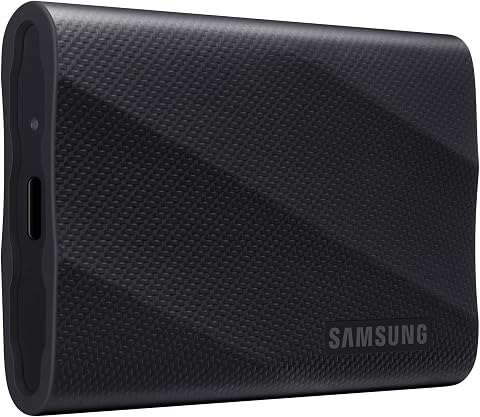 Samsung T9 Portable SSD 4TB, USB 3.2 Gen 2×2 External Solid State DriveView on Amazon →
- 2
 SanDisk Extreme Portable SSD, 4TB, Up to 2000MB/sView on Amazon →
- 3Samsung T9 Portable SSD 2TB, USB 3.2 Gen 2×2, Up to 2,000 MB/sView on Amazon →
- 4SanDisk Extreme Portable SSD, 2TB, Up to 2000MB/sView on Amazon →
- 5
 SanDisk Extreme 2TB Portable SSDView on Amazon →
- 6
 SanDisk 2TB Portable SSD, Up to 1000 MB/s Read Speed, BlackView on Amazon →
- 7Samsung T9 Portable SSD 1TB, USB 3.2 Gen 2×2, Up to 2,000 MB/sView on Amazon →
- 8SanDisk Extreme Portable SSD, 1TB, Up to 2000MB/sView on Amazon →
- 9
 Samsung T7 Portable SSD 1TB Titan Gray, USB 3.2 Gen 2, Up to 1,050MB/sView on Amazon →
- 10SanDisk 1TB Extreme Portable SSD, Up to 1050MB/sView on Amazon →
- 11SanDisk 1TB Portable SSD, Up to 1000MB/s Read Speed, BlackView on Amazon →
- 12SanDisk 500GB Portable SSD, Up to 1000MB/s Read Speed, BlackView on Amazon →
- 13
 SSK Portable SSD 500GB External Solid State Drive USB-C/USB-AView on Amazon →
Matching SSD Speed to Your Devices
The guide’s practical point is that a drive’s advertised maximum speed is not a guaranteed everyday transfer rate. A USB-C socket alone does not show whether a device supports USB 3.2 Gen 2×2, the connection standard the source says is needed to approach the T9’s stated maximum. Buyers who do not check their computer’s port and cable may pay for speed they cannot use.
Capacity and design also affect the purchase. A 500GB or 1TB drive may suit a smaller active workload, while larger media collections can make 2TB or 4TB more useful. The guide positions rugged-style Extreme models for mobile work, but a tougher design does not remove the need to keep a second copy of important files. These distinctions can help buyers select for actual use rather than brand name or headline speed.
Products Worth Considering

Bose QuietComfort Headphones, White Smoke

Apple MacBook Air 15-inch Laptop with M5 Chip, 16GB Memory, 512GB SSD, Liquid Retina Display, and Touch ID (Midnight)

DJI Mini 5 Pro Fly More Combo Plus with DJI RC 2
As an affiliate, we earn on qualifying purchases.
How the Guide Compares 13 Drives
The source says it ranked the listings by speed, usable capacity, connection requirements, portability and likely workload. Its stated approach favors balanced choices over maximum advertised speed alone, and judges capacity variants by the needs they serve rather than assuming larger drives perform better.
The guide separates the standard SanDisk Portable SSD range from the Extreme family and flags differences between listings that share a brand or capacity. It also advises checking formatting and device support when moving a drive between computers, phones or operating systems. Reformatting can erase existing files, so the source recommends copying contents elsewhere first.
“The Samsung T7 is the balanced starting point.”
— ThorstenMeyerAI.com buying guide
What the Listings Do Not Establish
The source provides no publication date, independent benchmark results, prices or availability details. Its title refers to 2027, but the material does not establish that all 13 listings were newly released or verified for sale in that year. The recommendations should be read as a buyer’s guide, not as proof that the selected drives are the top-performing products on the market.
It is also unclear which exact products make up all 13 picks: the supplied material identifies several model families and capacity variants but does not include a complete, numbered list with specifications for every listing. Some SanDisk Extreme listings reportedly have different advertised speed figures, but the source does not provide enough detail here to resolve those differences. Actual transfer results will vary with the host device, cable, file sizes and sustained workload.
Check Models Before You Buy
Before purchasing, buyers should verify the exact model, capacity and published interface speed, then compare those details with their computer or phone’s specifications. They should also check the included cable, intended file system and any product-specific protection details rather than assuming all models in a family are alike.
The source gives no date for a follow-up or update to the guide. Prices, availability and model specifications should be checked with retailers and manufacturers at the time of purchase. For important files, keep a separate copy: a portable SSD alone is not a backup plan.
Key Questions
Which drive does the guide recommend for everyday use?
It names the Samsung T7 1TB as a balanced starting point, citing its USB 3.2 Gen 2 interface and capacity for everyday transfers. That is the guide’s recommendation, not an independent test result.
Will a Samsung T9 reach its advertised 2,000 MB/s on any USB-C port?
No. The guide says approaching that advertised maximum requires a USB 3.2 Gen 2×2-compatible host connection and a suitable cable. USB-C describes connector shape and does not by itself confirm the port’s speed standard.
How much capacity should I choose?
The guide associates 500GB with lighter carry needs and larger capacities such as 2TB or 4TB with growing photo, video or project libraries. The right size depends on the files you expect to keep and how much room you want for future work.
Does a rugged-style SSD protect files from loss?
No drive design makes data loss impossible. The guide says the SanDisk Extreme family may better suit mobile work, but buyers should check the exact model’s protection details and keep a second copy of important files elsewhere.
Source: ThorstenMeyerAI.com