

🔍 Read the full analysis: What Makes A Portable SSD A Handy Storage Choice In 2027? on ThorstenMeyerAI.com

Get business pricing on tech for your team
- Business-only prices and quantity discounts
- Tax-exempt purchasing
- Multiple users, one account, clear invoices
TL;DR
A 10-drive roundup from ThorstenMeyerAI.com compares portable SSDs for backups, travel and large-file transfers. It names the 1TB Samsung T7 as its balanced pick, while higher-speed Samsung T9 and SanDisk models depend on compatible host devices to reach advertised performance.
ThorstenMeyerAI.com has published a 10-drive portable SSD roundup that compares Samsung, SanDisk and SSK options for backups, travel and large-file transfers. The guide names the 1TB Samsung T7 its balanced overall choice, while emphasizing that faster advertised speeds matter only when a connected computer or other device supports the required connection.
The roundup assesses products by advertised transfer speed, capacity and connection standard, as well as how each configuration might suit common tasks. It favors the T7 for general use because its 1TB capacity and USB 3.2 Gen 2 connection offer a middle ground without requiring the higher-speed setup associated with the Samsung T9.
For buyers moving larger files, the guide highlights the 2TB Samsung T9 and faster SanDisk Extreme models, which are advertised at up to 2,000 MB/s. Those figures are stated maximums, not a guarantee of the speed a user will see: the source says performance depends on the connected device. It also lists SanDisk Extreme versions at up to 1,050 MB/s, making the exact model specification important.
The ten configurations cover different storage needs, including SanDisk Extreme capacities of 1TB, 2TB and 4TB, and SSK drives in 250GB, 500GB and 1TB capacities. The source frames the smaller SSK options as basic portable storage choices. It does not provide independent benchmark results, current prices, or a dated test methodology, so its performance descriptions should be read as product specifications and editorial recommendations rather than measured guarantees.
The 10 picks
- 1
 SanDisk Extreme Portable SSD, 4TB, Up to 2000MB/sView on Amazon →
- 2SanDisk Extreme Portable SSD, 2TB, Up to 2000MB/sView on Amazon →
- 3
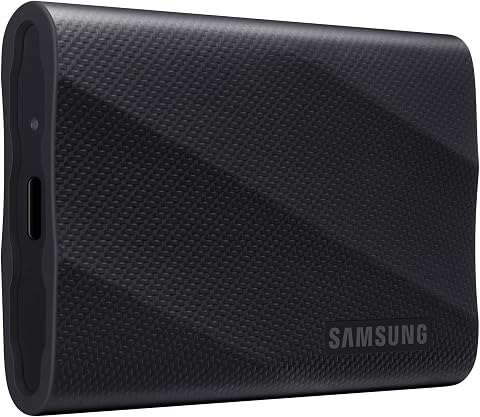 Samsung T9 Portable SSD 2TB, USB 3.2 Gen 2×2, Up to 2,000 MB/sView on Amazon →
- 4
 SanDisk 2TB Extreme Portable SSD, Up to 1050MB/s, USB-C, IP65 Water and Dust…View on Amazon →
- 5
 Samsung T7 Portable SSD, 1TB, Titan Gray, USB 3.2 Gen 2View on Amazon →
- 6SanDisk Extreme Portable SSD, 1TB, Up to 2,000MB/sView on Amazon →
- 7
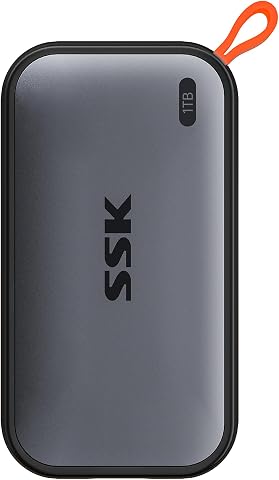 SSK 1TB Portable External SSD with USB-CView on Amazon →
- 8
 SanDisk 500GB Portable SSD, Up to 1000 MB/s Read SpeedView on Amazon →
- 9
 SSK 500GB Portable External SSD with USB-CView on Amazon →
- 10
 SSK Portable 250GB External SSD, USB-CView on Amazon →
Choosing Speed That Your Devices Can Use
The practical value of an external SSD depends on more than its highest speed figure. A drive with a faster advertised rate may save time when transferring large video files or project folders, but a device with a slower port can limit the transfer. For routine document backups, buyers may get more value from a suitable capacity and compatible connection than from paying for speed their setup cannot use.
The capacity range also matters for different kinds of use. A 250GB or 500GB drive may fit a modest working set, while a larger collection of photos, video or project files may call for 2TB or 4TB. Matching capacity to expected growth can help avoid running short without buying substantially more storage than needed. The roundup’s central point is that compatibility and capacity should be considered alongside speed.
Products Worth Considering
Bose QuietComfort Ultra Earbuds (2nd Gen) – Wireless Noise‑Cancelling Earbuds with Mic, Immersive Audio, USB‑C Charging, Up to 6 Hours Batte

EcoFlow DELTA 3 Portable Power Station (1024Wh, 1800W)

Bose SoundLink Flex Bluetooth Speaker (2nd Gen), Black
As an affiliate, we earn on qualifying purchases.
How the Ten Drives Differ
The source describes a comparison of ten portable SSD configurations, rather than a report of a newly introduced product or a controlled performance test. Its ranking prioritizes what the author calls useful balance and a clear fit for different needs. The T7 is presented as a general-purpose option; the T9 and faster SanDisk variants are aimed at users whose devices can take advantage of their stated performance.
Model names alone may not make the differences clear. The listed SanDisk Extreme options include versions with maximum advertised speeds of up to 1,050 MB/s and up to 2,000 MB/s. The guide advises checking the exact listing and connection details rather than assuming every product in a family has the same specification. It also recommends considering how the drive will be carried and checking model-specific protection claims instead of assuming portability means protection from drops, spills or dust.
“The Samsung T7 is the balanced pick.”
— ThorstenMeyerAI.com roundup
Performance and Protection Caveats
The supplied material does not give a publication date, prices, warranty details, independent benchmark measurements or full model numbers for all ten configurations. It also does not specify the test conditions behind the quoted maximum speeds. Readers should treat the speed figures as advertised specifications; actual results can vary with the host device and connection.
Details about durability and protection are also limited. The source advises checking individual model claims but does not establish that any listed drive can withstand a particular drop, spill or dusty environment. Whether prices or product specifications have changed since the roundup was prepared is unclear.
Check Compatibility Before Buying
Before choosing a drive, buyers can compare the exact model’s capacity and connection with the ports on the computer, phone or other device they plan to use. They should also estimate the size and likely growth of the files they intend to store, then check current product specifications, protection information and price with the seller. The source provides no announced follow-up test or update date, so current listings should be verified at the point of purchase.
Key Questions
Which portable SSD does the roundup recommend for general use?
It names the 1TB Samsung T7 its balanced overall pick, citing its USB 3.2 Gen 2 connection and capacity for routine backups and file transfers.
Do the Samsung T9 and faster SanDisk models always reach 2,000 MB/s?
No. The roundup describes speeds of up to 2,000 MB/s as advertised maximums. Actual performance depends on the connected device and whether it supports the required connection.
How do the SanDisk Extreme versions differ?
The listed models include versions advertised at up to 1,050 MB/s and up to 2,000 MB/s, as well as 1TB, 2TB and 4TB capacity options. Check the exact model specification rather than relying on the product-family name alone.
Which capacity should I choose?
Estimate the size of your current files and how quickly they will grow. The roundup includes SSK options from 250GB to 1TB and SanDisk Extreme options from 1TB to 4TB; the suitable choice depends on the workload and budget.
Does portable mean an SSD is protected from drops or water?
Not necessarily. The source advises checking the specific model’s protection claims and handling guidance. It does not establish that every drive in the roundup is protected against drops, spills or dust.
Source: ThorstenMeyerAI.com