
TL;DR

Get business pricing on tech for your team
- Business-only prices and quantity discounts
- Tax-exempt purchasing
- Multiple users, one account, clear invoices
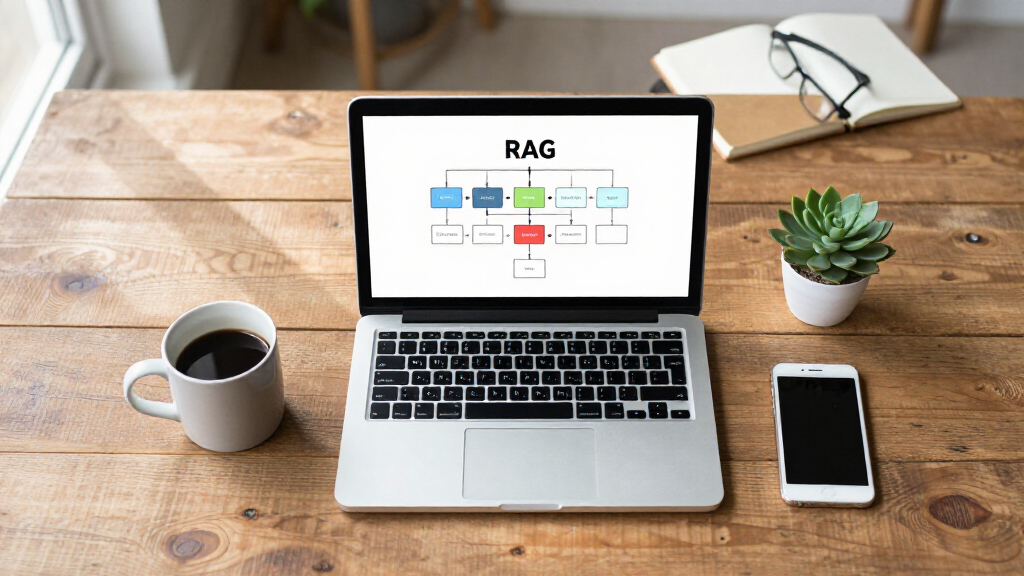
Retrieval-Augmented Generation (RAG) is a method that enhances AI language models by combining retrieval of external data with text generation. Experts clarify that RAG is simpler to implement and understand than many believe, making it accessible for broader AI applications.
Retrieval-Augmented Generation (RAG) is a method used to improve AI language model responses by combining external data retrieval with text generation. Contrary to common perceptions, experts emphasize that RAG is simpler to understand and implement than many believe, potentially lowering barriers for wider adoption in AI development.
RAG integrates two core components: a retrieval system that fetches relevant information from external sources, and a generator that synthesizes this data into coherent responses. This approach allows models to access up-to-date or specialized information beyond their training data, enhancing accuracy and relevance.
Recent statements from AI researchers and practitioners highlight that the core concept of RAG is straightforward. Unlike some complex multi-stage models, RAG primarily involves retrieving relevant documents or data points and conditioning the language model’s output on this information. This simplicity makes it accessible to developers with varying levels of expertise.
Many industry experts, including those from leading AI labs, have shared educational content and tutorials demonstrating that RAG does not require advanced engineering or extensive infrastructure. Instead, it can be implemented with existing retrieval tools and standard language models, making it a practical choice for many applications.
How RAG Changes the AI Development Landscape
Understanding that RAG is a simpler, more accessible technique can democratize its adoption across industries. Companies and researchers can leverage RAG to build more accurate, up-to-date AI systems without needing complex architectures or massive resources. This could accelerate innovation in fields like customer support, research, and content generation, where access to current information is crucial. Additionally, clarifying RAG’s simplicity helps dispel misconceptions that hinder its adoption, potentially leading to broader integration in real-world applications.
As an affiliate, we earn on qualifying purchases.
RAG’s Emergence and Growing Adoption in AI
Retrieval-Augmented Generation was introduced as a solution to the limitations of static language models that cannot access real-time information. Early versions of RAG appeared around 2020, gaining attention for improving factual accuracy. Over time, the approach has been refined and increasingly adopted by AI developers seeking to enhance model relevance and reliability.
Despite its advantages, misconceptions about RAG’s complexity have persisted, partly due to its technical terminology and perceived integration challenges. Recent educational efforts and expert clarifications aim to dispel these myths, emphasizing that RAG’s core process is straightforward and adaptable.
As an affiliate, we earn on qualifying purchases.
What Aspects of RAG Are Still Being Clarified?
While the core concept of RAG is clear, questions remain about optimal implementation strategies, scalability, and performance in different contexts. Researchers are still exploring best practices for integrating retrieval methods with various language models, and how to fine-tune these systems for specific applications.
Additionally, there is ongoing discussion about the limitations of RAG in handling ambiguous queries or retrieving unreliable data, which could impact its effectiveness in certain scenarios. More empirical studies are needed to establish standardized guidelines for deployment across diverse use cases.
As an affiliate, we earn on qualifying purchases.
Next Steps for RAG Development and Adoption
Experts anticipate continued educational efforts to demystify RAG, making it more accessible for a broader range of users. Research will likely focus on refining retrieval techniques, improving integration methods, and testing RAG in real-world applications such as search engines, chatbots, and knowledge bases.
Furthermore, industry collaborations and open-source projects are expected to accelerate the development of user-friendly tools and frameworks, lowering technical barriers and fostering innovation in AI systems that leverage RAG.
As an affiliate, we earn on qualifying purchases.
Key Questions
Is RAG difficult to implement for beginners?
No, many experts agree that RAG is straightforward to implement using existing retrieval tools and language models. It requires basic understanding of data retrieval and text generation but does not demand complex architecture.
Does RAG require specialized hardware?
Typically, RAG can run on standard hardware, especially if using cloud-based retrieval systems and pre-trained language models. Scalability depends on the application’s size and performance needs.
What are the main benefits of using RAG?
RAG improves the relevance and accuracy of AI responses by accessing real-time or domain-specific information, making outputs more factual and current without retraining the entire model.
Are there any limitations to RAG?
Yes, RAG can sometimes retrieve unreliable data or struggle with ambiguous queries. Its effectiveness depends on the quality of the retrieval system and the context of use.
Will RAG replace traditional language models?
Not necessarily; RAG is designed to augment existing models, not replace them. It enhances capabilities by providing external data access, complementing the core language model.
Source: hn
Halloween Picks
halloween
As an affiliate, we earn on qualifying purchases.