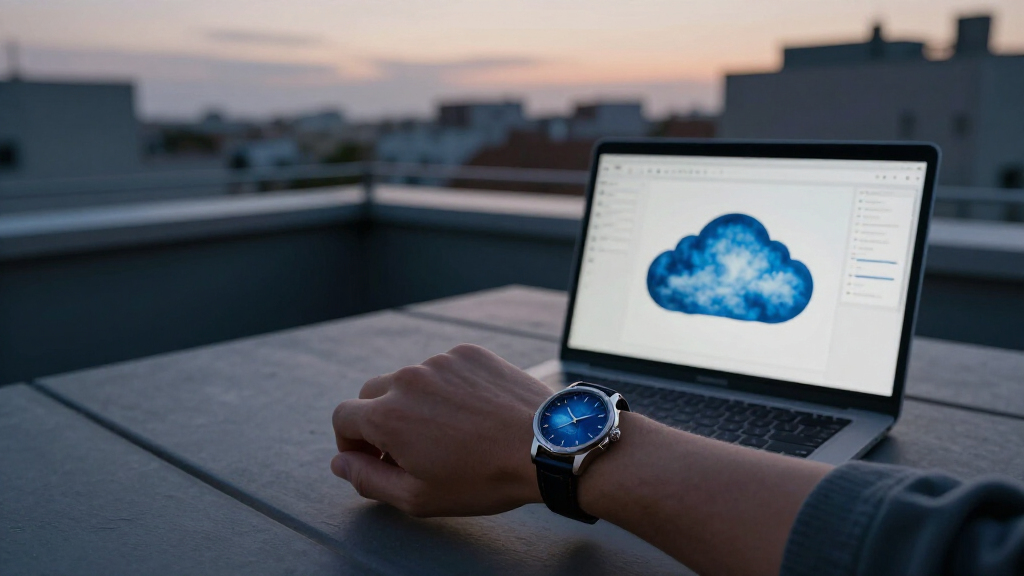

🔍 Read the full analysis: The AI Design Choice Behind This Noctilucent Cloud Dial on ThorstenMeyerAI.com

Get business pricing on tech for your team
- Business-only prices and quantity discounts
- Tax-exempt purchasing
- Multiple users, one account, clear invoices
TL;DR
ThorstenMeyerAI.com describes “Noctilucent — NLC Watch at 83 km,” an AI-built fictional exhibition about real high-altitude ice clouds. Its solar-depression dial changes the page’s lighting and cloud effects, turning twilight geometry into an interactive design feature; it is not a live scientific service.
ThorstenMeyerAI.com has presented “Noctilucent — NLC Watch at 83 km,” an AI-built web exhibition that uses an interactive solar-depression dial to show how high-altitude clouds can remain illuminated after the ground is dark, as detailed in the original analysis. The page is a fictional field journal for a fictional observing project, not a scientific monitoring service, though the noctilucent clouds it describes are real.
The dial moves through a stated range of six to sixteen degrees below the horizon, with the exhibit’s most expressive visual state near 11 degrees. Adjusting it changes several linked elements, including the sky’s brightness, shadow depth, cloud glow, ambient color, grain and horizon flare. Supporting diagrams and text also respond to the same lighting state, according to the site description.
The experience is rendered in the browser using Canvas for the sky and cloud imagery, and inline SVG for diagrams and an altitude illustration. CSS supplies effects such as instrument edges, grain and rays. The source says the page uses no image assets. Its cloud shapes vary by type: billows form tighter crests, whirls bend into polar distortions, and bands move in broader waves.
A later interaction asks visitors to hold a control while ground-level haze fades and a cloud band at 83 kilometres becomes clearer. Releasing early lets the sighting fade. The source says the interaction supports pointer, keyboard and touch-like input. It also describes offscreen and hidden-tab animation pauses and a reduced-motion still state. The visual palette contrasts electric cyan and violet with a cream-colored field-log section.
Design analysis · AI-built exhibition
The AI Design Choice Behind This Noctilucent Cloud Dial
A fictional field journal turns twilight geometry into an interactive visual system. One control—the Sun’s position below the horizon—shapes the sky, cloud glow, diagrams, and atmosphere.
Twilight geometry becomes the interface
Noctilucent clouds are real, high-altitude ice clouds that can remain sunlit after the ground has fallen into darkness. The exhibit makes that contrast tangible by linking a single dial to multiple parts of the page.
Light shifts across the sky
Moving the dial changes sky brightness, shadow depth, ambient color, grain, and the flare along the horizon.
Glow follows the setting
Cloud glow responds to the same lighting state. Billows form tighter crests, whirls bend into polar distortions, and bands move in broader waves.
Diagrams stay in sync
Supporting diagrams and explanatory text also respond, making the dial a shared model for the exhibit rather than a decorative control.
Procedural visuals, assembled in the browser
A fictional watch, real clouds
The field-journal framing and station names are part of an imagined observing project. The brief places this room as “162 of 175” in a collection of AI-built exhibition pieces, with a sequence from luminous horizon to cloud forms, ice crystals, seasonal observation, and a warm field log.
Set the twilight
Choose the Sun’s angle below the horizon.
Watch light travel
Grazing sunlight reaches ice above the shadowed Earth.
Explore cloud forms
Procedural shapes and glow respond to the lighting.
Enter the field log
Invented station notes complete the exhibition mood.
What the supplied description does—and does not—establish
Interaction and rendering
A dial-linked visual system, browser-rendered Canvas and SVG artwork, and a hold-to-reveal interaction are described by the project source.
Features are claimed
The source describes reduced-motion still behavior and pauses for offscreen or hidden-tab animation. It provides no test results or independent audit.
Reach and scientific review
No launch date, audience figures, independent scientific assessment, named reviewers, or documented review changes are supplied.
Two ideas from the source
“A fictional field journal for a fictional observing project, not a real company or live scientific service.”
ThorstenMeyerAI.com project description
What visitors should know
Is NLC Watch a live monitoring service?
No. It is described as a fictional field journal for an imagined project. Its subject—noctilucent clouds—is real.
What does the dial change?
Across 6°–16° below the horizon, it updates sky light, shadows, cloud glow, ambient color, grain, horizon flare, and related diagrams and copy.
How is the artwork made?
The source describes Canvas for sky and clouds, inline SVG for diagrams, and CSS for additional effects, with no image assets.
What remains unknown?
The AI tools used, the extent of AI-generated implementation, the results of review passes, and independent accessibility or scientific testing are not documented in the supplied material.
Turning Twilight Geometry Into Interaction
The exhibit’s design choice is to make a single variable—solar depression—shape the experience beyond a decorative hero image. As the dial moves, the cloud rendering, diagrams and explanatory copy follow the same lighting state. That gives visitors a visual way to explore the central idea: sunlight can still reach ice clouds high above the observer while the lower atmosphere and ground are in darkness.
For readers interested in AI-assisted design, the project is presented as more than generated artwork. The source describes a designed, browser-based experience that combines procedural graphics, interaction and accessibility considerations. Its stated approach is to make one meaningful variable influence the wider page. However, the source does not provide independent evaluation of the build process or evidence that the exhibit has been tested as a scientific teaching tool.
The distinction between the fictional observing network and the real atmospheric subject matters. The station names and field-journal framing create an immersive presentation, but visitors should not mistake the page for an operational watch, a real observing program or a source of current cloud reports.
high-altitude cloud viewing telescope
As an affiliate, we earn on qualifying purchases.
As an affiliate, we earn on qualifying purchases.
A Fictional Watch, Real Clouds
Noctilucent clouds are high-altitude ice clouds that can remain sunlit after darkness has reached the ground. The exhibit uses that contrast as its organizing idea: an unseen Sun illuminates cloud forms above a shadowed lower sky. Its title places the cloud band at 83 km, and the brief describes an illustration of sunlight grazing the shadowed Earth to reach ice at that height.
The source frames the page as “room 162 of 175” in a collection of AI-built exhibition pieces. It outlines a sequence from the luminous horizon through cloud forms, small ice crystals and seasonal observation, ending in a warm field log. The design brief also proposes an observation calendar around the solstice and at latitudes of 55–65 degrees, plus invented station logs. These are elements of the concept, not reports from real observers.
The supplied description says the project was built in three passes: constructing the room, reviewing it for clarity and interaction, then conducting an art-director review. It points readers to a separate construction guide for implementation details. The source does not name an independent reviewer or provide a record of specific changes made during those review stages.
“A fictional field journal for a fictional observing project, not a real company or live scientific service.”
— ThorstenMeyerAI.com project description
As an affiliate, we earn on qualifying purchases.
What the Source Does Not Verify
The supplied material does not give a publication date, a public launch date or usage figures, so the timing and audience reach of the exhibit cannot be established from it. It also provides no independent assessment of the scientific accuracy of every diagram or explanatory passage. The basic subject is described as real, but the page itself is explicitly fictional.
It is also unclear which AI tools were used, how much of the implementation was generated by AI, and what changes followed the stated critique and art-direction passes. The source describes accessibility and performance features, including reduced-motion behavior and pausing animation when the page is hidden, but supplies no test results or independent audit. Its design brief sets quality goals such as responsive layouts and contrast; those targets should not be treated as verified outcomes based on the text alone.
As an affiliate, we earn on qualifying purchases.
The Design Guide Offers More Detail
The source directs readers to the exhibit’s construction guide for further explanation of the lighting model, procedural graphics and visibility-aware animation. It also invites visitors to open the room in a browser. No further release, scientific collaboration or live observing service is announced in the supplied material; any such development remains unconfirmed.
As an affiliate, we earn on qualifying purchases.
Key Questions
Is NLC Watch at 83 km a live cloud-monitoring service?
No. ThorstenMeyerAI.com describes it as a fictional field journal for a fictional project, not a live scientific service. Its subject, noctilucent clouds, is real.
What does the solar-depression dial change?
The dial covers six to sixteen degrees below the horizon. The source says it updates the exhibit’s sky light, shadow depth, cloud glow, ambient color, grain and horizon flare, along with related diagrams and copy.
How is the exhibit’s artwork made?
The project description says the visuals are generated in the browser: Canvas draws the sky and cloud forms, inline SVG supplies diagrams, and CSS creates additional effects. It says the page uses no image assets.
What does the hold-to-reveal interaction do?
Visitors hold a control as ground-level haze recedes and a cloud band at 83 kilometres becomes clearer. Releasing early allows the sighting to fade, according to the source description.
Source: ThorstenMeyerAI.com
Halloween Picks
halloween
As an affiliate, we earn on qualifying purchases.