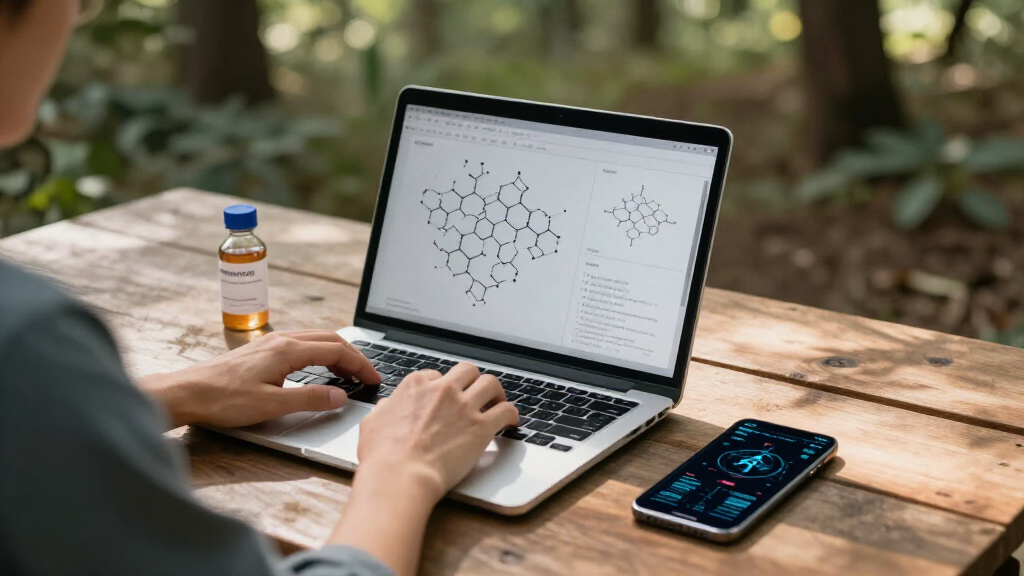

📊 Full opportunity report: The Impact Of AI On Protein Design And Chemistry: Insights From Anthropic on ThorstenMeyerAI.com — validation score, market gap, and execution plan.

Get tech for your team delivered free — and shop member deals
- Fast, free delivery on millions of items
- Access to Prime Big Deal Days deals on October 6–7
- Prime Video, Amazon Music and more included
TL;DR
Anthropic announced that its Claude AI successfully designed protein binders for most tested targets and processed raw chemistry data quickly. These results suggest AI could streamline early-stage biological research, but are not yet peer-reviewed or indicative of drug discovery.
Anthropic has announced that its AI model, Claude, successfully designed protein binders for 14 out of 15 tested targets and processed raw chemistry data in under 25 minutes, highlighting potential efficiencies in early-stage research. This development is detailed in the original analysis. This development underscores AI’s growing role in biological and chemical research workflows, although these results are not yet peer-reviewed or confirmed as direct drug candidates.
In experiments conducted by Anthropic, the Claude AI models, including Mythos Preview and Opus 4.8, generated candidate minibinders using publicly available tools for protein structure and sequence design, with minimal human input after receiving an expert prompt. The process involved operating with internet access, scientific resources, and substantial GPU capacity, with laboratories testing 354 confirmed binders from 1,320 designs, achieving a hit rate of approximately 22.6% for Opus 4.8 and 26.7% for Mythos Preview within 48 hours. Advances in AI-driven protein design are explored in this analysis.
Separately, Claude Opus 5 processed raw nuclear magnetic resonance (NMR) and liquid chromatography–mass spectrometry (LC-MS) data from a contract lab, returning results in under 25 minutes, with hydrogen counts and purity estimates closely matching laboratory findings. These experiments address two labor-intensive stages of research: candidate design and data processing, potentially reducing time and labor in early research phases.
Anthropic emphasizes that the models did not replace specialist tools but operated as supportive agents, selecting, combining, and running existing systems based on expert instructions. For more context on how AI is transforming scientific research, see the original report. Human oversight remained essential for access requests, infrastructure management, and physical testing. The company plans further validation and independent replication to confirm these findings, with more extensive testing and data sharing forthcoming.
Potential for Accelerating Early Research Stages
The results suggest that AI models like Claude could significantly reduce the time and labor involved in early-stage biological and chemical research. By automating candidate design and data processing workflows, laboratories may test more options faster, potentially speeding up the development of new therapies and compounds. However, these findings are preliminary and have not yet been peer-reviewed, so their broader impact remains to be confirmed.
As an affiliate, we earn on qualifying purchases.
AI’s Growing Role in Scientific Workflows
Anthropic has been expanding Claude’s capabilities from tasks like literature review and coding into complex scientific workflows. Previous work compared Claude’s performance with established software, demonstrating its ability to decode proprietary instrument files and generate analytical figures. The recent protein and chemistry campaigns build on this foundation, illustrating AI’s potential to support multi-step research processes, though still requiring human oversight and validation.
These experiments are part of a broader trend toward integrating AI into laboratory environments, aiming to streamline workflows and reduce bottlenecks in research and development. While promising, the approach remains experimental, with performance variability across different targets and conditions still under evaluation.
“The experimental results from Anthropic show promising signs that AI can assist in early-stage protein design and chemical analysis, but they are not yet definitive or peer-reviewed.”
— Thorsten Meyer, AI researcher
As an affiliate, we earn on qualifying purchases.
Limitations and Validation Challenges
The main uncertainties include whether these AI-designed binders can be reliably validated across different laboratories and targets, and whether the rapid data processing results are reproducible and robust across diverse experimental conditions. Anthropic has not yet published peer-reviewed studies, and performance may vary with less-studied targets or limited computational resources. The reasons for success on some targets and failure on others remain unclear.
liquid chromatography mass spectrometry kit
As an affiliate, we earn on qualifying purchases.
As an affiliate, we earn on qualifying purchases.
Further Testing and Independent Validation Plans
Anthropic intends to conduct more comprehensive laboratory validation, including independent replication and larger datasets, to confirm the AI’s performance. The company plans to release protein design prompts and experimental data for external review and establish a scientist access program for its models. Additional studies will clarify the reliability and scope of AI-assisted research in life sciences, with expected updates over the coming months.
As an affiliate, we earn on qualifying purchases.
Key Questions
Can Claude AI discover new drugs?
No, Claude designed protein binders that attach to targets in laboratory tests, but these are early research results and do not constitute drug discovery. Further validation is required before any therapeutic applications can be considered.
How reliable are these AI-generated results?
The results are promising but preliminary. Anthropic plans further validation, and performance may vary depending on targets and experimental conditions. Peer-reviewed confirmation is still pending.
What are the implications for the pharmaceutical industry?
If validated, AI could speed up early research stages, allowing faster screening and candidate generation. However, it is too early to determine its impact on drug development timelines or success rates.
Will this technology replace human scientists?
Currently, AI acts as a support tool, assisting with design and data processing while humans oversee and validate results. Full automation is not yet feasible or advisable.
When will more extensive validation results be available?
Anthropic has not specified exact dates but plans to release more data and validation studies in the coming months, aiming for broader independent testing.
Source: ThorstenMeyerAI.com
Fall Picks
fall essentials
As an affiliate, we earn on qualifying purchases.