
📊 Full opportunity report: The New Standard For Food Safety In Restaurants: Vision-Model Tech on IdeaNavigator AI — validation score, market gap, and execution plan.
TL;DR
A new vision-model technology is being tested to improve food safety inspections in restaurants. It automates walk-through checks using photos, offering verifiable data and potential cost savings. The development is in early testing phases with promising results. Learn how to ensure food safety compliance effectively.
Restaurants are beginning to test a new vision-model technology designed to automate and verify kitchen safety inspections. This innovation aims to replace traditional walk-through checklists with AI-driven photo analysis, providing more reliable and timestamped data. The development could significantly improve food safety compliance and operational efficiency for multi-unit restaurant groups, making it a notable advancement in industry standards. Ensure Food Safety Compliance With Effective Pesticide-Residue Monitoring.
The technology involves capturing photographs during morning kitchen inspections, including prep stations, storage areas, and sinks. A vision model then analyzes these images to identify violations such as uncovered containers, propped cooler doors, or missing date labels. The system assigns severity ratings and creates timestamped reports, enabling managers and QA leads to track trends across multiple locations.
This approach is designed for use by operations or QA leads at multi-unit restaurant groups. It leverages existing phone cameras, eliminating the need for new hardware, and offers a subscription-based model with dashboards for monitoring compliance. You can learn more about food safety compliance strategies. The initial validation involves comparing the AI’s flagged violations against findings from professional health inspectors over a two-week pilot at five locations.
The New Standard for Food Safety in Restaurants: Vision-Model Tech
TL;DR: Restaurants are testing vision models that analyze ordinary kitchen photos, flag potential safety violations, assign severity, and generate timestamped inspection records. The promise is stronger verification and lower operating friction—but the evidence remains early.
Real-world kitchens included in the initial validation plan.
AI findings are planned for comparison with professional inspections.
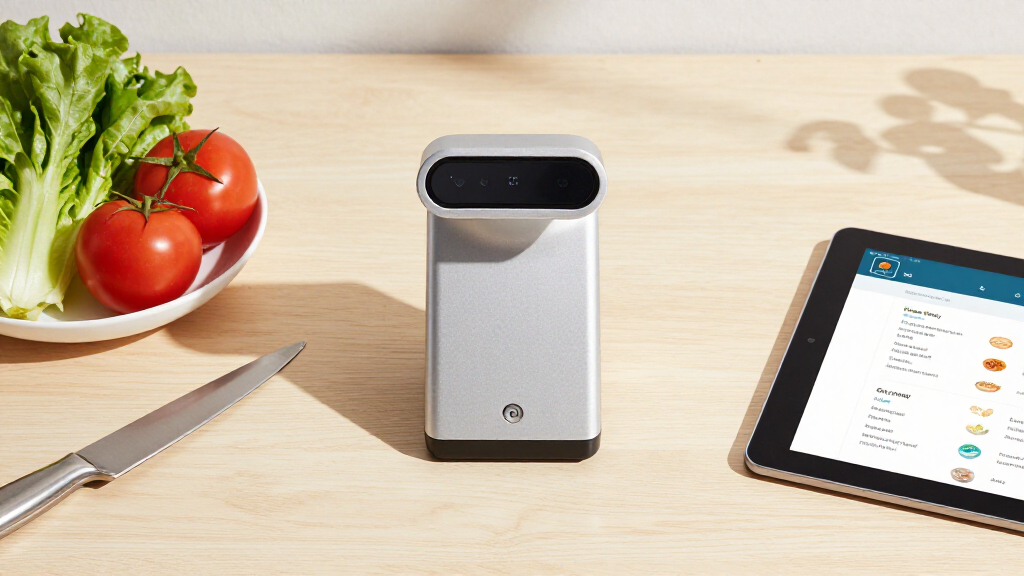
The proposed workflow uses phone cameras already carried by staff.
From routine walk-through to verifiable record
Instead of relying only on a completed checklist, the system turns visual evidence from prep stations, storage zones, coolers, and sinks into structured compliance data.
Capture
Staff photograph designated kitchen zones during the morning inspection using a standard phone camera.
Analyze
A vision model reviews each image for visible conditions that may indicate a food-safety violation.
Prioritize
Detected issues receive severity ratings so urgent risks can be separated from lower-priority corrections.
Verify
Timestamped reports create an auditable record for managers, QA teams, and multi-location trend analysis.
What the model adds to the inspection process
The technology is intended to supplement human oversight with consistent documentation, centralized visibility, and repeatable evaluation across locations.
Repeatable visual checks
A shared model can apply the same screening logic across shifts and restaurants, reducing variation between locally completed checklists.
Evidence linked to time
Photos and timestamps make it easier to verify that checks occurred and to review the conditions present at the moment of inspection.
Multi-unit dashboards
Operations and QA leads can monitor patterns, compare locations, and identify recurring issues without visiting every kitchen.
Less manual reporting
Automated classification and report generation may reduce repetitive recording work and accelerate corrective action.
No dedicated cameras
Using existing phones lowers deployment friction and could support a subscription model without a hardware installation program.
Trend-based coaching
Recurring findings can inform training, operating procedures, maintenance priorities, and location-specific follow-up.
Visible risks the system is designed to flag
Vision models can only assess what appears in the image. Their strongest near-term use is screening observable conditions and routing them to a human decision-maker.
A stronger evidence layer—not an inspector replacement
The near-term case is augmentation: improving daily verification while retaining human judgment for context, ambiguous findings, and regulatory decisions.
| Inspection dimension | Manual checklist | Vision-assisted workflow | Human inspector |
|---|---|---|---|
| Evidence captured | ~ Often self-reported | ✓ Photo plus timestamp | ✓ Direct observation |
| Cross-location consistency | ~ Varies by staff | ✓ Shared screening model | ~ Periodic coverage |
| Daily scalability | ✓ Easy to distribute | ✓ Designed for routine use | ~ Limited by availability |
| Contextual judgment | ~ Depends on training | ~ Requires escalation | ✓ Professional assessment |
| Automated trend reporting | ~ Manual consolidation | ✓ Dashboard-ready | ~ Inspection-cycle based |
Compare model flags with professional findings
During the pilot, AI-identified violations are expected to be checked against reports from professional health inspectors. The key question is not simply whether the model finds issues—it is whether those findings are accurate, repeatable, and operationally useful.
The vision-model system can reliably flag violations from standard phone photos, turning routine walk-throughs into verifiable inspection data.
Anonymous researcher · Claim remains unconfirmedWhat still needs to be proven
A short pilot can demonstrate feasibility, but broader adoption requires evidence across different kitchens, operating conditions, teams, and food-service formats.
Image conditions vary
Lighting, camera angle, clutter, steam, reflections, and partial visibility may change detection quality from one kitchen to another.
Five sites are not the industry
Different menus, layouts, storage systems, equipment, and staff practices may produce new edge cases not represented in the pilot.
Data rules remain important
Operators need clear policies for photo retention, access controls, worker privacy, security, model review, and incident escalation.
Promising, but not established. Accuracy, scalability, cost-effectiveness, integration quality, and regulatory acceptance must be demonstrated before the technology can be treated as a new industry standard.
How a photo becomes an operational action
The practical value comes from linking evidence to decisions—not merely generating an AI prediction.
Kitchen condition recorded
Model screens visible risks
Issue and severity assigned
Manager reviews and responds
Trends inform future controls
What restaurant operators need to know
The technology’s role should be evaluated as part of a wider food-safety program that includes trained people, documented procedures, monitoring, and corrective action.
Will it replace human inspectors?
Not at this stage. The proposed system supplements inspections with visual evidence and structured reporting. Full replacement is neither confirmed nor validated.
What benefits could operators see?
More consistent checks, fewer manual recording errors, easier compliance documentation, faster escalation, and potential savings across multi-unit operations.
When could it become widely available?
The technology remains in early testing. Broader rollout could follow successful validation, but timing depends on performance, integration, and industry adoption.
What about privacy and security?
Phone photos may contain sensitive operational or employee information. Secure storage, limited access, retention rules, and transparent data-use policies are essential.
What should operators do now?
Maintain established food-safety controls, including staff training, temperature and sanitation monitoring, date-label procedures, pesticide-residue monitoring where applicable, internal audits, and professional inspections. Treat vision technology as an additional verification layer until its reliability is independently demonstrated.
Impact of Vision-Model Tech on Food Safety Standards
This technology could transform how restaurants conduct and document safety inspections, making them more accurate and verifiable. By automating the detection of violations, it reduces reliance on subjective checklists and manual recording, potentially lowering compliance errors and improving public health outcomes. Additionally, it offers a scalable solution for large restaurant groups seeking consistent standards across multiple locations.
As an affiliate, we earn on qualifying purchases.
Background of AI in Restaurant Food Safety
Traditional restaurant inspections rely on manual checklists completed by staff or inspectors, often leading to incomplete or inaccurate records. Recent advances in AI, particularly vision models, have demonstrated the ability to reliably identify safety violations in ordinary phone photos. Pilot programs are now exploring how these tools can be integrated into daily operations to enhance compliance and accountability.
This development follows broader trends of automation in food safety and quality control, aiming to reduce human error and improve traceability. The pilot at five locations represents one of the first efforts to validate these models in real-world restaurant environments, with promising initial results reported by IdeaNavigator AI.
“The vision-model system can reliably flag violations from standard phone photos, turning routine walk-throughs into verifiable inspection data.”
— an anonymous researcher
As an affiliate, we earn on qualifying purchases.
Unconfirmed Aspects and Testing Limitations
It is not yet clear how well the system will perform across diverse restaurant environments or over longer periods. The validation is limited to a two-week pilot at five locations, and results may vary with different lighting conditions, staff practices, or food types. Further testing is needed to confirm accuracy and scalability before broader rollout.
As an affiliate, we earn on qualifying purchases.
Next Steps for Validation and Deployment
The pilot program will run for two weeks, during which flagged violations will be compared with health inspector reports. If results are positive, the developers plan to refine the model and expand testing to additional locations. Long-term adoption will depend on demonstrated reliability, cost-effectiveness, and integration with existing management systems.
As an affiliate, we earn on qualifying purchases.
Key Questions
How does the vision-model inspection system work?
The system uses photos taken during kitchen inspections, which are analyzed by AI to identify violations like uncovered food or missing labels. It then creates reports with severity ratings and timestamps for tracking compliance.
Will this replace human inspectors entirely?
Currently, the technology is designed to supplement human inspections by providing verifiable data. Full replacement is not yet confirmed and would depend on further validation and regulatory acceptance.
What are the benefits for restaurant operators?
Operators can achieve more consistent and reliable safety checks, reduce manual errors, and generate documented compliance records easily. It also offers potential cost savings by streamlining inspections.
When will this technology be widely available?
It is still in early testing; a broader rollout may occur within the next year if validation proves successful and the solution gains industry adoption.
Are there privacy or data security concerns?
The system relies on phone photos, with data stored securely and used solely for inspection purposes. Details on data handling are still being finalized.
Source: IdeaNavigator AI