
TL;DR

Get business pricing on tech for your team
- Business-only prices and quantity discounts
- Tax-exempt purchasing
- Multiple users, one account, clear invoices
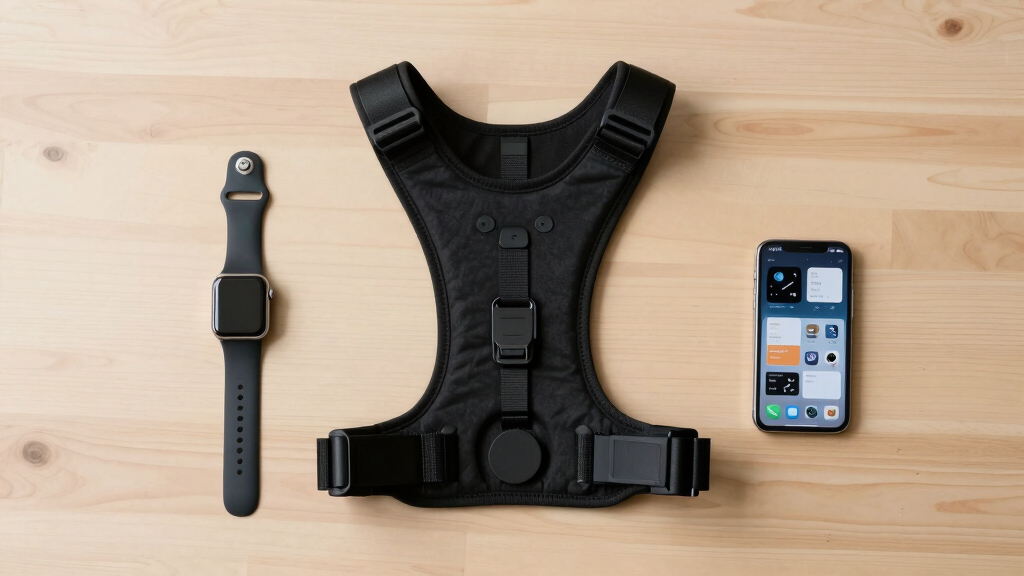
Researchers have announced a breakthrough in wearable technology with a harness capable of performing various functions. This development could revolutionize personal and industrial applications, but many details remain under wraps.
Scientists have unveiled a prototype of a versatile wearable harness designed to perform multiple functions, representing a major step toward universal wearable technology. This innovation aims to enable a single device to adapt to various tasks across different industries and personal needs, making it a potentially transformative development in wearable design.
The development was announced by a research team at the Institute for Advanced Wearable Technologies. The harness integrates adaptive materials and modular components, allowing it to switch functions such as support, sensing, and actuation. For more insights on AI safety and development, see Demis Hassabis Has A Plan To Harness AI Safely. According to the researchers, the prototype can adjust its shape, stiffness, and functionality in real-time, responding to user commands or environmental conditions.
While the team has demonstrated several core capabilities, including load support and health monitoring, the full range of potential functions remains under active development. This project exemplifies the innovative use of AI in wearable tech, which is a broader trend discussed in our article about AI safety and planning. The project is still in the experimental stage, with plans to test the harness in real-world scenarios over the coming months. To understand more about how AI is shaping future technologies, visit our overview of AI safety strategies. The researchers emphasize that this is a proof of concept, not a commercial product yet.
Potential Impact of a Universal Wearable Harness
This development could significantly impact multiple sectors, including healthcare, industrial work, and personal fitness. A single adaptable device could reduce the need for multiple specialized wearables, lowering costs and increasing convenience. It also opens new possibilities for assistive technologies, such as exoskeletons or adaptive support systems, tailored to individual needs. However, experts note that widespread adoption depends on further validation of durability, safety, and user acceptance.
As an affiliate, we earn on qualifying purchases.
Previous Advances Toward Adaptive Wearable Devices
Research into multifunctional wearables has been ongoing for several years, with notable efforts in flexible electronics, smart textiles, and modular systems. Earlier prototypes could perform limited tasks, such as health monitoring or basic support functions. This latest breakthrough builds on these efforts by integrating multiple capabilities into a single, adaptive platform. The concept aligns with broader trends toward personalized, multifunctional technology but remains in the early experimental phase.
“This harness represents a significant step toward truly adaptable wearable technology that can serve multiple purposes, reducing the need for multiple devices.”
— Lead researcher Dr. Emily Carter
As an affiliate, we earn on qualifying purchases.
Unanswered Questions About Durability and Practical Use
It is not yet clear how durable the harness will be under long-term use or extreme conditions. The scalability of manufacturing and cost-effectiveness are also still under investigation. Furthermore, user acceptance and regulatory approval processes are yet to be addressed, leaving questions about how soon such devices could become commercially available.
As an affiliate, we earn on qualifying purchases.
Next Steps in Testing and Development Phases
The research team plans to conduct extensive field testing of the prototype in real-world settings over the next six to twelve months. They aim to refine the design based on feedback, improve durability, and explore additional functionalities. If successful, the project could move toward commercialization within the next few years, pending regulatory approval and further validation.
health monitoring wearable harness
As an affiliate, we earn on qualifying purchases.
As an affiliate, we earn on qualifying purchases.
Key Questions
What functions can the current prototype perform?
The prototype can support load-bearing tasks, monitor health metrics, and adapt its shape and stiffness for different uses. Additional functions are still under development.
When might this technology become available to consumers?
It is too early to specify a release date. The prototype is in testing phases, with commercial availability possibly within the next three to five years, depending on development success and regulatory approval.
What industries could benefit from this harness?
Healthcare, industrial work, sports, and personal fitness are primary sectors likely to benefit from a versatile, adaptive wearable harness.
What are the main challenges remaining?
Key challenges include ensuring long-term durability, user comfort, safety, manufacturing scalability, and regulatory compliance.
How does this differ from existing wearable technology?
Unlike current devices that are specialized for specific tasks, this harness aims to perform multiple functions within a single, adaptable platform, reducing the need for multiple separate devices.
Source: hn
Fall Picks
fall essentials
As an affiliate, we earn on qualifying purchases.