
🔍 Read the full analysis: The Closing Scene Moves To The Clock’s Beat In “Nightmarket — Mercado De Medianoche” on ThorstenMeyerAI.com

Get business pricing on tech for your team
- Business-only prices and quantity discounts
- Tax-exempt purchasing
- Multiple users, one account, clear invoices
TL;DR
ThorstenMeyerAI.com has published a field guide to “Nightmarket — Mercado de Medianoche,” a digital market scene whose atmosphere shifts toward closing as time passes. The guide describes a clock-driven design approach, but provides no technical specifications, release date, or evidence of a broader deployment.
ThorstenMeyerAI.com presents “Nightmarket — Mercado de Medianoche,” a digital market scene and accompanying field guide built around a clock-driven closing sequence. In its project description, the site says the scene uses gradual changes in lighting and activity to suggest a market winding down. The presentation offers an example of time-based atmosphere design for people interested in AI tools, automation and interactive environments.
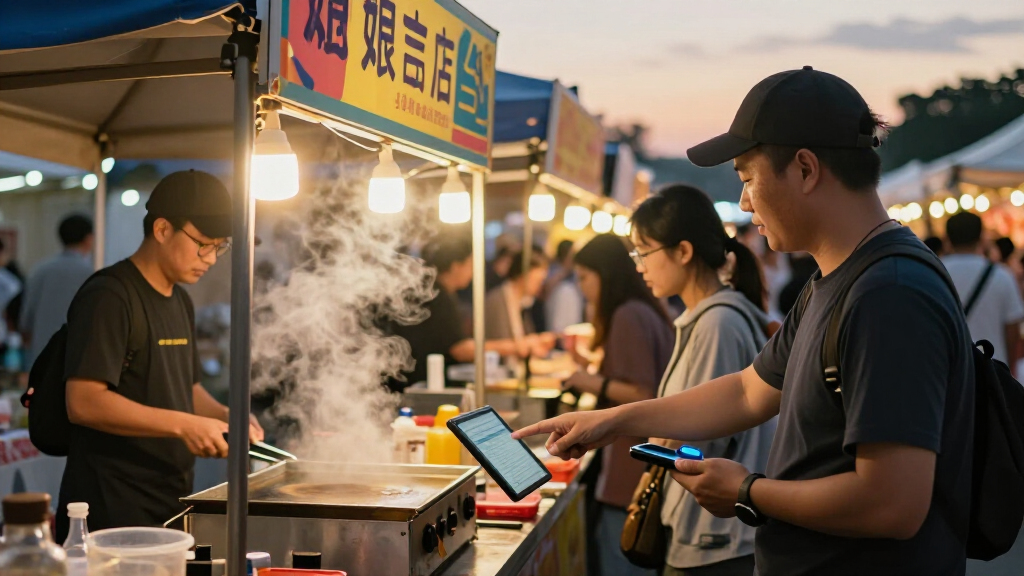
According to the field guide on ThorstenMeyerAI.com, the scene shifts from lantern-like warmth and imperfect neon toward a quieter, nearly empty market. The description mentions steam rising into the night and stalls beginning to disappear. It presents the design principle as making time an active part of the environment rather than treating atmosphere as a fixed visual layer.
ThorstenMeyerAI.com says small changes accumulate until the room appears to be moving from busy to nearly gone. The site describes the guide as following how those effects are built and how their details work together to create a lived-in setting. It also points readers to a live room and a full design teardown, though the description does not specify how to access or interact with the room.
The site presents the project as a design example, not as a reported deployment or evaluation of a commercial product. Its description does not provide technical details about the clock, code, tools or automation used, nor does it report user testing or measured results. Claims about the scene’s effect are descriptions of the intended experience, not independently reported outcomes.
FIELD GUIDE · TIME-BASED ATMOSPHERE
The Closing Scene Moves to the Clock’s Beat
“Nightmarket — Mercado de Medianoche”A digital market scene lets time become part of the setting: warm lights soften, activity fades, and stalls begin to disappear. ThorstenMeyerAI.com presents the work as a field guide and live room—a design demonstration whose technical details and measured effects remain unreported.
01 / The sequence
Time Shapes the Market’s Exit
The guide describes atmosphere changing through accumulated cues, rather than relying only on a status label or notification.
Warmth & neon
Lantern-like light and imperfect neon establish the market’s nighttime character.
Steam rises
Small details suggest a lived-in space as time moves forward.
Stalls fade
Visible activity and market structures begin to recede from the scene.
Nearly empty
The room shifts toward quiet; the description leaves the final moment open.
02 / Design proposition
Small Changes, Larger Progression
For responsive interfaces and generative environments, the project offers a compact idea to examine: timed visual changes can communicate a shift in a space’s state.
Shift the mood
Lantern warmth and imperfect neon are described as visual cues that can evolve as closing approaches.
Reduce what’s present
Fading stalls and diminishing activity help suggest movement from busy to nearly gone.
Give time an endpoint
The closing moment creates a narrative question—what remains after the market disappears?
03 / What is established
A Design Demonstration, So Far
The published description points to a field guide and live digital room. It does not document a commercial launch, broad deployment, or evaluation.
A timed visual experience
The scene changes toward closing through lighting, activity, steam, and stalls that begin to disappear. The guide says it follows how the effects are built and how they work together.
Implementation or outcomes
No clock logic, code, tools, AI model, visitor controls, user research, or measured results are specified. The intended feeling of a lived-in setting is a design aim, not an independently reported outcome.
04 / Open questions
Details Still to Be Confirmed
ThorstenMeyerAI.com points readers to a live room and a full design teardown. The available description leaves practical and technical questions unanswered.
Which clock, code, software, or automation drives the sequence?
How can visitors enter the live room, and when is it available?
Can visitors change the pace or interact with the scene?
What remains after closing, and does the scene reset?
When was it published, and are further releases planned?
How do visitors respond? No testing results are reported.
Evidence note: The broader impact of timed atmosphere remains unmeasured here. The guide presents a design proposition, without comparative study, adoption figures, or technical performance data.
05 / Key questions
What Readers May Want to Know
What is “Nightmarket — Mercado de Medianoche”?
A digital market scene accompanied by a field guide about how its atmosphere changes toward closing.
What changes as the scene winds down?
The description mentions lantern-like warmth, imperfect neon, rising steam, and stalls beginning to disappear.
Is the clock-driven system explained?
The guide says it covers how the effects are built, but the available description gives no clock, code, or tool specifics.
Can visitors try the experience?
The site points to a live room, but does not state access requirements or an operating schedule.
Time Shapes the Market’s Exit
The concept suggests a design direction for digital spaces that change with time. As described in the ThorstenMeyerAI.com field guide, a closing sequence can communicate a shift in a room’s state through its environment—not just through a label or notification. Changes in light, visible activity and the gradual removal of stalls can work together to signal that a space is reaching its end.
For creators of generative environments and responsive interfaces, the project offers a compact idea to examine: small timed changes can create a larger sense of progression. That is a design proposition presented by the guide, not evidence that the approach improves usability or makes an environment more convincing for all users. ThorstenMeyerAI.com provides no comparative study, adoption figures or technical performance data, so the broader impact remains unmeasured.
The closing moment also gives the scene a narrative endpoint. The project description asks what remains when the stalls disappear, but does not provide a specific answer or detail about the ending.
digital scene lighting automation tools
As an affiliate, we earn on qualifying purchases.
As an affiliate, we earn on qualifying purchases.
A Field Guide to a Timed Scene
ThorstenMeyerAI.com introduces “Nightmarket — Mercado de Medianoche” as a field guide paired with a live digital room. Its description focuses not simply on the appearance of a market at night, but on the sequence through which the setting changes. It links visual cues—warm light, neon, steam and fading stalls—to the passage of time.
The site places the approach in the orbit of AI tools and automation, suggesting it may inform generative environments or interfaces that respond with more than a status update. However, the project description does not identify a particular AI model, platform, implementation method or automated system. It also gives no development or release timeline, so based on the published information, the project is best understood as a design demonstration rather than a documented product launch.
interactive environment design software
As an affiliate, we earn on qualifying purchases.
As an affiliate, we earn on qualifying purchases.
Implementation Details Remain Unreported
ThorstenMeyerAI.com’s public description does not explain how the clock-driven changes are implemented, whether the scene runs automatically in real time, or whether visitors can control its pace. It does not name specific software, code libraries, models or data inputs. The page also provides no publication date, access requirements, operating schedule or technical documentation.
The description does not say what happens at the end of the sequence, including what the market leaves behind or whether the experience resets for another cycle. It presents the scene as a way to create a sense of a lived-in market, but offers no user research or measured evidence showing how visitors respond. Those points should not be treated as confirmed outcomes.
clock-driven lighting control system
As an affiliate, we earn on qualifying purchases.
As an affiliate, we earn on qualifying purchases.
The Live Room and Teardown
ThorstenMeyerAI.com directs readers to visit the live room and read the full design teardown. The site presents these as ways to explore the project’s timed sequence and the details behind its visual effects. Its description does not give a schedule for further updates or announce additional releases.
More information would be needed to establish how the scene is built, what controls are available to visitors and whether the closing sequence can be reused in other environments. Until those details are published, the confirmed development, as reported by ThorstenMeyerAI.com, is the presentation of a field guide and live room centered on a digital market that winds down with time.
Source: ThorstenMeyerAI.com
ambient lighting for digital environments
As an affiliate, we earn on qualifying purchases.
As an affiliate, we earn on qualifying purchases.
Key Questions
What is “Nightmarket — Mercado de Medianoche”?
ThorstenMeyerAI.com describes it as a digital market scene accompanied by a field guide about how its atmosphere changes toward closing.
What changes as the scene winds down?
The project description mentions lantern-like warmth, imperfect neon, rising steam and stalls beginning to disappear, creating a shift from busy to nearly empty.
Is the clock-driven system explained?
ThorstenMeyerAI.com says the guide covers how the effects are built, but its available project description does not provide specific technical details about the clock, code or tools.
Can visitors try the experience?
ThorstenMeyerAI.com points readers to a live room, but its description does not state access requirements or an operating schedule.
What remains unknown about the project?
The project description does not specify its implementation, visitor controls, ending behavior or user response. It reports no testing results or measured outcomes.
Source: ThorstenMeyerAI.com
Halloween Picks
halloween
As an affiliate, we earn on qualifying purchases.