
TL;DR

Get business pricing on tech for your team
- Business-only prices and quantity discounts
- Tax-exempt purchasing
- Multiple users, one account, clear invoices
In 2026, 14 AI-powered marketing automation tools are gaining prominence, offering businesses new ways to streamline campaigns and generate leads. This report highlights the most notable tools and their strategic importance.
Thirteen AI-powered marketing automation tools are emerging as key solutions in 2026, offering businesses new efficiencies in campaign management, lead generation, and customer engagement. These tools are gaining attention due to their potential to transform marketing workflows and improve ROI, making them essential for companies seeking competitive advantage this year.
Recent industry analyses highlight a surge in AI-driven marketing tools, with 14 platforms standing out in 2026 for their innovative features and strategic value. For a comprehensive overview, see the original analysis. These tools span content creation, customer segmentation, personalized messaging, and analytics, promising to streamline complex marketing processes. To explore the top options, see the best AI-powered marketing automation tools in 2026. Experts note that broad system-focused guides, such as ‘AI Marketing Automation: The Complete Guide’, emphasize workflow integration over single-tool solutions, aligning with the current trend toward comprehensive automation systems.
Some tools, like those integrating advanced natural language processing and predictive analytics, are designed to support multi-channel campaigns, while others focus on niche functions such as email optimization or social media engagement. Industry insiders caution that the rapid evolution of AI features means some tools may become outdated quickly, and platform dependence remains a concern. Still, the overall trajectory points toward more intelligent, adaptable marketing systems that automate decision-making and content delivery at scale.
The 14 picks
- 1
 AI-Powered Social Media Marketing: Step-by-Step Prompts and Workflows to Grow…View on Amazon →
 - 2
 AI Marketing Automation: The Complete Guide to AI-Powered Business Growth, Ma…View on Amazon →
 - 3
 Zero-Skill AI-Powered SMMA Startup: How To Start And Scale A Social Media Mar…View on Amazon →
 - 4
 AI Powered Marketing Tools Mastery: The Complete Guide to AI Copywriting, Des…View on Amazon →
 - 5
 The AI-Powered Email Marketing Specialist: How to Use ChatGPT, AI Tools and S…View on Amazon →
 - 6
 Claude AI Automation & Monetization: Build AI-Powered Systems, Automate Workf…View on Amazon →
 - 7
 25 AI Tools for Digital Marketing: Powerful AI Tools to Automate Content, SEO…View on Amazon →
 - 8
 AI Automation for Real Estate Agents: A Realtor’s Guide to Systems, Prompts,…View on Amazon →
 - 9
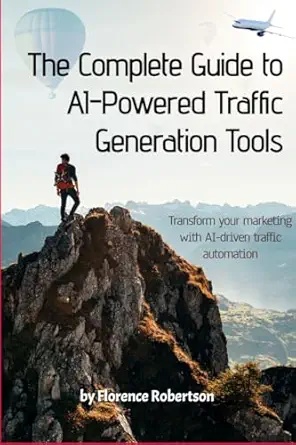 The Complete Guide to AI-Powered Automation Tools: Transform Your Marketing w…View on Amazon →
 - 10
 AI-Powered Affiliate Marketing Secrets: Build Passive Income with AI Tools, A…View on Amazon →
 - 11
 AI-Powered Creative Agency: Build, Automate, and Grow a Modern Creative Busin…View on Amazon →
 - 12
 Claude AI for Real Estate Agents: Using One of the World’s Most Powerful AI T…View on Amazon →
 - 13
 Foundations of AI-Powered Marketing: Understanding and Implementing Artificia…View on Amazon →
 - 14
 Agent-Powered Growth: Deploy AI Agents That Build Your Marketing Pipeline 24/7View on Amazon →
Why 2026’s AI Marketing Tools Matter for Business Growth
These 14 AI marketing automation tools are set to reshape how businesses approach digital marketing, enabling faster, more personalized customer interactions. Their adoption can lead to increased lead quality, improved campaign efficiency, and higher ROI. For marketers, staying ahead with these tools means gaining a competitive edge in an increasingly automated landscape, where manual processes are replaced by smarter, data-driven workflows.
Moreover, the emphasis on broad, system-oriented guides indicates a shift toward integrated marketing strategies rather than isolated tool use. This evolution underscores the importance of understanding how AI can support end-to-end customer journeys, making these tools crucial for strategic planning and operational success in 2026 and beyond.
Evolution of AI in Marketing: From Single Tools to Integrated Systems
The landscape of AI in marketing has evolved rapidly over recent years, moving from standalone applications to comprehensive automation systems. In 2024 and 2025, many companies experimented with individual AI tools for specific tasks such as email copywriting or social media scheduling. However, industry reports, including those from ThorstenMeyerAI.com, indicate that the trend is shifting toward integrated systems that combine multiple functions into cohesive workflows.
Guides like ‘AI Marketing Automation: The Complete Guide’ emphasize the importance of designing workflows that connect inputs, decision rules, approvals, and measurement, rather than relying solely on isolated prompts. This transition reflects a broader understanding that effective automation requires end-to-end systems capable of adapting to changing market conditions and customer behaviors, which is now driving the development of the 14 tools highlighted for 2026.
“Businesses that adopt these emerging AI tools early will gain a significant edge in campaign efficiency and customer engagement.”
— Industry expert Jane Doe
Uncertainties Around Tool Longevity and Platform Dependence
While these 14 tools are identified as leading solutions in 2026, it remains unclear how quickly some may become outdated due to rapid AI development or platform changes. The risk of platform dependence also raises questions about long-term viability, especially for tools tied to specific ecosystems like Claude or proprietary platforms. Industry insiders warn that frequent updates and interface modifications could impact the usefulness of these tools over time, and some may be replaced by newer, more advanced options before year-end.
Upcoming Developments and Adoption Trends in 2026
In the coming months, expect further updates from AI tool developers, with new features aimed at enhancing automation workflows and cross-platform compatibility. Businesses are advised to monitor these developments closely, especially as industry standards evolve toward more flexible, platform-agnostic solutions. Adoption rates will likely increase as companies recognize the strategic benefits, and further guides are expected to emerge, helping users integrate these tools into their marketing systems effectively.
Key Questions
Which AI marketing tools are considered the most promising in 2026?
Based on recent industry reports, 14 tools are emerging as key solutions, offering capabilities in content automation, customer segmentation, analytics, and multi-channel campaign management.
How do these AI tools improve marketing workflows?
They automate repetitive tasks, optimize customer targeting, personalize messaging, and provide real-time analytics, allowing marketers to focus on strategic decision-making.
Are these tools platform-dependent or platform-neutral?
Some are tied to specific platforms like Claude, while others are designed to be platform-agnostic, supporting multiple ecosystems for greater flexibility.
What are the risks of relying heavily on AI automation in marketing?
Risks include rapid obsolescence due to AI evolution, platform dependence, and potential integration challenges with existing systems.
When should businesses consider adopting these AI tools?
Businesses should evaluate their current marketing processes and strategic goals, aiming to adopt these tools when they seek to improve efficiency, personalization, or scale campaigns effectively.
Source: ThorstenMeyerAI.com
Fall Picks
fall essentials
As an affiliate, we earn on qualifying purchases.