
Manufacturing automation and Industry 4.0 turn factories into smart, interconnected systems that boost efficiency and flexibility. You’ll see physical machines integrated with digital control systems, enabling real-time monitoring, data collection, and autonomous adjustments. This interconnected setup reduces downtime, predicts maintenance needs, and improves product quality. By adopting advanced technologies like sensors, cloud computing, and digital twins, you’ll gain control and agility. Continuing further can help you understand how these innovations drive smarter, more resilient manufacturing operations.
Key Takeaways
- Industry 4.0 leverages cyber physical systems (CPS) to connect machines and digital systems for smarter manufacturing.
- Automation in factories enhances real-time monitoring, predictive maintenance, and process optimization.
- Smart factories utilize sensors and data analytics to improve efficiency, reduce waste, and ensure product quality.
- Advanced communication protocols and cloud computing facilitate seamless data flow and rapid decision-making.
- The integration of digital twins and autonomous systems positions manufacturing toward greater flexibility and resilience.
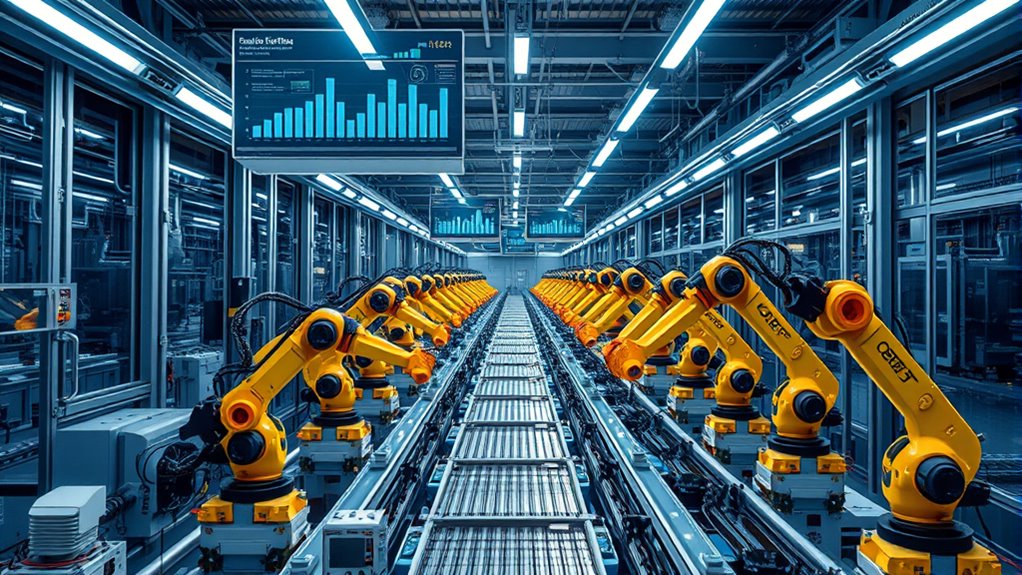
Manufacturing automation has transformed factories into highly efficient, interconnected systems, paving the way for Industry 4.0. At the heart of this revolution are cyber physical systems (CPS), which integrate physical machines with digital control and communication capabilities. These systems allow you to monitor, analyze, and adjust manufacturing processes in real-time, leading to smarter decision-making and reduced downtime. When you embrace cyber physical systems, your factory becomes a smart factory—an environment where machines communicate seamlessly, coordinate production tasks, and adapt to changing conditions without human intervention. This interconnectedness streamlines operations, enhances precision, and boosts productivity.
Cyber physical systems enable real-time monitoring, smarter decision-making, and seamless factory automation for Industry 4.0 success.
In a smart factory, automation isn’t just about replacing manual labor; it’s about creating a dynamic ecosystem where every component works in harmony. Sensors embedded in machinery collect data continuously, feeding it into centralized systems that analyze performance and predict maintenance needs. This proactive approach prevents breakdowns, minimizes delays, and ensures consistent product quality. As you implement cyber physical systems, you gain greater visibility into your manufacturing process, enabling you to optimize workflows, reduce waste, and improve overall efficiency. The integration of digital technologies into physical assets transforms traditional factories into intelligent environments capable of self-regulation and self-improvement.
You’ll find that smart factories leverage advanced communication protocols, cloud computing, and analytics to create a unified network where data flows freely across all levels of production. This connectivity allows you to quickly identify bottlenecks or defects and respond swiftly, often before problems impact output. With cyber physical systems, your factory can adapt on the fly, adjusting parameters automatically to meet demand or quality standards. This agility is key in today’s competitive landscape, where responsiveness and customization matter more than ever. The use of digital twins—virtual replicas of physical assets—further enhances your ability to simulate, test, and optimize processes without risking interruptions or incurring costs.
Moreover, understanding the weight of wind turbine blades can guide manufacturing choices to improve transportation and installation logistics for large components. Ultimately, cyber physical systems and smart factories empower you to move beyond traditional manufacturing paradigms. They enable a more flexible, resilient, and sustainable approach to production. As you adopt these technologies, you’re not just increasing efficiency—you’re transforming your factory into a future-ready facility capable of meeting the evolving demands of Industry 4.0. This interconnected ecosystem offers you the control, insight, and adaptability necessary to thrive in a rapidly changing industrial landscape, positioning your operation at the forefront of manufacturing innovation.
Frequently Asked Questions
How Does Industry 4.0 Impact Global Supply Chains?
Industry 4.0 transforms your global supply chains by boosting resilience and adapting to changing trade dynamics. You can leverage advanced data analytics, IoT, and automation to identify disruptions quickly, optimize logistics, and reduce delays. This technology makes your supply chain more flexible and responsive, allowing you to navigate fluctuations in global trade more effectively. As a result, you stay competitive and better prepared for unpredictable market shifts.
What Are the Main Cybersecurity Challenges in Manufacturing Automation?
You face significant cybersecurity challenges in manufacturing automation, where cyber threats loom like silent shadows. Data breaches can disrupt your operations and compromise sensitive information. To protect your systems, you need robust security measures, regular updates, and vigilant monitoring. Staying ahead of evolving cyber threats is essential, so you can maintain smooth production and safeguard your valuable data from malicious attacks.
How Do Small Manufacturers Adopt Industry 4.0 Technologies?
As a small business, you can adopt Industry 4.0 technologies by starting with lean manufacturing principles to identify key areas for digital integration. Invest gradually in automation tools, cloud-based systems, and IoT devices that fit your budget. Partner with technology providers, prioritize staff training, and focus on scalable solutions. This approach helps you stay competitive, improve efficiency, and smoothly shift into Industry 4.0 without overwhelming your resources.
What Is the Return on Investment for Automation in Manufacturing?
You’ll see a strong return on investment from automation in manufacturing through cost savings and productivity gains. Automation reduces labor costs, minimizes errors, and speeds up production processes, leading to quicker delivery times. Over time, these improvements lower operational expenses and boost output, making automation a smart financial decision. The initial investment pays off as your facility becomes more efficient, competitive, and capable of meeting increasing customer demands.
How Are Workforce Skills Evolving With Industry 4.0 Adoption?
Think of your workforce skills evolving like a river carving new paths. As Industry 4.0 rolls in, you need to boost digital literacy and technical proficiency among your employees. They’re learning to operate smart machines, analyze data, and adapt to automated processes. This shift demands continuous training, turning your team into tech-savvy professionals, ready to navigate the digital landscape and harness new innovations for greater efficiency and growth.
Conclusion
As you embrace manufacturing automation and Industry 4.0, you’ll find yourself blending tradition with innovation. While machines increase efficiency, human ingenuity remains essential. Just as technology streamlines processes, creativity and adaptability fuel progress. In this new era, progress isn’t about replacing you but empowering you—combining the precision of automation with your unique insights. Together, you’ll shape a future where tradition meets innovation, creating a dynamic balance that drives industry forward.