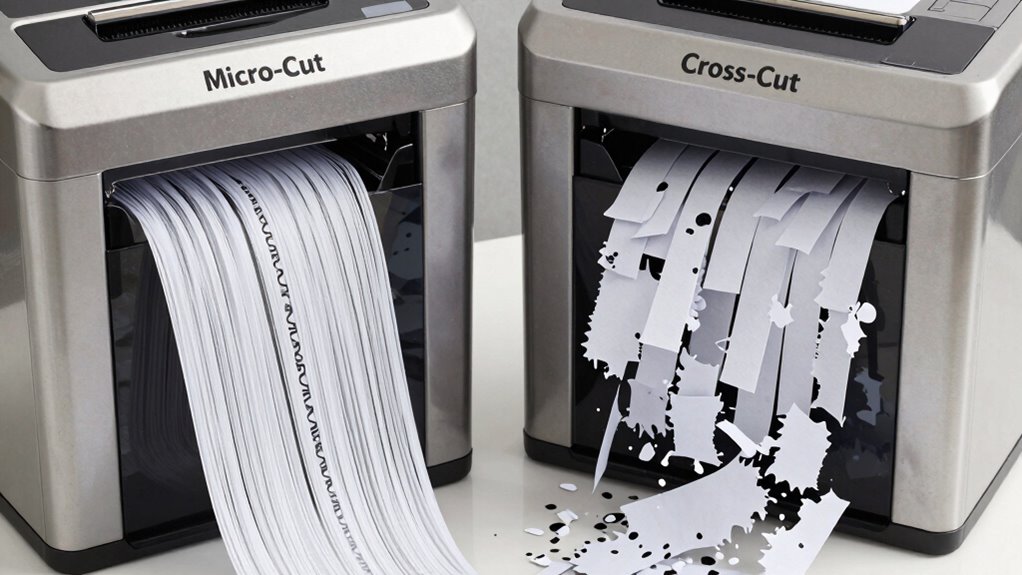

If you need high security, a micro-cut shredder is your best choice, as it cuts paper into tiny particles making reconstruction nearly impossible. Cross-cut shredders offer a high level of confidentiality with faster processing, ideal for busy offices handling large volumes. If security is your top priority, micro-cut is better, but if you need quick, efficient shredding for a high workload, cross-cut suits your needs. Keep exploring to find out which model elevates your office’s security and workflow.

Get business pricing on tech for your team
- Business-only prices and quantity discounts
- Tax-exempt purchasing
- Multiple users, one account, clear invoices
Key Takeaways
- Micro-cut shredders provide the highest security by producing tiny particles, ideal for highly sensitive documents.
- Cross-cut shredders offer a strong security level with rectangular pieces, suitable for most office confidentiality needs.
- Micro-cut models are slower and more expensive, making them better for sensitive data rather than high-volume shredding.
- Cross-cut shredders balance security and speed, fitting well in busy offices with moderate security requirements.
- Choose micro-cut for maximum security; opt for cross-cut if you need faster processing with good confidentiality.
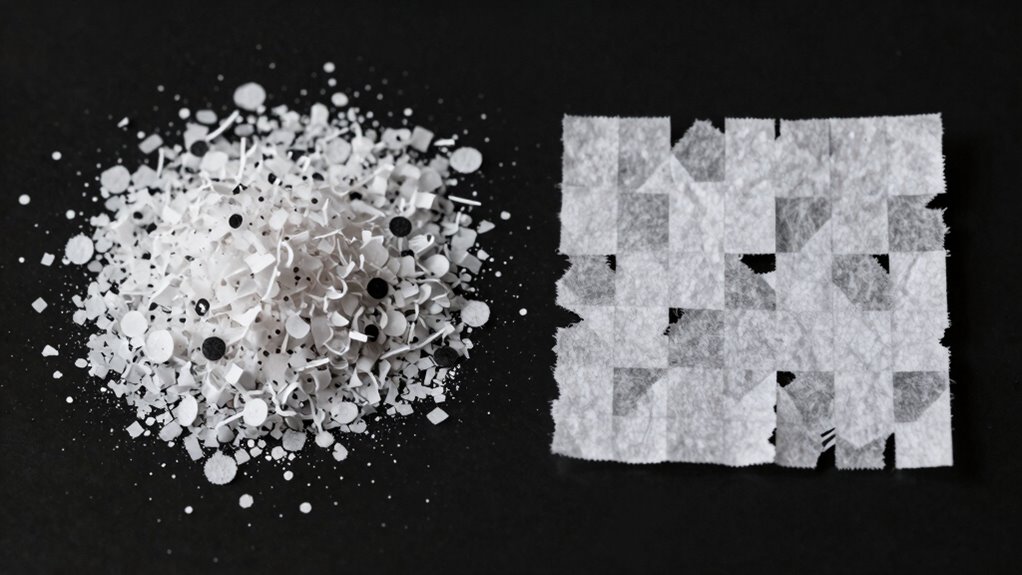
When choosing a paper shredder, understanding the differences between micro-cut and cross-cut models is essential to finding the right level of security for your needs. The decision often hinges on how much security you require and how efficiently you want to process your documents. Micro-cut shredders cut paper into tiny particles, typically measuring around 5mm or smaller, making it nearly impossible for anyone to reconstruct shredded documents. Cross-cut shredders, on the other hand, cut paper into smaller rectangular pieces, usually around 4mm by 50mm, offering a high level of confidentiality but not quite as fine as micro-cut models.
One of the key factors to *weigh* is the paper size you deal with daily. If you regularly handle large stacks of documents, you’ll want a shredder with a higher shredding capacity and faster shredding speed. Micro-cut shredders tend to process paper a bit more slowly because they produce finer particles, which requires more time per sheet. Cross-cut models often have a higher shredding speed, making them suitable for offices where quick processing is necessary. When evaluating shredding speed, think about your workload—if you need to shred hundreds of pages each day, a cross-cut shredder might keep up better, whereas micro-cut shredders are ideal for sensitive documents that need extra security, even if it takes a little longer. Additionally, understanding the security level provided by each type can help you make a more informed decision. Choosing the right shredder also involves considering the document types you handle regularly, as some models are better suited for different materials and sizes.
Choose a shredder that matches your daily volume; micro-cut is slower but more secure, while cross-cut offers faster processing.
Durability and ease of use also come into play. Micro-cut shredders generally require more maintenance because their finer particles can clog the machine if not handled properly. Cross-cut shredders tend to be more robust and easier to maintain, which is beneficial in busy office environments. You should also consider the size of the bin, especially if you’re shredding large volumes. A larger bin reduces the frequency of emptying, keeping your workflow smooth. To further optimize your workflow, some models feature automatic shut-off when the bin is full, preventing jams and messes. Moreover, selecting a shredder with noise reduction features can improve the overall office environment during operation.
Ultimately, your choice depends on balancing security needs with efficiency. If you handle sensitive financial or legal documents, investing in a micro-cut shredder provides peace of mind by offering the highest security level. However, if your priority is quick, high-volume shredding with adequate security, a cross-cut model might be more suitable. Keep in mind that while micro-cut shredders offer superior security, they tend to be more expensive and slower. Conversely, cross-cut shredders strike a good compromise between security and speed, making them a popular choice for many offices. By understanding these differences, you can select a shredder that aligns with your security requirements and daily workflow, ensuring your confidential information stays protected without sacrificing efficiency.
As an affiliate, we earn on qualifying purchases.
Frequently Asked Questions
How Long Does a Micro-Cut Shredder Typically Last With Regular Use?
A micro-cut shredder typically lasts around 3 to 5 years with regular use, depending on factors like shredder lifespan and maintenance requirements. To maximize its longevity, you should regularly oil the blades and avoid overloading it. Proper maintenance helps prevent jams and motor wear, ensuring your shredder remains efficient. Keep an eye on its performance and address any issues early to extend its useful life.
Are Cross-Cut Shredders More Energy-Efficient Than Micro-Cut Models?
Cross-cut shredders tend to be more energy-efficient than micro-cut models because they usually consume less energy during operation. Their shredder efficiency allows them to process paper quickly while using less power, making them a good choice if you’re conscious about energy consumption. However, micro-cut shredders might use slightly more energy due to their finer shredding process. Consider your office’s shredding volume and security needs to choose the best option.
Can Both Shredder Types Handle Credit Cards and CDS?
Both micro-cut and cross-cut shredders can handle credit cards and CDs, but check your shredder’s specifications first. Micro-cut models often excel at shredding CDs and credit cards due to their finer particles, offering better security. Cross-cut shredders usually manage credit cards well, but some may struggle with CDs. Always verify credit card compatibility and CD shredding capabilities before purchasing to guarantee your office’s security needs are met efficiently.
What Is the Ideal Shredder Capacity for a Small Office?
For a small office, an ideal shredder capacity is about 6 to 8 pages per pass. You’ll want one with moderate shredder noise levels to avoid disturbing your workspace. Also, choose a model with a low paper jam frequency to keep operations smooth and efficient. This balance guarantees you can handle daily shredding tasks comfortably without constant interruptions or frustration.
Do Micro-Cut Shredders Require More Maintenance Than Cross-Cut Models?
Micro-cut shredders generally require more maintenance frequency than cross-cut models because their blades tend to dull faster due to finer cuts. You’ll need to regularly clean and oil the blades to maintain peak performance and guarantee blade durability. This extra upkeep helps prevent jams and prolongs the shredder’s lifespan, but it does mean more attention compared to the typically lower maintenance needs of cross-cut shredders.
As an affiliate, we earn on qualifying purchases.
Conclusion
Choosing between micro-cut and cross-cut shredders isn’t just about security—it’s about peace of mind. While some say all shredders offer the same protection, research shows micro-cut models provide superior data security by destroying documents into tiny particles. So, if you handle sensitive info daily, investing in a micro-cut shredder could be the smartest move. Remember, the true test isn’t just shredding documents; it’s ensuring your confidential info stays safe.
As an affiliate, we earn on qualifying purchases.
As an affiliate, we earn on qualifying purchases.
Fall Picks
fall essentials
As an affiliate, we earn on qualifying purchases.