
Privacy by Design isn’t just fluffy talk; it’s a practical, step-by-step approach to embedding privacy into every part of your data processes. You start by mapping your data flows and spotting risks, then build privacy principles into your system’s design. Next, you implement safeguards like encryption and clear policies, test everything before launch, and continuously improve. If you want practical strategies to protect user data and build trust, exploring this framework will guide you through the details.
Key Takeaways
- The 7-step framework integrates privacy principles into system design, data flow mapping, and ongoing management.
- Visualizing data flows helps identify vulnerabilities and prioritize high-risk areas for protection.
- Embedding privacy from the start ensures user control, transparency, and compliance with regulations.
- Implementing strong data encryption, access controls, and privacy policies safeguards personal data.
- Continuous monitoring, audits, and staff training maintain and improve privacy practices over time.
What Is Privacy by Design and Why It Matters
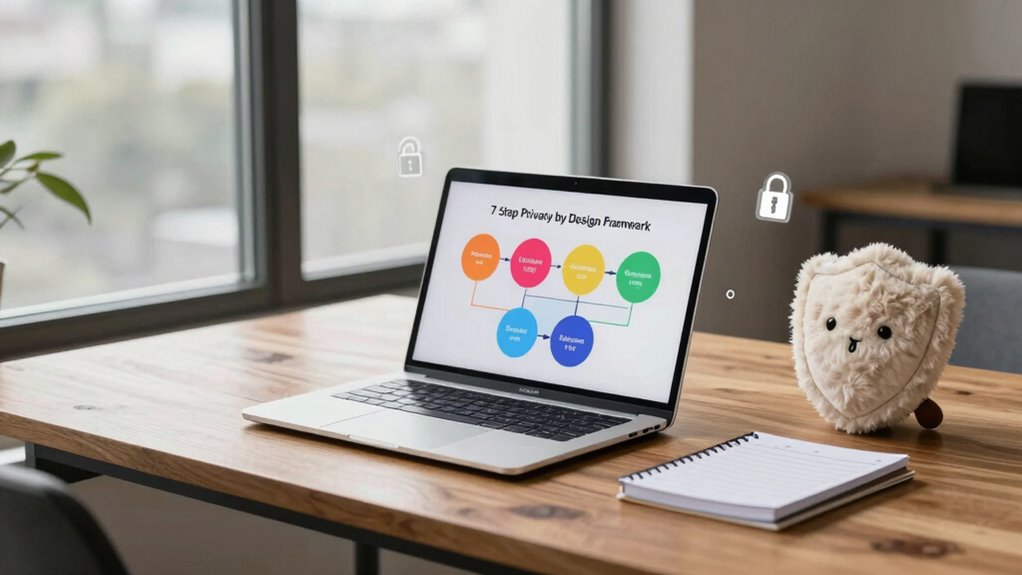
Have you ever wondered how organizations protect your personal information from the moment they collect it? Privacy by Design is a proactive approach that embeds privacy into every stage of data handling. It’s about creating a privacy culture within organizations, where safeguarding personal data isn’t an afterthought but a core value. This approach emphasizes ethical considerations, ensuring that privacy isn’t compromised for convenience or profit. By integrating privacy principles into systems, processes, and policies from the start, organizations can reduce risks and build trust with users. Privacy by Design isn’t just a legal requirement; it’s a commitment to respecting individuals’ rights. When privacy becomes part of your organization’s DNA, protecting personal information becomes second nature. Incorporating security measures like data encryption and access controls further strengthens this framework and helps prevent data breaches. A comprehensive privacy framework ensures all aspects of data protection are systematically addressed throughout organizational operations. Additionally, adopting privacy-enhancing technologies can further reinforce this proactive privacy stance.
How to Map Data Flows and Find Privacy Risks

To protect privacy effectively, you need to clearly visualize how data moves through your system. This helps you spot potential privacy risks before they become problems. By mapping data flows, you can identify areas where sensitive information might be exposed or mishandled. Understanding data flow diagrams allows organizations to better anticipate and mitigate privacy vulnerabilities. Additionally, recognizing how energetic alignment influences the overall system can provide deeper insights into potential points of leakage or misalignment. Incorporating water sources and their pathways into your data map can highlight hidden vulnerabilities or points of contamination within your data ecosystem. Considering privacy principles during this process ensures that your mapping aligns with foundational privacy laws and best practices. Using cookie categories as a reference can help you understand the different types of data processing involved.
Visualize Data Flows
Wondering how to identify potential privacy risks in your data processes? Visualizing data flows through data visualization tools helps you see exactly how information moves within your system. Using flow diagrams, you can map out data collection, storage, processing, and sharing points clearly. This visual approach makes complex processes easier to understand and spot vulnerabilities. To create effective flow diagrams, consider these steps:
- Identify all data sources and destinations
- Map data transit points across systems and departments
- Highlight where sensitive data is involved
- Track data access and transfer paths
Identify Privacy Risks
Mapping your data flows is essential for uncovering potential privacy risks. Once you understand how data moves through your system, you can identify where privacy breaches might occur. Conduct a thorough risk evaluation by pinpointing sensitive data and evaluating who has access at each stage. Look for vulnerabilities such as unsecured storage, improper data sharing, or unencrypted transmission. Recognizing these weak points helps you prioritize risks and implement safeguards. Remember, not all risks are equal—focus on those with the highest impact or likelihood. By systematically mapping data flows and appraising risks, you create a clear view of where privacy breaches could happen. This proactive approach forms the foundation for designing privacy-respecting processes and controls. Implementing data classification can further enhance your ability to identify and protect sensitive information.
Building Privacy Principles Into Your System Design

To build privacy into your system design, you need to embed privacy principles from the start, making them core to your architecture. Clearly defining data boundaries helps prevent over-collection and misuse, while prioritizing user control guarantees individuals can manage their information. By focusing on these points, you create a privacy-conscious system that respects user rights and reduces risks.
Embed Privacy Into Design
Embedding privacy into your system design guarantees that privacy principles are integral from the outset, rather than afterthoughts. This approach helps foster a strong privacy culture and addresses ethical considerations early on. To effectively embed privacy, you should:
- Integrate privacy features into core architecture, not add them later
- Prioritize user consent and transparency
- Conduct regular privacy impact assessments
- Promote awareness and accountability across your team
- Consider the use of necessary cookies to ensure basic site functions are maintained without compromising user privacy
Define Clear Data Boundaries
How can you guarantee that your system handles data responsibly? The key is defining clear data boundaries through boundary definition. You need to identify what data is essential, where it’s stored, and who has access. Set strict limits on data collection, ensuring you only gather what’s necessary for your purpose. Establish protocols that prevent data from crossing these boundaries unintentionally, reducing risks of misuse or breaches. Clear data boundaries help you create a structured approach to privacy, making it easier to manage data lifecycle stages. By defining these boundaries early, you embed privacy into your system’s architecture, promoting responsible handling and trust. Remember, precise boundary definition isn’t just about compliance—it’s about building a resilient, privacy-aware system from the ground up.
Prioritize User Control
Have you considered how giving users control over their data can strengthen your system’s privacy? Prioritizing user control empowers individuals to manage their privacy preferences directly. This approach enhances user trust and reduces privacy risks. To implement this, you should:
- Provide clear options for data access, correction, and deletion
- Enable easy privacy setting adjustments anytime
- Limit data collection to only what’s necessary
- Inform users about how their data is used and shared
Focusing on user empowerment ensures users feel confident in managing their information, fostering transparency. It’s not just about compliance; it’s about respecting their autonomy. By building these controls into your system, you create a privacy-first environment that values their choices and minimizes potential privacy breaches. Implementing user consent management practices helps maintain user trust and aligns with privacy by design principles. Additionally, integrating privacy settings into your user interface allows for seamless and ongoing control. Ultimately, user control becomes a cornerstone of your privacy by design strategy.
Implementing Data Protection Measures and Safeguards

What steps can you take to effectively protect data and guarantee privacy? First, implement data encryption to secure information both at rest and in transit, making it unreadable to unauthorized users. Pair this with robust access controls to limit who can view or modify sensitive data, ensuring only authorized personnel have appropriate permissions. Regularly update encryption protocols and review access rights to address new threats or organizational changes. Use multi-factor authentication to strengthen access controls further. Additionally, monitor data activity logs to detect suspicious behavior early. By applying these measures diligently, you create strong safeguards that reduce risks of data breaches and help maintain user trust. Combining data encryption with strict access controls forms a cornerstone of effective privacy protection.
Creating Clear Privacy Policies and User Controls

Creating clear privacy policies and user controls is essential for building trust and ensuring compliance with regulations. Your privacy policies should be transparent, easy to understand, and accessible, clearly outlining how you collect, use, and protect data. User controls empower individuals to manage their privacy preferences effectively. To achieve this, consider these steps:
- Use plain language in your privacy policies to avoid confusion
- Provide straightforward options for users to control data sharing
- Regularly update policies to reflect changes in data practices
- Offer intuitive tools for users to review or revoke permissions
- Ensure your privacy practices are transparent and trustworthy, demonstrating your commitment to user privacy. Incorporating privacy by design principles can further enhance trust and security in your data handling processes.
- Emphasizing ethical considerations in your privacy strategies can help maintain integrity and credibility with your users.
Testing Your Privacy Measures Before Launch

How can you guarantee your privacy measures are effective before launching your product? The key is thorough privacy testing and vulnerability assessments. Conduct simulated attacks to identify weaknesses in your privacy controls. Use testing tools to verify data encryption, access restrictions, and user consent processes. Vulnerability assessments help uncover potential data leaks or loopholes before real users encounter them. Here’s a simple way to visualize the process:
| Privacy Testing Methods | Focus Areas |
|---|---|
| Penetration Testing | Data security vulnerabilities |
| Data Flow Analysis | Data handling and storage |
| User Access Audits | Authorization and controls |
Performing these steps ensures your privacy measures stand strong against threats, safeguarding user data effectively before launch.
Maintaining and Improving Privacy Practices Over Time

To effectively maintain and improve your privacy practices over time, you need to establish a continuous process of monitoring, evaluation, and adjustment. Regular privacy audits help identify vulnerabilities and guarantee compliance, while ongoing training keeps your team updated on best practices. This proactive approach helps prevent data breaches and fosters a privacy-conscious culture. Consider implementing the following:
- Schedule regular privacy audits to assess current practices
- Update policies based on audit findings and regulatory changes
- Provide ongoing training to keep staff informed of new threats and protocols
- Use feedback from audits and staff to refine your privacy measures
- Incorporate How to Status to stay aligned with evolving privacy standards and practices
- Incorporate ventilation considerations to ensure physical privacy and security measures are maintained effectively
- Conduct privacy technology assessments periodically to adapt to emerging tools and threats.
Frequently Asked Questions
How Does Privacy by Design Differ From Traditional Privacy Approaches?
Privacy by Design differs from traditional privacy approaches because it integrates data minimization and user consent into your processes from the start. Instead of adding privacy as an afterthought, you proactively embed protections into your system architecture. This way, you reduce data collection and ensure users are informed and in control, creating a more secure and trustworthy environment. It’s a shift from reactive to proactive privacy management.
What Are Common Challenges in Implementing Privacy by Design?
Implementing privacy by design can feel like climbing Mount Everest, but the main challenges are manageable. You’ll often face data breaches if security isn’t tight and staff training gaps that leave vulnerabilities exposed. Overcoming these hurdles requires ongoing education and robust security measures. By staying vigilant, you can embed privacy seamlessly into your processes, transforming it from a formidable task into a powerful shield for your organization’s data.
Can Smaller Organizations Effectively Adopt Privacy by Design Principles?
Yes, smaller organizations can effectively adopt privacy by design principles. You just need to prioritize data privacy from the start and stay flexible enough to adapt as your organization grows. Focusing on organizational agility helps you implement these principles without overwhelming resources. By integrating privacy into your daily operations and decision-making, you guarantee stronger data privacy protections while maintaining the ability to respond quickly to changing needs.
How Can Privacy by Design Influence User Trust and Business Reputation?
Building belief boosts your brand reputation and bolsters user trust. By prioritizing Privacy by Design, you demonstrate dedication, diligence, and dependability. This transparency reassures users that their data is protected, fostering loyalty and love for your brand. When you proactively incorporate privacy measures from the outset, you create credibility and connection, ultimately cultivating a community of confident customers who trust you with their sensitive information and champion your reputation.
What Legal Frameworks Support Privacy by Design Implementation?
You’re supported by legal frameworks like the GDPR in the EU and CCPA in California, which mandate privacy by design principles. These regulations emphasize regulatory compliance and require businesses to embed privacy measures from the start. By aligning your practices with legal mandates, you reduce risks of penalties and build trust with users. Staying proactive with these frameworks demonstrates your commitment to protecting personal data and maintaining a responsible reputation.
Conclusion
Think of privacy by design as planting a sturdy tree. With each step—mapping data flows, building safeguards, and testing—you nurture its roots. Over time, it grows strong and resilient, offering shelter and trust to your users. By continuously tending to its branches, you guarantee your privacy practices flourish. Remember, a well-tended tree provides shade for years to come—just like a solid privacy foundation protects your users’ trust far into the future.