
To guarantee data security in customer chats, it’s vital to implement encryption protocols like end-to-end encryption, which keeps conversations private from unauthorized access. You should also use strong user authentication methods, such as multi-factor or biometric verification, to prevent breaches. Regular updates to your security systems and best practices help stay ahead of evolving threats. By adopting these measures, you protect sensitive information and build customer trust—discover more ways to enhance your chat security further.

Get business pricing on tech for your team
- Business-only prices and quantity discounts
- Tax-exempt purchasing
- Multiple users, one account, clear invoices
Key Takeaways
- Implement end-to-end encryption to ensure chat content remains confidential and inaccessible to unauthorized parties.
- Use multi-factor authentication to verify user identities and prevent unauthorized access to customer chat systems.
- Regularly update chat platform security protocols to address emerging cyber threats and vulnerabilities.
- Enforce strong, secure login credentials and biometric verification for enhanced user authentication.
- Follow best practices for data privacy and compliance to maintain customer trust and protect sensitive information.
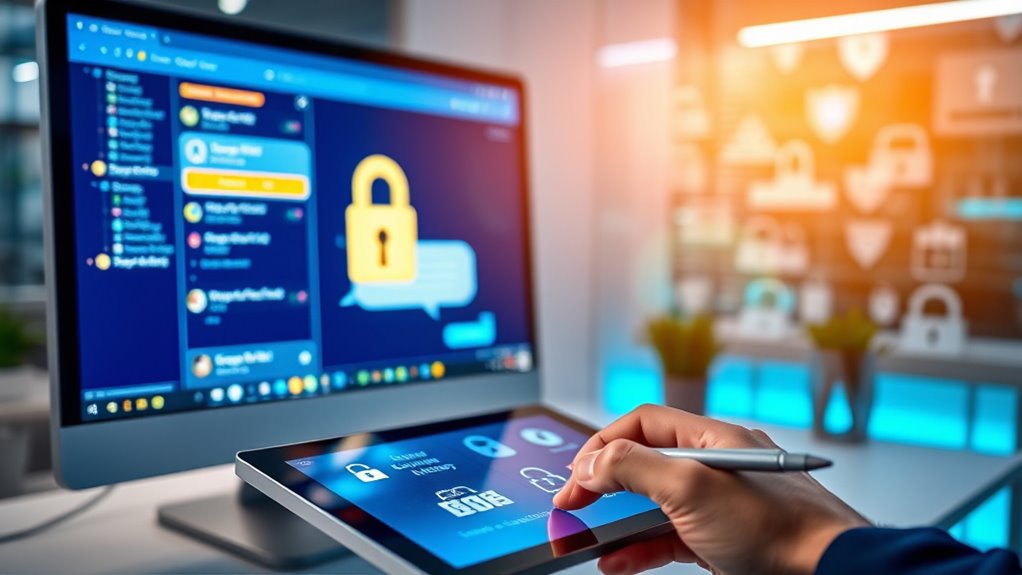
In today’s digital-first world, securing customer chat data isn’t just a best practice—it’s a necessity. As businesses increasingly rely on online communication channels, protecting sensitive information becomes vital to maintain trust and comply with data privacy regulations. One of the most effective ways to safeguard chat data is by implementing robust encryption protocols. These protocols ensure that any information exchanged between you and your customers remains unreadable to unauthorized parties. When encryption is in place, even if someone intercepts the data during transmission, they can’t decipher its contents without the decryption key. This layer of security creates a formidable barrier against cyber threats, making it substantially harder for hackers to access confidential conversations.
Alongside encryption, user authentication plays a pivotal role in maintaining chat security. You need to verify that only authorized individuals can access the chat system, whether they’re customers or support agents. Strong user authentication methods—such as multi-factor authentication, biometric verification, or secure login credentials—add an extra layer of protection. When you enforce rigorous authentication protocols, you reduce the risk of unauthorized access that could lead to data breaches or information leaks. This process not only helps prevent malicious actors from hijacking chat sessions but also ensures that customer data remains confidential and within the right hands.
You might think that implementing these measures is complicated, but modern chat platforms make it straightforward. Many solutions come with built-in encryption protocols and user authentication features that you can activate with minimal setup. It’s vital, however, that you stay vigilant and regularly update your security measures. Cyber threats evolve quickly, and hackers constantly find new ways to exploit vulnerabilities. Regularly reviewing your encryption standards and authentication processes ensures you stay ahead of potential threats. For example, adopting end-to-end encryption guarantees that only the communicating parties can access the conversation content, and multi-factor authentication adds an extra hurdle for anyone trying to gain unauthorized access. Additionally, understanding data security best practices can further strengthen your defenses and safeguard customer trust.
Frequently Asked Questions
How Often Should Chat Security Protocols Be Reviewed?
You should review your chat security protocols at least quarterly, ensuring they stay effective. Regular security audits help identify vulnerabilities, so schedule them consistently. Keep your protocols up-to-date by implementing necessary updates promptly after audits or when new threats emerge. Staying proactive in reviewing and updating your security measures minimizes risks, keeps customer data safe, and maintains trust. Consistent reviews are essential for ongoing security and compliance.
Are Customer Chats Encrypted End-To-End?
Think of customer chats as a delicate vault, and encryption practices as its unbreakable lock. Yes, most platforms now use end-to-end encryption, ensuring your conversations remain private and secure from prying eyes. However, it is crucial to review privacy policies regularly, as they outline how your data is protected and used. You can trust that, with proper encryption, your interactions stay confidential, safeguarding your trust every step of the way.
What Training Do Staff Receive on Data Security?
You’re trained on data security through extensive programs that emphasize staff awareness and best practices. Your team receives regular training sessions focused on recognizing security threats, safeguarding customer information, and maintaining confidentiality. Additionally, staff are encouraged to obtain security certifications, which reinforce their knowledge and commitment to protecting data. This ongoing education ensures everyone stays current with the latest security protocols, helping prevent breaches and maintain customer trust.
How Are Data Breaches Detected in Customer Chats?
You detect data breaches in customer chats by monitoring for signs like phishing attacks or insider threats. Automated systems flag unusual activity, such as multiple login attempts or suspicious message content. Regular security audits and employee training help you stay ahead. When breaches occur, you investigate promptly, analyze logs, and fortify defenses. Staying vigilant ensures you catch breaches early, minimizing damage and protecting customer data effectively.
Can Customers Request Chat Transcript Deletions?
Sure, you can request chat transcript deletion—because nothing screams privacy like a customer demanding their digital diary be erased. When you make a customer privacy request for chat transcript deletion, companies typically honor it to respect your rights. It’s your data, after all. Just remember, these requests help keep your information safe and demonstrate that your privacy matters. So go ahead, ask for that transcript to vanish into the digital ether.
Conclusion
Remember, safeguarding customer chats isn’t just about technology—it’s about building trust. Some believe that strong security measures can’t fully prevent data breaches, but history shows proactive steps markedly reduce risks. You hold the power to implement best practices, proving that vigilance and transparency create a safer environment. By doing so, you demonstrate that true security isn’t just a theory; it’s a commitment you make every day to protect your customers’ trust and data.
Halloween Picks
halloween
As an affiliate, we earn on qualifying purchases.