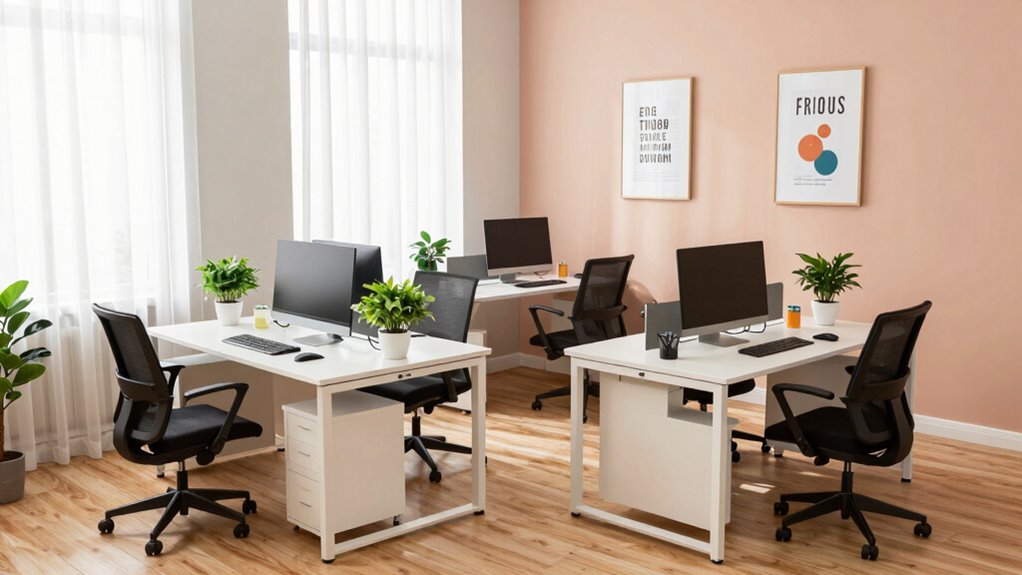
For small customer support teams, the best room layout mixes open plan for collaboration with private zones for focus. Arrange desks in clusters or face-to-face and include quiet booths or enclosed spaces for sensitive tasks. Incorporate flexible furniture to adapt easily as your team grows. Guarantee clear pathways, easy access to shared resources, and reliable tech connections. Want to discover more ways to optimize your workspace? Keep going to find expert tips and ideas.

Get tech for your team delivered free — and shop member deals
- Fast, free delivery on millions of items
- Access to Prime Big Deal Days deals on October 6–7
- Prime Video, Amazon Music and more included
Key Takeaways
- Opt for open-plan layouts with clustered desks to foster collaboration and spontaneous communication.
- Incorporate quiet zones or private booths for focused, confidential tasks.
- Design clear pathways and designated zones to ensure smooth movement and efficient space utilization.
- Use modular furniture and movable partitions for flexible reconfiguration as team needs evolve.
- Ensure reliable access to technology, power outlets, and shared resources to support seamless workflow.
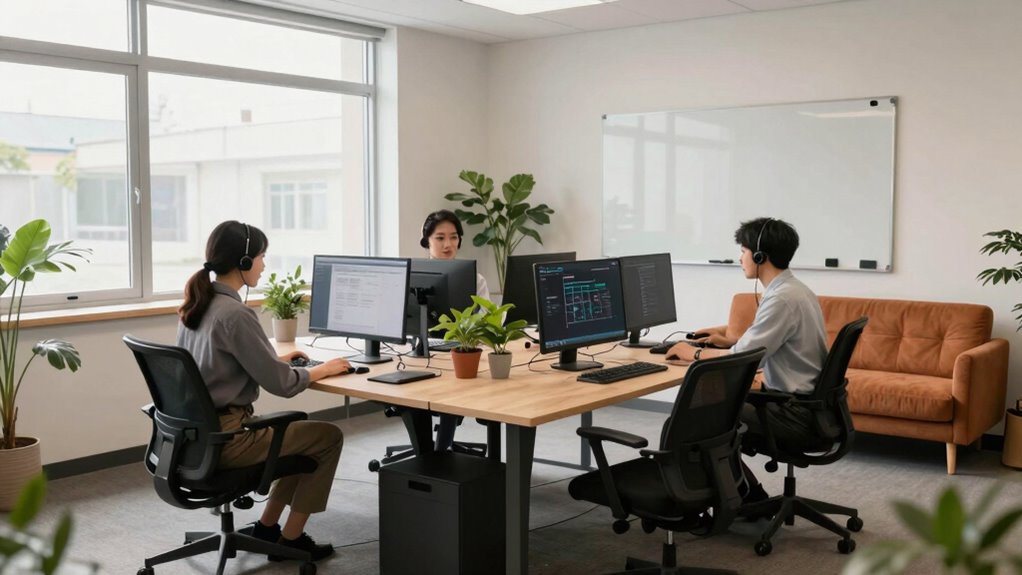
When designing a workspace for a small customer support team, choosing the right room layout can markedly boost efficiency and morale. The way you arrange desks, seating, and shared spaces directly impacts how well your team communicates and how comfortable they feel while working. Prioritizing office ergonomics ensures that each team member stays comfortable during long shifts, reducing fatigue and preventing strain. Adjustable chairs, proper monitor heights, and sufficient lighting create an environment where employees can focus without physical discomfort.
Effective workspace design boosts team comfort, communication, and productivity through ergonomic furniture and thoughtful layout.
A layout that promotes team collaboration is essential for a customer support team. You want to foster an atmosphere where members can easily share information, ask questions, and troubleshoot issues together. Open-plan arrangements work well here, with desks grouped in clusters or facing each other. This setup encourages spontaneous conversations and quick problem-solving, which are critical in support roles. Additionally, incorporating designated collaboration zones with whiteboards or glass walls can facilitate brainstorming sessions and team meetings. These spaces should be close enough for easy access but separated enough to avoid constant interruptions to individual work.
At the same time, you should consider how to balance collaboration with privacy. Not every task requires group input, so including quiet zones or private booths allows team members to focus on complex or sensitive issues without distractions. These private spaces also give support agents a chance to recharge mentally, improving overall productivity and job satisfaction. When designing your layout, think about flow—how team members move around the space. Clear pathways prevent congestion and make it easy to reach different areas, whether it’s a communal break space or a dedicated work zone.
Technology integration plays a critical role in these room layouts. Ensure that each station has access to reliable power outlets, high-speed internet, and necessary communication tools. Easy access to shared resources like printers, headsets, and knowledge bases keeps workflows smooth. The layout should also support flexibility, allowing you to adapt the space as your team grows or changes. Modular furniture and movable partitions enable quick reconfigurations, keeping the environment dynamic and responsive to your team’s evolving needs.
ergonomic office chairs for support teams
As an affiliate, we earn on qualifying purchases.
As an affiliate, we earn on qualifying purchases.
Frequently Asked Questions
How Do Room Layouts Impact Team Productivity?
Room layouts directly impact your team’s productivity by fostering collaboration and minimizing distractions. Using ergonomic furniture keeps your team comfortable and reduces fatigue, while lighting optimization ensures everyone stays alert and focused. When you design your space with these elements in mind, your team works more efficiently, communicates effectively, and stays motivated. A well-planned layout creates a positive environment where your support team can perform at their best every day.
What Budget Considerations Are Involved in Designing Support Rooms?
They say “you get what you pay for,” and that’s true when designing support rooms. Your budget considerations include proper budget allocation, ensuring funds prioritize essential equipment like headsets, computers, and acoustic treatments. Focus on equipment prioritization to maximize efficiency without overspending. Planning wisely helps create a functional workspace that boosts team productivity while keeping costs manageable, making every dollar count toward a supportive, comfortable environment.
How Can Layouts Accommodate Remote or Hybrid Team Members?
You can accommodate remote or hybrid team members by designing layouts that promote virtual collaboration, such as including dedicated video conferencing zones. Incorporate ergonomic furniture to guarantee comfort for in-office staff and create flexible spaces that can be easily adapted for remote work needs. Using technologies like high-quality microphones and monitors also helps team members stay connected and engaged, fostering productivity regardless of physical location.
What Are the Best Acoustics for Small Support Team Rooms?
To optimize acoustics in small support team rooms, you should focus on soundproofing options like acoustic panels, carpets, and door seals to reduce noise. Pair these with ergonomic furniture that minimizes distractions and enhances comfort. This combination helps create a quieter environment, improves focus, and boosts productivity. Ensuring proper sound management allows your team to communicate clearly and work efficiently without background noise interruptions.
How Do Layouts Influence Team Collaboration and Morale?
Your room layout greatly influences team collaboration and morale by balancing personal space and visual privacy. When you design with open areas, teammates can easily share ideas, fostering teamwork. Yet, providing private zones allows individuals to focus and recharge, boosting morale. Striking the right balance creates an environment where collaboration feels natural, and everyone feels respected and comfortable, ultimately enhancing overall productivity and job satisfaction.
modular office furniture for small teams
As an affiliate, we earn on qualifying purchases.
As an affiliate, we earn on qualifying purchases.
Conclusion
Choosing the right room layout can boost your small support team’s efficiency and morale. An open-plan setup encourages collaboration, while private areas help with focus and confidentiality. Did you know that teams using flexible layouts report 25% higher satisfaction? By tailoring your space to your team’s needs, you’ll foster better communication and productivity. Remember, the right environment isn’t just about space—it’s about creating a supportive atmosphere where your team can thrive.
private booths for office privacy
As an affiliate, we earn on qualifying purchases.
As an affiliate, we earn on qualifying purchases.
office desk clusters for collaboration
As an affiliate, we earn on qualifying purchases.
As an affiliate, we earn on qualifying purchases.
Fall Picks
fall essentials
As an affiliate, we earn on qualifying purchases.