
Support data visualization by leveraging interactive dashboards that simplify complex data into clear visuals, making trends and anomalies easy to spot. Enable real-time updates so your insights stay current, allowing you to respond quickly to emerging issues or opportunities. Collaboration tools help share insights across teams, promoting transparency and coordinated action. With these features, you’ll make smarter decisions faster. Keep exploring how these tools can transform your data analysis and boost your responsiveness and efficiency.
Key Takeaways
- Provide interactive dashboards that enable users to explore data through customizable visualizations.
- Offer real-time data updates to ensure visualizations reflect the most current information.
- Incorporate drill-down features for detailed analysis within visual representations.
- Facilitate data sharing and collaboration across teams for unified insights.
- Support diverse visualization tools to simplify complex data and enhance decision-making.
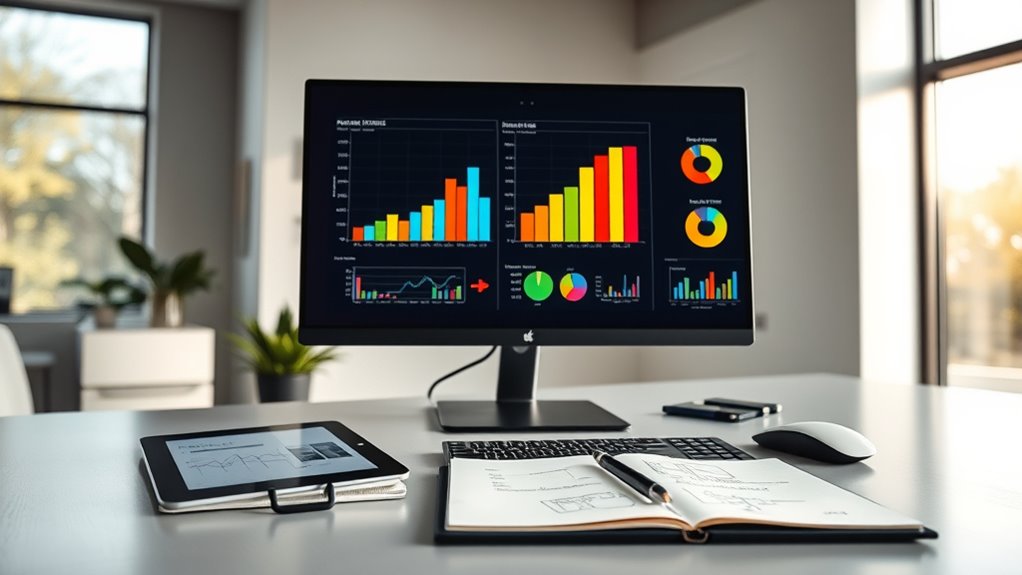
Have you ever struggled to make sense of complex data without the right visualization tools? If so, you’re not alone. Charting large datasets can feel overwhelming, especially when you need to extract insights quickly. That’s where interactive dashboards come into play. They transform raw data into visual formats that are easy to interpret, allowing you to spot trends and anomalies at a glance. Unlike static reports, interactive dashboards enable you to drill down into specific metrics, customize views, and explore data from different angles—all within a single interface. This interactivity keeps you engaged and provides a deeper understanding of your information.
Real-time updates are another vital element in effective data visualization support. When you’re making decisions based on live data, delays can cost you valuable opportunities or lead to misguided actions. With real-time updates integrated into your visualization tools, your dashboards refresh automatically as new data comes in. This guarantees you’re always working with the most current information, whether you’re monitoring sales performance, tracking website traffic, or overseeing operational metrics. Immediate updates mean you can respond quickly to emerging issues, capitalize on new opportunities, and maintain a pulse on your business environment without constantly refreshing or manually updating reports.
Implementing interactive dashboards with real-time data feeds enhances your ability to act swiftly and confidently. Instead of sifting through spreadsheets or static charts, you gain an intuitive visual overview that adapts as your data evolves. For example, if a sudden spike in customer complaints occurs, your dashboard will reflect that instantly, prompting you to investigate and address the issue without delay. This dynamic approach minimizes guesswork and accelerates your decision-making process.
Moreover, these visualization tools foster collaboration. Shared dashboards allow team members across departments to access the same real-time data, facilitating coordinated responses and unified strategies. You can set permissions to control who sees what, ensuring sensitive information remains protected while enabling transparency for key stakeholders. By supporting data visualization through interactive dashboards and real-time updates, you’re empowering yourself and your team to stay informed, agile, and proactive.
Frequently Asked Questions
What Are the Best Tools for Interactive Data Visualization Support?
You should consider tools like Tableau, Power BI, and Google Data Studio for interactive data visualization support. These platforms excel in chart customization, allowing you to tailor visuals to your needs. They also enable user collaboration, making it easy for teams to work together seamlessly. With their intuitive interfaces and robust features, you can create engaging, dynamic visualizations that enhance understanding and decision-making.
How Does Support Differ for Real-Time Versus Historical Data Visualization?
Think of support as a dynamic bridge that adapts to the flow of information. For real-time data, you need tools that respond instantly, like a swift river, enabling live updates and quick analysis. In contrast, historical comparison requires sturdy, detailed support that lets you explore past trends with precision. You rely on different features to keep your visualizations accurate and insightful, whether chasing the current or examining history’s echoes.
Can Support Services Assist With Custom Data Visualization Dashboards?
Yes, support services can assist with custom data visualization dashboards by helping you with visualization customization and dashboard integration. They work closely with you to understand your specific needs, ensuring the dashboards reflect your data accurately and are easy to interpret. Support teams can troubleshoot issues, optimize performance, and even suggest enhancements, making sure your visualizations effectively communicate insights and support your decision-making processes seamlessly.
What Training Options Are Available for Learning Data Visualization Techniques?
You can explore a variety of training options to master data visualization techniques, including engaging training workshops that provide hands-on experience and interactive learning. Additionally, online tutorials offer flexible, self-paced instruction to sharpen your skills at any time. By combining these resources, you build confidence, expand your expertise, and turn complex data into compelling visuals—making your insights clear, impactful, and easy to understand.
How Do Support Services Handle Data Security in Visualization Platforms?
You guarantee data security in visualization platforms by implementing data encryption, which protects sensitive information from unauthorized access. Support services also establish strict access controls, allowing only authorized users to view or modify data. Regular security audits and monitoring help identify vulnerabilities. By combining data encryption with robust access controls, support teams safeguard your data effectively, maintaining confidentiality and integrity while enabling seamless data visualization.
Conclusion
By mastering data visualization support, you turn complex data into clear insights. Remember, a picture is worth a thousand words, so use visuals wisely to communicate effectively. When you make data accessible and engaging, you empower better decision-making. Keep honing your skills, because in the world of data, clarity is king. As the saying goes, “A chain is only as strong as its weakest link”—strengthen your visual tools to strengthen your overall analysis.