

To guarantee quality support without micromanaging, set clear expectations and use transparent monitoring tools like real-time dashboards and AI analytics that empower agents rather than control them. Focus on providing constructive feedback, recognizing strengths, and fostering trust through open communication. Encourage peer reviews and self-assessment to promote independence. Balancing coaching with ongoing development helps support agents grow confidently. Keep refining your processes to sustain motivation and long-term growth—discover how to implement these strategies effectively.

Get business pricing on tech for your team
- Business-only prices and quantity discounts
- Tax-exempt purchasing
- Multiple users, one account, clear invoices
Key Takeaways
- Implement automated monitoring tools and real-time dashboards to oversee interactions without constant manual oversight.
- Establish clear performance benchmarks and communicate expectations openly to foster accountability and self-improvement.
- Use positive reinforcement and constructive feedback during scheduled coaching sessions to support growth without micromanagement.
- Promote peer reviews and self-assessment practices to encourage independence and reflective learning.
- Regularly refine performance metrics and training programs to align with evolving skills and support continuous development.
real-time support team monitoring dashboard
As an affiliate, we earn on qualifying purchases.
As an affiliate, we earn on qualifying purchases.
How to Improve Support Quality Without Micromanaging

Wondering how to enhance your support team’s quality without falling into micromanagement? The key lies in boosting agent motivation and fostering independence. When you trust your team to handle customer issues confidently, they feel more engaged and responsible. Recognize their strengths and provide constructive feedback to reinforce positive behaviors, which naturally improves support quality. Offering ongoing training and resources shows you’re invested in their growth, increasing motivation. A motivated team is more likely to deliver high-quality service consistently. Satisfied, motivated agents tend to deliver better service, leading to higher customer satisfaction. Additionally, understanding the role of ethics in fostering trust can help create a more cohesive team environment. Instead of micromanaging every interaction, focus on creating a supportive environment where agents understand your expectations and have the tools to succeed. By understanding the “why” behind food, you can apply similar principles of transparency and education to support your team effectively. This approach encourages ownership and accountability, resulting in consistent, high-quality support that benefits both your team and your customers. Additionally, fostering a supportive environment can lead to improved team morale and better overall performance.
AI analytics for customer support
As an affiliate, we earn on qualifying purchases.
As an affiliate, we earn on qualifying purchases.
How to Set Clear Expectations for Your Support Team

Setting clear expectations is essential for ensuring your support team delivers consistent, high-quality service. Start by establishing performance benchmarks that define success for each role. These benchmarks should include response times, resolution rates, and customer satisfaction scores. Communicate these expectations openly, so everyone understands their responsibilities and goals. Focus on skill development by identifying areas for improvement and offering targeted training. When your team knows what’s expected and how their performance will be measured, they’ll be better equipped to meet standards without constant supervision. Regularly review these benchmarks and expectations to keep them relevant and motivating. Clear, transparent guidelines create accountability and foster a culture of continuous improvement, empowering your support team to excel independently. Incorporating sound healing science principles into team routines can also help reduce stress and enhance focus, contributing to improved performance. Additionally, leveraging architectural solutions that promote a conducive work environment can further support team effectiveness and well-being. Establishing a well-designed workspace can also reinforce productivity and focus, aligning physical surroundings with team goals.
support team performance management tools
As an affiliate, we earn on qualifying purchases.
As an affiliate, we earn on qualifying purchases.
What Tools Can Help Monitor Support Interactions Transparently
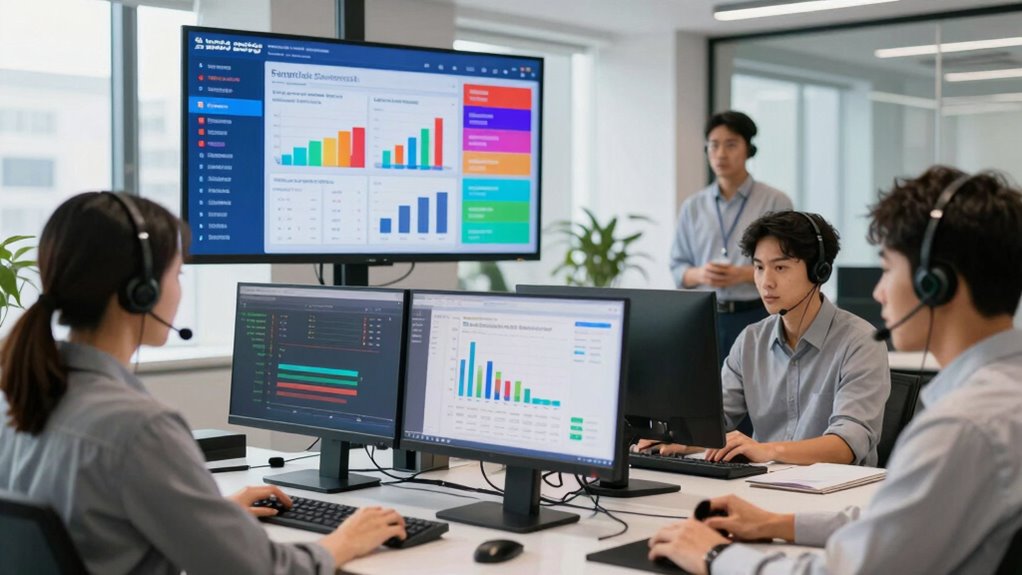
To guarantee your support interactions are transparent and well-monitored, leveraging the right tools is essential. Automated monitoring solutions allow you to track support conversations without manual effort, ensuring consistency and objectivity. These tools can flag issues, highlight patterns, and provide insights into agent performance. Incorporating home safety & accessibility considerations into your monitoring can further ensure that support aligns with the needs of those in home environments. Real-time dashboards are particularly valuable, offering instant visibility into ongoing interactions and team metrics. They enable you to spot bottlenecks, customer sentiment shifts, and compliance issues immediately, helping you make informed decisions quickly. Utilizing wellness technology tools can also help monitor customer well-being and satisfaction during support interactions. Additionally, integrating performance metrics into your monitoring process helps maintain high standards and continuous improvement. Employing automated alert systems can further streamline issue detection and resolution. By integrating these tools into your support processes, you create a transparent environment where quality is continuously assessed without micromanaging. This approach empowers your team to excel while maintaining oversight through data-driven insights, and incorporating AI-powered analytics can enhance pattern recognition and predictive capabilities for proactive support.
support agent training resources
As an affiliate, we earn on qualifying purchases.
As an affiliate, we earn on qualifying purchases.
How to Provide Constructive Feedback That Builds Confidence

Providing constructive feedback is essential for helping support agents grow and feel confident in their roles. Focus on positive reinforcement by highlighting what they did well, which encourages continued improvement. When addressing areas for growth, be specific and offer actionable suggestions rather than general critiques. This approach fosters skill development, making agents feel supported rather than criticized. Use a calm, encouraging tone to reassure them that mistakes are part of learning. Recognize their efforts and progress to boost confidence. Remember, feedback should be timely and balanced, emphasizing strengths while gently guiding improvements. Incorporating effective communication strategies can further enhance how feedback is received and acted upon, fostering trust and engagement. Additionally, understanding Free Floating can be useful in recognizing the importance of early detection and health awareness, which underscores the value of clear communication and attentive support. Being mindful of curiosity can facilitate a more open dialogue, encouraging agents to ask questions and seek clarification, thereby promoting continuous learning. Creating an environment that values positive reinforcement helps motivate support team members to develop their skills and take ownership of their growth. By framing your feedback constructively, you create a motivating environment that promotes continuous development without micromanaging. This method helps support agents thrive and take ownership of their growth.
Building Trust and Promoting Continuous Improvement in Support

Building trust with support agents is the foundation for fostering a culture of continuous improvement. When you prioritize transparency and open communication, team collaboration naturally strengthens, enabling everyone to share insights and learn from each other. This openness encourages agents to take ownership of their growth without fear of micromanagement. Additionally, understanding the Mental Wellbeing Index can help managers identify stressors affecting team performance and address them proactively. Incorporating support team metrics can provide valuable insights into ongoing performance and areas for development. Regularly reviewing performance data helps maintain transparency and keeps everyone aligned on goals. Developing trust-building strategies further enhances team cohesion and commitment. As trust grows, agents become more invested in improving their skills, which directly boosts customer satisfaction. Recognize achievements and provide consistent support to reinforce confidence. Promote a mindset that mistakes are opportunities to learn rather than reasons for punishment. By creating a safe environment, you empower your support team to innovate, collaborate, and continuously elevate their performance, ultimately delivering better service and building stronger relationships with customers. Transform Your Fitness Journey With Clear, Expert Guidance
How to Encourage Peer Reviews and Self-Assessment Among Agents

Encouraging peer reviews and self-assessment helps support teams identify areas for growth and fosters a culture of continuous learning. You can promote peer evaluation by creating a structured process where agents review each other’s interactions constructively. Self reflection encourages agents to analyze their performance honestly and highlight improvement opportunities. To facilitate this, consider providing clear guidelines and prompts. Use a transparent system like this:
| Peer Evaluation Focus | Self-Assessment Questions | Benefits |
|---|---|---|
| Communication Skills | What could I improve? | Growth mindset |
| Problem-Solving | Did I handle the issue efficiently? | Self-awareness |
| Empathy | Was I understanding enough? | Better customer experience |
| Product Knowledge | Do I need more training? | Skill enhancement |
| Follow-Up | Did I ensure customer satisfaction? | Quality consistency |
This approach builds trust and nurtures independent, reflective support agents. Additionally, understanding net worth can motivate agents to develop their professional skills and achieve personal growth.
What Support Quality Metrics Promote Independence and Growth

To foster independence and continuous growth in support teams, focusing on the right quality metrics is essential. Empowerment metrics, such as resolution autonomy and decision-making confidence, encourage agents to take ownership of their work. These metrics highlight how much responsibility agents can handle without constant oversight, boosting their confidence and problem-solving skills. Additionally, tracking skill development metrics—like completion of training modules or proficiency improvements—supports ongoing learning. When agents see their progress in these areas, they feel more capable and motivated to handle complex issues independently. By emphasizing empowerment and skill growth metrics, you create a culture where agents are encouraged to grow, make decisions, and develop their expertise without feeling micromanaged. This approach promotes sustainable independence and professional development.
How to Balance Monitoring and Coaching to Empower Support Agents

Balancing monitoring and coaching is essential for empowering support agents without undermining their confidence. You want to provide constructive feedback through motivational coaching that encourages growth, not frustration. Regular monitoring helps you identify areas for skill development, but it shouldn’t feel like micromanagement. Instead, frame your oversight as a way to support your agents’ success. Use positive reinforcement to highlight strengths and guide improvement gently. Schedule coaching sessions that focus on skill development, offering actionable advice rather than criticism. By maintaining open communication and showing genuine interest in their progress, you foster trust and motivation. This approach ensures agents feel supported, capable, and empowered to improve their performance without feeling scrutinized.
How to Adapt Your QA Processes for Long-Term Support Team Growth

Adapting your QA processes for long-term support team growth requires a strategic approach that evolves with your agents’ skills and the changing demands of your organization. Focus on refining performance metrics to track progress effectively and identify areas for improvement. Regularly update training programs to match skill levels and support ongoing development. Use the table below to align your processes:
| Performance Metrics | Training Programs |
|---|---|
| Measure quality scores | Incorporate new skills |
| Track customer satisfaction | Focus on soft skills |
| Monitor first-call resolution | Provide refresher courses |
Frequently Asked Questions
How Can I Motivate Support Agents Without Constant Oversight?
You can motivate support agents by empowering them with autonomy and trusting their judgment, fostering agent empowerment. Recognize their achievements through peer recognition, which boosts morale and encourages high performance. Set clear goals and provide constructive feedback, so they feel valued and motivated to excel. Avoid micromanaging by focusing on results and growth, creating a positive environment where agents are inspired to take ownership of their work and improve naturally.
What Are Effective Ways to Recognize Individual Agent Achievements?
Did you know that recognizing individual agent achievements can boost morale instantly? You can do this by encouraging peer recognition, where teammates celebrate each other’s successes. Additionally, highlight skill development milestones to show progress. When you publicly appreciate their efforts, agents feel valued and motivated. This approach fosters a positive environment, promotes continuous improvement, and helps everyone see their contributions’ impact—no micromanagement needed.
How Do I Handle Underperformance Without Damaging Morale?
When handling underperformance, you should focus on performance metrics to identify specific issues and apply coaching strategies to support improvement. Address the concerns privately, offer constructive feedback, and set clear, achievable goals. Encourage open communication and provide resources or training if needed. By focusing on development rather than punishment, you maintain morale and motivate your team to enhance their skills, fostering a positive and productive work environment.
What Training Methods Support Autonomy in Support Teams?
You support autonomy in your team by implementing empowerment strategies like providing decision-making authority and encouraging problem-solving. Incorporate regular feedback loops where team members can share insights, ask questions, and receive constructive guidance. Offer training that emphasizes self-directed learning and peer collaboration. This approach boosts confidence, fosters independence, and creates a culture where support agents feel trusted to handle their responsibilities effectively without micromanagement.
How Can Support Quality Improvements Be Sustained Long-Term?
Imagine your support team’s success as a river flowing steadily—you keep it nourished with consistent effort. To sustain long-term quality, regularly review performance metrics and implement quality monitoring tools that provide ongoing feedback. Engage your team in continuous improvement, celebrate wins, and adapt processes as needed. This proactive approach keeps quality high, ensuring your support remains reliable and excellent without the need for micromanagement.
Conclusion
So, next time you think micromanaging is the secret to exceptional support, remember—trust, transparency, and clear expectations actually do the heavy lifting. Ironically, giving your team space often boosts quality more than constant oversight. Embrace feedback, foster growth, and watch your support evolve without feeling like a control freak. After all, the best support teams flourish when they’re empowered, not policed—who knew?
Halloween Picks
halloween
As an affiliate, we earn on qualifying purchases.