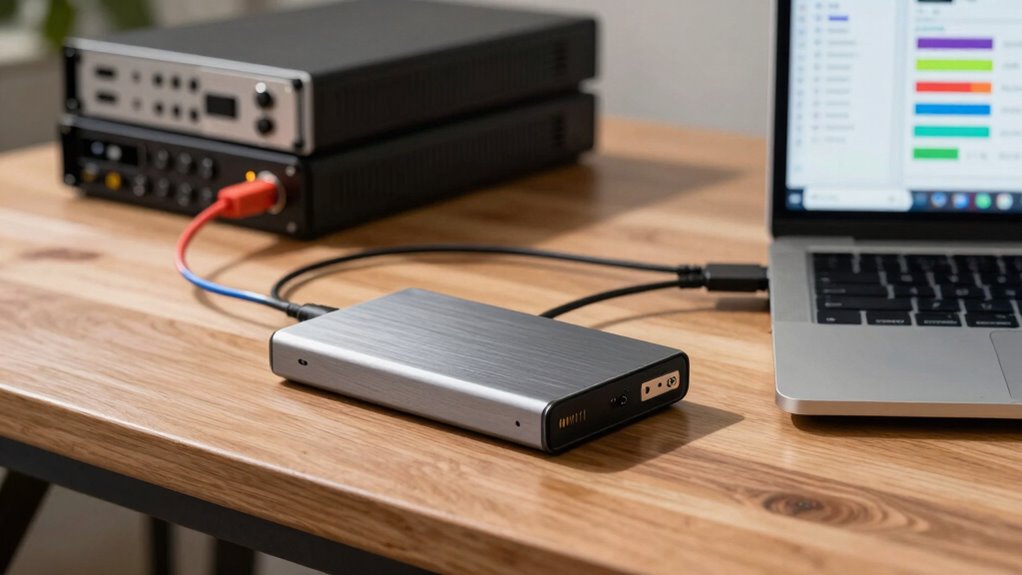

When choosing an external SSD for large dataset transfers, guarantee it supports high transfer speeds over interfaces like Thunderbolt 3 or USB 3.2 Gen 2. Confirm compatibility with your system to avoid transfer issues and opt for durable, reliable drives that safeguard your data during intensive use. Prioritize drives with good benchmarks and data safety features. Keep your options updated with the latest technology, and you’ll be ready to optimize your data transfers—more tips follow to help you make the best choice.

Get tech for your team delivered free — and shop member deals
- Fast, free delivery on millions of items
- Access to Prime Big Deal Days deals on October 6–7
- Prime Video, Amazon Music and more included
Key Takeaways
- Prioritize SSDs with transfer speeds over 1,000 MB/s to minimize transfer times for large datasets.
- Ensure compatibility with your computer’s interface, such as Thunderbolt 3 or USB 3.2 Gen 2.
- Check system requirements and performance benchmarks to select the most efficient and reliable drive.
- Opt for durable and reliable drives to maintain data integrity during extensive transfer processes.
- Implement robust backup and security strategies to protect large datasets during transfers.
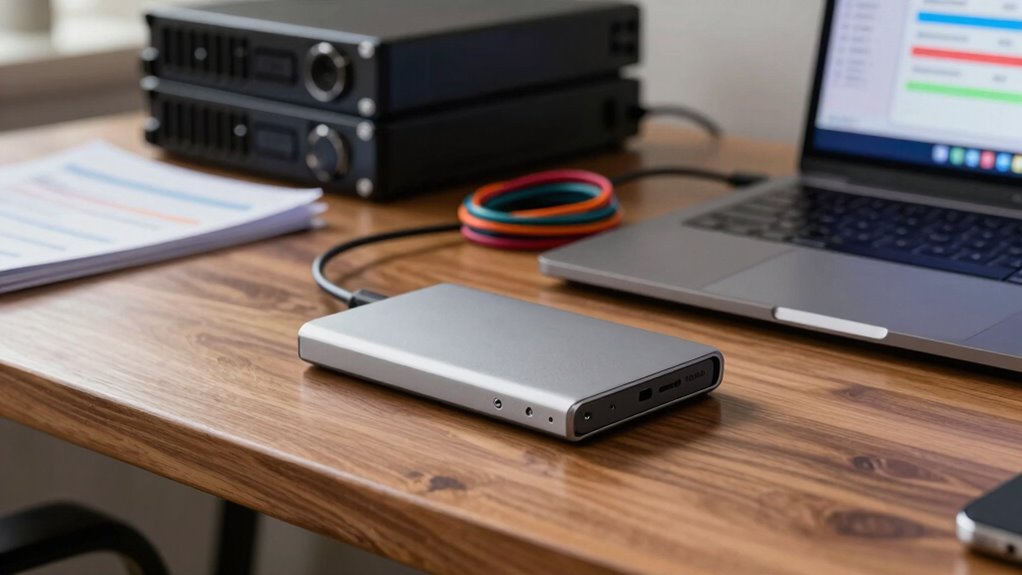
When transferring large datasets, choosing the right external SSD can notably accelerate your workflow and guarantee data integrity. The key factors to evaluate are data transfer speeds and compatibility considerations. High data transfer speeds ensure that your large files move quickly, minimizing downtime and increasing productivity. Look for SSDs that support the latest interfaces, such as Thunderbolt 3 or USB 3.2 Gen 2, as these offer faster transfer rates. An SSD with a high read/write speed — ideally over 1,000 MB/s — can substantially cut down on transfer times, especially when working with multi-gigabyte or terabyte-sized datasets. Keep in mind that actual speeds depend on your computer’s ports and hardware, so confirm that your device supports these high-speed interfaces for peak performance. Ensuring you select a drive with latest interfaces can make a significant difference in transfer efficiency. Additionally, staying aware of system compatibility requirements can help prevent unexpected issues during data transfers. Understanding performance benchmarks can also aid in selecting the most efficient drive for your needs. Moreover, considering durability and reliability can ensure your data remains safe during extensive transfer processes. Incorporating proper backup strategies can further safeguard against potential data loss during large transfers.
As an affiliate, we earn on qualifying purchases.
Frequently Asked Questions
How Do External SSDS Compare to Traditional HDDS for Large Datasets?
External SSDs outperform traditional HDDs in large dataset transfers due to higher data transfer rates, allowing quicker access and movement of files. You’ll notice faster read/write speeds, especially with USB-C or Thunderbolt ports, thanks to better port compatibility. HDDs are slower and more prone to mechanical failure, making SSDs a more reliable and efficient choice for handling large datasets where speed and durability matter most.
What Is the Typical Lifespan of an External SSD Under Heavy Use?
You might worry about external SSD lifespan under heavy use, but typically, they last around 5 to 10 years with proper care. Even if data recovery becomes necessary, many models offer robust warranty coverage, giving you peace of mind. Regular backups help safeguard your data, ensuring your work remains protected. Keep your device cool and avoid constant writing to extend its life, maximizing its performance over time.
Are There Specific Brands Known for Durability in External SSDS?
You should look for brands known for durability and reliability, like Samsung, SanDisk, and Western Digital. These brands often meet high durability standards, ensuring your external SSDs withstand heavy use. Their products typically feature robust build quality, good shock resistance, and solid warranty support. Choosing a reputable brand helps protect your large datasets and minimizes the risk of drive failure, giving you peace of mind during extensive data transfers.
How Does Data Encryption Impact SSD Transfer Speeds?
Data encryption acts like a gatekeeper, adding encryption overhead that can slow down your SSD transfer speeds. While encrypting your data boosts security, it often results in speed reduction, especially with large datasets. You might notice transfers taking longer, like a river flowing through a narrow channel. To balance security and performance, choose SSDs with hardware encryption or optimize encryption settings, so your data remains safe without sacrificing too much speed.
Can External SSDS Be Used Effectively With Older Computers?
Yes, external SSDs can be used effectively with older computers, but watch out for compatibility issues and power requirements. Older systems might lack the latest ports like USB 3.1 or Thunderbolt, affecting transfer speeds. Additionally, some external SSDs need more power than your computer’s port supplies, so consider models with bus-powered options or an external power source. Ensuring your setup matches the SSD’s specifications helps optimize performance.
high speed USB 3.2 Gen 2 external SSD
As an affiliate, we earn on qualifying purchases.
As an affiliate, we earn on qualifying purchases.
Conclusion
When selecting an external SSD for large data transfers, think of it as choosing the fastest vehicle on the road—you want reliability, speed, and capacity. Prioritize drives with high transfer speeds, durable build quality, and ample storage. Don’t settle for less, or you might find yourself stuck in traffic when you need to move massive files quickly. With the right SSD, your data transfer process becomes as smooth as a well-oiled machine, saving you time and frustration.
durable portable SSD for large datasets
As an affiliate, we earn on qualifying purchases.
As an affiliate, we earn on qualifying purchases.
external SSD for data transfer over 1000MB/s
As an affiliate, we earn on qualifying purchases.
As an affiliate, we earn on qualifying purchases.
Halloween Picks
halloween
As an affiliate, we earn on qualifying purchases.