

To measure growth while respecting user privacy, you should use privacy-safe analytics techniques like data anonymization, aggregation, and differential privacy. Focus on collecting minimal data with clear user consent and transparent policies. Employ encryption and secure data handling to protect information. Balancing accuracy with privacy is key, and choosing tools designed for responsible data use helps build trust. Keep exploring best practices to ensure your analytics are both effective and respectful of users’ privacy.
Key Takeaways
- Implement anonymization and aggregation to analyze trends without exposing individual identities.
- Use privacy-preserving technologies like differential privacy and federated learning to protect user data.
- Obtain explicit user consent and provide transparent privacy policies for data collection and analysis.
- Apply robust encryption and secure data handling practices to safeguard sensitive information.
- Communicate openly about data usage, emphasizing responsible analytics to build user trust.
What Are Privacy‑Safe Analytics: and Why Do They Matter?

Privacy-safe analytics refer to methods of analyzing data that protect individual privacy while still providing valuable insights. When you focus on personal data and user tracking, it’s vital to avoid exposing sensitive information. These analytics use techniques like anonymization or aggregation to guarantee that you can understand user behavior without compromising privacy. Instead of tracking specific personal data, privacy-safe analytics gather insights in a way that prevents identifying individuals. This often involves data anonymization techniques that obscure personal identifiers, making it harder to trace data back to individuals. This approach is essential because it helps you respect user trust and comply with privacy regulations. By prioritizing privacy, you can still measure growth and optimize your strategies without making users feel uncomfortable or exposed. Incorporating privacy-preserving techniques, such as differential privacy, further enhances the ability to analyze data securely. Additionally, adopting privacy-conscious design principles in data collection can help maintain transparency and user confidence. Using secure data collection methods ensures that sensitive information remains protected throughout the analysis process. Ultimately, privacy-safe analytics enable you to gain useful insights while maintaining ethical standards.
How Can You Collect User Data Without Invading Privacy?

To collect user data without invading privacy, you need to focus on techniques that gather meaningful insights while respecting user boundaries. Data anonymization is key—it removes personally identifiable information, making data less invasive. Offering user control empowers individuals to decide what data they share, increasing trust. You can implement opt-in mechanisms, clear privacy settings, and transparent data policies to enhance user control. Consider these strategies:
| Technique | Benefit |
|---|---|
| Data anonymization | Protects identities while analyzing trends |
| User control options | Builds trust and ensures consent |
| Minimal data collection | Limits exposure and enhances privacy |
| Transparent policies | Communicates intent, reducing suspicion |
| Consent Management | Ensures users have clear options to agree or decline data sharing |
Additionally, employing privacy-by-design principles can help embed privacy protections into your analytics from the start, aligning with Website Functionality and user expectations. Incorporating automated privacy checks can further reinforce your commitment to privacy compliance and build user confidence.
How Differential Privacy Protects User Information in Analytics?
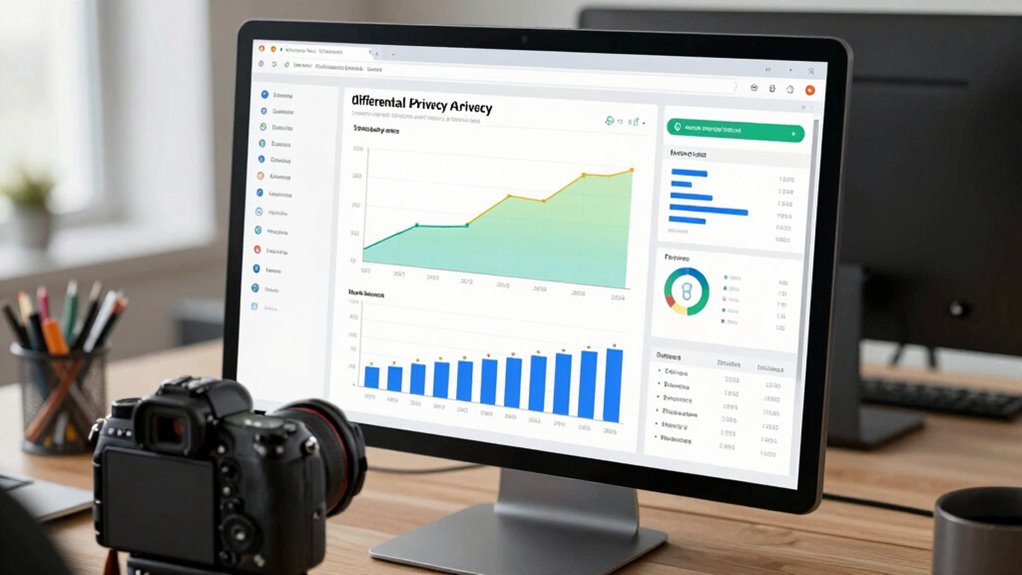
Differential privacy offers a robust way to protect user information during data analysis by adding carefully calibrated noise to the data or query results. This noise ensures that individual user details remain indistinguishable, even when combining data from sensor fusion systems. As analytics become more complex, techniques like quantum computing can enhance differential privacy algorithms, making them faster and more efficient. You benefit from this by being able to analyze large datasets securely without exposing sensitive information. The core idea is that the added noise masks individual contributions while still allowing meaningful insights. This approach balances data utility with privacy, ensuring your analytics respect user confidentiality while delivering accurate growth metrics. Differential privacy therefore safeguards user info in advanced data environments, including those leveraging sensor fusion and quantum computing.
Using Aggregated and Anonymized Data to Protect User Privacy

By focusing on aggregated and anonymized data, organizations can effectively safeguard user privacy while still gaining valuable insights. When you use data encryption, sensitive information remains secure, preventing unauthorized access. Anonymizing user data ensures individual identities stay hidden, fostering trust. Implementing data anonymization techniques can further enhance privacy protections and reduce risks associated with data breaches. Natural pools can be designed to be environmentally friendly and blend seamlessly with the landscape, promoting sustainability. Moreover, adopting privacy-preserving analytics can help organizations analyze data without compromising individual privacy. Additionally, implementing cryptocurrency integration can streamline secure transactions and reduce the risk of data breaches. By combining these strategies, you respect user privacy without sacrificing analytics quality. Consider the emotional impact: data privacy is more than just a technical feature—it’s fundamental to user confidence.
Tools and Strategies for Privacy‑Preserving Tracking

You can safeguard user privacy by using anonymized data collection techniques and consent-based tracking methods. Privacy-first analytics platforms help ensure data is handled responsibly and securely. Implementing these tools and strategies allows you to gather insights without compromising individual privacy. Incorporating protective styling benefits from textile techniques can also serve as inspiration for designing privacy-conscious data strategies. Additionally, adopting data minimization practices ensures only essential information is collected, reducing potential privacy risks. Employing robust encryption methods further enhances data security and user trust. Fostering a privacy-centric approach emphasizes the importance of respecting user autonomy and building trust through transparent data practices. To enhance privacy, integrating secure data transmission techniques can prevent unauthorized access during data transfer processes.
Anonymized Data Collection
To protect user privacy during data collection, organizations employ various tools and strategies that anonymize information before analysis. One effective approach is anonymized data collection, which removes or masks identifiable details to prevent tracking individuals. This often involves techniques like data encryption, ensuring that sensitive information remains unreadable during transmission and storage. When conducting behavior tracking, anonymization helps gather insights without exposing personal identities, maintaining user trust. By encrypting data at every stage, you minimize risks of data breaches and misuse. These strategies enable you to analyze trends and user actions while respecting privacy boundaries. Additionally, understanding Floating on Water principles can guide the development of secure and transparent data practices. Implementing anonymized data collection not only safeguards users but also aligns with privacy regulations and best practices, fostering a responsible approach to analytics. Employing privacy-preserving techniques further enhances data security and user confidence in your analytics efforts.
Consent-Based Tracking Methods
Implementing consent-based tracking methods guarantees that you give users control over their data while still enabling meaningful insights. With consent management tools, you can implement behavioral segmentation without overstepping privacy boundaries. These strategies ensure your data governance policies are transparent and user-centric, fostering trust and compliance. By asking for explicit permission before collecting data, you respect individual choices and reduce privacy concerns. This approach also helps you avoid legal risks associated with unauthorized data collection. Consent-based methods support a more ethical analytics process, enabling you to analyze user behavior responsibly. Additionally, understanding data privacy regulations is crucial for developing compliant tracking practices. Incorporating privacy-preserving techniques can further strengthen user trust and safeguard sensitive information. Utilizing user consent frameworks can streamline the process of obtaining and managing permissions effectively. Overall, they strike a balance between gaining valuable insights and maintaining user trust, making your tracking practices both effective and privacy-safe.
Privacy-First Analytics Platforms
Privacy-first analytics platforms are designed to prioritize user privacy while still delivering valuable insights. These platforms leverage data anonymization techniques to protect individual identities, ensuring personal information isn’t exposed or misused. By applying data anonymization, you can analyze trends and behaviors without compromising user privacy. Additionally, these tools emphasize obtaining explicit user consent before collecting any data, aligning with privacy regulations and fostering trust. They often incorporate privacy-preserving technologies like differential privacy or federated learning, which allow you to gather meaningful metrics without accessing raw personal data. This approach not only respects user rights but also helps you stay compliant with evolving privacy laws, making your analytics more ethical and sustainable in the long run.
How to Balance Data Accuracy With Privacy?

To balance data accuracy with privacy, you need to prioritize user consent and make it clear how their data is used. Anonymizing data collection helps safeguard individual identities without sacrificing insights. Using privacy-first tools ensures you gather accurate information while respecting user privacy.
Prioritize User Consent
Balancing data accuracy with user privacy requires actively prioritizing user consent at every stage. You must respect user behavior by clearly informing them about data collection and how it’s used. Transparency builds trust and encourages honest engagement. Guarantee you implement data encryption to protect user information, demonstrating your commitment to privacy. Here are four key ways to prioritize user consent:
- Obtain explicit permission before collecting any data
- Offer easy-to-understand privacy choices
- Regularly review consent preferences
- Reinforce privacy commitments through transparent communication
Anonymize Data Collection
Implementing data anonymization techniques allows you to gather valuable insights without compromising user privacy. By anonymizing data, you reduce the risk of exposing personally identifiable information while still capturing meaningful analytics. Techniques like data encryption help secure data during collection and storage, ensuring unauthorized parties can’t access sensitive details. It’s also essential to obtain user opt in, so users understand and agree to how their data is used. Anonymization methods, such as aggregating data or removing identifiable markers, strike a balance between maintaining data accuracy and respecting privacy. This approach enables you to analyze trends and behaviors effectively, without crossing privacy boundaries. Ultimately, anonymized data collection fosters trust and ensures compliance with privacy regulations while supporting your growth strategies.
Implement Privacy-First Tools
Achieving privacy-first data collection requires carefully selecting tools that prioritize user privacy without sacrificing data quality. You want insights without risking data breaches or invasive user profiling. To do this:
- Choose tools with built-in encryption and strict privacy policies to protect against data breaches.
- Use privacy-preserving analytics that minimize data collection, reducing risks of misuse.
- Implement anonymization and pseudonymization to safeguard individual identities.
- Opt for solutions that offer transparency and user control, fostering trust and respect for privacy.
Common Privacy Mistakes and How to Avoid Them

Many organizations unknowingly make privacy mistakes that can compromise user data and erode trust. One common error is overlooking user behavior, which can reveal sensitive info if not handled carefully. Another mistake is neglecting data encryption, leaving data vulnerable during storage and transmission. These oversights can lead to breaches or misuse, damaging your reputation. To avoid this, focus on understanding user behavior securely and implement strong encryption protocols.
| Mistake | Solution |
|---|---|
| Ignoring user behavior | Analyzing behavior with privacy in mind |
| No data encryption | Encrypt data both at rest and in transit |
| Sharing data without consent | Obtain clear user consent and limit sharing |
Features to Look for in Privacy‑Focused Analytics Tools

Selecting the right privacy-focused analytics tools requires you to look beyond basic features and prioritize those that protect user data. Focus on tools offering robust behavioral segmentation without compromising privacy, so you can understand your audience deeply and ethically. Real-time insights empower you to make quick, informed decisions while respecting user anonymity. Look for these essential features:
- Anonymized Data Collection – Ensures user identities stay private.
- Granular Behavioral Segmentation – Allows targeted analysis without invasive tracking.
- Real-Time Data Processing – Provides instant insights while maintaining privacy standards.
- Built-in Privacy Controls – Gives you control over data sharing and retention.
Choosing tools with these features helps you grow responsibly while safeguarding user trust.
Future Trends in Privacy‑Conscious Data Analytics

As privacy-focused analytics tools become more sophisticated, innovative trends are shaping the future of data collection and analysis. You’ll see a stronger emphasis on extracting behavioral insights without compromising individual privacy, using techniques like federated learning and differential privacy. These methods enable meaningful analysis while keeping personal data secure. Additionally, ethical considerations are taking center stage, guiding organizations to prioritize transparency and user consent. Future analytics will likely involve more user-centric approaches, giving individuals greater control over their data and how it’s used. As a result, you’ll be able to gain valuable insights into customer behavior while respecting privacy boundaries. This shift guarantees that data-driven growth remains responsible, trustworthy, and aligned with societal expectations around privacy and ethics.
Frequently Asked Questions
How Do Privacy-Preserving Analytics Impact Data-Driven Decision Making?
Privacy-preserving analytics enhance your data-driven decisions by prioritizing user privacy while maintaining data accuracy. You can confidently analyze trends without risking privacy breaches, which builds trust with your users. Although some detail might be lost, careful implementation guarantees your insights remain reliable. Ultimately, balancing user privacy with accurate data helps you make informed decisions without alienating your audience or compromising ethical standards.
Can Privacy-Safe Analytics Be Integrated With Existing Marketing Tools?
Yes, you can integrate privacy-safe analytics with your existing marketing tools through third-party integrations. These tools often support data anonymization, which guarantees user privacy while still providing valuable insights. By leveraging secure APIs and compatibility features, you can seamlessly connect privacy-preserving analytics to your current platforms, enabling you to measure growth effectively without compromising user trust or privacy.
What Are the Limitations of Differential Privacy in Real-World Applications?
You should know that differential privacy faces limitations in real-world applications due to noise addition, which can reduce data accuracy. This utility trade-off means you might get less precise insights as more noise is added to protect user privacy. Striking the right balance is essential; too much noise hampers usefulness, while too little risks privacy breaches. Understanding these limitations helps you implement effective, privacy-safe analytics without compromising valuable data insights.
How Do User Consent and Privacy Regulations Influence Data Collection?
User rights, data encryption, and privacy regulations shape how you collect data. You must respect user rights by obtaining clear consent, guarantee data encryption to protect information, and follow regulations like GDPR or CCPA. These rules influence your data collection practices, requiring transparency, minimizing data use, and enabling users to control their information. By prioritizing consent and security, you build trust and comply with legal standards, making your analytics both ethical and effective.
Are There Industry-Specific Best Practices for Privacy-Conscious Analytics?
Yes, there are industry-specific best practices for privacy-conscious analytics. You should prioritize contextual compliance by understanding sector-specific standards, like HIPAA for healthcare or GDPR for European markets. Tailor your data collection methods to meet these regulations, ensuring transparency and minimal intrusion. Regularly review guidelines to stay current. By doing so, you protect user privacy while gathering meaningful insights, building trust, and avoiding legal pitfalls.
Conclusion
By embracing privacy-safe analytics, you not only protect your users but also build trust that naturally fosters growth. When you balance data insights with respect for privacy, it’s easy to see how transparency becomes your best strategy—often a coincidence of honesty and innovation. As technology evolves, staying committed to privacy isn’t just ethical; it’s essential. Ultimately, safeguarding user data quietly fuels your success in a world that values both progress and privacy.