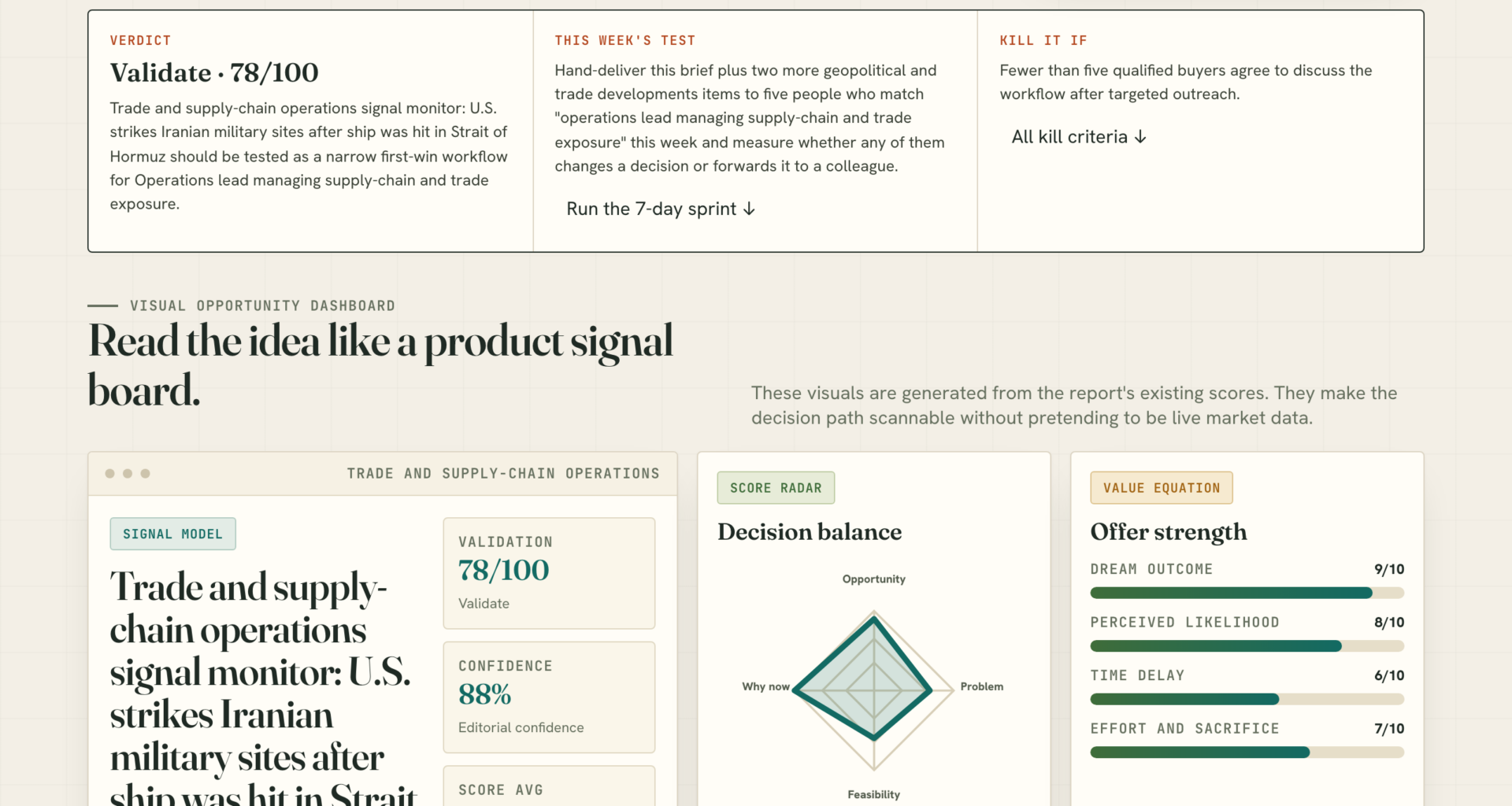

📊 Full opportunity report: Trade and supply-chain operations signal monitor: U.S. strikes Iranian military sites after ship was hit in Strait of Hormuz on IdeaNavigator AI — validation score, market gap, and execution plan.

Get business pricing on tech for your team
- Business-only prices and quantity discounts
- Tax-exempt purchasing
- Multiple users, one account, clear invoices
TL;DR

The U.S. military launched strikes against Iranian military sites after a ship was attacked in the Strait of Hormuz. This escalation impacts global trade routes and supply chains. Details are still emerging about the incident and its broader implications.
The United States has carried out military strikes against Iranian military sites following an attack on a commercial ship in the Strait of Hormuz, according to U.S. officials. This escalation matters because it affects regional stability and global trade routes, especially as supply chains are sensitive to geopolitical conflicts.
U.S. officials confirmed that the strikes targeted Iranian military infrastructure in response to the attack on a merchant vessel in the Strait of Hormuz. The incident involved a commercial ship that was hit, prompting the U.S. to respond with military action, though the exact nature of the attack on the vessel remains under investigation.
Iranian authorities have not yet officially responded to the strikes, and the broader context of escalating tensions in the region continues to unfold. The U.S. government has emphasized that the military actions are defensive and aimed at protecting maritime security.
Implications for Global Trade and Regional Stability
This development is significant because the Strait of Hormuz is a critical chokepoint for global oil and trade shipments. Escalation between the U.S. and Iran raises risks of disruptions to supply chains, potentially affecting prices and availability of energy resources worldwide. For supply chain managers, such geopolitical conflicts can lead to increased costs and uncertainty.
As an affiliate, we earn on qualifying purchases.
Recent Escalations in U.S.-Iran Tensions and Strait Incidents
Earlier this year, tensions between the U.S. and Iran escalated amid ongoing disputes over Iran’s nuclear program and regional influence. The Strait of Hormuz has been a flashpoint multiple times, with previous incidents involving attacks on ships and military confrontations. The recent attack on a commercial vessel and subsequent U.S. strikes mark a notable escalation in this ongoing conflict.
Trade and supply-chain operations monitoring tools have flagged increased geopolitical activity in this region, reflecting the potential for wider disruptions. The incident follows a pattern of recent maritime tensions that have heightened concerns among global traders and logistics operators.
“The strikes were conducted in self-defense and to neutralize threats to maritime security in the region.”
— U.S. Defense Department spokesperson
supply chain risk management tools
As an affiliate, we earn on qualifying purchases.
As an affiliate, we earn on qualifying purchases.
Unconfirmed Details and Regional Response Unclear
It remains unclear what specific damage was inflicted on the Iranian military sites, and whether there will be further military escalation. Iran’s official response is still pending, and the potential for retaliatory actions or broader conflict is uncertain at this stage.
As an affiliate, we earn on qualifying purchases.
Monitoring Developments and Diplomatic Responses
Next steps include observing Iran’s official response, potential retaliatory actions, and the impact on regional stability. International actors may call for de-escalation, while supply chain operators will continue to assess risks associated with maritime disruptions and geopolitical tensions.
shipping security monitoring device
As an affiliate, we earn on qualifying purchases.
As an affiliate, we earn on qualifying purchases.
Key Questions
What triggered the U.S. strikes against Iran?
The strikes were triggered by an attack on a merchant vessel in the Strait of Hormuz, which U.S. officials say was linked to Iranian military activity.
Will this escalation affect global oil prices?
Potentially, yes. The Strait of Hormuz is a key shipping route for oil, and increased tensions or conflict could disrupt supply and influence prices.
Has Iran officially responded to the strikes?
No official response has been issued yet, and Iran’s reaction remains uncertain.
Could this lead to broader regional conflict?
The situation is still developing; further escalation could occur, but it is not yet clear if this will lead to a wider conflict.
How might this impact supply chain operations?
Disruptions in maritime traffic and increased geopolitical risks could lead to delays, higher costs, and the need for alternative routing for global trade.
Source: IdeaNavigator AI
Fall Picks
fall essentials
As an affiliate, we earn on qualifying purchases.