
To measure your code’s carbon impact, focus on key metrics like energy consumption from CPU, memory, and I/O activity, and translate that into CO₂ emissions using tools like Carbon Scope or CodeCarbon. Collect data consistently with profiling tools that integrate into your development process, and analyze trends to identify energy-intensive areas. Incorporating renewable energy data can further refine your assessment. Explore further strategies to optimize and monitor your software’s environmental footprint effectively.
Key Takeaways
- Measure energy consumption of code components using profiling tools to identify high-impact functions.
- Convert energy data into CO₂ emissions metrics to quantify the environmental footprint of software.
- Track resource usage (CPU, memory, I/O) during operation to assess efficiency and potential for optimization.
- Incorporate renewable energy sources and monitor their impact using specialized tools like CodeCarbon.
- Regularly review and compare metrics against benchmarks to evaluate improvements and guide sustainable development.
What Are Green Software Metrics and Why Do They Matter?
Green software metrics are measurable indicators used to evaluate the environmental impact of software systems. These metrics help you understand how your code and infrastructure consume energy, especially when powered by renewable energy sources. By monitoring these metrics, you can identify how user behavior influences energy use—such as peak traffic times or inefficient interactions that increase server load. Recognizing these patterns empowers you to optimize your software for lower carbon emissions and better energy efficiency. Green metrics also highlight the importance of leveraging renewable energy, encouraging you to design systems that support sustainable energy integration. Additionally, adopting European cloud infrastructure can enhance your ability to track and improve sustainability metrics across your software ecosystem. Incorporating sustainable coding practices further minimizes environmental impact and promotes eco-friendly development. Understanding these metrics enables you to prioritize energy-efficient algorithms and reduce unnecessary computational overhead, ultimately leading to a more sustainable software lifecycle. Ultimately, understanding these metrics guides you in making data-driven decisions to reduce environmental harm and promote more sustainable software development practices.
Key Metrics for Measuring Software Energy Use and Carbon Emissions
To effectively reduce software’s environmental impact, you need to understand the key metrics that measure energy use and emissions. These include energy consumption indicators, carbon emission metrics, and efficiency optimization measures. Incorporating Free Floating concepts can help optimize resource management and reduce unnecessary energy expenditure. For example, implementing modular design principles allows for easier updates and energy-efficient scaling of software components. Incorporating smart resource allocation techniques inspired by smart home energy systems can further enhance efficiency and sustainability in software operations. Recognizing the importance of Youngster Choice in understanding diverse perspectives can also inspire innovative approaches to sustainability challenges. Implementing reliable, well-researched metrics ensures your efforts are based on accurate data, making your sustainability strategies more effective.
Energy Consumption Indicators
Measuring software energy use and carbon emissions requires clear, reliable indicators that can track how much power applications consume during operation. Energy metrics are essential for this purpose, providing quantifiable data on energy consumption. These indicators include measures like CPU utilization, memory usage, and I/O activity, which directly influence energy use. Integrating technology in family activities can aid in understanding how software performance impacts energy consumption, especially in digital environments. By monitoring energy metrics, you can identify inefficient code and optimize for lower power consumption. Accurate energy consumption indicators enable you to establish baselines, compare different implementations, and assess the impact of code changes over time. Implementing these metrics helps you make informed decisions, ultimately reducing both energy use and associated carbon emissions. Energy efficiency is a critical aspect of sustainable software development. Additionally, tools that analyze whale activity and market trends can help developers understand how external factors might influence energy consumption patterns in blockchain-related applications. Recognizing local environmental conditions can also enhance the accuracy of energy consumption assessments in specific regions. Furthermore, understanding software performance metrics can provide deeper insights into energy consumption patterns and guide optimization efforts. In short, energy metrics form the foundation for tracking and improving the eco-friendliness of your software.
Carbon Emission Metrics
Tracking the carbon footprint of your software requires specific metrics that translate energy consumption into tangible environmental impact. Carbon emission metrics quantify how much CO₂ your code generates, helping you understand its ecological footprint. To improve accuracy, consider the energy sources powering data centers—renewable energy considerably lowers emissions. These metrics are often expressed in grams or kilograms of CO₂ per operation or user transaction. You can also account for carbon offsets, which compensate for emissions by investing in renewable projects or reforestation. Monitoring these metrics provides clear insights into your software’s sustainability, guiding you to reduce emissions effectively. Energy sources play a crucial role in determining the true environmental impact of your software. Additionally, understanding carbon accounting methods helps in accurately measuring and managing your software’s carbon footprint. By focusing on Carbon emission metrics, you gain a precise understanding of your environmental impact and can implement targeted strategies to minimize it, especially when integrating sustainable development practices. A comprehensive approach includes monitoring tools that help visualize and analyze your carbon data in real-time.
Efficiency Optimization Measures
How can you effectively evaluate and improve your software’s energy efficiency? Focus on key metrics like code efficiency and resource management. Optimizing code efficiency involves reducing unnecessary computations, minimizing loops, and streamlining algorithms to lower energy consumption. Proper resource management ensures your software uses hardware resources judiciously, avoiding wasteful processes. Implement profiling tools to identify energy-intensive functions and optimize them. Automate resource scaling based on workload demands to prevent overuse. Regularly reviewing these metrics helps you pinpoint inefficiencies and measure improvements over time. By emphasizing code efficiency and managing resources wisely, you can considerably reduce your software’s carbon footprint while maintaining performance. These measures enable you to create sustainable, energy-conscious software that aligns with green computing goals.
How to Collect Data on Software Energy Consumption Effectively?

Choosing the right monitoring tools is essential to accurately track your software’s energy use. You should follow best practices for data collection to guarantee your results are reliable and consistent. By focusing on these points, you can gather meaningful insights to improve your software’s energy efficiency. Incorporating essential oil benefits can also help improve focus and reduce stress during data analysis sessions. Additionally, understanding wave and wind patterns can assist in optimizing energy consumption in certain environments. Implementing software energy profiling techniques can further enhance the accuracy of your measurements and identify key areas for improvement. Regularly reviewing your data with consistent measurement intervals ensures that your insights remain accurate over time. Establishing standardized data collection procedures helps maintain data integrity and comparability across different time periods and projects.
Monitoring Tools Selection
Selecting the right monitoring tools is essential for accurately measuring a software’s energy consumption. You should choose tools compatible with your hardware optimization strategies to get precise data. Look for solutions that can analyze CPU, GPU, and memory usage in real time, helping you identify energy-intensive processes. User behavior impacts energy use considerably, so pick tools that can track how users interact with your application, providing insights into activity patterns. Ensure the tools are easy to deploy and integrate seamlessly into your development environment. Accurate data collection depends on selecting monitors that capture detailed metrics without adding unnecessary overhead. By focusing on these aspects, you can effectively monitor your software’s energy profile and identify opportunities for optimization.
Data Collection Best Practices
Effective data collection is essential for accurately evaluating your software’s energy consumption, and it begins with setting clear measurement goals. To guarantee reliable results, you should consider the following best practices:
- Prioritize data privacy by anonymizing user data and securing sensitive information to build trust and comply with regulations.
- Use consistent measurement tools and methodologies to enable accurate comparisons over time.
- Be mindful of ethical considerations, such as avoiding intrusive monitoring that could infringe on user rights or skew data.
Best Tools and Frameworks to Calculate Your Software’s Carbon Impact
To accurately measure your software’s carbon footprint, you need the right tools and frameworks that can quantify energy consumption and greenhouse gas emissions. Tools like Carbon Scope and CodeCarbon help track energy usage during development and deployment, providing insights into how your code impacts carbon emissions. Frameworks such as Green Software Foundation’s tools emphasize software optimization, enabling you to reduce energy consumption by improving efficiency. Incorporating renewable energy sources into your infrastructure further decreases your carbon footprint, and these tools can help you monitor that impact. Accurate measurement is essential for understanding and managing your environmental impact. By leveraging these resources, you can identify areas for improvement, optimize your code for lower energy use, and make informed decisions to minimize environmental impact while maintaining performance.
How to Analyze and Interpret Green Software Metrics?
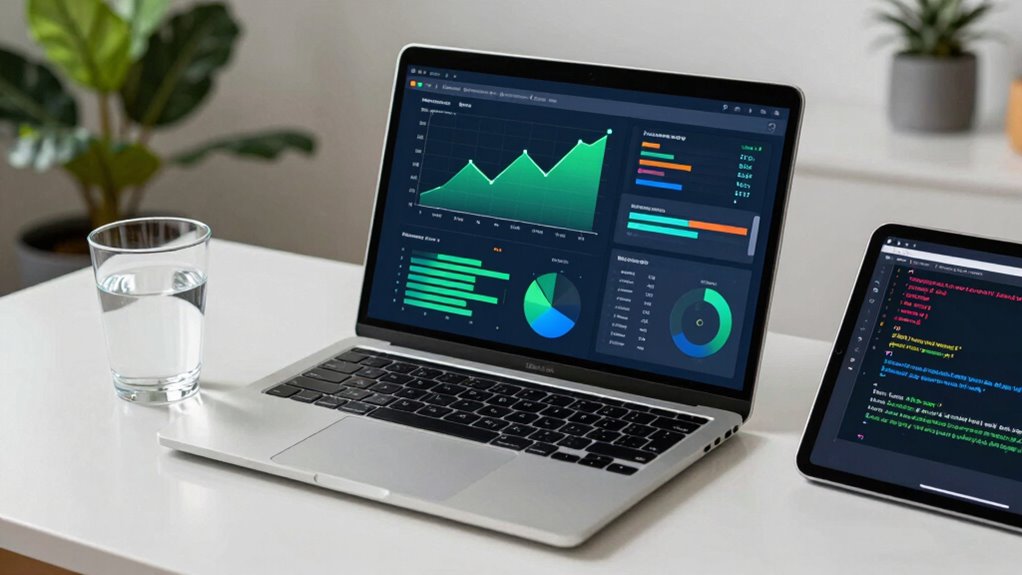
Understanding your green software metrics is essential for making meaningful improvements in your environmental impact. To analyze and interpret these metrics effectively, focus on clear data visualization that highlights trends and anomalies. Engage stakeholders by presenting insights in an understandable way, ensuring they grasp the significance of the data. Consider these steps:
- Identify key performance indicators (KPIs) that directly relate to sustainability goals.
- Use visual tools like charts and dashboards to track progress over time.
- Interpret the data by comparing metrics against benchmarks or targets to uncover areas for improvement.
Practical Tips for Embedding Green Metrics Into Your Development Workflow

Integrating green metrics into your development workflow requires deliberate planning and seamless processes. Start by establishing clear sustainability goals aligned with your project’s objectives. Incorporate eco friendly practices into your coding habits, such as optimizing algorithms for energy efficiency and reducing unnecessary computations. Use automated tools to track and measure green metrics consistently throughout development phases, making it easier to identify areas for improvement. Educate your team on sustainable coding principles and encourage open discussions about eco impact. Embed green metrics into your continuous integration and deployment pipelines to monitor progress in real-time. By embedding these practices early, you foster a culture of sustainability, ensuring your software’s carbon footprint is minimized without compromising performance or quality.
Challenges and Limitations in Measuring Software’s Carbon Footprint
Have you ever wondered why accurately measuring a software’s carbon footprint remains so challenging? Several hurdles make this task complex. First, data privacy concerns limit access to detailed operational data, hindering precise assessments. Second, measurement scalability becomes difficult as software varies across platforms and environments, making standardization tough. Third, the lack of unified metrics complicates comparisons and aggregate analysis. These issues mean that capturing an exact carbon footprint isn’t always feasible, especially at larger scales. Without consistent data and methods, it’s hard to track progress or identify areas for improvement. Overcoming these limitations requires balancing privacy with transparency and developing adaptable measurement tools that can handle diverse environments efficiently.
Success Stories: How Companies Use Green Metrics to Reduce Impact
Many companies have turned to green metrics as practical tools to cut their environmental impact. By tracking carbon emissions through these metrics, they identify areas for improvement, especially in cloud optimization. For example, some firms reduce server workloads during off-peak hours or migrate to more energy-efficient cloud services. They also influence user behavior by designing interfaces that encourage sustainable choices, like minimizing unnecessary data transfers. These strategies help lower overall carbon footprints while maintaining performance. Companies share success stories showing measurable results—such as reduced energy consumption and cost savings—by integrating green metrics into their operations. Ultimately, leveraging these insights enables organizations to make smarter decisions, promote sustainability, and demonstrate environmental responsibility to stakeholders.
Future Trends in Green Software Measurement and Innovation
What emerging trends will shape the future of green software measurement and innovation? You can expect a shift toward emerging standards that unify metrics and simplify comparison across platforms. These standards will enhance transparency and foster trust among stakeholders. Additionally, innovation strategies will focus on integrating real-time carbon tracking directly into development workflows, enabling immediate feedback and optimization. You’ll see increased adoption of AI and machine learning to predict and reduce environmental impacts more accurately. Moreover, collaboration between industry leaders and regulatory bodies will drive the development of global benchmarks, ensuring consistent measurement practices. These trends will empower developers and organizations to make smarter, more impactful decisions, accelerating the shift toward sustainable software practices and continuous environmental improvements.
Frequently Asked Questions
How Accurate Are Current Green Software Measurement Methods?
Current green software measurement methods offer useful insights but aren’t perfectly accurate due to measurement limitations. You might find data accuracy varies depending on the tools and data sources used. While these methods help track carbon impact, they can sometimes underestimate or overestimate emissions. So, it’s essential to understand their limitations and incorporate multiple data points for a more holistic view of your software’s environmental footprint.
Can Green Metrics Apply to All Types of Software?
Yes, green metrics can apply to all types of software, but their effectiveness depends on your focus on energy efficiency and renewable integration. Whether you’re developing mobile apps, enterprise systems, or embedded devices, measuring how your code impacts energy use helps optimize sustainability. By tracking these metrics consistently, you can identify improvements, reduce carbon footprints, and support renewable energy integration, regardless of the software’s complexity or domain.
How Do Hardware Differences Affect Software Carbon Impact?
Hardware variability notably influences software’s carbon impact because different devices have varied energy efficiency levels. When you consider hardware differences, you realize that some devices consume more power for the same tasks, increasing carbon emissions. To measure this effectively, you need to account for energy efficiency and hardware variability, which helps you identify the most eco-friendly options. This understanding enables you to optimize software performance across diverse hardware setups for lower carbon footprints.
What Are Cost Implications of Implementing Green Measurement Tools?
Think of green measurement tools as planting seeds for future savings. While the initial cost might seem high, a thorough cost analysis reveals long-term benefits, like reduced energy bills and environmental impact. You should adopt strategic investment strategies, balancing upfront expenses against potential gains. Implementing these tools requires an investment now, but it positions you to optimize resource use, cut costs, and contribute positively to sustainability goals over time.
How Do User Behaviors Influence Software’s Carbon Footprint?
Your user behavior directly influences software’s carbon footprint by affecting energy consumption. When you use more complex features or run apps longer, you increase energy use, raising the carbon impact. Simple actions like closing unused apps, optimizing workflows, or choosing energy-efficient devices can reduce energy consumption. Being mindful of your habits helps lower the overall carbon footprint of the software you interact with daily.
Conclusion
By tracking green software metrics, you can steer your code toward a greener future, much like a navigator charts a course through evolving waters. Embracing these measurements helps you identify impact hotspots and make smarter choices, ultimately reducing your carbon footprint. Remember, measuring is the first step to meaningful change—think of it as planting seeds for a more sustainable digital world. Your efforts can turn complex data into powerful progress.