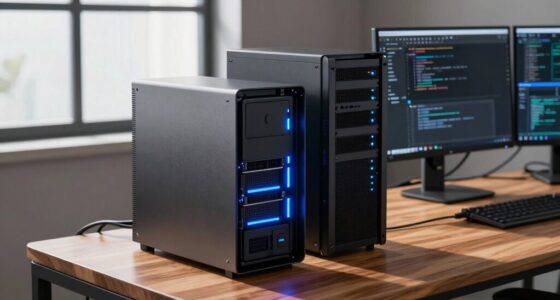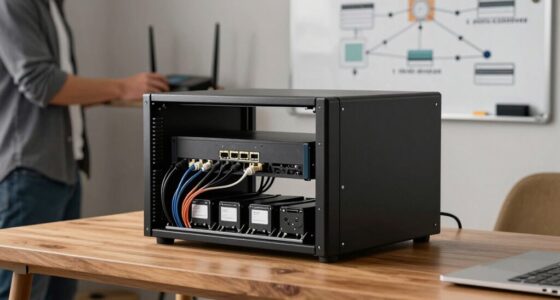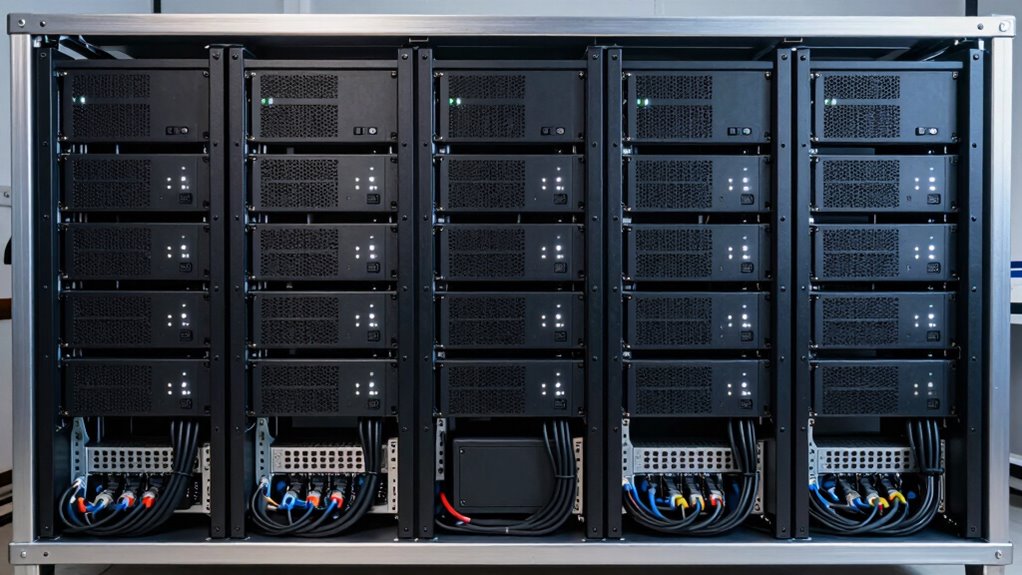

When planning your home lab rack, guarantee it has enough depth for current and future equipment, allowing for proper airflow and heat dissipation. Position heat-generating devices strategically, and include cooling solutions like fans or vents to prevent overheating. Organize cables with management tools to keep airflow clear and simplify troubleshooting. Be sure to include ample power outlets and safety features like surge protectors or UPS. Keep these tips in mind to optimize your setup—more useful insights follow.

Get business pricing on tech for your team
- Business-only prices and quantity discounts
- Tax-exempt purchasing
- Multiple users, one account, clear invoices
Key Takeaways
- Choose a rack depth that accommodates current and future equipment while ensuring proper airflow and heat dissipation.
- Position heat-generating devices strategically to promote efficient cooling and prevent overheating.
- Implement organized cable management to improve airflow, facilitate troubleshooting, and allow easy future adjustments.
- Incorporate energy-efficient cooling solutions and sustainable practices to reduce environmental impact.
- Ensure sufficient power outlets, surge protection, and UPS systems to safeguard equipment and maintain reliable operation.
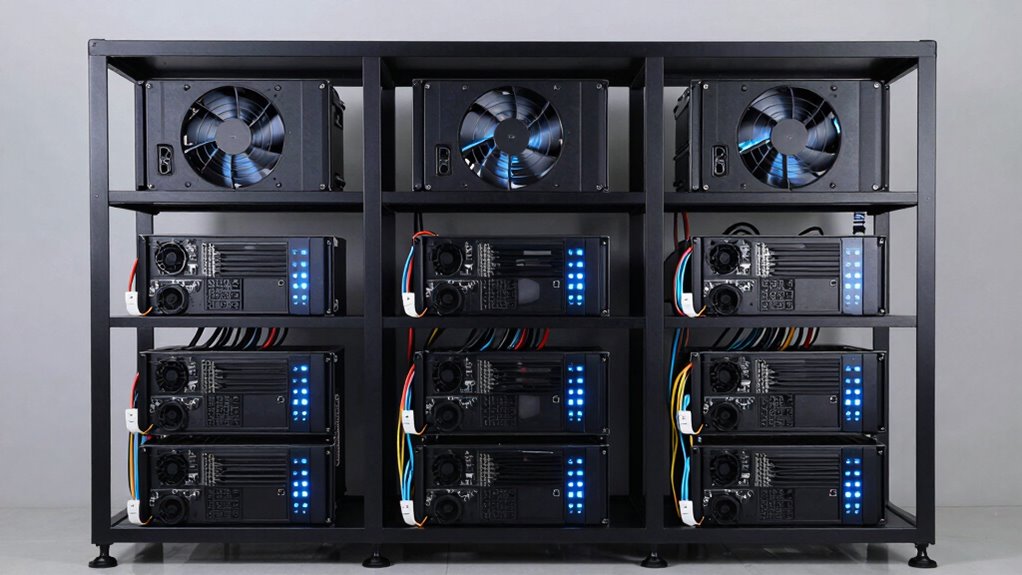
Setting up a home lab rack can seem overwhelming at first, but with careful planning, you can create a functional and organized space for your projects. One of the most important aspects to contemplate is depth. When selecting a rack, ensure it has enough space to accommodate your current equipment and future expansions. A rack that’s too shallow can restrict airflow and make cable management more difficult, while a rack with adequate depth provides room for proper ventilation and easier access to rear connections. Proper depth also helps prevent overheating by giving your devices enough space to dissipate heat effectively. Additionally, considering equipment placement can optimize airflow and cooling efficiency within your rack. Planning your layout with proper spacing can further enhance airflow and prevent hotspots. Thinking about biodiversity principles might seem unrelated, but sustainable practices in your setup, such as energy-efficient cooling, can contribute to a greener environment. Incorporating energy-efficient cooling solutions can further reduce your setup’s environmental impact while maintaining optimal device temperatures.
Airflow is vital to maintaining equipment longevity and performance. Good rack cooling starts with the arrangement of your devices; position heat-generating equipment at the top or in the middle to allow better airflow. Incorporate cooling fans or ventilation panels if necessary, especially for densely packed racks. Proper airflow reduces the risk of overheating, which can lead to hardware failures. When planning your rack, think about how air moves through the space; avoid blocking vents and ensure there’s enough space between devices for air to circulate freely. This not only prevents overheating but also minimizes noise levels from cooling fans, making your home lab more comfortable to work in.
Cable management plays an essential role in keeping your setup organized and accessible. As you install equipment, plan for enough space to route cables cleanly and securely. Use cable ties, Velcro straps, or cable management panels to keep cords tidy and prevent them from tangling. Proper cable management improves airflow by reducing clutter, which is crucial for rack cooling. It also makes troubleshooting easier since you can quickly identify and access the necessary connections without sifting through a mess of cables. When designing your rack, consider leaving extra slack for cables to accommodate future additions or adjustments without causing strain on ports or creating messes. A well-organized cable setup can also extend the lifespan of your equipment by preventing unnecessary wear and tear on connectors.
Finally, always think ahead about power needs. Ensure your rack has enough power outlets and consider installing surge protectors or uninterruptible power supplies (UPS) to protect your equipment. With well-planned depth, airflow, and cable management, your home lab rack becomes a reliable, efficient workspace. Proper planning now saves you time and effort later, helping you avoid common issues like overheating, tangled cables, or cramped setups. By paying attention to these details, you’ll create a home lab environment that’s not only functional but also enjoyable to work in.
home lab rack with adjustable depth
As an affiliate, we earn on qualifying purchases.
As an affiliate, we earn on qualifying purchases.
Frequently Asked Questions
How Do I Estimate Future Power Needs for My Home Lab?
To estimate your future power needs, start by listing all your current equipment and their power consumption. Then, consider potential upgrades or additional devices to gauge future load. Add a buffer for peak usage and unexpected needs. Use load balancing principles to distribute power efficiently across circuits, preventing overloads. Regularly monitor your power usage to adjust estimates, ensuring your home lab remains safe, reliable, and scalable.
What Materials Are Best for Building a Custom Rack?
Imagine building a fortress for your gear—your choice of material matters. Steel is durable and withstands wear, making it ideal for a custom rack, especially where rack ventilation is essential. Aluminum offers lightweight strength and excellent heat dissipation. Plywood can be cost-effective but may lack durability and proper ventilation. Prioritize sturdy, heat-resistant materials that support airflow, ensuring your equipment stays cool and protected through every challenge.
How Can I Optimize Airflow in a Small Home Lab Space?
To optimize airflow in your small home lab, focus on effective ventilation strategies and rack placement. Position your rack near a vent or window to guarantee good air circulation. Use fans or exhaust vents to promote airflow and prevent hot spots. Keep equipment spaced out for better ventilation, and avoid blocking air pathways. Regularly monitor temperature levels to adjust your ventilation strategies as needed, making sure your gear stays cool and runs efficiently.
What Safety Precautions Are Essential for Home Lab Racks?
You should prioritize fire safety by installing smoke detectors nearby and keeping a fire extinguisher within reach. Always make certain your rack is properly grounded to prevent electrical shocks or shorts. Regularly inspect power cords and connections for damage, and avoid overloading circuits. Keep the area clean and free of clutter to reduce fire hazards. These safety precautions help protect your equipment and ensure a safer home lab environment.
How Do I Manage Cable Organization Effectively?
To manage cable organization effectively, you should implement cable management techniques like using cable ties, Velcro straps, and cable organizers. Label your cables for easy identification, and run them along rack rails or behind equipment to keep them tidy. Regularly check and adjust your organization tips to prevent tangling and improve airflow. Proper cable management not only enhances safety but also makes troubleshooting and future upgrades much easier.
As an affiliate, we earn on qualifying purchases.
Conclusion
By carefully planning your home lab rack’s depth, airflow, and power, you’re building a foundation that can handle any tech challenge thrown your way. Skimping on these details is like trying to run a supercomputer on a potato — it just won’t cut it. When you get these elements right, your setup becomes a powerhouse of efficiency and reliability, ready to grow with your ambitions. So, plan smart, and watch your home lab reach legendary status!
As an affiliate, we earn on qualifying purchases.
uninterruptible power supply for server rack
As an affiliate, we earn on qualifying purchases.
As an affiliate, we earn on qualifying purchases.
Fall Picks
fall essentials
As an affiliate, we earn on qualifying purchases.