

Observability isn’t just about logs; it combines metrics, traces, and logs to give you a full picture of your system’s health. Relying only on logging can leave blind spots, slow troubleshooting, and missed performance issues. By integrating all data sources, you gain real-time insights, identify root causes faster, and anticipate problems before they escalate. Staying aware of these differences helps improve reliability—if you want to explore how to build a complete strategy, this will guide you.

Get business pricing on tech for your team
- Business-only prices and quantity discounts
- Tax-exempt purchasing
- Multiple users, one account, clear invoices
Key Takeaways
- Observability integrates logs, metrics, and traces for a comprehensive system view, unlike logs-only approaches.
- It enables real-time insights, anomaly detection, and proactive issue resolution beyond simple log analysis.
- Full observability correlates data across systems, facilitating precise root cause analysis and faster troubleshooting.
- Relying solely on logs can cause blind spots, alert fatigue, and delayed responses to systemic issues.
- Modern observability leverages AI, analytics, and dashboards for smarter, proactive system monitoring and management.
system observability monitoring tools
As an affiliate, we earn on qualifying purchases.
As an affiliate, we earn on qualifying purchases.
What Is Observability, and Why Is It Critical for Modern Systems?

Observability refers to your system’s ability to provide insight into its internal state based on the data it generates, such as logs, metrics, and traces. It relies on effective system instrumentation to collect relevant data, which is essential for understanding how different components interact. Data correlation plays a critical role here, allowing you to connect logs, metrics, and traces to pinpoint issues quickly and accurately. When your system is properly instrumented, it becomes easier to see relationships between events and identify root causes of problems. This all-encompassing visibility not only helps with troubleshooting but also improves performance and reliability. Additionally, leveraging European cloud innovation ensures that your observability practices adhere to sustainable and secure standards. In essence, observability turns raw data into actionable insights, empowering you to maintain a healthy, resilient system.
log and metrics analysis software
As an affiliate, we earn on qualifying purchases.
As an affiliate, we earn on qualifying purchases.
Why Relying Only on Logs Isn’t Enough for Full System Visibility

Relying solely on logs can give you only a partial view of your system’s health, leaving blind spots that hinder effective troubleshooting. Logs are valuable, but they often lack real-time context and can lag behind actual events. To fill these gaps, synthetic monitoring simulates user interactions to proactively detect issues before users notice, providing immediate insights. Additionally, anomaly detection tools analyze patterns across your system, alerting you to unusual behavior that logs might miss. These tools often employ advanced behavioral analysis techniques to identify subtle signs of trouble early. Incorporating high contrast ratios enhances the clarity and detail of your system’s visual representations, making it easier to spot issues. It’s also crucial to consider system scalability to ensure your observability tools can handle growth without losing effectiveness. Relying only on logs means missing the bigger picture, especially when issues develop rapidly. Incorporating synthetic monitoring and anomaly detection creates a more complete, proactive view of your system’s health and performance.
As an affiliate, we earn on qualifying purchases.
How Metrics, Traces, and Logs Work Together for Complete Monitoring
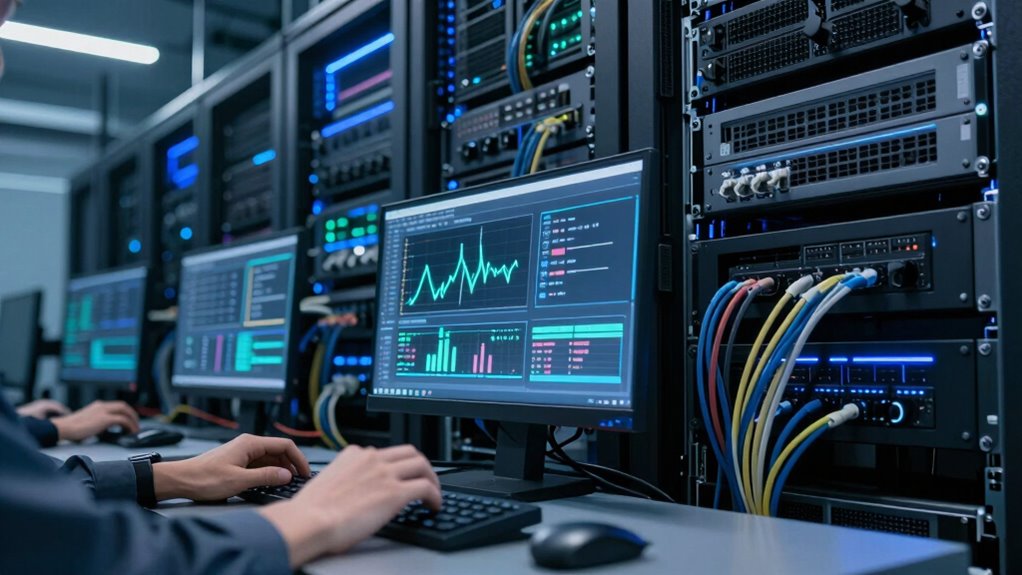
To get a full picture of your system’s health, you need to connect metrics, traces, and logs. By correlating these data sources, you can pinpoint issues faster and understand their root causes. This integrated approach guarantees you achieve complete visibility into your application’s behavior. Smart home automation systems also benefit from this comprehensive monitoring, ensuring seamless operation and user satisfaction. Incorporating system observability techniques allows for proactive detection of potential failures before they impact users.
Correlating Data Sources
Since metrics, traces, and logs each capture different aspects of system behavior, integrating these data sources provides an all-encompassing view of your application’s health. Data correlation is key—you can link logs to specific traces or metrics, revealing the context behind anomalies. Distributed tracing plays a crucial role by connecting individual requests through their entire lifecycle, enabling you to see how logs and metrics relate to specific transactions. This interconnected view helps you quickly identify root causes and understand system interactions. By correlating data sources effectively, you reduce blind spots and gain deeper insights into performance issues, errors, and bottlenecks. Additionally, understanding the science behind at-home devices can inform you about how different monitoring tools work together to ensure system stability. Data integration allows for more comprehensive analysis by combining different types of data, leading to more accurate diagnostics and faster resolution times. Ultimately, this integrated approach ensures you have a thorough, real-time understanding of your system’s behavior.
Achieving Complete Visibility
Integrating metrics, traces, and logs creates a complete view of your system’s health, allowing you to monitor performance and diagnose issues more effectively. To achieve this, focus on data correlation and system instrumentation. Here’s how:
- Collect diverse data types from all system components to guarantee thorough coverage.
- Use system instrumentation to automatically gather detailed metrics and trace data without manual effort.
- Correlate logs, traces, and metrics to identify patterns and pinpoint root causes quickly.
- Visualize combined data in dashboards that highlight anomalies and performance bottlenecks.
As an affiliate, we earn on qualifying purchases.
Common Blind Spots When You Depend Solely on Logging
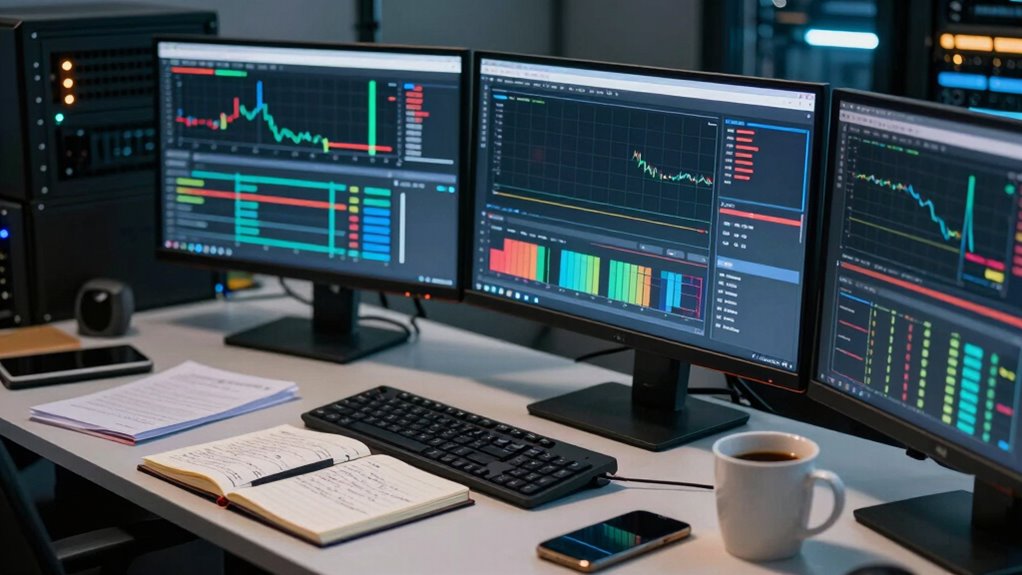
Relying solely on logging can create significant blind spots in your observability strategy. When logs are your only data source, you risk data silos that hinder a holistic view of your system. Without context from metrics or traces, you might miss root causes or dependencies, delaying issue resolution. Additionally, excessive logs can lead to alert fatigue, causing you to overlook critical warnings or dismiss important signals. This narrow focus makes it harder to identify systemic problems or performance bottlenecks. Over time, your team may become overwhelmed, reducing responsiveness and increasing downtime. To avoid these blind spots, you need a more integrated approach that combines logs with metrics and traces, providing a comprehensive, real-time picture of your system’s health. Incorporating full-stack monitoring and integrated data sources can help bridge these gaps and improve overall system observability, especially as organizations adopt modern monitoring techniques to enhance their visibility. Leveraging contextual analysis across multiple data types enables more accurate diagnosis and faster resolution of issues. Recognizing the importance of correlation between different data sources can further refine troubleshooting and proactive maintenance efforts.
How to Build a Complete Observability Strategy: Tools and Best Practices

Building a thorough observability strategy requires a balanced combination of tools and practices that gather, analyze, and visualize system data. To achieve this, focus on:
- Implementing event correlation to connect related data points across your system, helping you identify root causes faster.
- Using data normalization to standardize diverse data sources, making analysis more accurate and consistent.
- Deploying monitoring tools that provide real-time insights and alerting for immediate response, ensuring quick mitigation of issues.
- Establishing dashboards that visualize complex data, aiding in quick interpretation and decision-making.
- Incorporating Free Floating techniques to adapt to evolving system architectures and ensure continuous observability.
- Considering ventilation considerations and proper insulation to maintain system stability and performance in physical setups.
- Leveraging connected equipment to gather comprehensive data that enhances overall system visibility and performance monitoring. Additionally, integrating automated data collection methods can streamline processes and reduce manual effort.
- Employing data integration strategies to combine information from various sources, ensuring a holistic view of system health and performance.
Real-World Examples of Troubleshooting Success With Full Observability

Full observability has transformed how organizations troubleshoot complex systems, turning what used to be guesswork into precise, data-driven decisions. When issues arise, you can quickly identify the root cause by analyzing correlated data from across your entire stack. For example, a company faced an outage and used full observability to trace the problem from network latency spikes to database bottlenecks. By correlating logs, metrics, and traces, they pinpointed the root cause within minutes, avoiding hours of manual digging. This all-encompassing view allowed for rapid resolution and minimized downtime. Such success stories demonstrate how data correlation in a fully observable environment enables you to move beyond surface-level symptoms and address the actual problem efficiently. It’s a game-changer for troubleshooting in complex, distributed systems, especially when kitchen tools are used correctly to prevent common issues. Additionally, the integration of monitoring techniques ensures that potential issues are detected proactively before they escalate into outages. Leveraging comprehensive data collection facilitates holistic system visibility, allowing teams to see the full system picture, making troubleshooting more intuitive and effective. Moreover, adopting integrated observability tools can streamline the process even further, reducing the time and effort needed to resolve issues.
The Future of Monitoring: Moving Beyond Logs for Better Insights

As monitoring technology advances, organizations are increasingly moving beyond traditional log-based approaches to gain deeper, more actionable insights. You’ll leverage AI integration and predictive analytics to anticipate issues before they impact users. This shift enables you to:
- Detect patterns and anomalies faster with AI-powered tools.
- Predict future incidents, reducing downtime proactively.
- Correlate data across systems for all-encompassing understanding.
- Automate responses, minimizing manual intervention.
By incorporating system health metrics, you can achieve a more comprehensive view of your infrastructure’s performance, leading to smarter decision-making.
This evolution means you’re not just reacting to problems but preventing them altogether. Moving beyond logs allows for real-time, context-rich insights that empower you to optimize performance and reliability. By embracing these innovative techniques, you stay ahead of potential disruptions and improve overall system resilience.
Frequently Asked Questions
How Does Observability Improve System Reliability and Performance?
Observability boosts system reliability and performance by enabling you to perform quick root cause analysis when issues arise. It also supports proactive alerting, so you’re notified before problems impact users. With all-encompassing data from metrics, logs, and traces, you can identify bottlenecks and failures early, ensuring your system runs smoothly. This proactive approach helps you maintain high availability and optimize performance continuously.
What Are the Key Differences Between Monitoring and Observability?
Monitoring tracks predefined metrics to alert you to issues, while observability lets you explore data correlation across logs, metrics, and traces to identify root causes. You actively investigate problems by analyzing diverse data sources, gaining deep insights into system behavior. Observability provides an all-encompassing view, enabling you to quickly pinpoint root causes and resolve issues faster, unlike monitoring alone, which offers limited, reactive insights.
Can Existing Logging Tools Be Adapted for Full Observability?
You can adapt existing logging tools for full observability by integrating data correlation and alert tuning features. While logs alone aren’t enough, enhancing your tools to correlate data across systems helps reveal the bigger picture. Fine-tune alerts to focus on meaningful patterns, reducing noise and increasing your responsiveness. This approach transforms basic logs into a thorough observability strategy, giving you real-time insights and proactive issue detection.
How Do I Measure the Effectiveness of My Observability Strategy?
You measure your observability strategy’s effectiveness by tracking metrics significance, such as system uptime, error rates, and response times. Focus on data correlation to identify patterns and root causes quickly. Regularly review dashboards and alerts to see if they improve incident response times and reduce outages. If these metrics show improvement over time, your strategy is effective. Keep refining your tools to guarantee continuous insight and proactive issue resolution.
What Are Common Challenges in Implementing Comprehensive Observability?
Like steering through a maze, you’ll face common challenges in implementing thorough observability, such as filling context gaps and overcoming tool limitations. You might struggle to get a unified view across systems or find tools don’t integrate well, causing silos. These issues hinder your ability to quickly diagnose problems. Staying aware of these hurdles allows you to adapt your strategy, choose better tools, and guarantee you’re capturing meaningful data for true observability.
Conclusion
If you think logs alone can save your system, think again — you’re flying blind in a storm without radar. Full observability transforms your monitoring from guesswork into crystal-clear insight, preventing disasters before they happen. Embrace metrics, traces, and logs together, or risk being caught in a blackout when every second counts. Don’t let incomplete visibility be your downfall; upgrade now and see your system’s true health in stunning detail.
Halloween Picks
halloween
As an affiliate, we earn on qualifying purchases.