
📊 Full opportunity report: Take A Stroll And Let The App Narrate The Journey on IdeaNavigator AI — validation score, market gap, and execution plan.

Get business pricing on tech for your team
- Business-only prices and quantity discounts
- Tax-exempt purchasing
- Multiple users, one account, clear invoices
TL;DR
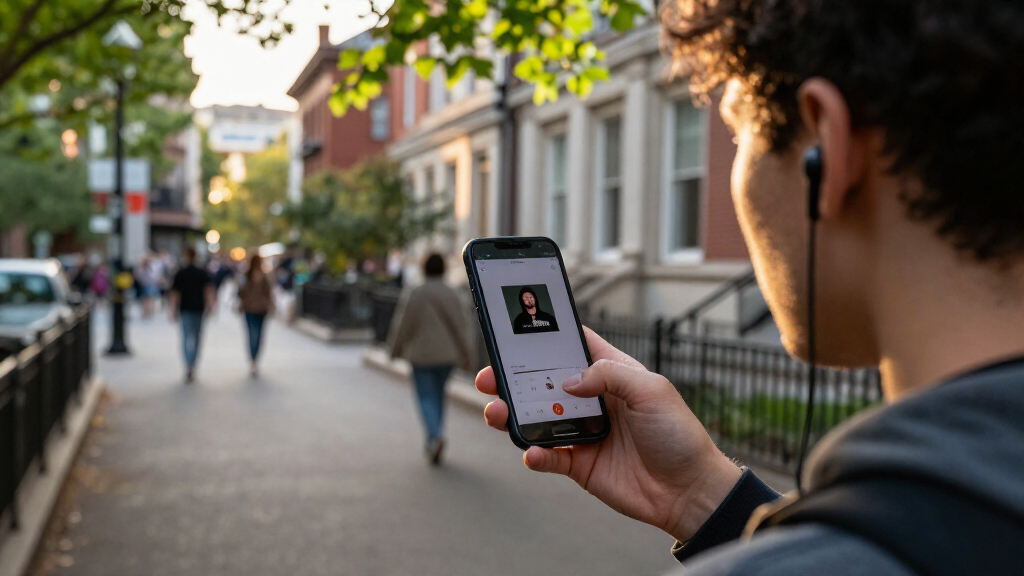
IdeaNavigator AI has outlined a concept for an audio walking app that generates narration based on a user’s live route, including local history, architecture and other details. The proposal recommends testing the product in two cities, tracking week-four walking retention and checking narration accuracy; no launch, funding or test results are reported.
IdeaNavigator AI has proposed an audio walking app that creates narration around a person’s route, responding to nearby streets, buildings and landmarks. The concept is framed as an early product opportunity, not a launched service: its suggested test would cover two cities and measure repeat walks and the accuracy of the generated information.
The proposed app would let a user start a walk and hear narration generated in response to the route as it unfolds. Suggested material includes local history, architectural details and unusual features, with the narration changing as the walker reaches corners or landmarks. The proposal also describes themed modes, such as history, architecture and nature, and the ability to save favorite routes.
IdeaNavigator AI identifies the intended user as someone who wants their neighborhood or travels narrated. Its case for the product is that ordinary walking routes receive less audio coverage than landmark districts: podcasts generally are not tied to a listener’s location, while conventional tour apps tend to focus on established visitor destinations. These are the proposal’s market assumptions; it does not provide user research or comparative data to substantiate them.
The suggested business model combines a consumer subscription with a licensing tier for tourism boards. To test demand, the concept recommends launching in two cities, then measuring walks per week among users who remain active at week four. It also calls for an audit of narration accuracy on a sample of routes. No cities, prices, launch date, partners or results are given.
Concept brief · Location-aware audio
Take A Stroll And Let The App Narrate The Journey
An early product concept for turning live walking routes into narrated journeys through local history, architecture and everyday details.
“Let the route become the story.”
Audio would respond to nearby streets, buildings and landmarks as the walk unfolds.Suggested pilot, not scheduled
Repeat walks among active users
Audit a sample of routes
Subscription + tourism licensing
01 / The experience
A walk shaped by what is nearby
The proposed app would generate narration as a person moves, making the route itself the structure for listening.
Local stories
Hear history, architectural details and unusual features connected to streets and places along the way.
Route-reactive audio
Narration could change at corners or landmarks, so the listening experience follows the walk as it unfolds.
Themes & saved routes
Possible modes include history, architecture and nature, with an option to save favorite walks.
Intended audience: people who want their neighborhood or travels narrated. These features are proposed; no working app or product demonstration is reported.
02 / The market thesis
Audio beyond tourist routes
The concept aims to bring location-based listening to ordinary streets, where coverage may be thinner than in established visitor districts.
Content without location
Usually follow a program or topic rather than adapting to where a listener is walking.
Selected destinations
Often focus on known landmarks and visitor areas, with routes prepared in advance.
Live route as the guide
Would use nearby places as prompts for narration, including on everyday routes.
03 / Validation plan
A two-city trial would test demand
The recommended next step is a minimum viable product test. No cities, dates, sample size or success thresholds are specified.
Select routes
Choose two cities and identify routes with usable local records.
Track repeat use
Measure walks per week among users still active at week four.
Review accuracy
Audit narration on a sample of routes for factual reliability.
Week-four walking retention would indicate whether use continues after initial curiosity. An accuracy audit would examine whether generated descriptions of history and buildings are dependable.
The proposal does not define audit methods, an acceptable error rate or how corrections would be made. Engaging storytelling and factual reliability need separate evaluation.
04 / Open questions
Product, data and trust remain unresolved
These are unknowns in the proposal, not confirmed shortcomings of an existing service.
Which open records and local datasets would support narration, and how complete is coverage by location?
How would unsupported details be prevented, reviewed and corrected before they sound authoritative?
How would the app determine a walker’s position and handle sensitive location data?
Who would operate it, what would pricing be, and what would tourism-board licensing include?
05 / From idea to evidence
What a useful update would include
The concept is a proposed opportunity and evaluation plan. Implementation and results remain unknown.
Who returns?
Participant counts, week-four repeat walking, and the kinds of routes people choose would clarify sustained interest.
What holds up?
Human review findings would show how often narration is inaccurate or weakly supported across sampled routes.
What can scale?
Pricing, privacy practices and tourism-board agreements would help explain whether a test could become a service.
The proposal invokes large language models and open data as a possible way to create route-specific narration without recording every tour in advance. It names no model, dataset, technical system or demonstration.
06 / Key questions
At a glance
Reported by IdeaNavigator AI. No launch, funding, test results or decision to proceed is stated.
Has the walking app launched?
No launch is reported. This is a product concept with a proposed validation approach, not an available app or completed trial.
What would the app narrate?
Local history, buildings and unusual details, with possible history, architecture and nature modes. Coverage would depend on information available for each place.
How might the idea be tested?
A two-city trial would track walks per week among users active at week four and audit narration accuracy on a sample of routes. Dates and thresholds are unspecified.
How might the service make money?
The proposed model combines a consumer subscription with licensing for tourism boards. No pricing or licensing terms are given.
Testing Audio Beyond Tourist Routes
If the concept works, it could make location-based audio available on everyday streets, rather than limiting narrated walks to destinations where tours have been produced in advance. That would offer walkers a way to learn about places they already pass, and could give visitors a more flexible alternative to following a fixed route. Those outcomes remain possibilities, not demonstrated results.
The proposal’s business and editorial questions are closely linked. A subscription product would need people to return often enough to justify paying, while a tourism-board license would depend on useful coverage and reliable information in a particular area. The recommended week-four retention measure addresses whether people continue taking walks after initial curiosity fades. An accuracy audit addresses whether the narration can be trusted, especially when it describes local history or identifies buildings.
That accuracy issue matters because generated narration may sound authoritative even when its underlying details are incomplete or wrong. A useful evaluation would need to distinguish engaging storytelling from factual reliability. The proposal calls for an audit but does not set out its methods, acceptable error rate or process for correcting mistakes.
Products Worth Considering

Anker SOLIX C300 Portable Power Station, 288Wh

Bose QuietComfort Headphones (2nd Gen), Wireless Noise-Cancelling Over-Ear Headphones, Black

Apple Watch Series 12 GPS 46mm
As an affiliate, we earn on qualifying purchases.
Why Route-Aware Narration Is Proposed Now
IdeaNavigator AI argues that advances in large language models could make it possible to generate location-grounded narration on demand from open data, including historical, architectural and place records. The proposal presents that capability as a possible way around the cost of producing a separate recorded tour for every route. It does not identify a specific model, dataset, technical system or product demonstration.
The concept sits between two familiar audio formats. Podcasts deliver listening content without adapting to where someone is walking; many guided-tour apps are organized around selected landmarks and visitor areas. The proposed app would instead use a live route as the organizing structure, with content intended to reflect nearby places. Whether open records offer enough detail and dependable coverage for that experience will vary by location and is not established in the proposal.
The recommended two-city trial is a validation plan, not evidence that the app has already been built or tested. It would allow a team to examine both use and content quality across selected routes, but the proposal does not explain how the cities would be chosen or how results would be compared.
Product, Data and Accuracy Still Open
No working app or public test results are described. It is not clear who would build or operate the service, which cities it would cover, what data sources it would use, or whether the proposed themed modes and saved routes would be included in an initial release. There is also no information about subscription pricing or tourism-board licensing terms.
The proposal does not specify how the app would determine a walker’s location, how often narration would be generated, or what safeguards would keep it from presenting unsupported details as fact. It also leaves open how user location data would be handled. These are unresolved product and trust questions, not confirmed shortcomings of an existing service.
The validation plan provides no sample size, retention target, accuracy standard or method for selecting route details for review. Without those details, the proposed measures indicate what the team might examine, but not what result would count as success. No development schedule or decision about proceeding beyond the test is stated.
A Two-City Trial Would Test Demand
The next step described in the proposal is to test a minimum viable product in two cities. The team would need to select locations and routes, establish what data can support the narration, and define how repeat walks and factual accuracy will be measured. IdeaNavigator AI does not say that this trial has been scheduled or that a company has committed to carrying it out.
If a test proceeds, the most informative updates would include how many participants return to walk by week four, what kinds of routes they use, and how often a human review finds inaccurate or weakly supported narration. Pricing, privacy practices and any tourism-board agreements would also clarify whether the idea can move from a product experiment to a sustained service. For now, the concept and its evaluation plan are the reported development; implementation and results remain unknown.
Source: IdeaNavigator AI
Key Questions
Has the walking app launched?
No launch is reported. IdeaNavigator AI presents a product concept and a proposed validation approach, not an available app or a completed trial.
What would the app narrate?
The concept describes route-based narration about local history, buildings and unusual details, with possible history, architecture and nature modes. The specific content would depend on what information is available for each place.
How would the idea be tested?
The proposal recommends a trial in two cities, tracking walks per week among users at week four and auditing the accuracy of narration on a sample of routes. No testing dates or success thresholds are provided.
How might the service make money?
IdeaNavigator AI suggests a consumer subscription and a separate licensing option for tourism boards. Pricing and licensing details have not been announced.
Source: IdeaNavigator AI