🔍 Read the full analysis: A Closer Look At 10 Best NVMe SSDs For High-Performance Computing on ThorstenMeyerAI.com

Get business pricing on tech for your team
- Business-only prices and quantity discounts
- Tax-exempt purchasing
- Multiple users, one account, clear invoices
TL;DR
ThorstenMeyerAI.com presents 10 NVMe SSD choices for different budgets and workloads, naming the Samsung 990 PRO 2TB its best overall pick and the Kingston NV3 1TB a budget option. The source highlights sustained-write slowdowns, heat and capacity as factors buyers should weigh, but provides limited model-by-model specifications and test data.
ThorstenMeyerAI.com has published a 10-drive NVMe SSD buyer’s guide that names the Samsung 990 PRO 2TB its best overall choice and the Kingston NV3 1TB its budget pick. The guide focuses on the difference between advertised peak speeds and sustained performance, a distinction that can affect large transfers, creative work and other demanding workloads.
The article says it evaluated drives using sequential read and write behavior under sustained loads, random input/output performance, thermal throttling, endurance ratings and warranty terms. It also considers whether a drive uses DRAM or relies on Host Memory Buffer technology. These criteria address practical use, but the supplied material does not include benchmark tables, test conditions or numerical scores that would let readers independently compare the ten drives.
The guide says smaller-capacity models can slow more sharply on large transfers when their SLC cache is exhausted, and that 2TB or 4TB versions may provide more consistent performance. It also identifies cooling as a key factor in compact systems. These are general findings presented by the source; the available material does not provide measured temperatures or transfer results for each model.
Among its named recommendations, the guide describes the Samsung 9100 PRO as a more power-efficient option for laptops, while the SanDisk Optimus 5100 is presented as a balanced DRAM-less choice for general use. It also names the heatsink-equipped Bestoss 1TB as suitable for compact builds. The source does not supply prices, full model specifications or a complete explanation of how each product placed in the ranking.
The 10 picks
- 1
 Samsung 990 PRO 4TB PCIe 4.0 NVMe M.2 2280 SSDView on Amazon →
- 2
 Gigastone Game Turbo 4TB M.2 NVMe PCIe 4.0 Internal SSDView on Amazon →
- 3
 Gigastone 1TB Game Turbo PCIe Gen4x4 M.2 NVMe SSD (2-Pack)View on Amazon →
- 4
 Samsung 9100 PRO 2TB Internal SSDView on Amazon →
- 5
 Samsung 990 PRO 2TB PCIe 4.0 M.2 2280 NVMe SSDView on Amazon →
- 6
 Bestoss 1TB PCIe 4.0 NVMe M.2 2280 SSD with HeatsinkView on Amazon →
- 7
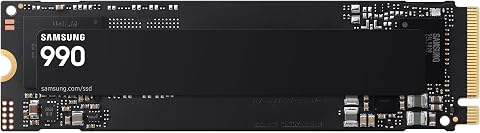 Samsung 990 1TB PCIe 4.0 NVMe Internal SSDView on Amazon →
- 8
 SanDisk Optimus 5100 1TB NVMe SSD, PCIe 4.0, M.2 2280View on Amazon →
- 9
 Kingston NV3 1TB M.2 2280 PCIe 4.0 NVMe SSDView on Amazon →
- 10
 SanDisk Optimus 5100 500GB NVMe SSD, PCIe 4.0, M.2 2280View on Amazon →
Choosing Between Peak Speed and Sustained Use
The guide’s central point is that a drive’s maximum advertised speed does not by itself predict performance through a long file transfer. Once an SLC cache fills, some drives can slow, making sustained write behavior more relevant to video editing, large game installations and similar tasks than a brief peak-speed result.
For buyers, this makes workload and system design part of the choice. A budget drive may be adequate for everyday use, while heavy write workloads can make capacity, cooling and endurance more consequential. A heatsink or motherboard thermal pad may also matter in a laptop or compact PC, where airflow is limited. The guide offers a useful checklist, though its lack of disclosed test data means readers should treat its rankings as the publisher’s assessment rather than a fully reproducible benchmark comparison.
Products Worth Considering

Bose Smart Dolby Atmos Soundbar, All-in-One Soundbar for TV, A.I. Dialogue Mode, Voice Control and Amazon Alexa Built-in, Supports Bluetooth

Apple MacBook Air 15-inch Laptop with M5 Chip, 16GB Memory, 512GB SSD, Midnight

LG UltraGear 32GX850A-B 32-inch 4K UHD OLED Gaming Monitor
As an affiliate, we earn on qualifying purchases.
The Guide’s Evaluation Criteria
The article frames SSD selection as a balance among throughput, heat and cost per gigabyte, rather than a simple comparison of maximum read speeds. It favors drives that maintain performance during extended workloads and considers random IOPS as an indicator of responsiveness during everyday multitasking.
It also discusses interface compatibility: a drive’s performance depends on the PCIe generation and lane configuration supported by the M.2 slot. The source notes that DRAM-less drives may use Host Memory Buffer to access a small amount of system memory, but says this may be less suitable for demanding multitasking. These points are presented as buying guidance, not as new hardware standards or independent test findings.
“The guide describes it as “a compelling entry into PCIe 4.0 speeds without the premium price tag of flagship models.””
— ThorstenMeyerAI.com, on the Kingston NV3 1TB
Missing Test Data and Model Details
The supplied guide excerpt does not identify the publication date, provide a complete list of all 10 drives, or show model-by-model benchmark results, test hardware, firmware versions or prices. It therefore is not possible from this material to verify the ranking, quantify the performance gaps or determine whether listed prices remain current.
Some claims also need further detail. The guide describes the Samsung 9100 PRO as a generational leap in power efficiency but gives no power measurements or comparison method. It says the Kingston NV3 can lose speed after its cache is exhausted, but does not state the drive capacity, transfer size or test conditions behind that observation. The full endurance and warranty comparisons are not provided either.
What Buyers Should Verify
The source does not announce a follow-up test or a future update. Readers comparing these drives should check current manufacturer specifications and retailer pricing, confirm their system’s M.2 and PCIe compatibility, and review endurance ratings and warranty terms for the exact capacity they intend to buy.
For a closer comparison, the next useful information would be repeatable sustained-transfer tests, thermal results and current prices for all ten models. Until those details are available, the guide’s recommendations are best read as a starting point, with the final choice matched to workload, cooling and budget.
Key Questions
Which SSD does the guide rank as its best overall pick?
ThorstenMeyerAI.com names the Samsung 990 PRO 2TB its best overall choice, citing its combination of sequential speeds and power efficiency. The supplied material does not include test scores to independently compare it with the other picks.
What is the guide’s budget recommendation?
The guide points to the Kingston NV3 1TB as a lower-cost way to get PCIe 4.0 storage. It cautions that sustained writes may slow after the SLC cache is exhausted, but does not provide the test conditions or current price.
Why does sustained write speed matter?
Peak speeds may apply only to short bursts. During a large transfer, a drive can slow after its cache fills, so sustained performance can matter for workloads such as video editing or moving large files.
What should buyers check before choosing an NVMe SSD?
Check PCIe and M.2 compatibility, the drive’s capacity, cooling needs, endurance rating and warranty. Compare sustained-workload tests and current prices where available, since the supplied guide does not publish those details for every pick.
Source: ThorstenMeyerAI.com