
🔍 Read the full analysis: A Practical Guide To 9 WiFi 7 Routers For AI Speed And Coverage on ThorstenMeyerAI.com

Get business pricing on tech for your team
- Business-only prices and quantity discounts
- Tax-exempt purchasing
- Multiple users, one account, clear invoices
TL;DR
ThorstenMeyerAI.com compares nine WiFi 7 routers, naming the TP-Link Archer BE600 its pick for many households, the ASUS ROG Rapture GT-BE98 Pro for high-demand gaming, and the TP-Link Deco BE25 for mesh coverage. Those rankings are editorial judgments, not independently documented test results in the supplied material; buyers should check device compatibility, home layout and Ethernet port speeds.
ThorstenMeyerAI.com has published a buying guide to nine WiFi 7 routers, recommending the TP-Link Archer BE600 for many households, the ASUS ROG Rapture GT-BE98 Pro for demanding gaming setups, and the TP-Link Deco BE25 for larger homes that need mesh coverage. The recommendations are the guide’s editorial assessment; the supplied material does not provide dated, independently verified test results or comparable measured speeds.
The guide says router choice depends on band configuration, home layout and wired-port capacity, rather than the WiFi 7 label alone. It favors the Archer BE600 as a balance of tri-band performance, usability and price, while describing the quad-band ROG Rapture GT-BE98 Pro as an option for users with heavier demands and the Deco BE25 as a mesh choice for homes where one router may leave dead zones.
Other models named in the guide include the Archer BE230, a dual-band option; the ASUS RT-BE82U, positioned for gaming; the NETGEAR Nighthawk RS700S, described as suited to smaller or single-story homes; the Archer BE400, cited in discussion of budget port limits; and the NETGEAR Nighthawk RS90, mentioned for its 10G port. The supplied source refers to nine picks but names only eight distinct models, so the ninth selection cannot be identified from the available material. For comparison, see another WiFi 7 router roundup.
The article says its ranking considered throughput consistency, coverage efficiency and ecosystem integration. However, it does not include the underlying measurements, prices, test conditions or a complete nine-router ranking in the supplied text. Its performance descriptions should be read as the publisher’s claims rather than verified comparative findings.
The 9 picks
- 1
 ASUS ROG Rapture GT-BE98 Pro Quad-Band WiFi 7 Gaming RouterView on Amazon →
- 2
 NETGEAR Nighthawk WiFi 7 Router RS700S, Up to 3,500 sq ft, 19 GbpsView on Amazon →
- 3
 NETGEAR Nighthawk WiFi 7 Router, Up to 2,500 sq ft, 9.3 GbpsView on Amazon →
- 4
 Deco 7 Dual-Band BE5000 WiFi 7 Mesh Wi-Fi System 4-Stream 5 Gbps, 240 MHzView on Amazon →
- 5
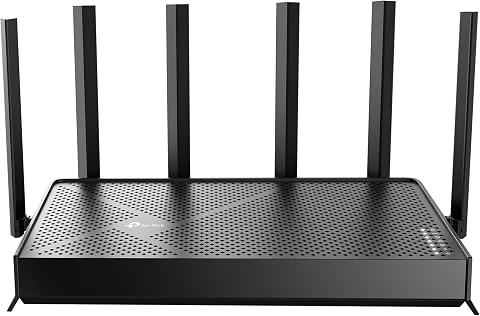 TP-Link Tri-Band BE9700 WiFi 7 Router (Archer BE600)View on Amazon →
- 6
 ASUS RT-BE82U Dual-Band Wi-Fi 7 RouterView on Amazon →
- 7
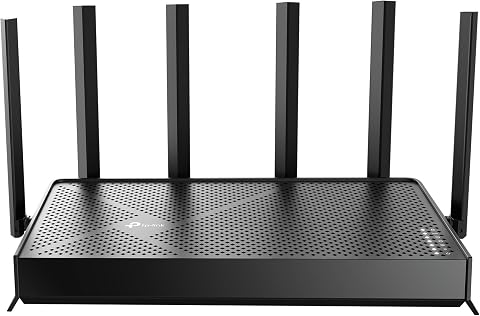 TP-Link BE6500 Dual-Band WiFi 7 Router (BE400)View on Amazon →
- 8
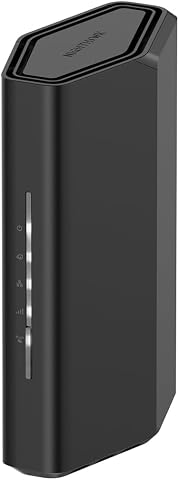 NETGEAR Nighthawk WiFi 7 Router RS90, Up to 2,000 sq ft, 3.6 GbpsView on Amazon →
- 9
 TP-Link Dual-Band Wi-Fi 7 Router, Archer BE230View on Amazon →
Choosing Between Speed and Coverage
The guide addresses a practical decision for people considering an upgrade: whether to buy a single high-performance router or a mesh system. A flagship may suit a compact home and a high-speed internet plan, while mesh nodes can extend coverage across floors or around obstacles. Mesh can cost more and, as the source notes, wireless links between nodes may add latency depending on placement.
It also highlights the potential mismatch between advertised wireless capability and a home’s actual connections. Ethernet port speed can limit wired devices, even when wireless performance is higher. And WiFi 7 features such as Multi-Link Operation and 320 MHz channels require compatible client devices to deliver their intended benefits; older devices can connect but will not use those features.
Products Worth Considering

LG UltraGear 34GX90SA-W 34-inch WQHD Curved OLED Gaming Monitor

LG UltraGear 27GX704A-B 27-inch QHD OLED Gaming Monitor

LG UltraGear 32GX850A-B 32-inch 4K UHD Glossy OLED Gaming Monitor
As an affiliate, we earn on qualifying purchases.
What the Guide Compares
The source frames WiFi 7 as the next step after WiFi 6E and points to features including 320 MHz channels, Multi-Link Operation and 4096-QAM. It distinguishes dual-band routers, which use 2.4 GHz and 5 GHz, from tri-band models that add 6 GHz and quad-band designs that add another 5 GHz band. The guide argues that additional bands may help manage traffic in busy homes, though results depend on compatible devices and local conditions.
Its recommendations also reflect differing software needs. The guide describes TP-Link’s Tether app and Deco interface as approachable for basic setup, while ASUS gaming software offers more detailed controls that may suit experienced users. These are the guide’s characterizations; the supplied material does not show a formal usability study.
“My top pick for most households is the TP-Link Archer BE600”
— ThorstenMeyerAI.com guide
Missing Test Data and Ninth Pick
The supplied source does not give a publication date, prices, measured throughput figures, test locations, sample devices or detailed results behind its rankings. It is not clear how the models performed under comparable conditions, or whether the assessments reflect laboratory testing, hands-on use or manufacturer specifications. The source also promises nine picks but identifies only eight distinct router models in the material provided.
Actual coverage and speed can vary with building materials, interference, client-device support, internet service and router placement. The guide’s claims about gaming latency and performance under load cannot be independently assessed from the supplied text.
Checks Before Buying
Readers should verify the exact model’s current specifications, price, firmware support and Ethernet ports before purchase, then compare those details with their internet plan and wired-device needs. For multi-story homes, they should assess whether mesh nodes can be placed with a reliable connection between them. Households with mostly older phones and computers may see limited benefit from WiFi 7’s newest features until they upgrade those devices.
A fuller comparison would need to identify the missing ninth router and publish comparable test methods and results. No further testing or update schedule is stated in the supplied material.
Key Questions
Which router does the guide recommend for most households?
The guide names the TP-Link Archer BE600, describing it as a balance of tri-band performance, usability and price. This is the publisher’s recommendation, not a conclusion supported by test data included in the supplied material.
Which model does it recommend for a larger home?
The guide points to the TP-Link Deco BE25 mesh system for larger homes where one router may not cover every room. Mesh coverage depends on node placement and the home’s layout.
Do WiFi 7 features work with older devices?
Older devices can connect because WiFi 7 routers are backward compatible, according to the guide. They will not use WiFi 7-specific features such as Multi-Link Operation or 320 MHz channels unless the client device supports them.
Does the source provide all nine router picks?
No. The supplied material names eight distinct models despite describing the article as a guide to nine routers. The missing selection is not specified.
Source: ThorstenMeyerAI.com