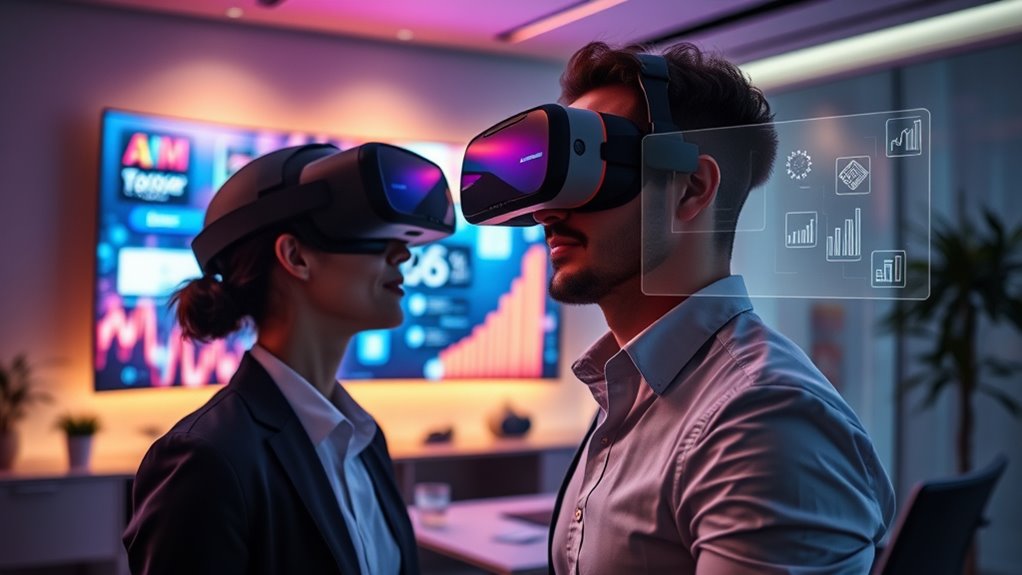

AR and VR are revolutionizing your digital marketing efforts by creating immersive shopping experiences, virtual showrooms, and interactive branding campaigns that boost engagement and loyalty. They let you explore products virtually, try them out, and connect with brands on a deeper level. These technologies make your interactions more personalized, memorable, and fun, transforming passive viewing into active participation. Keep exploring how you can leverage AR/VR to stand out and strengthen your brand presence.
Key Takeaways
- Virtual showrooms enable interactive product exploration, reducing physical visits and increasing purchase confidence.
- AR/VR creates immersive, personalized shopping experiences that enhance customer engagement and satisfaction.
- Brands use AR/VR to craft memorable, emotionally resonant experiences that strengthen brand loyalty.
- Interactive virtual environments allow tailored experiences like virtual try-ons and product testing, boosting conversions.
- AR/VR revolutionizes digital marketing by fostering deeper emotional bonds and innovative brand-audience interactions.

Have you ever wondered how augmented reality (AR) and virtual reality (VR) are transforming digital marketing? These cutting-edge technologies create opportunities for brands to engage audiences in ways that were once impossible. One of the most exciting developments is the rise of virtual showrooms, which allow customers to explore products in a highly interactive, digital environment. Instead of visiting physical stores, you can walk through a virtual space from your living room, examining every detail of a product with an immersive level of detail. This not only saves time but also provides a richer, more personalized shopping experience. Virtual showrooms give you the chance to see how furniture fits in your space, try on clothes virtually, or test out gadgets before making a purchase—eliminating guesswork and increasing confidence in buying decisions.
These virtual environments are also a powerful tool for immersive branding. They let brands craft experiences that deeply resonate with you by immersing you in their story, values, and products. Imagine entering a virtual world where you’re surrounded by your favorite brand’s aesthetics, interacting with its products in a way that feels real. This shifts traditional branding from passive viewing to active participation, making the brand memorable and emotionally engaging. As you navigate these immersive spaces, you’re more likely to develop a strong connection because you’re not just observing but experiencing the brand firsthand. Companies are leveraging AR and VR to create memorable campaigns that evoke emotion, foster loyalty, and drive purchasing behavior.
Immersive branding transforms passive viewers into active participants, fostering emotional connections and lasting loyalty.
Furthermore, these technologies enable brands to stand out in a crowded marketplace by offering novel, interactive experiences. Instead of scrolling through static images or watching videos, you’re invited to step inside a virtual environment where your curiosity is sparked. Whether it’s trying out virtual makeup tutorials or walking through a simulated car model, the level of engagement is markedly heightened. This immersive branding approach can also be tailored to individual preferences, providing customized experiences that resonate personally with you, which can increase conversion rates and customer satisfaction.
In essence, AR and VR are revolutionizing the way brands connect with their audiences. Virtual showrooms make shopping more convenient and engaging, while immersive branding fosters emotional bonds that are difficult to achieve through traditional marketing. As these technologies continue to evolve, expect to see even more innovative ways to interact with brands on a deeper level, ultimately transforming your digital experiences into something more dynamic, interactive, and memorable.
Frequently Asked Questions
How Cost-Effective Is Ar/Vr for Small Businesses?
AR and VR can be cost-effective for small businesses if you focus on targeted virtual experiences and augmented reality features that enhance customer engagement. While initial setup may seem pricey, you save by reducing physical prototypes, boosting online sales, and improving customer satisfaction. By choosing scalable solutions and focusing on your specific needs, you can make augmented reality and virtual experiences a worthwhile investment that drives growth without breaking the bank.
What Are the Privacy Concerns With Ar/Vr Marketing?
You should be aware that AR/VR marketing raises privacy concerns related to data privacy and user tracking. As you collect detailed user data, there’s a risk of exposing sensitive information if not properly secured. Tracking user interactions can feel invasive, potentially damaging trust. To protect your audience, implement strict data privacy policies, anonymize data when possible, and be transparent about how you track and use user information.
How Do Ar/Vr Experiences Impact Customer Engagement?
You might think AR/VR experiences are just fancy gadgets, but they actually boost your customer engagement. By offering immersive storytelling, you draw customers into a world where they feel emotionally connected to your brand. This deep engagement keeps them interested longer, making your message memorable. So, instead of just selling a product, you create an experience that resonates emotionally, turning casual viewers into loyal customers—ironic, isn’t it?
What Skills Are Needed to Develop Ar/Vr Marketing Content?
To develop AR/VR marketing content, you need a mix of technical skill development and creativity. Focus on learning AR/VR content creation tools like Unity, Unreal Engine, or Blender, and sharpen your coding skills in languages such as C# or JavaScript. Understanding 3D modeling, user experience design, and interactive storytelling is essential. By honing these skills, you can craft immersive experiences that captivate your audience and elevate your marketing strategies.
Which Industries Benefit Most From Ar/Vr Marketing Strategies?
You’ll find industries like retail, automotive, and real estate benefit most from AR/VR marketing strategies. Virtual showrooms let customers explore products interactively, boosting engagement and sales. Immersive branding creates memorable experiences, helping brands stand out in competitive markets. By adopting these technologies, you can offer personalized, realistic previews that enhance customer satisfaction and loyalty, making these industries prime candidates for AR/VR’s transformative potential.
Conclusion
Don’t let concerns about complexity hold you back—AR and VR are more accessible than ever. They offer immersive, engaging experiences that can truly set your brand apart. Imagine your customers exploring your products from their living rooms or trying on clothes virtually—it’s easier than you think. Embrace these technologies now, and watch your marketing efforts become more interactive and memorable. The future of digital marketing is here—are you ready to take the leap?