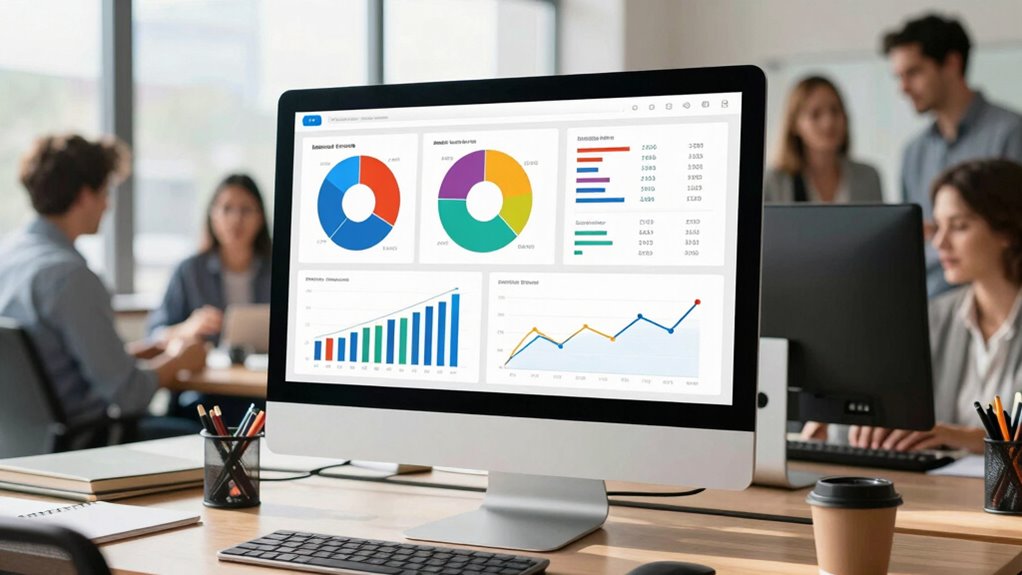

A unified marketing dashboard is essential for your team to track key metrics in real time, make data-driven decisions, and stay aligned across multiple channels. It should automate data collection from social media, emails, and analytics tools, reducing manual errors and saving time. Choosing the right tools, designing clear visuals, and maintaining data accuracy are critical. Keep refining your setup to guarantee it stays relevant—continue exploring to learn how to build one that truly works for your team.
Key Takeaways
- A unified marketing dashboard centralizes real-time key metrics, ensuring team alignment and quick decision-making.
- Automating data integration from multiple sources reduces errors and updates metrics instantly for accurate insights.
- Prioritizing essential KPIs like engagement, reach, and conversions guides strategic actions and optimizes marketing ROI.
- Clear visualizations with trend lines and alerts help teams quickly identify issues and opportunities.
- Regular maintenance, data validation, and ongoing review ensure the dashboard remains reliable, relevant, and trusted.
Why Your Marketing Team Needs a Unified Dashboard

A unified marketing dashboard is essential because it provides your team with a clear, real-time view of all key metrics in one place. With effective data integration, you can automatically pull information from various platforms like social media, email marketing, and analytics tools, eliminating manual updates and reducing errors. This seamless data flow ensures everyone on your team has access to the latest insights without jumping between different systems. User access controls make sure the right team members see relevant data, maintaining security while promoting collaboration. A centralized dashboard simplifies decision-making, saves time, and keeps your team aligned. Additionally, understanding projector specifications can help tailor your data presentation to better suit your team’s needs. By consolidating data sources and managing user access, you create a streamlined environment that enhances productivity and informed strategy execution. Recognizing ear wax odor and other subtle cues can also improve your ability to interpret data patterns and anomalies within your dashboard. Moreover, considering data visualization techniques can make complex information more understandable and actionable for your team. Incorporating automated alerts can further ensure timely responses to critical metrics changes, keeping your strategies agile and effective. Exploring user interface design best practices can help optimize how team members interact with the dashboard for maximum efficiency.
What Metrics Should You Include in Your Marketing Dashboard?
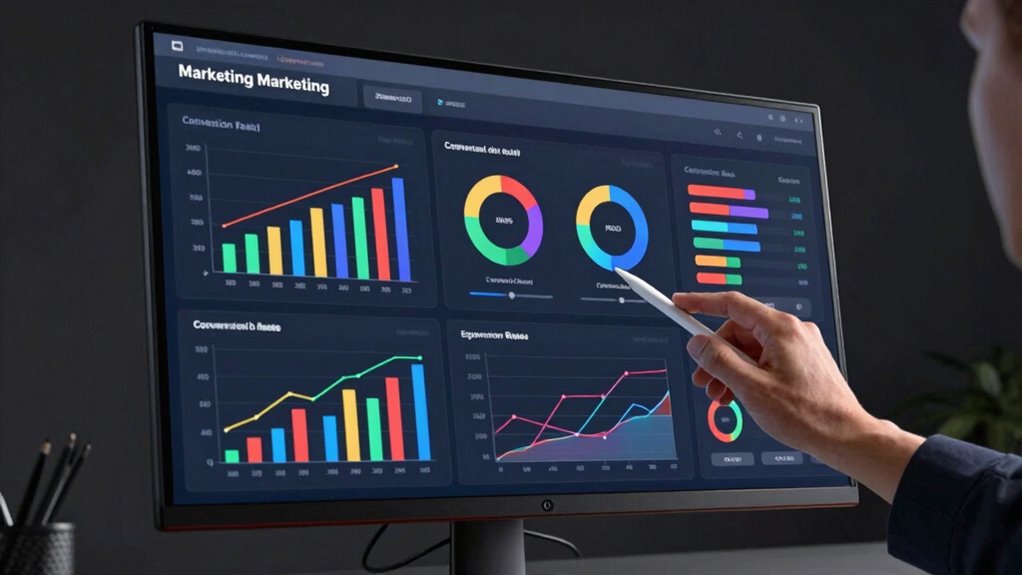
To make your marketing dashboard effective, you need to focus on key metrics like KPIs that align with your goals. Tracking engagement and reach helps you understand how your audience interacts with your content. Consider which specific indicators will give you the clearest picture of your team’s performance. Additionally, ensuring that your data sources are reliable and verified helps prevent scam investments and maintains the integrity of your insights. Incorporating simple systems from your overall home organization approach can help keep your data tracking straightforward and manageable. Understanding how essential oils can support your well-being might also inspire new ways to enhance team health and productivity, much like selecting the right equipment and filters is crucial for deep-sky imaging. Being aware of trending wellness practices, such as spiritual retreats, can also provide fresh perspectives on team motivation and mental clarity.
Key Performance Indicators
What metrics should you include in your marketing dashboard to measure success effectively? Your KPIs must tell a compelling story with data storytelling, guiding your decisions. Focus on benchmarks that reflect your goals and industry standards. Here’s a quick glance:
| Metric | Purpose | Benchmark Target |
|---|---|---|
| Conversion Rate | Measures campaign effectiveness | 5-10% |
| Cost per Lead | Tracks lead acquisition costs | <$50 |
| Customer Lifetime Value | Assesses long-term value | 3x Customer Acquisition Cost |
In addition, aligning your KPIs with European cloud innovation principles can help ensure your marketing strategies support sustainable and secure cloud solutions. These KPIs evoke emotion by highlighting progress and areas to improve. Regularly reviewing your performance metrics allows you to make data-driven adjustments that keep your strategies on track. Consistently tracking them helps you stay aligned with your KPIs benchmarks, ensuring your marketing efforts drive real results through impactful data storytelling. Emphasizing industry standards can also help you stay competitive in a constantly evolving marketplace. Incorporating benchmarking techniques can further refine your understanding of where your team stands relative to competitors.
Engagement and Reach
Have you ever wondered how effectively your content resonates with your audience? Tracking engagement and reach metrics is essential. These metrics show how well your content strategy connects with different audience segments. Focus on metrics like page views, bounce rates, social shares, and comments to gauge engagement levels. These insights help you identify what content resonates most and which segments are most active. Monitoring reach metrics such as impressions, unique visitors, and follower growth reveals how far your content spreads across platforms. By analyzing engagement and reach together, you can refine your content strategy, tailor messaging for specific audience segments, and boost overall performance. Including these metrics in your marketing dashboard ensures you stay aligned with your audience’s preferences and behaviors, especially when understanding audience engagement fundamentals. Recognizing the importance of quality assurance ensures the data collected is accurate and actionable, and implementing consistent data tracking practices further enhances your insights. Incorporating data validation procedures helps maintain the integrity of your metrics over time. Additionally, using cultural content can deepen audience connection and foster community engagement.
How to Choose the Best Tools and Platforms for Building Your Dashboard

Choosing the right tools and platforms for building your marketing dashboard is essential to guarantee it meets your team’s needs and integrates seamlessly with existing systems. To do this effectively, consider these factors:
- Data integration capabilities: Ensure the platform can connect effortlessly with your data sources, enabling real-time updates.
- Platform scalability: Pick a solution that can grow with your team, handling increased data volume and user access without performance issues.
- Customization options: Opt for tools that allow you to tailor dashboards to your specific KPIs and workflows, making insights more actionable.
Design Tips for Creating an Actionable Marketing Dashboard
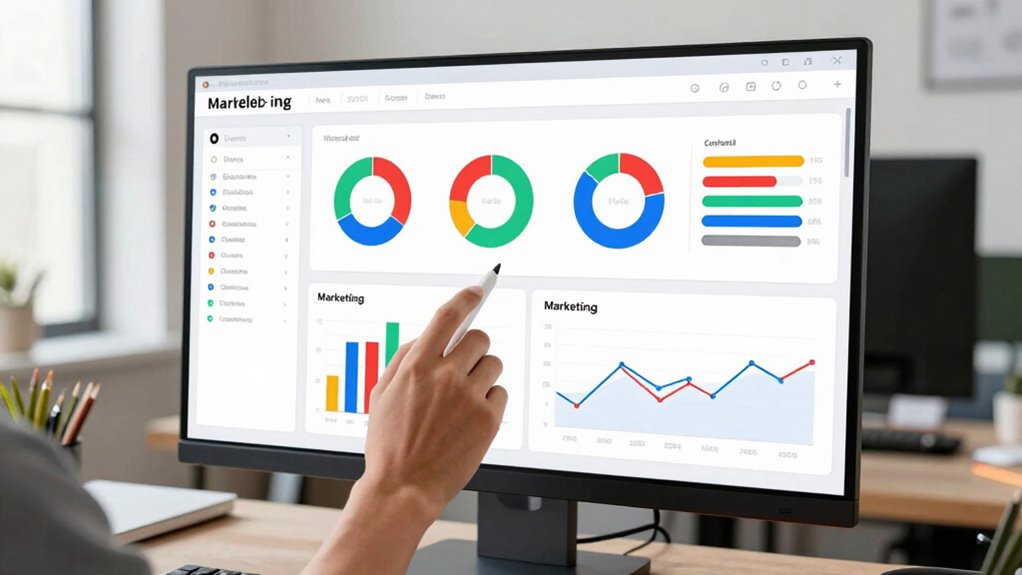
To make your marketing dashboard truly actionable, focus on the key metrics that matter most to your goals. Use clear visuals like charts and graphs to quickly convey insights, avoiding clutter. Guarantee your design highlights actionable takeaways so your team can make informed decisions without confusion. Incorporating high-quality products into your analysis can help differentiate your brand and appeal to discerning customers. Additionally, emphasizing transparent information helps build trust and supports smarter decision-making across your team.
Prioritize Key Metrics
How do you guarantee your marketing dashboard drives meaningful action? The key is prioritizing key metrics that truly matter. Focus on the data visualization that highlights these metrics clearly and avoid clutter. To do this effectively:
- Select 3-5 core KPIs aligned with your goals.
- Ensure data accuracy by consistently validating sources.
- Simplify visuals to emphasize trends without overwhelming viewers.
Use Clear Visuals
Clear visuals are essential for making your marketing dashboard actionable because they allow viewers to grasp key insights at a glance. Using effective data visualization and visual storytelling helps highlight trends and outliers quickly. Avoid clutter by choosing simple chart types that match your data, such as line graphs for trends or bar charts for comparisons. Consistent color schemes guide viewers’ attention and differentiate metrics. Here’s a quick guide:
| Tip | Example | Benefit |
|---|---|---|
| Use contrasting colors | Red for issues, green for good | Immediate understanding |
| Limit chart types | Stick to bar, line, pie | Reduces confusion |
| Highlight key data | Use annotations or bold colors | Focuses attention on essentials |
Additionally, understanding the maintenance costs associated with equipment can help teams allocate resources more effectively and avoid unexpected expenses. Incorporating visual data analysis techniques can further enhance decision-making by revealing hidden patterns. Clear visuals empower your team to interpret data efficiently and make informed decisions.
Enable Actionable Insights
Designing your marketing dashboard with actionable insights in mind involves prioritizing data that directly informs decisions. To enhance user engagement and clarity through data visualization, focus on highlighting key metrics that matter most.
Consider these tips:
- Use clear, concise visuals like charts and heatmaps to display trends and patterns immediately.
- Incorporate alerts or color-coding to flag urgent issues or opportunities, prompting quick action.
- Organize data logically, emphasizing the metrics that drive strategic decisions, so users can easily interpret and act on insights.
Common Challenges When Building a Dashboard: And How to Fix Them
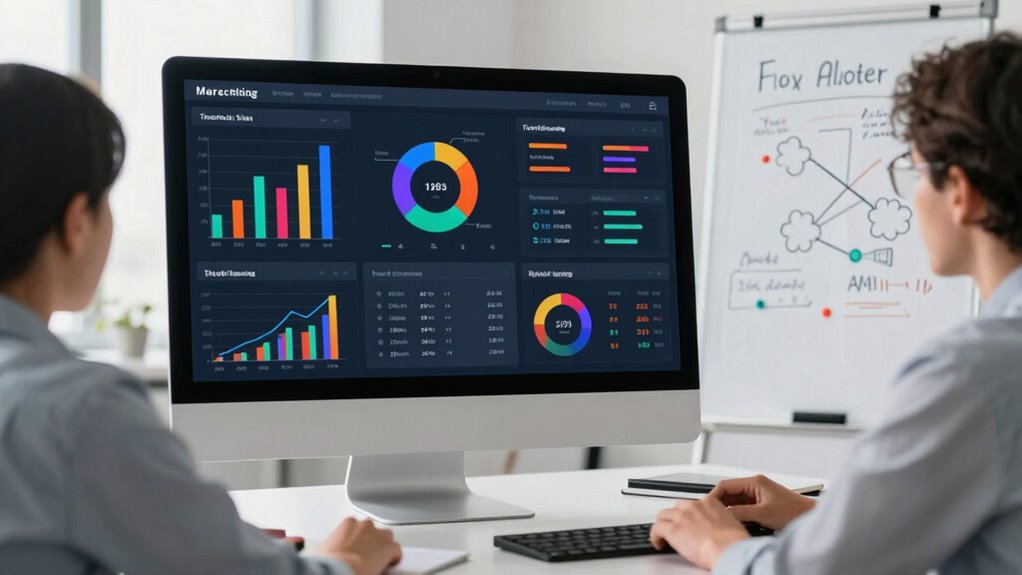
Building a dashboard often comes with unexpected hurdles that can derail your project if you’re not prepared. One common challenge is guaranteeing real-time updates, which are essential for accurate decision-making. Without timely data, your team may act on outdated information, leading to errors. Another obstacle is maintaining data consistency across different sources. Inconsistent data can cause confusion and undermine trust in your dashboard. To fix these issues, prioritize setting up automated data feeds that refresh regularly and verify data integrity regularly. Establish clear standards for data input and validation to ensure accuracy. By addressing these challenges early, you’ll create a reliable, up-to-date dashboard that empowers your team with current insights and fosters confidence in your data-driven decisions.
Next Steps: Implementing and Maintaining Your Marketing Dashboard
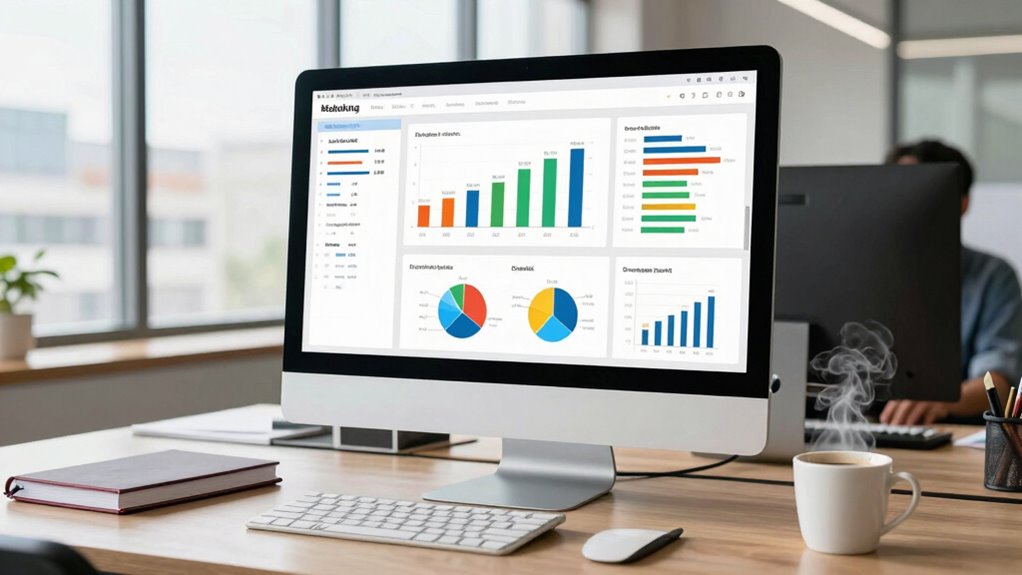
To successfully implement and maintain your marketing dashboard, you need a strategic plan that emphasizes ongoing oversight and continuous improvement. Start by ensuring seamless data integration so your dashboard reflects real-time, accurate information. Next, invest in team training to help everyone understand how to interpret and leverage the data effectively. Finally, establish regular review sessions to assess performance, update metrics, and identify areas for refinement. This proactive approach helps prevent data silos, increases adoption, and keeps your dashboard relevant. Remember, maintaining your dashboard isn’t a one-time task—it’s an ongoing process that requires vigilant oversight and adaptability. By focusing on these steps, you’ll create a dynamic tool that drives smarter decision-making and boosts your marketing efforts.
Frequently Asked Questions
How Often Should I Update My Marketing Dashboard?
You should update your marketing dashboard weekly to keep your data visualization current and relevant. Regular updates ensure you’re tracking KPIs accurately, allowing swift adjustments to campaigns. If your marketing efforts are fast-paced, consider daily updates for real-time insights. For less dynamic strategies, bi-weekly or monthly updates might suffice. The key is consistency, so choose a schedule that keeps your data fresh and supports informed decision-making without becoming overwhelming.
Can I Customize Dashboards for Different Team Members?
Yes, you can customize dashboards for different team members. You have personalization options that let you tailor views based on roles or preferences, ensuring each person sees relevant data. Access controls help you manage who can edit or view specific dashboards, maintaining security. By leveraging these features, your team gets a more efficient, focused experience, making data-driven decisions quicker and more effectively tailored to individual responsibilities.
What Are the Security Considerations for Marketing Dashboards?
You might wonder about security when setting up marketing dashboards. The key concerns are Data Privacy and Access Controls—without strict safeguards, sensitive info could be exposed. You need to guarantee only authorized team members access specific data, and sensitive details are protected. Implement strong access controls, regularly review permissions, and stay updated on privacy standards. This proactive approach keeps your dashboard secure and your data safe from breaches.
How Do I Integrate Data From Multiple Sources Effectively?
To integrate data from multiple sources effectively, focus on seamless data integration and source synchronization. You should establish clear API connections, use ETL tools, or data integration platforms that automate the process. Regularly update and verify source synchronization to prevent discrepancies. By centralizing your data and maintaining real-time updates, you guarantee your dashboard provides accurate, thorough insights without manual effort, keeping your team aligned and informed.
What Training Is Needed for Team Members to Use the Dashboard Efficiently?
To guarantee your team uses the dashboard efficiently, you need targeted dashboard training and smooth user onboarding. Start with thorough onboarding sessions that familiarize team members with key features and data interpretation. Follow up with ongoing training to address questions and introduce updates. Encourage hands-on practice, provide clear documentation, and set up support channels. This approach helps your team confidently navigate the dashboard and leverage its full potential.
Conclusion
By creating a unified marketing dashboard, you gain clear insights and drive smarter decisions. Imagine a startup tracking campaigns in real-time, adjusting strategies instantly and boosting ROI. Whether you’re just starting or refining your approach, a well-built dashboard keeps your team aligned and agile. Take the time to select the right tools, design effectively, and troubleshoot issues early. Your marketing efforts will become more focused, impactful, and ultimately, successful.