

To create a flexible time blocking template for real life, focus on balancing fixed tasks with adaptable open periods. Schedule key activities early and leave buffer zones between tasks to absorb surprises. Use tools like digital calendars and task apps to visualize and adjust your schedule easily. Incorporate spontaneous tasks and prioritize self-care to stay resilient. Embracing flexibility helps you adapt to life’s unpredictability without stress—stay tuned to learn how to fine-tune your approach for better balance and focus.

Get business pricing on tech for your team
- Business-only prices and quantity discounts
- Tax-exempt purchasing
- Multiple users, one account, clear invoices
Key Takeaways
- Incorporate buffer periods between tasks to adapt to unexpected changes and maintain flexibility.
- Use color-coding or labels to identify flexible blocks for easy reallocation.
- Schedule critical tasks early to allow adjustments without losing focus during disruptions.
- Regularly review and modify your schedule based on energy levels and shifting priorities.
- Utilize digital tools like calendars and task apps to visualize plans and enable real-time flexibility.
Why Flexibility Matters in Time Blocking for Real Life?

While time blocking can boost productivity, rigid schedules often fall short in real life. To truly succeed, you need adaptive planning that allows your routines to shift as needed. Life is unpredictable, and sticking rigidly to a schedule can cause frustration and stress. Dynamic routines let you adjust your tasks without losing momentum, ensuring you stay flexible and responsive. Incorporating flexibility means you can handle unexpected events or urgent priorities without derailing your entire day. This approach helps you stay focused while remaining adaptable. By embracing a flexible time blocking system, you create a sustainable routine that accommodates life’s twists and turns, making it easier to maintain consistency and avoid burnout. Flexibility isn’t a compromise; it’s essential for real-life productivity. Additionally, understanding quorum sensing in bacterial communication reminds us that adaptable systems are vital for thriving in unpredictable environments. Recognizing the importance of adaptive planning can further enhance your ability to navigate unforeseen challenges effectively. Including lifestyle products that support adaptable routines can also contribute to smoother transitions during busy or unpredictable days. Embracing technology integration such as smart home devices can seamlessly integrate flexible routines into your daily life, making adjustments more intuitive and less disruptive.
How to Assess Your Schedule and Priorities Effectively

Evaluating your schedule and priorities effectively is the foundation for a flexible and productive time blocking system. Begin by identifying your most important tasks and recognizing where your energy peaks during the day. This awareness helps you allocate high-focus activities to times when you’re most alert. You can also consider how contrast ratio impacts your ability to see details clearly, which applies to both visual tasks and overall clarity in planning. Don’t hesitate to delegate tasks that drain your energy or don’t require your direct involvement; task delegation frees up time for priorities that matter most. Regularly review your schedule to spot patterns and adjust your blocks accordingly. Consider how your commitments align with your goals, and be honest about what’s realistic. By managing your energy wisely and delegating when appropriate, you create a balanced schedule that adapts to your changing needs and maximizes productivity. Incorporating energy-efficient cloud solutions can also help streamline your workflow and reduce unnecessary disruptions. Being mindful of cognitive load can further help you avoid overload and maintain focus on what truly matters. Recognizing the importance of time management techniques can empower you to optimize your daily routines effectively, and utilizing proper wiring basics (informational) can ensure your setup supports your productivity and safety.
Design Your Flexible Time Blocking Template
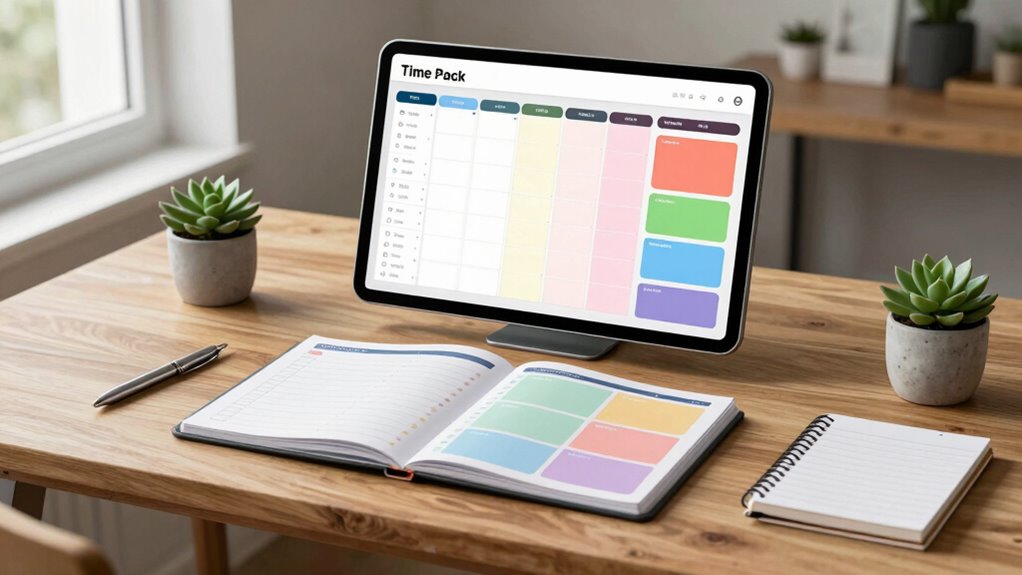
Designing a flexible time blocking template starts with outlining your key activities and assigning them to specific time slots, but it’s important to build in room for adjustments. To do this effectively, focus on creating adaptive routines that can shift as your priorities or circumstances change. Embrace mindset shifts that prioritize progress over perfection, allowing you to modify your schedule without guilt. Your template should include core activities, but also leave open spaces for spontaneous tasks or unexpected events. Use color-coding or labels to identify flexible blocks, making it easier to reallocate time when needed. Incorporating elements of Free Floating into your schedule can help you stay spontaneous and responsive to life’s changes. Additionally, understanding the importance of flexibility in scheduling can make your system more resilient. Recognizing the value of scheduling adaptability empowers you to adjust plans without feeling overwhelmed. By designing with adaptability in mind, you’ll develop a system that supports consistency while accommodating life’s unpredictability. Incorporating nutritional insights from healthy fruit juices can also remind you to prioritize wellness and self-care in your daily routines. This approach makes your schedule resilient and more aligned with real-life demands.
How to Incorporate Buffer Zones for Unexpected Events

To handle unexpected events, you should schedule flexible buffer periods between tasks. Prioritize critical tasks first so you can adjust your schedule without losing focus on important work. When surprises arise, be ready to shift your time blocks quickly to stay on track. Incorporating situational awareness into your planning can help you better anticipate and respond to unforeseen changes. Developing adaptive scheduling can further enhance your ability to maintain productivity amidst unpredictability. Additionally, understanding herbal remedies for stress and resilience can provide natural support during hectic periods, helping you stay balanced and focused. Utilizing aromatherapy techniques, such as essential oils like lavender or peppermint, can also promote calmness and mental clarity during busy times. Applying travel safety tips can also prepare you to manage disruptions more effectively in any environment.
Scheduling Flexible Buffer Periods
Incorporating flexible buffer periods into your schedule allows you to handle unexpected events without causing major disruptions. These buffers act as adaptive routines, giving you room to adjust when plans shift suddenly. By intentionally designating short, flexible intervals between tasks, you create space for spontaneity planning—letting you respond to urgent needs or interruptions seamlessly. Instead of rigidly sticking to a strict timetable, you reserve these periods to absorb any delays or surprises. Establishing flexible routines can also reduce stress by providing a predictable structure that still allows for adjustments when needed. Using adaptive routines can help you respond more effectively to life’s unpredictability, making your schedule more resilient. Over time, you’ll find that flexible buffer periods help you stay productive without feeling overwhelmed by the unpredictability of daily life. They make your schedule more resilient, adaptable, and better suited to real-world demands. Sound fundamentals ensure your buffers support a balanced and reliable routine.
Prioritizing Critical Tasks First
When you prioritize critical tasks first, you guarantee that your most important work gets done, even if unexpected events arise later. Effective priority planning helps you identify these tasks and schedule them at the start of your day. Task sequencing ensures you tackle high-impact activities before less urgent ones, minimizing the risk of neglect. By focusing on critical tasks early, you create natural buffer zones around them. These buffers allow flexibility for unforeseen interruptions without derailing your entire schedule. Incorporating priority planning into your time blocks helps you stay focused on what truly matters. Remember, placing essential tasks upfront provides a safety net, ensuring that even if surprises occur, your key objectives remain on track and completed.
Adjusting Time Blocks Rapidly
Unexpected events can disrupt even the most carefully planned schedule, but you can stay flexible by building buffer zones into your time blocks. These buffer zones allow for adaptive planning, giving you space to handle surprises without throwing off your entire day. When an unexpected task or delay arises, make dynamic adjustments by shifting or shortening subsequent blocks. This approach helps you maintain momentum while accommodating life’s unpredictability. Instead of sticking rigidly to your original plan, view your schedule as a flexible framework. Regularly review and update your time blocks throughout the day, ensuring you respond swiftly to changes. By incorporating buffer zones and embracing adaptive planning, you’ll increase your ability to adjust rapidly, keeping your day on track despite unforeseen events.
Balancing Fixed Tasks and Flex Time: What You Need to Know

Balancing fixed tasks with flexible time can be challenging but is essential for effective time management. When you have set commitments like meetings or deadlines, prioritize them to maintain your work-life balance. Use fixed blocks for these non-negotiables to prevent stress and ensure consistency. Flex time allows you to handle unexpected tasks or personal needs, giving you room to adapt without feeling overwhelmed. By clearly distinguishing between fixed and flexible periods, you create a structure that supports stress management and reduces burnout. Remember, the goal isn’t to fill every moment but to allocate time wisely, blending routine tasks with flexibility. This balance helps you stay productive while maintaining a healthy work-life harmony, making your schedule more sustainable.
Best Tools and Apps for Flexible Time Blocking
Using the right tools can make managing fixed tasks and flexible time much easier. Digital calendars like Google Calendar or Outlook help you visualize your day and allocate blocks for both fixed and flexible activities. Task management apps such as Todoist or Asana keep your priorities clear and guarantee nothing slips through the cracks. These tools sync across devices, offering real-time updates and reminders. Here’s a quick comparison:
| Feature | Best Use |
|---|---|
| Digital Calendar | Scheduling and visualizing time |
| Task Management Apps | Prioritizing and tracking tasks |
Choosing the right combination streamlines your planning, making flexible time blocking effective and stress-free. These tools help you stay organized, adaptable, and in control of your schedule.
Strategies to Stay Focused When Distractions Arise

Distractions can strike at any moment, threatening to derail your focus and productivity. To manage this, you need effective distraction management and focus techniques. First, identify your biggest sources of distraction and set boundaries, like silencing notifications or closing unrelated tabs. Second, practice the Pomodoro Technique: work intensely for 25 minutes, then take a 5-minute break to reset your focus. Third, use physical cues—like a designated workspace or noise-canceling headphones—to signal your focus time. When distractions occur, acknowledge them briefly and gently redirect your attention back to your task. These strategies help you regain control quickly, maintaining momentum in your schedule. Consistent focus techniques turn interruptions into minor setbacks, not major derailers.
How to Adjust Your Schedule When Things Change
When unexpected events or urgent tasks disrupt your schedule, adjusting it promptly is essential to stay on track. Embrace adaptive planning by viewing your time blocks as flexible rather than rigid. Shift your mindset to see changes as opportunities rather than setbacks. Start by reassessing your priorities and identifying what tasks can be rescheduled or condensed. Reallocate time blocks to accommodate urgent needs without abandoning your overall goals. Remember, flexibility doesn’t mean abandoning structure; it’s about making strategic adjustments. Staying calm and proactive helps you adapt without feeling overwhelmed. By adopting a mindset shift toward flexibility, you’ll find it easier to navigate surprises while maintaining momentum. This approach ensures your schedule remains realistic and responsive to life’s unpredictability.
Tips for Maintaining Productivity Without Feeling Confined

To stay productive without feeling restricted, try flexible scheduling options that adapt to your daily needs. Personalize your time blocks so they suit your workflow and energy levels, making adjustments as necessary. This approach keeps you engaged while giving you the freedom to handle unexpected changes smoothly.
Flexible Scheduling Options
Flexible scheduling allows you to adapt your time blocks to fit your daily rhythm, preventing the feeling of being confined by rigid plans. With remote work and digital tools, you can easily shift tasks as needed without losing productivity. To maximize this flexibility, consider these tips:
- Use digital calendars to regularly review and adjust your blocks throughout the day.
- Incorporate buffer periods for unexpected tasks or breaks, keeping your schedule adaptable.
- Prioritize tasks based on energy levels, shifting less demanding work to times when you feel less focused.
Personalized Time Adjustments
Personalized time adjustments help you stay productive without feeling trapped by your schedule. By tailoring your routines with custom adjustments, you can better align your tasks with your energy levels and daily fluctuations. For example, if you notice certain tasks take longer than expected, shift your time blocks to accommodate them instead of rigidly sticking to a set plan. Incorporate personalized routines that reflect your peak focus times and personal commitments. Flexibility is key—allow yourself to modify your schedule as needed, rather than feeling confined by it. This approach keeps you engaged and motivated, reducing stress and preventing burnout. Ultimately, custom adjustments ensure your time blocking remains practical and sustainable, helping you maintain productivity while respecting your individual rhythm.
Common Mistakes to Avoid With Flexible Time Blocking

One common mistake people make with flexible time blocking is overloading their schedule without leaving room for adjustments. Rigid routines and strict deadlines can make this worse, forcing you to stick to a plan that doesn’t account for unexpected events. To avoid this, consider these tips:
- Over-scheduling tasks, leaving no buffer time for surprises or delays.
- Ignoring the need for flexibility, which can lead to burnout or missed deadlines.
- Failing to review and adjust your plan regularly, especially when new priorities emerge.
Frequently Asked Questions
How Can I Ensure My Flexible Schedule Stays Consistent?
To keep your flexible schedule consistent, prioritize effective time management by setting clear boundaries and realistic goals. Use habit formation techniques like daily routines and reminders to reinforce your schedule. Regularly review and adjust your plan to stay aligned with your goals, ensuring flexibility doesn’t lead to chaos. Consistency builds over time, so stay committed, and you’ll develop strong habits that make your schedule more reliable and easier to maintain.
What Are Signs My Time Blocking Needs Adjustment?
Like a broken compass in a sea of chaos, if you notice frequent priority conflicts or your tasks spill over their allotted time, your schedule needs a tweak. You might feel overwhelmed, or find yourself rushing, which signals it’s time for schedule adjustments. When your plan no longer aligns with your real-life demands, it’s a clear sign you should reassess your time blocks to stay on course.
How Do I Handle Overlapping Priorities in Flexible Planning?
When facing priority conflicts or schedule overlaps, you should reassess and prioritize tasks based on urgency and importance. Adjust your time blocks by reallocating or shortening less critical activities. Communicate with others if needed to reschedule commitments. Flexibility is key—be willing to shift your plan to guarantee the most essential priorities get the attention they deserve. Regularly review your schedule to prevent overlaps and stay aligned with your goals.
Can Flexible Time Blocking Improve Long-Term Productivity?
Flexible time blocking can definitely improve your long-term productivity by supporting habit formation and ensuring goal alignment. When you adapt your schedule to changing priorities, you stay consistent with daily habits that build toward bigger goals. This flexibility helps you avoid burnout and stay motivated, making it easier to maintain focus over time. By regularly adjusting your blocks, you reinforce productive routines and keep your long-term vision clear and achievable.
How Do I Communicate My Flexible Schedule to Others?
You should prioritize communication clarity and expectation setting when sharing your flexible schedule. Be honest about your availability, specify your core hours, and mention any potential changes. Use clear language and confirm understanding to prevent misunderstandings. Regular updates help others stay aligned with your evolving schedule, showing you’re committed to transparency. This approach fosters trust and ensures your flexible time blocking supports both your needs and theirs effectively.
Conclusion
Remember, flexible time blocking is your sailing ship—always adjusting to the winds of life. Embrace the ebb and flow, knowing that setbacks are just ripples, not the storm. When you stay adaptable, your schedule becomes a trusty compass guiding you through chaos. With patience and practice, you’ll find your rhythm, turning busy days into a smooth voyage. Keep steering with purpose, and you’ll navigate your life with confidence and calm.
Fall Picks
fall essentials
As an affiliate, we earn on qualifying purchases.