
TL;DR

Get tech for your team delivered free — and shop member deals
- Fast, free delivery on millions of items
- Access to Prime Big Deal Days deals on October 6–7
- Prime Video, Amazon Music and more included
Nine advanced AI study planning tools are set to transform student organization and learning efficiency in 2026. These tools offer personalized schedules, automation, and integration features, but vary in complexity and cost.
In 2026, nine innovative AI-powered study planning tools have emerged as key resources for students seeking to optimize their learning schedules and outcomes. These tools, ranging from tailored workbooks to advanced AI strategies, are designed to adapt to individual needs and improve study efficiency. Their release reflects a broader trend of integrating artificial intelligence into education technology, with potential impacts on how students manage workloads and prepare for exams.
The nine tools include options like the AI Powered Student Success Planning Workbook and AI Study Power, each offering features such as personalized scheduling, automated report generation, and task reminders. These products are evaluated based on their ability to support effective study sessions, user interface clarity, customization options, and overall value. While some tools focus on high school students, others are optimized for college or adult learners, ensuring targeted functionality across education levels.
Price points vary significantly, with free versions available alongside premium subscriptions that include more advanced AI features. The tools also differ in their levels of automation and user control; some provide highly automated schedules, while others offer more manual customization. Compatibility with existing apps like calendars and note-taking platforms is a key consideration, with many tools integrating seamlessly to streamline workflows.
The 9 picks
- 1
 The AI-Powered Scholar: Transform Every Stage of Your Research With Cutting-e…View on Amazon →
 - 2
 The Power of AI for Educators: Revolutionize Teaching to Stay Competitive, Re…View on Amazon →
 - 3
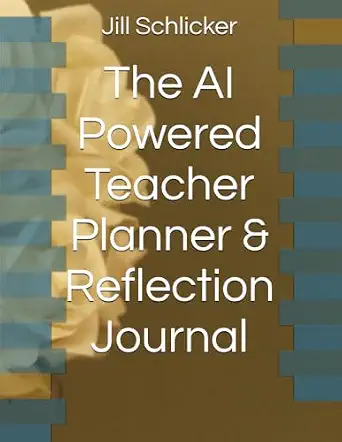 AI Powered Teacher Planner & Reflection JournalView on Amazon →
 - 4
 AI Study Power: Advanced AI Strategies with ChatGPT for Smarter Learning, Exa…View on Amazon →
 - 5
 The AI-Powered Project Manager: How Project Managers Use AI to Automate Statu…View on Amazon →
 - 6
 AI-Powered Student Success Planning WorkbookView on Amazon →
 - 7
 The AI-Powered University Student: Study Smarter, Build the Record That Matte…View on Amazon →
 - 8
 AI for Educators Made Easy: Unlock the Power of Artificial Intelligence to En…View on Amazon →
 - 9
 The AI-Powered High School Student: Study Smarter, Think Clearly, and Prepare…View on Amazon →
Impacts of AI Study Planners on Student Productivity
These AI study planning tools are poised to significantly improve student productivity by offering personalized, automated schedules that adapt to individual learning styles. They can help reduce study time, prevent burnout, and improve academic outcomes. However, their effectiveness depends on user engagement and proper integration into existing study routines. As AI tools become more prevalent, understanding their benefits and limitations will be essential for students and educators alike.Evolution of AI in Educational Planning
The integration of AI into educational planning has accelerated over recent years, with early tools focusing on basic scheduling and reminders. In 2026, the market has expanded to include highly sophisticated systems capable of analyzing student performance data, offering tailored recommendations, and integrating with multiple platforms. The development reflects ongoing efforts to enhance personalized learning experiences and address diverse student needs, with some tools designed specifically for high school, college, or adult learners. Prior to these releases, traditional planners and manual methods dominated, but recent innovations are shifting the landscape toward more automated, data-driven approaches.Remaining Questions About AI Study Tools’ Effectiveness
It is still unclear how these AI tools perform across diverse student populations and learning environments. Long-term impacts on academic achievement and user engagement are yet to be fully studied. Additionally, concerns about data privacy and security vary among providers, with some platforms lacking transparent policies. The actual effectiveness of automation versus manual control remains a subject of ongoing debate, and user experiences may differ based on individual preferences and technical proficiency.Upcoming Developments and Evaluations for 2026 Tools
Further updates and new features are expected to roll out throughout 2026, with ongoing evaluations by educators and students. Future developments may include enhanced AI capabilities, better integration with learning management systems, and improved user interfaces. Researchers and users will likely scrutinize these tools’ impact on academic performance and time management, guiding future improvements. Additionally, industry standards for data security and privacy are anticipated to evolve in response to user concerns.Key Questions
Can AI study planners replace traditional study methods?
While AI-powered study planners offer automation and personalized suggestions, they are best used as supplementary tools rather than complete replacements for traditional planning methods. Combining both approaches often yields the best results.
Are these AI tools suitable for all education levels?
Most tools are adaptable across various education levels, but some are specifically tailored for high school, college, or adult learners. Check each product’s target audience to ensure compatibility with your needs.
How secure is my data with these AI study planners?
Data security varies among providers. Reputable platforms typically use encryption and privacy policies to protect user information. Always review a platform’s data handling policies before use.
Do I need technical skills to use these AI study planners effectively?
Many tools are designed for ease of use, with intuitive interfaces suitable for users without advanced technical skills. However, some advanced features may require a learning curve, so trying demos or reading reviews can help gauge usability.
Source: ThorstenMeyerAI.com
Fall Picks
fall essentials
As an affiliate, we earn on qualifying purchases.