

AI-powered study planners have shifted from novelty to practical toolkit, and the market has split into two very different products: physical planners and journals that structure AI-assisted study habits, and books that teach you how to use ChatGPT and similar tools as an actual planning engine. The AI-Powered Student Success Planning Workbook takes the top spot because it combines guided planning pages with AI prompts, making it usable on day one without a steep learning curve. The AI-Powered High School Student and AI Study Power stand out for younger students and exam-focused learners respectively, though both demand more reading before they pay off. The main tradeoff you’ll face is depth versus immediacy — workbooks get you organized this week, while strategy guides change how you study for years but require upfront effort. Read on for the full breakdown, including who each pick is for and who should skip it.
Listen free for 30 days with Audible
Thousands of audiobooks and originals — cancel anytime.
Start your free trialAs an affiliate, we earn on qualifying purchases.
Key Takeaways
- This category is really two categories: structured workbooks for immediate planning and strategy books for long-term AI study habits — the top pick blends both, which is why it ranks first.
- Audience fit matters more than page count. The high school, university, and scholar picks cover the same AI tools but tailor examples, pacing, and career framing to completely different readers.
- Three of the nine products are aimed at educators, not students — they landed lower for personal study use but are strong picks if you’re buying for classroom planning.
- Exam-focused buyers get the most direct value from AI Study Power, which trades breadth for concrete test-preparation workflows.
- The AI-Powered Project Manager is the outlier: valuable for professionals, but nearly irrelevant unless you’re mapping study projects onto PM-style planning.
| AI-Powered Student Success Planning Workbook |  | Best for Advisors and Counselors | Format: Paperback workbook | Primary audience: Educators, advisors, counselors | Key tools: ILPs, case notes, advising scripts | VIEW LATEST PRICE | See Our Full Breakdown |
| AI Powered Teacher Planner & Reflection Journal | 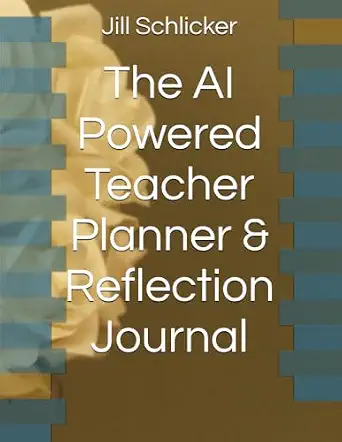 | Best Hybrid Planner Format | Format: Planner / reflection journal | Primary audience: Classroom teachers | Core functions: Scheduling, progress tracking, reflection | VIEW LATEST PRICE | See Our Full Breakdown |
| The AI-Powered High School Student: Study Smarter, Think Clearly, and Prepare for What Comes Next |  | Best for High School Students | Format: Book (paperback/ebook) | Primary audience: High school students | Key topics: Study strategies, critical thinking, college/career prep | VIEW LATEST PRICE | See Our Full Breakdown |
| AI Study Power: Advanced AI Strategies with ChatGPT for Smarter Learning, Exams & Productivity |  | Best for Exam Prep and Power Users | Format: Book (paperback/ebook) | Primary audience: Students and professionals | AI tool covered: ChatGPT exclusively | VIEW LATEST PRICE | See Our Full Breakdown |
| AI for Educators Made Easy: Unlock the Power of Artificial Intelligence to Enhance Teaching Effectiveness, Boost Student Engagement, and Embrace Ethical Practices |  | Best Ethics and Pedagogy Focus | Format: Book (paperback/ebook) | Primary audience: K-12 and higher-ed teachers | Key topics: Teaching effectiveness, engagement, AI ethics | VIEW LATEST PRICE | See Our Full Breakdown |
| The AI-Powered Project Manager |  | Best for Career-Oriented Planners | Format: Kindle eBook | Primary Audience: Project managers and PMO professionals | Focus Areas: Status reports, sprint planning, risk logs, stakeholder communication | VIEW LATEST PRICE | See Our Full Breakdown |
| The Power of AI for Educators |  | Best for Teachers Guiding Study Plans | Format: Kindle eBook | Primary Audience: K-12 and higher-ed teachers | Focus Areas: Personalized learning, workload reduction, student engagement | VIEW LATEST PRICE | See Our Full Breakdown |
| The AI-Powered University Student |  | Best for Degree-to-Career Planning | Format: Kindle eBook | Primary Audience: University and college students | Focus Areas: Study efficiency, academic record building, career launch | VIEW LATEST PRICE | See Our Full Breakdown |
| The AI-Powered Scholar |  | Best for Research-Heavy Study | Format: Print book | Primary Audience: Researchers, graduate students, and academics | Series: AI-Powered Research Toolkit | VIEW LATEST PRICE | See Our Full Breakdown |
| AI-powered study planner | Format | Primary audience | Customer ratings |
|---|---|---|---|
| AI-Powered Student Success Pla | Paperback workbook | Educators, advisors, counselors | None available |
| AI Powered Teacher Planner & R | Planner / reflection journal | Classroom teachers | Limited information available |
| The AI-Powered High School Stu | Book (paperback/ebook) | High school students | None available |
| AI Study Power: Advanced AI St | Book (paperback/ebook) | Students and professionals | None available |
| AI for Educators Made Easy: Un | Book (paperback/ebook) | K-12 and higher-ed teachers | None available |
| The AI-Powered Project Manager | Kindle eBook | Project managers and PMO professionals | — |
| The Power of AI for Educators | Kindle eBook | K-12 and higher-ed teachers | — |
| The AI-Powered University Stud | Kindle eBook | University and college students | — |
| The AI-Powered Scholar | Print book | Researchers, graduate students, and academics | — |
More Details on Our Top Picks
AI-Powered Student Success Planning Workbook
Most titles in this roundup are written for the student doing the studying, but this workbook flips the lens toward the adults guiding at-risk learners. Its individualized learning plans, case notes, and advising scripts make it a working toolkit rather than a read-once book, and the built-in AI prompts give counselors a concrete way to apply generative tools to advising sessions. Compared with The AI-Powered High School Student, which coaches the learner directly, this option is operational — it equips CTE programs and alternative education staff to systematize student support. The tradeoff is specificity: it is narrowly aimed at opportunity youth programs, so a general classroom teacher gets more value from the AI Powered Teacher Planner & Reflection Journal. There are also no reviews or ratings yet, so buyers are taking something of a chance on polish.
Pros:- Complete advising toolkit with ILPs, case notes, and scripts rather than just theory
- Ready-to-use AI prompts tailored to student advising conversations
- Purpose-built for CTE, alternative education, and opportunity youth programs
- Practical implementation resources, not abstract strategy essays
Cons:- Extremely niche audience — useless outside advising and student-support contexts
- No customer reviews or ratings available to gauge real-world quality
Best for: CTE instructors, alternative education staff, and counselors managing individualized learning plans for opportunity youth
Not ideal for: Students looking for personal study strategies — this is built for advisors, not self-directed learners
- Format:Paperback workbook
- Primary audience:Educators, advisors, counselors
- Key tools:ILPs, case notes, advising scripts
- AI component:Included AI prompt library
- Program focus:CTE, alternative education, opportunity youth
- Customer ratings:None available
Our verdict“If you advise underserved or alternative-education students and want AI to streamline your caseload, this is the most actionable pick on the list.”
AI Powered Teacher Planner & Reflection Journal
This is the only entry in the lineup that functions as an actual day-to-day planner rather than a strategy book. It pairs schedule organization and progress tracking with structured reflection prompts, blending AI-assisted planning with pen-and-paper journaling. That hybrid approach makes sense for teachers who have tried fully digital tools and drifted away from them. Compared with AI for Educators Made Easy, which teaches broad AI integration across teaching practice, this pick stays focused on the teacher’s own workflow — planning, tracking, and self-assessment — making it lighter and more immediately usable. The compromise is depth: documentation on which AI features are included and how they work is thin, so tech-savvy buyers may find the AI element more decorative than transformative. Still, for a busy teacher wanting structure over theory, this makes the most sense.
Pros:- Works as a daily-use planner, not just a one-time read
- Built-in reflection prompts encourage genuine self-assessment
- Low learning curve for teachers intimidated by full digital tools
- Combines scheduling, tracking, and journaling in one place
Cons:- Vague documentation on what the AI features actually do
- Physical format means no automation or reminders — you still do the work
Best for: Classroom teachers who want a physical planner-and-journal system with AI-guided structure rather than another book to read
Not ideal for: Educators wanting deep AI methodology — the AI component here is a planning aid, not a curriculum
- Format:Planner / reflection journal
- Primary audience:Classroom teachers
- Core functions:Scheduling, progress tracking, reflection
- AI component:AI-assisted planning prompts
- Learning curve:Low
- Customer ratings:Limited information available
Our verdict“Teachers who live in paper planners but want smarter structure will find this the most practical entry point in the roundup.”
The AI-Powered High School Student: Study Smarter, Think Clearly, and Prepare for What Comes Next
Of the student-facing titles here, this one targets the youngest and least experienced audience, and it is pitched accordingly — plain-language study strategies, critical thinking habits, and college-and-career prep framed around AI tools. Compared with AI Study Power, which assumes readers already know their way around ChatGPT and want advanced techniques, this book starts earlier: what AI is, how to use it responsibly for homework, and how to think for yourself while using it. That makes it the right on-ramp for teens rather than power users. The tradeoff is that ambitious students will outgrow it quickly, and parents should know there are no sample pages or reviews to preview tone and reading level. Its sibling title, The AI-Powered University Student, covers similar ground at a more advanced stage, so choose based on where the reader is.
Pros:- Age-appropriate framing for teenagers new to AI tools
- Balances study tactics with critical thinking, not just shortcuts
- Covers future prep — college and career readiness — beyond homework help
- Approachable for readers with no prior AI knowledge
Cons:- Advanced students will outpace the content within a semester
- No sample pages or reviews to verify reading level and depth
Best for: High school students (and their parents) who want a first, accessible guide to studying with AI
Not ideal for: College students or professionals — the material skews young and will feel basic
- Format:Book (paperback/ebook)
- Primary audience:High school students
- Key topics:Study strategies, critical thinking, college/career prep
- AI focus:General AI study tools for beginners
- Experience level required:None
- Customer ratings:None available
Our verdict“This is the best first AI study guide for a high schooler, provided they are starting from zero — older or savvier students should jump to AI Study Power.”
AI Study Power: Advanced AI Strategies with ChatGPT for Smarter Learning, Exams & Productivity
This is the most tool-specific title in the batch — everything is anchored in ChatGPT, with techniques aimed at exam preparation and productivity rather than general study habits. That focus is its strength: readers who already use ChatGPT casually will find concrete, advanced tactics instead of introductory filler. Next to The AI-Powered High School Student, this book sits clearly at the experienced end of the spectrum, and unlike The AI-Powered Scholar in the wider roundup — which targets academic research — it stays squarely on learning efficiency and test performance, so it works for professionals studying for certifications, not just students. The drawbacks are real, though. Content on non-ChatGPT tools is essentially absent, so anyone on Gemini or Claude gets partial value, and there are no sample pages or reviews to confirm whether the ‘advanced’ label matches the actual depth.
Pros:- Deep, single-tool focus makes the strategies immediately actionable
- Explicitly aimed at exam preparation, not just vague ‘better learning’
- Useful for both students and professionals studying for certifications
- Advanced framing skips the beginner hand-holding
Cons:- ChatGPT-only content limits value for users of competing AI tools
- No reviews or samples to verify the depth behind the ‘advanced’ claim
Best for: College students and working professionals who already use ChatGPT and want sharper exam and productivity techniques
Not ideal for: Beginners or users of other AI platforms — the single-tool focus and advanced framing leave both groups underserved
- Format:Book (paperback/ebook)
- Primary audience:Students and professionals
- AI tool covered:ChatGPT exclusively
- Key topics:Learning strategies, exam prep, productivity
- Difficulty level:Intermediate to advanced
- Customer ratings:None available
Our verdict“If ChatGPT is your study tool and exams are your goal, this is the sharpest tactical guide in the lineup — just skip it if you need platform-agnostic advice.”
AI for Educators Made Easy: Unlock the Power of Artificial Intelligence to Enhance Teaching Effectiveness, Boost Student Engagement, and Embrace Ethical Practices
Plenty of educator-focused AI books promise workload reduction, but this one stands out for treating ethics as a core topic rather than a footnote. Alongside engagement and effectiveness strategies, it grapples with responsible AI use in classrooms — a dimension The Power of AI for Educators covers less centrally. Compared with the AI Powered Teacher Planner & Reflection Journal, this is the broader read: it is about transforming teaching practice across a whole course, not organizing your week. The ‘Made Easy’ framing is somewhat optimistic, since the book assumes some prior comfort with AI concepts and offers limited step-by-step technical instruction — teachers wanting click-by-click tutorials will need a companion resource. But for departments drafting AI policies, or educators who want to use AI thoughtfully rather than just quickly, this is the more defensible choice.
Pros:- Ethics and responsible use treated as central content, not an afterthought
- Covers both teaching effectiveness and student engagement strategies
- Broad enough to inform department or school-level AI policy
- Written for educators rather than tech professionals
Cons:- Assumes some baseline AI familiarity despite the ‘Made Easy’ title
- Light on concrete technical instructions for specific tools
Best for: Teachers and department leads who want a principled, ethics-first framework for bringing AI into instruction
Not ideal for: Hands-on learners wanting step-by-step technical walkthroughs — the guidance here is strategic, not tutorial-based
- Format:Book (paperback/ebook)
- Primary audience:K-12 and higher-ed teachers
- Key topics:Teaching effectiveness, engagement, AI ethics
- AI focus:General AI integration in education
- Prior knowledge needed:Basic AI familiarity recommended
- Customer ratings:None available
Our verdict“Educators who care about using AI responsibly — not just efficiently — will get more from this than from any planner-style pick on this list.”
The AI-Powered Project Manager
Of all the titles in this roundup, this one takes the broadest view of what an AI-powered planner can be — it treats planning as a professional workflow covering status reports, sprint cycles, risk logs, and stakeholder updates rather than a single study session. This pick makes the most sense for readers who want their study-planning habits to translate into workplace skills, especially anyone heading into tech or consulting roles. Compared with The AI-Powered University Student, it goes deeper on recurring workflow automation instead of exam prep. The tradeoff: it assumes you already understand AI basics and offers little step-by-step technical guidance, so beginners expecting tool walkthroughs will be left wanting.
Pros:- Connects study planning to real professional workflows like sprint planning and reporting
- Strong coverage of automation for repetitive planning tasks
- Practical framing for readers adopting AI tools in structured environments
- Useful vocabulary and mental models that carry over into career settings
Cons:- No detailed technical implementation guidance — expect concepts, not walkthroughs
- Too specialized for general readers who just want a simpler study planner approach
Best for: University students and early-career professionals who want study-planning skills that transfer directly into project management and PMO roles
Not ideal for: Readers wanting hands-on tool tutorials — it stays at the strategy level and assumes prior familiarity with AI concepts
- Format:Kindle eBook
- Primary Audience:Project managers and PMO professionals
- Focus Areas:Status reports, sprint planning, risk logs, stakeholder communication
- Skill Level Assumed:Intermediate — prior AI familiarity recommended
- Content Style:Strategic overview rather than technical tutorials
- Best Use Case:Workflow automation in professional planning contexts
Our verdict“Choose this if you see your study planner as training ground for a project management career; skip it if you want literal, tool-by-tool study scheduling.”
The Power of AI for Educators
Where most entries in this lineup aim at the person doing the studying, this one flips the lens: it helps teachers design and personalize study plans for their students. That makes it the natural companion piece to titles like the AI Powered Teacher Planner & Reflection Journal, but with a stronger emphasis on reducing teacher workload and lifting student engagement rather than day-to-day lesson logging. Compared with AI for Educators Made Easy, it leans more toward motivation and personalization strategy than ethics and classroom tactics. The honest drawback is that it reads more theoretical than practical — educators wanting ready-to-deploy prompts and templates will need to build them themselves.
Pros:- Directly addresses personalization of learning plans across a whole class
- Strong angle on reducing repetitive teacher workload
- Frames AI adoption as a way to stay competitive in education
- Accessible to educators without a technical background
Cons:- Lacks detailed technical implementation steps
- More conceptual than hands-on for teachers who want immediate, plug-and-play resources
Best for: Classroom teachers and tutors who create study plans for multiple students and want AI to cut grading and planning workload
Not ideal for: Self-directed students — it’s written for the educator’s side of the desk, not personal study use
- Format:Kindle eBook
- Primary Audience:K-12 and higher-ed teachers
- Focus Areas:Personalized learning, workload reduction, student engagement
- Skill Level Assumed:Beginner-friendly for educators
- Content Style:Strategic and motivational rather than tutorial-based
- Best Use Case:Classroom-level study planning and differentiation
Our verdict“This is the pick for educators shaping study plans for others; students shopping for themselves should pass it over.”
The AI-Powered University Student
This option stands out as the most career-forward student guide in the roundup — it treats AI-powered studying as one part of building an academic record that actually opens doors after graduation. Compared with The AI-Powered High School Student, it targets a reader with more autonomy: course selection, transcript strategy, and internship preparation sit alongside study tactics. It also pairs well with the AI-Powered Student Success Planning Workbook, adding a long-horizon career layer that the workbook’s structured exercises don’t cover. The tradeoff is real, though: it’s light on technical depth, so readers who’ve already mastered basic AI study tools will find the middle chapters familiar rather than new.
Pros:- Connects daily study habits to long-term academic and career outcomes
- Practical strategies for weaving AI into coursework and professional development
- Covers a life stage most study guides ignore — the degree-to-job transition
- Readable for students with no prior AI knowledge
Cons:- Lacks detailed technical content on specific tools
- Narrow appeal — working professionals and casual learners won’t find it relevant
Best for: University students who want their study planning tied to GPA strategy, résumé building, and post-graduation career moves
Not ideal for: Advanced users wanting deep technical AI workflows — and non-students, since the framing is entirely campus-based
- Format:Kindle eBook
- Primary Audience:University and college students
- Focus Areas:Study efficiency, academic record building, career launch
- Skill Level Assumed:Beginner to intermediate student
- Content Style:Practical strategy with career framing
- Best Use Case:Long-horizon academic and career planning
Our verdict“If you’re a degree student planning beyond next week’s exam, this is the guide that thinks furthest ahead; technical adepts should look elsewhere.”
The AI-Powered Scholar
The most specialized entry in this lineup, this book applies AI planning to the research process itself — literature review, synthesis, and writing — rather than exam prep or class scheduling. That focus sets it apart from AI Study Power, which targets exams and general productivity: here, the payoff is for graduate students and academics whose ‘studying’ means managing sources and long-form projects. It belongs to the AI-Powered Research Toolkit series, which is a strength if you want a structured learning path and a limitation if you don’t want to buy multiple volumes. Be aware that it assumes prior AI familiarity and offers little upfront orientation, so true beginners should start with a simpler title first.
Pros:- Covers AI strategies across every stage of the research workflow
- Part of a structured series for readers wanting a complete toolkit
- One of the few titles aimed squarely at academic research productivity
- Practical framing for scholars managing long, multi-phase projects
Cons:- Assumes prior knowledge of AI concepts — no gentle on-ramp
- Sparse documentation and content overview make it hard to evaluate depth before buying
- Series structure means full value may require purchasing additional volumes
Best for: Graduate students, PhD candidates, and academics who want AI support for literature reviews, synthesis, and long research projects
Not ideal for: Undergraduates cramming for exams — the research focus is overkill, and it presumes AI concepts you may not have yet
- Format:Print book
- Primary Audience:Researchers, graduate students, and academics
- Series:AI-Powered Research Toolkit
- Focus Areas:Literature review, research synthesis, academic writing
- Skill Level Assumed:Intermediate — prior AI knowledge expected
- Content Style:Stage-by-stage research strategies
- Best Use Case:Long-form academic research projects
Our verdict“Researchers will get the most out of this pick; anyone studying for a test next week should choose a more exam-focused guide.”

How We Picked
I evaluated each product against four buyer-facing criteria. Usability speed came first: how quickly can a reader go from purchase to an actual working study plan? Workbooks and guided journals scored well here, while longer strategy books required more investment before payoff. AI integration quality came second — products that gave specific, repeatable prompts and workflows ranked above those that only describe AI in general terms. Third, I weighed audience precision: a book written squarely for high schoolers, undergraduates, or researchers beat generic one-size-fits-all titles. Finally, value for money factored in longevity — a guide that reshapes study habits for a full degree arguably justifies a higher price than a single-semester planner.
The ranking logic follows directly from these criteria. Products that combine planning structure with actionable AI instruction sit at the top; single-audience books that execute their niche well fill the middle; and titles aimed at teachers or project managers rank lower for this list’s core reader — the student or self-learner — while still earning a place for specific buyer types. No product was ranked on hype or length alone.
| AI-powered study planner | Format | Customer ratings |
|---|---|---|
| AI-Powered Student Success Pla | Paperback workbook | None available |
| AI Powered Teacher Planner & R | Planner / reflection journal | Limited information available |
| The AI-Powered High School Stu | Book (paperback/ebook) | None available |
| AI Study Power: Advanced AI St | Book (paperback/ebook) | None available |
| AI for Educators Made Easy: Un | Book (paperback/ebook) | None available |
| The AI-Powered Project Manager | Kindle eBook | — |
| The Power of AI for Educators | Kindle eBook | — |
| The AI-Powered University Stud | Kindle eBook | — |
| The AI-Powered Scholar | Print book | — |
Factors to Consider When Choosing AI-powered Study Planners
Before choosing, it helps to understand what separates a genuinely useful AI study planner from a repackaged notebook or a generic ChatGPT tips book. These are the factors that shaped my rankings and should shape your decision.Workbook or Strategy Guide?
This is the single biggest decision and most buyers get it wrong. A workbook-style planner gives you dated pages, trackers, and prompts you fill in immediately — ideal if your problem is disorganization. A strategy guide teaches you frameworks for using AI tools across a whole degree or career — ideal if your problem is inefficient study methods. The common mistake is buying a thick strategy book when what you actually needed was structure this week, then abandoning it by chapter three. Ask yourself which failure mode you’re trying to fix before comparing prices.
Specificity of the AI Prompts
The gap between good and mediocre products in this category almost always comes down to prompt specificity. Vague advice like “ask AI to summarize your notes” is freely available online and adds nothing to a purchased product. Look for copy-paste-ready prompts with context slots, examples of good versus bad output, and workflows you can repeat weekly. A shorter book with ten genuinely reusable prompts beats a 400-page book of AI trivia every time. If a product’s description mentions exact tools, task types, and worked examples, that’s a strong signal.
Matching the Book to Your Education Stage
AI study advice written for a PhD researcher falls flat for a tenth grader, and vice versa. High school–focused titles emphasize parental expectations, college admissions, and foundational habits; university titles add research skills, transcript building, and career launch; scholar-oriented titles assume existing research literacy. Buying above your stage wastes money on inaccessible content; buying below it bores you quickly. Stage fit predicts satisfaction better than any other single factor in this category, so resist the temptation to buy the “most advanced” title available.
Student or Educator Orientation
Several top-selling titles in this space are written for teachers planning curricula, not students planning their own study. They appear in the same search results and often have similar covers, which trips up buyers. An educator-focused book will spend chapters on grading workflows, classroom engagement, and institutional ethics — content that adds little to personal study planning. Check the subtitle carefully and, when in doubt, look at the table of contents for lesson-plan language. Buying the wrong orientation is the most common return reason for products in this roundup.
Tool Dependence and Shelf Life
Some books tie their instructions tightly to one tool, usually ChatGPT, while others teach tool-agnostic principles. Tool-specific books feel more actionable now but age faster as interfaces and models change — a book written for a 2023 interface can already feel stale. Tool-agnostic books last longer but sometimes feel abstract. The best products hedge by teaching reasoning-first frameworks with tool-specific examples as illustrations. If you plan to use the book for more than a year, favor principle-based instruction over click-by-click tutorials.
When to Pay More
Pricing in this category is mostly flat, so paying more should buy something concrete: deeper workflows, a companion prompt library, or stage-specific career guidance. A premium price is justified for books that carry you through an entire degree or research project, because the cost per semester is trivial. It is not justified for padded page counts, forewords by internet personalities, or recycled blog content. Students on tight budgets should also remember that a mid-priced workbook plus free AI tools often outperforms an expensive guide you never finish. Buy the depth you’ll actually use, not the depth that looks impressive.
Frequently Asked Questions
Do these planners actually use AI, or do I still need a separate ChatGPT subscription?
All of the student-facing products in this roundup follow the same model: the book or workbook provides structure, prompts, and planning pages, while you supply the AI tool — usually a free ChatGPT or Gemini account. None of them include built-in software, which is worth knowing before you buy. The upside is that you’re learning a transferable skill rather than depending on one company’s app, and free tiers are sufficient for nearly every workflow these books describe. The downside is that you’ll need basic familiarity with a chatbot to get started, though most titles walk you through it. If you want a fully automated app that schedules everything for you, this entire category — not just these nine — will feel manual.
Which pick is right for a high school student who hates reading long books?
The AI-Powered Student Success Planning Workbook is the clear answer, because it’s designed around filling things in rather than reading cover to cover. A reluctant reader can start with the planning pages and prompt templates on day one and treat the explanatory sections as reference material. The AI-Powered High School Student is a strong alternative for motivated students who want the “why” behind the methods, but it demands sustained reading. Strategy guides like AI Study Power are the worst fit here — dense, exam-focused, and front-loaded with theory. Match the format to the reader’s patience before worrying about content quality.
Are the educator-focused books useful for a student buying for themselves?
Generally, no — and this is where a lot of buyers waste money. Titles like AI for Educators Made Easy and The Power of AI for Educators are built around curriculum design, grading efficiency, and classroom management, which don’t map onto personal study planning. A student would maybe extract a chapter’s worth of relevant prompt ideas. The exception is a tutor, homeschooling parent, or education student, who straddles both worlds and would get real value from the teaching perspective. For everyone else, the student-specific titles deliver the same AI instruction without the classroom overhead.
Can one of these books last through an entire four-year degree?
It depends on the type. Stage-specific university titles, especially The AI-Powered University Student, are written with multi-year arcs in mind — first-year study habits through final-year career preparation — so yes, those hold up across a degree. Single-semester workbooks with dated pages will need replacing annually, which is why their price point matters. Tool-specific tutorials age fastest, so if a book leans heavily on screenshots of one app, expect the instructions to drift out of date within two years. The pragmatic move is pairing one durable strategy guide with an inexpensive workbook you refresh each semester.
Is the project management book ever a smart buy for studying?
Only for a narrow group: students tackling a genuinely large, multi-workstream project like a thesis, a dissertation, or a long-running group assignment. The AI-Powered Project Manager teaches status reporting, risk logs, and sprint planning, which translate surprisingly well to research projects with milestones and supervisors. For everyday course study, it’s overkill — you don’t need stakeholder communication frameworks to plan for a midterm. Graduate students and professionals returning to study are the natural audience. Undergraduates with standard coursework should pick a student-focused title instead.
Conclusion
After comparing all nine, the right choice depends less on quality — most of these are competent — and more on who you are. For best overall, the AI-Powered Student Success Planning Workbook wins because it delivers immediate planning structure plus reusable AI prompts, serving the broadest range of learners. For best value, AI Study Power packs the most actionable exam-focused workflows per dollar, as long as you’re willing to read. The premium pick is The AI-Powered Scholar, aimed at researchers who want depth over convenience. For beginners, The AI-Powered High School Student assumes no prior AI knowledge and builds habits from zero. Specific needs map cleanly too: educators should choose between the two teacher titles, university students get the dedicated campus-to-career guide, and thesis-writers will find the project management book unexpectedly useful. Pick the book that matches your stage and your patience, and the AI part will take care of itself.
NFL season / tailgating Picks
team gear
As an affiliate, we earn on qualifying purchases.