
To plan your day without overplanning, use the 3-Block Method by dividing your schedule into three focused segments, each dedicated to specific tasks. Focus on high-priority work during your peak energy times, and include buffer periods for flexibility. Keep goals simple and manageable, and adjust the blocks as your routine evolves. Stick to this approach, and you’ll find it easier to stay productive while avoiding overwhelm—exploring these strategies further can help you tailor your day effectively.
Key Takeaways
- Divide your day into three focused segments aligned with your energy peaks to prevent overplanning.
- Set clear, simple goals for each block, prioritizing essential tasks to stay manageable.
- Incorporate buffer periods between blocks to allow flexibility for unexpected tasks or delays.
- Use timers to stay on track within each segment, avoiding unnecessary overcommitment.
- Regularly review and adjust your plan to maintain balance and prevent feeling overwhelmed.
What Is the 3-Block Method, and Why Does It Work?

Ever wonder how to stay productive without feeling overwhelmed? The 3-Block Method simplifies your day by dividing it into three focused segments, making time management easier. Each block is dedicated to specific tasks, helping you avoid multitasking and stay engaged. Focus techniques come into play as you concentrate on one block at a time, removing distractions and boosting efficiency. These techniques are rooted in scientific research on productivity, which demonstrates the benefits of focused work sessions. This approach encourages intentional planning, so you know exactly what to tackle without overloading yourself. By structuring your day into manageable parts, you’re less likely to feel overwhelmed or burned out. The method works because it creates clear boundaries, enabling you to fully commit to each segment. As a result, you maintain better focus, manage your time more effectively, and finish your day with a sense of accomplishment. Plus, understanding how to balance focus and boundaries draws on the principles of time management techniques, which are grounded in scientific research on productivity and cognitive load. Incorporating elements like ethical considerations in AI, which involve shaping the moral framework of AI technologies, can also help ensure that your productivity tools are aligned with ethical standards. Additionally, integrating sound healing science concepts can help enhance your focus and relaxation during work intervals.
How Can You Break Your Day Into Three Focused, Manageable Segments?

To effectively implement the 3-Block Method, start by identifying your most important tasks and grouping them into three distinct segments that align with your energy levels and daily routines. Consider how your energy fluctuates throughout the day and assign high-focus tasks to your peak times. Use these segments to structure your time management, ensuring each block has a clear purpose. For example, mornings might be ideal for creative work, afternoons for meetings, and evenings for reflection or lighter tasks. Breaking your day into three manageable segments helps prevent overwhelm and maintains focus. Incorporating energy-efficient cloud solutions can also support your productivity by streamlining tasks and reducing downtime. Additionally, understanding your natural energy rhythms allows you to optimize each segment for maximum efficiency. Recognizing and working with your biological clock can further enhance your ability to stay aligned with your natural energy patterns. Moreover, paying attention to contrast ratio in your environment, such as lighting conditions, can help maintain your focus and comfort during these segments. Implementing strategies like task batching can also increase your efficiency within each block, ensuring you make the most of your focused periods. This approach simplifies planning, keeps you aligned with your natural rhythms, and allows you to stay productive without overloading your schedule.
How Do You Balance Productivity and Flexibility in This Schedule?
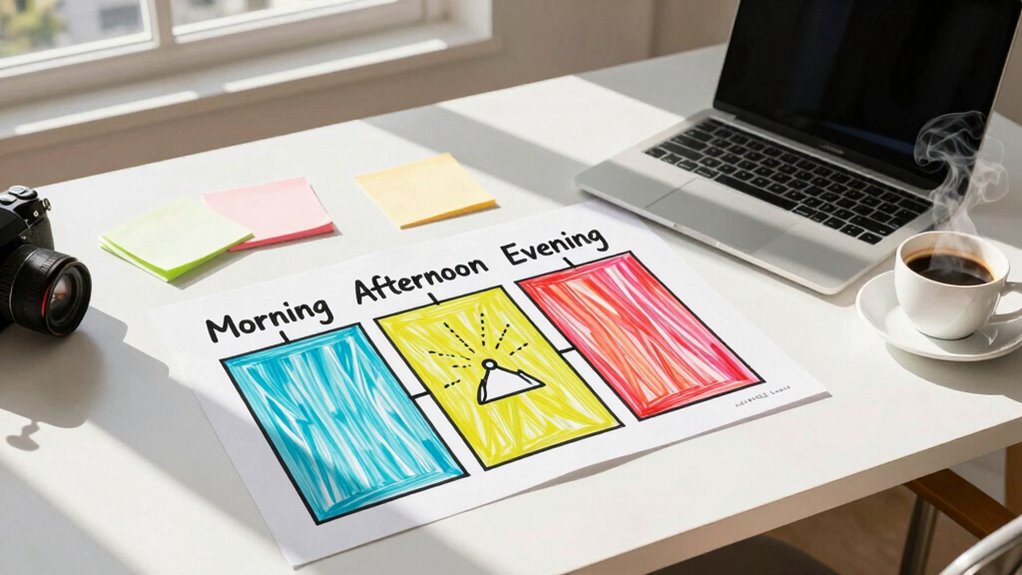
Balancing productivity and flexibility requires intentional planning that allows room for adjustments without sacrificing your progress. Effective time management helps you stay focused during each block, ensuring you meet your goals while leaving space for unexpected tasks or breaks. Incorporate flexibility planning by allocating buffer periods between blocks, so you can adapt when priorities shift or delays occur. This approach prevents burnout and reduces stress, keeping you motivated. Remember, the key is to set clear objectives for each segment but remain open to tweaks as needed. By intentionally balancing structured work with adaptable elements, you create a schedule that promotes steady progress without feeling rigid or overwhelming. This balance helps you stay productive while maintaining the flexibility to handle life’s surprises.
What Are Simple Tips to Stay on Track Without Overplanning?

Staying on track without overplanning is all about simplicity and focus. To do this, keep your approach straightforward and prioritize essential tasks. Good time management helps you avoid overwhelm, so set clear goals for each part of your day. Break your goals into manageable chunks, and don’t overcomplicate your schedule. Regularly review your progress to stay aligned without getting lost in details. Here are simple tips to help you stay on track:
- Limit your daily goals to three main tasks
- Use a timer to stay focused on each task
- Adjust your plan as needed, avoiding rigid schedules
- Reflect briefly on your progress at day’s end
- Incorporate basic shop fundamentals to keep your workflow smooth and efficient
These strategies keep your day manageable and maintain momentum without overplanning.
How Can You Adapt the 3-Block Method to Fit Your Unique Routine?
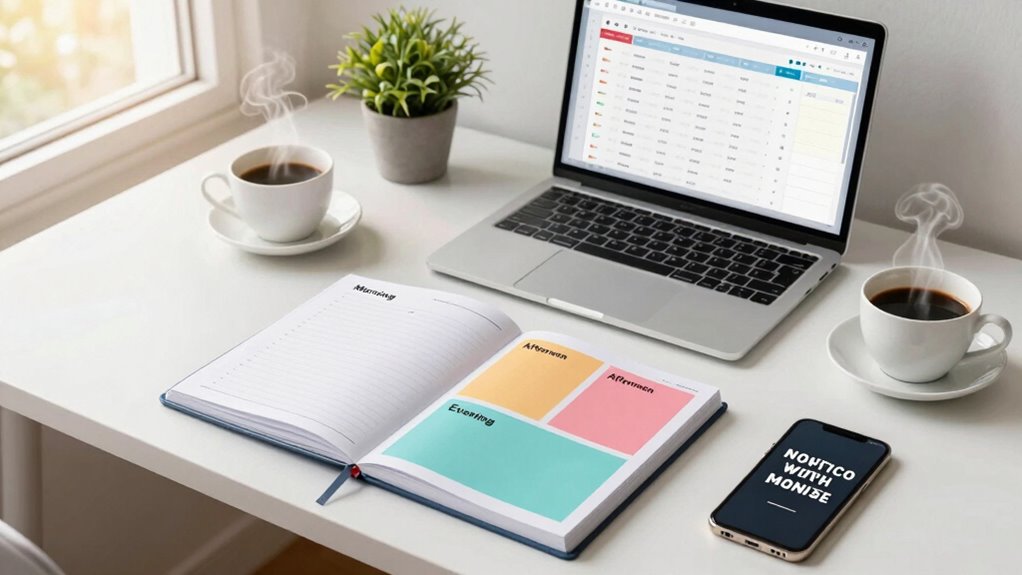
Adapting the 3-Block Method to fit your routine requires flexibility and personalization. Start by analyzing your personal routines—identify your most productive times and routine breaks. Use customization strategies like adjusting block durations or shifting focus areas to match your energy levels. For example, if mornings are your peak, dedicate your first block to challenging tasks, then reserve later blocks for lighter activities. Don’t hesitate to modify the number of blocks or their contents as your schedule evolves. Remember, the method isn’t rigid; it’s a tool to support your efficiency. Understanding your energy patterns can help you better align your blocks with your natural productivity peaks. By tailoring the approach to your unique daily flow, you’ll stay organized without feeling overwhelmed or overplanned. This personalized adaptation helps you maintain balance and productivity every day.
Frequently Asked Questions
Can the 3-Block Method Work for Remote or Hybrid Workers?
Yes, the 3-block method works well for remote and hybrid workers. It offers remote flexibility by helping you focus on key tasks without overloading your day. By dividing your work into dedicated blocks, you boost hybrid productivity and maintain a clear structure, whether you’re at home or in the office. This simple approach helps you stay balanced, manage distractions, and make sure you accomplish your goals efficiently.
How Long Should Each Block Typically Last?
Research shows that 52 minutes is the ideal work duration before fatigue sets in. For the 3‑block method, each work block should last around 60 to 90 minutes, offering enough flexibility to adapt to your tasks. This balance helps maintain focus and productivity without burnout. Keep in mind, block flexibility is key—you can adjust durations based on your energy levels and workload.
What Tools or Apps Can Help Implement This Method?
You can use time management and productivity apps like Todoist, Trello, or Notion to implement the 3‑Block Method. These tools help you schedule, prioritize, and track each block efficiently. With notifications and reminders, you stay focused and on track throughout your day. Many apps also offer customization, so you can adapt the method to fit your personal workflow, making your day more organized and productive without overplanning.
Is This Method Suitable for Highly Unpredictable Daily Routines?
Yes, the 3-Block Method can work for unpredictable routines, but you’ll need to stay flexible. It helps you focus on essential tasks while allowing room for flexibility challenges and routine adaptability. By planning three broad blocks, you can easily shift activities based on your day’s demands. This approach encourages you to adapt without feeling overwhelmed, making it ideal for days filled with surprises and changing priorities.
How Do I Handle Urgent Tasks That Arise Unexpectedly?
When urgent tasks explode into your day like a fireworks finale, you must act fast! Use sharp time management and quick task prioritization to tackle them immediately, reshuffling your 3-block plan if needed. Don’t panic—stay flexible, focus on what’s critical, and move swiftly. This way, you maintain control, adapt on the fly, and ensure even unexpected surprises don’t derail your entire day.
Conclusion
By using the 3-block method, you can boost your productivity while maintaining flexibility. Research shows that breaking your day into focused segments increases efficiency by up to 25%. With this approach, you’ll avoid burnout and stay adaptable to unexpected tasks. Remember, the key is to keep it simple and personalized. Give it a try, and you’ll discover how a balanced, manageable schedule can transform your day—without the stress of overplanning.