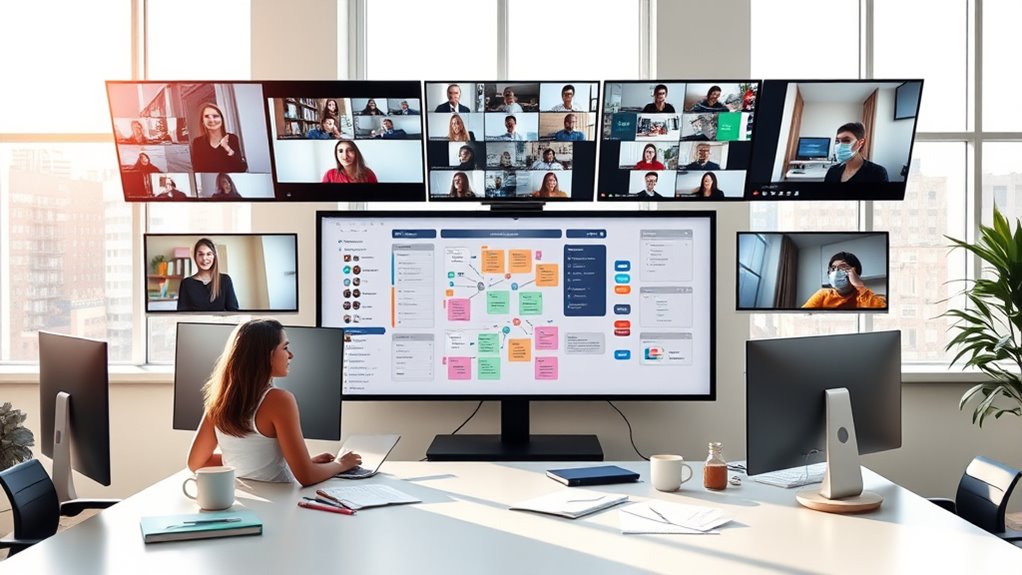

To manage asynchronous teams effectively, set clear expectations about availability, deadlines, and communication protocols from the start. Use shared calendars and tools like Slack or Asana to keep everyone aligned, and record meetings for those who can’t attend live. Be flexible and adapt workflows as needed, emphasizing thorough documentation and concise messaging. By creating a structured yet adaptable environment, you’ll foster productivity and cohesion—discover more ways to optimize your team’s collaboration if you continue exploring this topic.
Key Takeaways
- Set clear communication guidelines and expectations to ensure consistency and understanding across team members.
- Leverage asynchronous tools like Slack or Asana for effective, flexible updates and information sharing.
- Respect different time zones by scheduling and responding within team members’ working hours.
- Use regular asynchronous check-ins, summaries, or progress reports to keep everyone aligned.
- Foster adaptability by adjusting workflows and communication strategies based on team needs and feedback.

Managing asynchronous teams can be challenging, especially when team members work across different time zones and schedules. You need to navigate the complexities of time zone coordination to guarantee everyone stays aligned and productive. The key is to set clear expectations about availability and deadlines from the outset. When team members are spread out globally, it’s essential to understand their working hours and avoid scheduling meetings or demanding responses during off-hours. Using a shared calendar that highlights each person’s working window can help you visualize overlapping hours, making it easier to plan real-time interactions or synchronous meetings when necessary.
Set clear expectations and use shared calendars to coordinate overlapping working hours across time zones.
Beyond scheduling, effective communication becomes indispensable. Asynchronous communication tools are your best allies in this environment. These tools—such as Slack, Microsoft Teams, or project management platforms like Asana—allow team members to communicate on their own schedules without the pressure of immediate responses. You should encourage your team to document updates, questions, and decisions thoroughly so that everyone can access the information they need, regardless of when they log in. Clear, organized communication reduces misunderstandings and keeps projects moving forward.
To make the most of asynchronous communication tools, establish guidelines on their usage. For example, specify what types of messages are suitable for immediate chat versus those that require detailed, thoughtful responses. Encourage team members to be explicit and concise in their messages to prevent confusion. Use labels or tags to categorize updates, priorities, or topics, which makes information retrieval easier later. Also, consider creating shared documentation or knowledge bases where key information, templates, and project histories are stored. This minimizes redundant questions and guarantees all team members have access to the same information, regardless of their time zone.
Another essential aspect is regular check-ins that respect everyone’s schedule. Instead of relying solely on live meetings, set up recurring asynchronous updates or progress reports. You can ask team members to post weekly summaries or status updates. This keeps everyone informed without demanding real-time participation, which can be frustrating across different time zones. When you do schedule live meetings, try to find a compromise time that works reasonably well for most, and record these sessions so those who can’t attend can review them later. Additionally, understanding how to efficiently shift gears on a gravel bike can serve as a helpful analogy for adjusting communication and workflow strategies as needed to adapt to team dynamics.
Frequently Asked Questions
How Do I Build Trust in a Remote, Asynchronous Team?
To build trust in a remote, asynchronous team, focus on consistent communication and transparency. You should prioritize relationship nurturing by sharing updates openly and openly acknowledging team members’ contributions. Trust building happens when you demonstrate reliability and follow through on commitments. Encourage open dialogue, actively listen, and show appreciation regularly. By fostering a culture of honesty and respect, you create a strong foundation for trust among team members, despite physical distance.
What Tools Are Best for Coordinating Asynchronous Communication?
Think of your tools as a symphony’s conductor, guiding harmony. For coordinating asynchronous communication, project management and collaboration platforms like Asana, Trello, or Slack work best. They keep everyone aligned and informed, like notes in a melody. Use these tools to assign tasks, share updates, and facilitate discussions. They streamline your team’s workflow, ensuring that asynchronous collaboration flows smoothly, just like a well-conducted orchestra.
How Can I Measure Productivity Without Constant Oversight?
You can measure productivity by establishing clear performance metrics and tracking progress regularly. Use project management tools to monitor task completion and set achievable goals. Incorporate feedback loops where team members update you on their progress and challenges. This approach helps you gauge performance without constant oversight, ensuring accountability while fostering autonomy. Regular check-ins and transparent metrics keep everyone aligned and motivated, making remote management more effective.
How Do I Handle Cultural Differences in Asynchronous Teams?
To handle cultural differences in asynchronous teams, you should prioritize cross-cultural communication and cultural sensitivity. Be open-minded and actively learn about your team members’ backgrounds, customs, and communication styles. Use clear, respectful language, and encourage team members to share their perspectives. Set expectations that value diversity, fostering an inclusive environment. Regularly check in to guarantee understanding and adapt your communication approach to bridge cultural gaps effectively.
What Are Common Pitfalls to Avoid in Asynchronous Team Management?
To avoid common pitfalls, you should prevent misaligned expectations by setting clear goals and deadlines from the start. Avoid overcommunication, which can overwhelm team members and cause confusion; instead, focus on concise, purposeful updates. Regular check-ins help ensure everyone stays aligned. Also, be mindful of time zones and cultural differences, fostering an environment of trust and clarity. This approach keeps your asynchronous team productive and engaged.
Conclusion
By mastering the art of managing asynchronous teams, you become the captain guiding a fleet across different time zones, steering through waves of communication. Embrace clear expectations and trust as your compass, ensuring each crew member sails smoothly toward shared goals. Remember, with patience and adaptability, you turn scattered islands into a thriving archipelago. Soon, your team will work like a well-oiled machine, harmonizing across distances to achieve remarkable success.