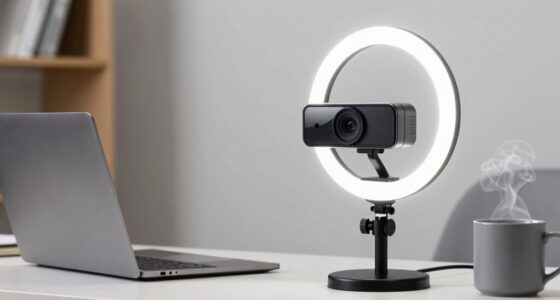
📊 Full opportunity report: Digital MSK Health Checks For Remote Workforces: What You Need To Know on IdeaNavigator AI — validation score, market gap, and execution plan.

Get business pricing on tech for your team
- Business-only prices and quantity discounts
- Tax-exempt purchasing
- Multiple users, one account, clear invoices
TL;DR

Employers are developing digital, camera-based MSK health assessments for remote workers to detect early mobility issues. These tools aim to reduce costs and improve employee well-being, with pilot programs underway. Key questions remain about validation and adoption.
Employers and benefits providers are testing digital, camera-based musculoskeletal (MSK) health assessments designed for remote workers, aiming to detect early signs of mobility decline. This development responds to the surge in MSK issues caused by remote and hybrid work arrangements, which have reduced incidental movement and ergonomic support. The initiative could enable proactive intervention, potentially lowering medical claims and reducing workday disruptions.
The proposed platform involves a web or mobile self-assessment that guides employees through a series of strength, mobility, and posture tests, such as sit-to-stand repetitions, shoulder and hip range-of-motion, and seated posture photos. Using a smartphone camera and pose estimation technology, the system scores movement quality and generates a personalized MSK risk profile. Employers can view aggregated, privacy-safe dashboards showing team-level risk trends and engagement metrics, while flagged individuals can be referred to clinical MSK or physical therapy services.
Initial pilots are planned with one or two employers, focusing on measuring completion rates, user retention, and the validity of camera-derived risk scores against established self-report questionnaires scored by physical therapists. The goal is to validate the tool’s accuracy, engagement levels, and willingness of HR and benefits teams to adopt the platform on a per-employee-per-month basis. Success hinges on meaningful participation, reliable scoring, and positive stakeholder feedback.
Why Digital MSK Checks Matter for Employers
This innovation addresses a critical gap in remote workforce health management by enabling early detection of MSK decline, which is a top driver of employer healthcare costs. By shifting from reactive treatment to preventive screening, companies could reduce medical claims, absenteeism, and presenteeism. Additionally, the scalable nature of digital assessments offers a cost-effective way to monitor large distributed teams, supporting overall employee well-being and productivity. As remote work persists, such tools could become a standard component of corporate wellness programs, especially for self-insured employers seeking to control rising healthcare expenses.
digital musculoskeletal assessment tools
As an affiliate, we earn on qualifying purchases.
As an affiliate, we earn on qualifying purchases.
Background of Remote Work and MSK Health Challenges
The shift to remote and hybrid work models has significantly altered employee activity patterns. Without commuting and ergonomic office setups, many workers experience increased sedentary behavior, leading to a rise in neck, back, and posture-related MSK issues. These problems have contributed to higher medical claims and lost workdays, prompting employers to seek proactive solutions. Currently, most MSK interventions are reactive, focusing on treatment after pain or injury occurs. The advent of smartphone-based pose estimation and motion capture technology offers a new opportunity for early screening, enabling preventive care at scale.
While digital health tools for MSK are not new, their application in remote workforce management is emerging as a promising frontier. Early-stage pilot programs are exploring the feasibility, validity, and engagement levels of camera-based self-assessments, with the aim of integrating them into broader benefits strategies.
As an affiliate, we earn on qualifying purchases.
Unanswered Questions About Validation and Adoption
It is still unclear how accurately the camera-based assessments will correlate with traditional clinical evaluations, such as physical therapy scoring. The validity of the risk scores, especially across diverse body types and movement patterns, remains to be confirmed. Additionally, the willingness of HR and benefits teams to adopt and fund these tools on a broad scale depends on pilot outcomes, which are still in progress. Data privacy concerns and employee acceptance are also unresolved factors that could influence implementation.
remote worker ergonomic assessment
As an affiliate, we earn on qualifying purchases.
As an affiliate, we earn on qualifying purchases.
Next Steps in Pilot Testing and Validation Efforts
Within the next 3 to 6 months, pilot programs will deploy the digital assessments to remote employees, measuring completion rates, engagement, and scoring accuracy. Results from these pilots will determine whether the technology can be scaled and integrated into existing benefits platforms. Further validation studies comparing camera-derived scores with clinical assessments will inform regulatory and employer confidence. Stakeholders will also evaluate the cost-effectiveness and user experience before broader rollout.
As an affiliate, we earn on qualifying purchases.
Key Questions
How does the digital MSK assessment work?
The assessment uses a smartphone or webcam camera to capture employee movements during guided strength, mobility, and posture tests. Pose estimation algorithms analyze the videos to score movement quality and generate a personalized risk profile.
What are the benefits for employers?
Employers can identify employees at risk of MSK problems early, enabling preventive interventions that may reduce healthcare costs, absenteeism, and productivity loss. The platform also provides aggregated risk trend data to inform benefits strategies.
Are these assessments secure and privacy-safe?
Yes, pilot programs are emphasizing privacy protections, including anonymized, aggregate data dashboards and secure handling of individual assessment videos. Data privacy policies will be crucial for broader adoption.
When will this technology be widely available?
Widespread adoption depends on pilot success and validation outcomes, which are expected within the next 6 to 12 months. Full commercial availability may follow shortly after successful pilots.
Can these assessments replace clinical MSK evaluations?
No, they are intended as screening tools to identify at-risk employees and prompt clinical follow-up, not as substitutes for professional medical assessments.
Source: IdeaNavigator AI
Halloween Picks
halloween
As an affiliate, we earn on qualifying purchases.