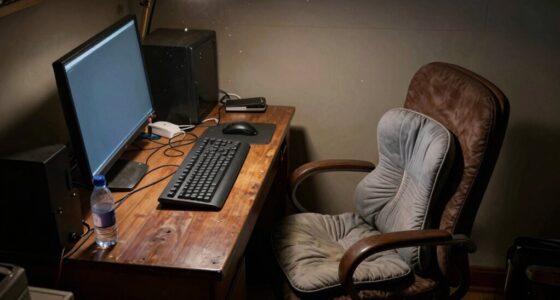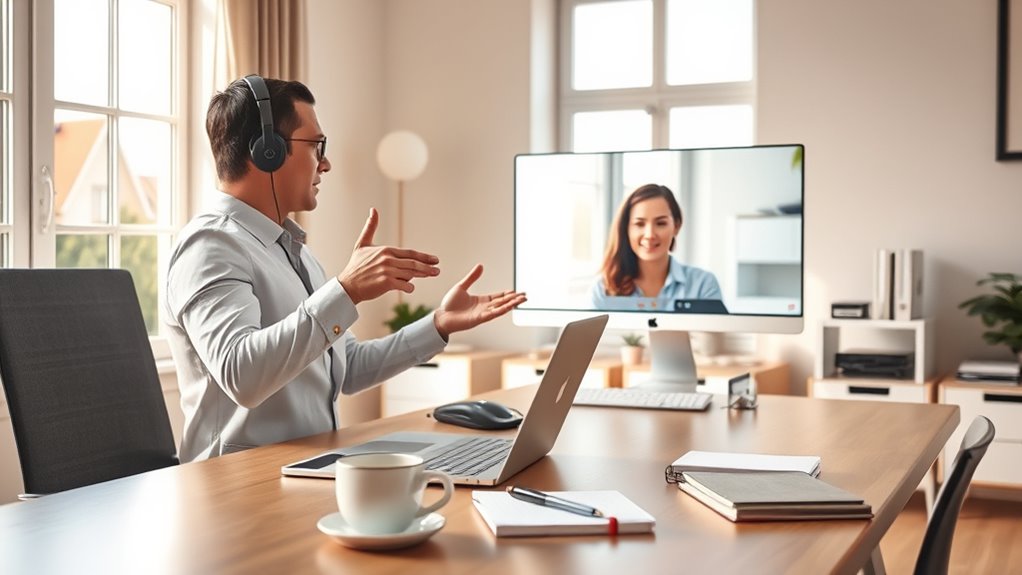

To conduct remote performance reviews effectively, prepare by creating a distraction-free environment with quality equipment and clear visuals. Build trust through open communication, empathetic language, and specific feedback. Set clear goals aligned with company objectives, and use digital tools for transparent documentation. Engage actively, listen carefully, and follow up on action items consistently. If you keep these strategies in mind, you’ll improve your remote review skills and foster stronger team performance.

Get business pricing on tech for your team
- Business-only prices and quantity discounts
- Tax-exempt purchasing
- Multiple users, one account, clear invoices
Key Takeaways
- Prepare a distraction-free, professional environment with quality equipment to ensure clear communication during virtual reviews.
- Set clear, measurable goals aligned with organizational standards and revisit them regularly for accountability.
- Use reliable digital tools for seamless collaboration, screen sharing, and real-time feedback to enhance engagement.
- Communicate with empathy, maintain a warm tone, and actively listen to foster openness and trust remotely.
- Document action items, assign responsibilities, and schedule follow-ups to ensure fair and consistent performance management.
Preparing for a Remote Performance Review

To guarantee a smooth remote performance review, you need to prepare thoroughly beforehand. Building virtual rapport starts with understanding your employee’s communication style and showing genuine interest. Use your emotional intelligence to recognize their feelings and respond empathetically, creating a comfortable atmosphere. Review their recent achievements, challenges, and goals so you can provide meaningful feedback. Test your technology in advance to avoid disruptions, ensuring clear audio and video quality. Set a clear agenda and allocate enough time, respecting their schedule. Keep your tone positive and engaging, fostering trust. Preparation isn’t just about logistics; it’s about creating a connection that encourages openness. Being familiar with your employee’s gelato preferences can also help you connect on a personal level and build rapport. This approach helps establish a foundation of mutual respect and understanding before diving into performance discussions.
Setting the Right Environment for Virtual Meetings
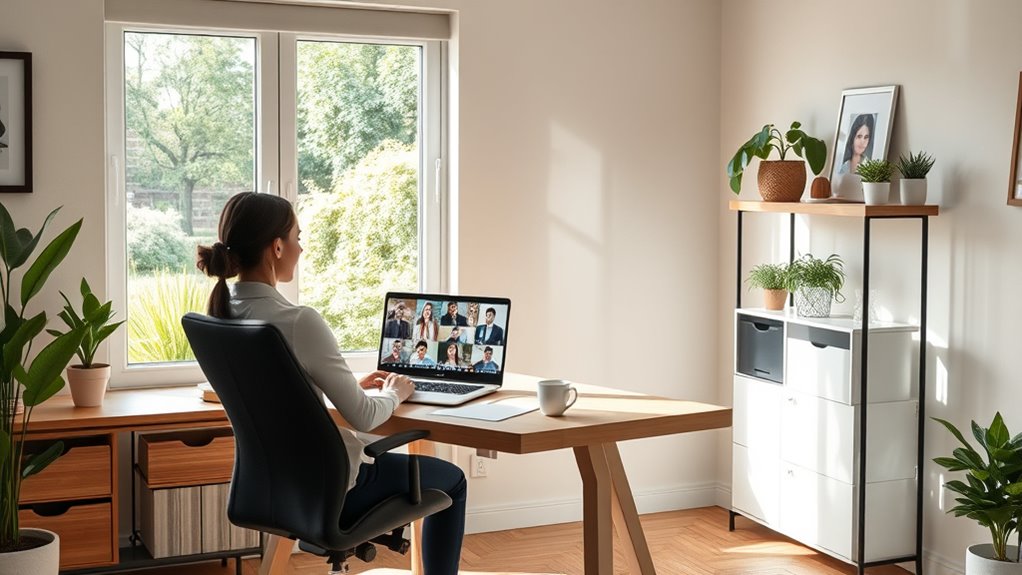
Creating a distraction-free zone is essential for a successful virtual performance review. Make sure your physical space is optimized for comfort and free from interruptions. When your environment is focused and quiet, you can communicate more effectively and stay engaged throughout the meeting. Incorporating attention into your environment can significantly enhance your focus and the overall quality of the review.
Optimize Physical Space
Since your physical environment directly impacts the quality of virtual meetings, it’s essential to optimize your space for a professional and distraction-free setting. Invest in ergonomic furniture to support comfort and focus during long discussions. Position your desk and chair to ensure good posture and easy camera framing. Keep decorative accessories minimal but intentional, avoiding clutter that can distract or create visual noise. A clean, organized space signals professionalism and helps set a serious tone for performance reviews. Lighting matters too; ensure your face is well-lit with natural or soft artificial light. By creating a tidy, comfortable environment with thoughtful touches, you’ll project confidence and foster a focused atmosphere, making your remote performance review more effective and engaging. Incorporating proper lighting techniques can further enhance your visual clarity and presence on camera.
Ensure Distraction-Free Zone
A distraction-free environment is essential for maintaining focus during virtual performance reviews. To achieve this, minimize noise distractions by choosing a quiet space away from household activity or background noise. Inform others in your household about your meeting to avoid interruptions. Clearing visual clutter in your background helps maintain a professional appearance and reduces distractions for both you and your reviewee. Use a clean, organized background or a virtual backdrop if necessary. Turn off notifications on your devices to prevent popup distractions. Ensure your camera is stable and your lighting is adequate. By creating a calm, uncluttered setting, you help foster a focused conversation, making the review more effective and respectful of everyone’s time. Incorporating professional equipment such as quality microphones and cameras can also enhance clarity and engagement during your virtual review.
Establishing Clear Goals and Expectations

To guarantee your remote team stays on track, you need to define measurable objectives that clearly outline what success looks like. Communicate your expectations openly so everyone understands their roles and responsibilities. By setting performance benchmarks, you create a transparent framework that guides progress and accountability. Incorporating elements of a well-designed bedroom can also support a productive remote work environment.
Define Measurable Objectives
Setting clear, measurable objectives is essential for effective performance reviews, especially in a remote environment. When you define specific goals, you help your team understand exactly what’s expected, making goal setting more effective. Focus on creating objectives that are achievable and relevant, ensuring they align with broader company targets. Use metric tracking to monitor progress regularly, which keeps everyone accountable and allows for timely adjustments. Clear, measurable objectives provide a concrete way to evaluate performance objectively, reducing ambiguity and misunderstandings. By establishing these goals early, you set the stage for meaningful discussions during reviews. Remember, the key is to make objectives specific, quantifiable, and attainable, so your team knows exactly what success looks like. Additionally, understanding how contrast ratio impacts image quality can help in evaluating visual presentations during remote reviews.
Communicate Expectations Clearly
Building on your efforts to establish measurable objectives, clearly communicating expectations guarantees everyone understands what success looks like. In a remote setting, virtual communication becomes your primary tool for expectation setting. Be specific about goals, deadlines, and quality standards during your performance reviews. Use clear language and confirm understanding by asking for feedback or summaries. Avoid vague instructions that can lead to confusion later. When expectations are transparent, your team members know exactly what’s required, reducing misunderstandings and misaligned efforts. Regularly revisit these expectations during check-ins to reinforce clarity. Effective expectation setting through virtual communication builds trust and transparency and keeps everyone aligned, ensuring your remote team stays focused and motivated throughout their performance review process.
Set Performance Benchmarks
Establishing clear performance benchmarks is essential for guiding your remote team toward success. You need to define specific performance metrics that measure progress effectively. Clear benchmarks help your team understand what’s expected and how their work aligns with overall goals. Use benchmark standards to set consistent, attainable targets across roles, ensuring everyone is on the same page. These standards serve as a reference point for performance reviews, making evaluations fair and objective. When setting benchmarks, be precise about deadlines, quality levels, and productivity goals. Communicate these expectations openly, so team members know how their efforts are measured. Regularly review and adjust benchmarks as needed to keep pace with changing priorities and business needs. This clarity empowers your team to perform confidently and achieve success remotely. Additionally, referencing performance benchmarks derived from notable industry examples can inspire your team and provide real-world context.
Using Technology Effectively During the Review
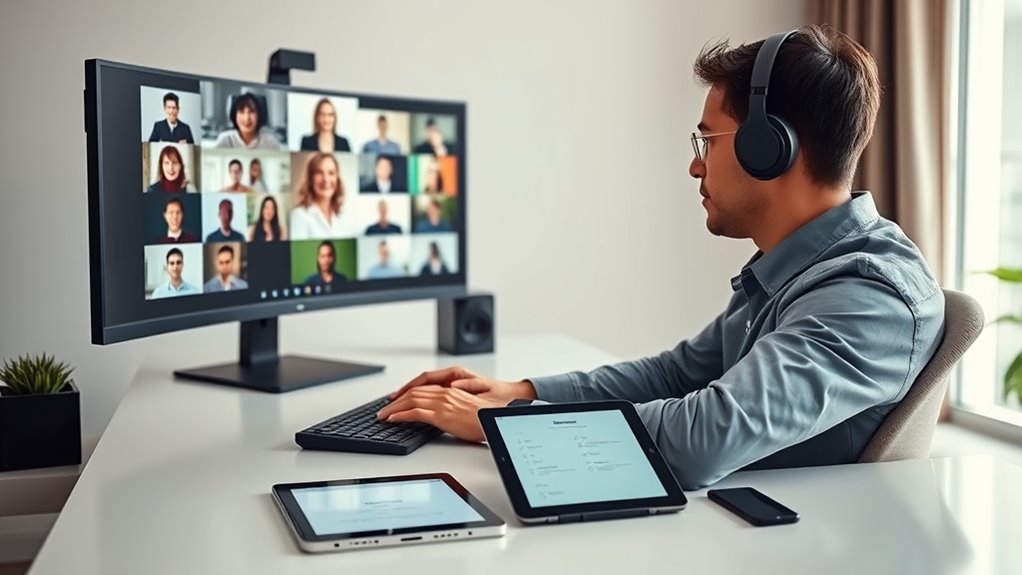
To make the most of your remote performance review, leveraging technology effectively is essential. Use digital tools that facilitate seamless virtual collaboration, ensuring both you and your employee can share feedback, documents, and visuals in real time. Video conferencing platforms like Zoom or Teams help create a face-to-face connection, making conversations more engaging and personal. Screen sharing features allow you to review performance data together, while chat functions enable quick clarifications without interrupting the flow. Be sure to prepare your digital workspace beforehand, minimizing technical issues. Clear audio and good lighting improve communication clarity. By choosing the right tools and mastering their features, you ensure your review remains interactive, transparent, and productive despite the remote setting.
Communicating Clearly and Transparently

Using the right technology sets the stage for a smooth remote performance review, but clear and transparent communication guarantees your message hits home. Focus on verbal clarity by speaking directly and avoiding jargon or ambiguous language. Be intentional with your transparency practices—share honest feedback and explain your points openly. Make sure your tone is warm and approachable, which encourages openness. Use pauses to check for understanding and invite questions to clarify any uncertainties. Keep your messages straightforward and avoid assumptions about what your employee understands. Remember, transparency builds trust, so be honest about both strengths and areas for improvement. Additionally, being aware of expiration dates and signs of spoilage can help you provide accurate and honest feedback. By prioritizing verbal clarity and transparency practices, you ensure your remote performance review is effective, respectful, and productive.
Fostering Engagement and Active Listening

Fostering engagement and active listening during remote performance reviews requires your intentional effort to create a two-way dialogue. Use interactive activities, like open-ended questions or quick polls, to encourage your employee to share their thoughts and feelings. Demonstrate emotional intelligence by paying attention to tone and non-verbal cues, even over video, and respond empathetically. Show genuine interest by paraphrasing their points, which confirms you’re listening and valuing their perspective. Keep your environment distraction-free to maintain focus. Your goal is to make your employee feel heard and engaged, which boosts trust and openness. Being aware of social determinants of health can also inform more empathetic conversations about wellbeing. By incorporating these strategies, you create a more meaningful, participative review that benefits both of you.
Providing Constructive Feedback Remotely

Providing constructive feedback remotely requires your intentional approach to guarantee clarity and maintain a positive tone. Virtual feedback can easily be misunderstood, so focus on empathetic communication to foster trust. Use clear examples and specific suggestions to help your team member understand expectations. Balance honesty with encouragement to motivate improvement without discouragement. Remember, tone and body language are limited online, so choose words carefully. Consider this table to deepen your understanding:
| Effective Strategies | Key Benefits |
|---|---|
| Be specific and objective | Clarity and actionable steps |
| Use empathetic language | Builds trust and openness |
| Focus on behaviors, not personality | Prevents defensiveness |
| Maintain a supportive tone | Encourages growth |
| Follow up regularly | Reinforces progress |
Additionally, being aware of relationship dynamics can help you tailor your feedback to individual personalities and improve overall team cohesion. Mastering virtual feedback strengthens your team’s development and morale.
Documenting and Following Up on Action Items
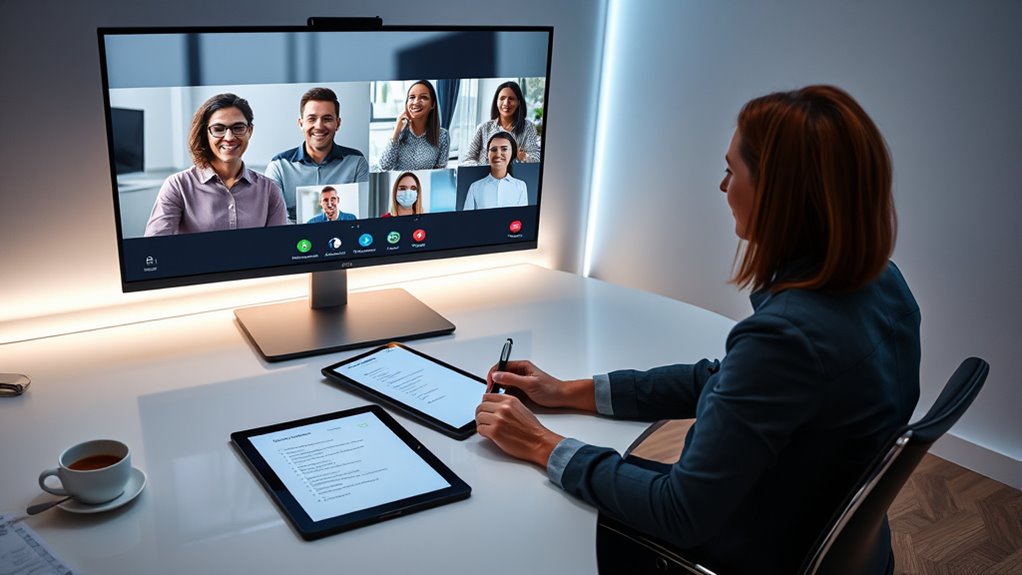
How can you guarantee that action items from performance reviews lead to real progress? The key is effective action item tracking. After your review, clearly document each task, deadlines, and responsible parties. Use shared digital tools or project management software to keep everything transparent. Follow up strategies are vital; schedule regular check-ins to review progress and address obstacles. Keep the communication open and encourage accountability without micromanaging. When employees see consistent follow-up, they’re more likely to stay motivated and complete their action items. By maintaining detailed documentation and proactive follow-up, you ensure that performance reviews translate into tangible improvements. This structured approach helps align individual goals with organizational objectives, fostering continuous development and accountability. Incorporating performance metrics can further measure progress and success over time.
Maintaining Consistency and Fairness Across Reviews
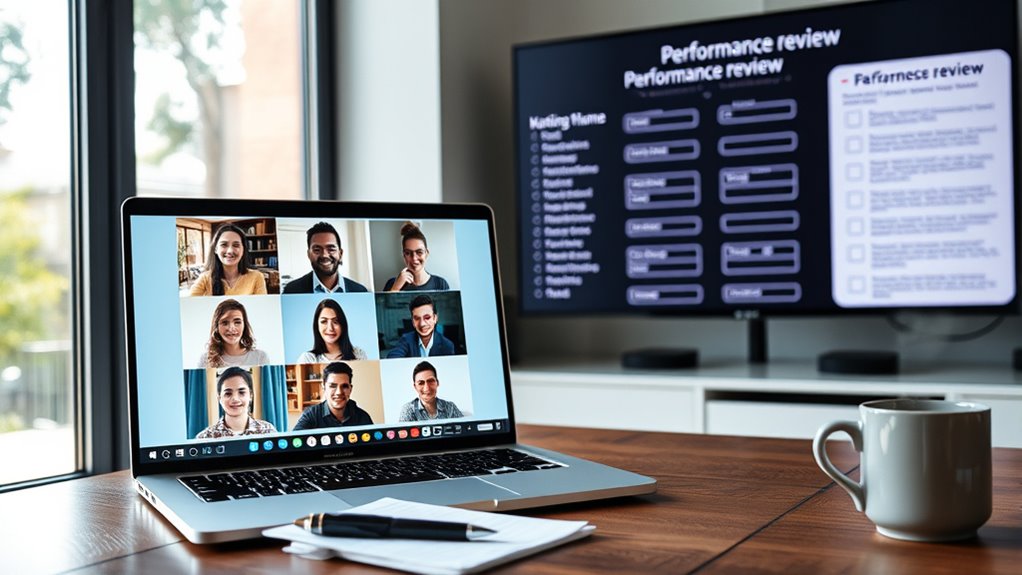
To guarantee that performance reviews remain fair and consistent, it’s essential to establish clear standards and apply them uniformly across all employees. This ensures a standardized evaluation process and promotes equitable treatment. Use objective criteria and consistent metrics to compare performance accurately. Regularly calibrate your assessments by involving multiple reviewers and reviewing policies. To emphasize, consider this table:
| Key Principle | Implementation |
|---|---|
| Standardized Evaluation | Use uniform criteria for all employees |
| Consistent Application | Apply standards across all reviews |
| Fairness | Treat everyone with the same impartiality |
| Transparency | Communicate expectations clearly |
This approach helps prevent bias and maintains trust in remote performance assessments. Additionally, incorporating performance standards aligned with organizational goals can further enhance the fairness and effectiveness of the review process.
Frequently Asked Questions
How Can I Handle Technical Issues During Remote Reviews?
When technical issues arise during remote reviews, you should stay calm and use troubleshooting techniques to resolve them quickly. Check your virtual meeting tools first—restart the app, update software, or switch devices if needed. Communicate clearly with your team about the issue, and have backup plans like phone dial-ins or alternative platforms ready. This proactive approach helps make certain your review stays productive despite technical hiccups.
What Are Best Practices for Managing Time Zones?
Think of time zone coordination like tuning instruments in an orchestra—you need the right timing for harmony. You should prioritize scheduling flexibility, allowing team members to choose slots that suit their local times. Use shared calendars and clear communication to prevent overlaps or confusion. For example, rotating meeting times can ensure fairness, helping everyone feel valued and engaged, regardless of their geographic location.
How Do I Address Sensitive Topics Virtually?
When addressing sensitive topics virtually, you should focus on building trust by choosing appropriate language that’s empathetic and respectful. Be clear and direct, but avoid sounding accusatory or harsh. Use video calls when possible to add a personal touch, and listen actively to your team member’s responses. Keep the conversation private, and follow up to show your support. This approach helps foster open communication and maintains a positive relationship.
How Can I Ensure Confidentiality in Remote Reviews?
Think of confidentiality safeguards as a vault protecting your sensitive information. To guarantee confidentiality in remote reviews, you should use secure communication channels like encrypted video calls and private messaging tools. Remind your team to find quiet, private spaces and avoid sharing confidential details over unsecured networks. Regularly update your security protocols, and always verify that your technology is secure, so sensitive conversations stay just between you and your employee.
What Strategies Promote Honesty in Virtual Feedback?
To promote honesty in virtual feedback, focus on trust building and active listening. Create a safe environment where employees feel comfortable sharing openly by being transparent and approachable. Use eye contact and attentive nods to show you’re engaged. Encourage honesty by asking open-ended questions and avoiding interruptions. When employees see you’re genuinely listening and trust you, they’re more likely to be truthful, leading to more valuable, constructive feedback.
Conclusion
So, there you have it—your foolproof guide to remote performance reviews. Just remember, if all else fails, blame the Wi-Fi for that awkward silence or misunderstood comment. Keep it transparent, stay engaged, and don’t forget to document everything—your future self will thank you. After all, conducting reviews from your couch is just as serious as in the office, minus the pants. Happy reviewing, and may your feedback be as clear as your webcam’s resolution!
Halloween Picks
halloween
As an affiliate, we earn on qualifying purchases.