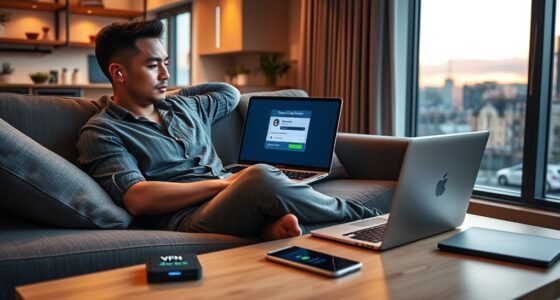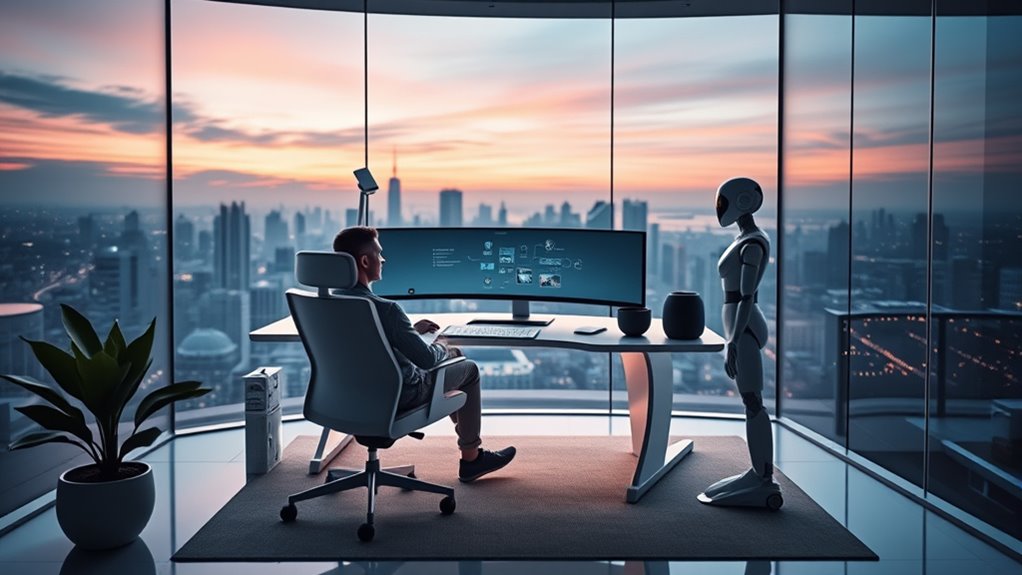

By 2030, remote work will be highly personalized, seamlessly integrated with AI that automates routine tasks and provides real-time insights. You’ll have the flexibility to work from decentralized hubs, smaller communities, or your own home, reducing commutes and urban congestion. Digital environments will be versatile and adaptive, supporting your wellness and collaboration needs. As work becomes more location-independent and autonomous, you’ll experience a new level of professional and lifestyle integration—if you keep exploring, you’ll discover how this future unfolds.
Key Takeaways
- AI will increasingly automate routine tasks, enabling more strategic and creative remote work beyond 2030.
- Decentralized communities and smaller hubs will replace traditional offices, supporting flexible living and working options.
- Physical workspaces will focus on adaptable, tech-enabled environments like coworking spaces and satellite offices.
- Wellness, community engagement, and personalized AI support will enhance remote work experiences and well-being.
- Location independence will foster greater work-life balance, professional growth, and reduced urban congestion worldwide.

As remote work continues to evolve, it’s clear that its influence will extend far beyond 2030. You’ll find that advancements like AI integration are transforming how you collaborate, communicate, and manage your tasks from anywhere. AI tools streamline workflows by automating routine activities, offering real-time insights, and enhancing decision-making processes. This shift means you can focus more on strategic, creative, or complex work while AI handles the repetitive parts. As AI becomes more sophisticated, it’s likely that your remote work experience will feel increasingly seamless, personalized, and efficient. You’ll also notice a significant impact on urban decentralization, where the traditional office-centric model gives way to a more distributed landscape. Cities might no longer be the only hubs of economic activity. Instead, you could see a rise in smaller, decentralized communities that support remote workers. This shift allows you to choose living environments that suit your lifestyle—whether that’s a rural area, a suburban neighborhood, or a smaller city—without sacrificing career opportunities. The decentralization of workspaces reduces congestion in urban centers, cuts commute times, and creates new hubs of innovation outside major metropolitan areas. You’ll have more options for where to live, which can improve your quality of life and work-life balance. As companies adopt AI-driven tools, they’ll also reconsider their physical presence, investing less in sprawling office spaces and more in flexible, tech-enabled environments. This metamorphosis encourages you to operate in a more agile workspace—whether that’s a coworking space, a home office, or a satellite office. It also increases the importance of digital infrastructure, making reliable high-speed internet and smart technology essential for your productivity. Additionally, health-conscious choices such as incorporating wellness-focused practices and nutritious foods into your routine can support your overall well-being while working remotely. With urban decentralization, you might find yourself working in vibrant communities that foster collaboration without the need for traditional office towers. AI integration enhances these communities by enabling smarter resource management, personalized support, and virtual networking opportunities. The blend of AI and decentralization means your work environment becomes more adaptable and tailored to your preferences. You’ll experience greater autonomy and flexibility, with technology shaping a future where your location no longer limits your professional growth. As remote work continues to evolve beyond 2030, expect these trends to deepen, making your work life more dynamic, personalized, and geographically liberated. The convergence of AI and urban decentralization promises a world where you can achieve your career goals while enjoying a lifestyle that aligns with your personal values and aspirations.
Frequently Asked Questions
How Will Remote Work Impact Global Economic Inequality?
Remote work could either widen or narrow economic disparity worldwide. If you have reliable internet and skills, you’ll benefit from global opportunities, reducing the digital divide. But, if you lack access or education, you might fall further behind, increasing the digital divide and economic disparity. Your ability to adapt and access technology will determine whether remote work helps level the playing field or deepens existing inequalities.
What New Technologies Will Emerge to Support Remote Collaboration?
You’ll see virtual reality and AI collaboration tools revolutionize remote work. Virtual reality will create immersive, interactive workspaces, making remote interactions feel face-to-face. AI collaboration platforms will streamline tasks, synthesize ideas, and support seamless communication. These technologies will transform teamwork, making remote collaboration more natural, nuanced, and efficient. As you adapt, you’ll harness these innovations to enhance productivity, connect effortlessly, and stay competitive in an ever-evolving digital workspace.
How Will Remote Work Influence Urban Development and City Planning?
Remote work will reduce urban sprawl as more people choose to live farther from city centers, relying less on dense developments. You’ll see cities redesign their space, emphasizing green zones and mixed-use areas. Public transportation may shift focus to suburban and regional routes, supporting remote workers commuting less daily. City planning will prioritize connectivity and sustainability, making urban areas more livable while accommodating the changing dynamics of remote work lifestyles.
What Legal Challenges Will Arise With Widespread Remote Employment?
Think of remote work like a puzzle with missing pieces—you’ll face legal challenges like privacy concerns and jurisdiction disputes. You might struggle to protect employee data across borders or determine which laws apply when workers are in different locations. These issues could lead to conflicts and confusion, making it essential for you to stay updated on evolving regulations and establish clear policies to navigate the complex legal landscape effectively.
How Will Remote Work Affect Work-Life Balance in Different Cultures?
You’ll find that remote work influences work-life integration differently across cultures, requiring cultural adaptation. In some societies, it blurs boundaries, making it harder to disconnect and risking burnout. In others, it enhances flexibility, promoting better balance. To succeed, you need to understand these cultural nuances and adapt your routines accordingly. Embracing cultural differences helps you maintain a healthier work-life balance, even as remote work continues to evolve globally.
Conclusion
As you think about remote work beyond 2030, it’s clear that technology and human connection will continue to intertwine in surprising ways. The more you adapt now, the more seamless your future work life becomes—almost as if the evolving tools were always meant to be part of your routine. Coincidences like sudden innovations and personal growth remind you that the future of remote work isn’t just about technology; it’s about how you embrace change.