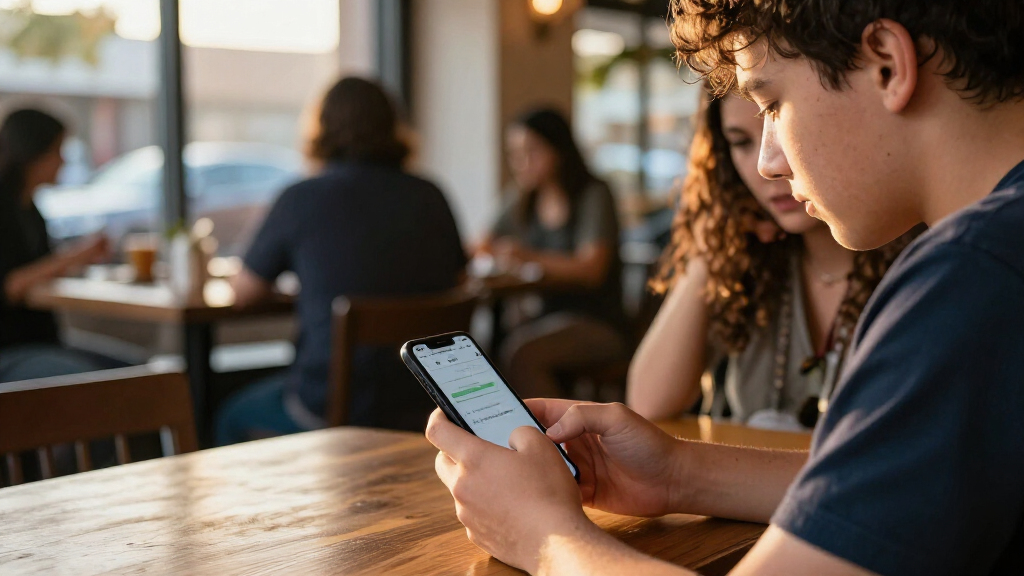

🔍 Read the full analysis: How Reliable Are Instagram’s AI Decisions About Teen Status? on ThorstenMeyerAI.com

Get business pricing on tech for your team
- Business-only prices and quantity discounts
- Tax-exempt purchasing
- Multiple users, one account, clear invoices
TL;DR
Meta said on November 9, 2026, that Instagram is expanding its AI age-estimation technology worldwide to identify suspected users ages 13 to 17 and place them in Teen Account protections, even if they entered an adult birthday. Meta has not published the system’s error rate or a clear appeal process for adults wrongly placed in those accounts.
Meta said on November 9, 2026, that Instagram is expanding its AI age-estimation system worldwide to identify users it suspects are 13 to 17 and place them in Teen Account protections, even if they entered an adult birthday. The move could add “millions more teens” to safeguards on contact, content and time, Meta said, but the company has not disclosed how often the system gets a person’s age wrong.
The global expansion concerns teenagers who may have misrepresented their age, not the separate process for identifying children under 13, who are not allowed on Instagram. Meta says accounts it believes belong to under-13s may be deactivated, with the account holder required to prove their age to prevent deletion. A report by The Verge was corrected on November 9 after Meta clarified that the new worldwide expansion applies to Teen Account placement.
Meta’s earlier descriptions say its AI looks for contextual clues across profiles, including references to birthdays and school grades in posts, comments, bios and captions. The company has also described visual analysis of photos and videos in select countries. Meta said that visual analysis is not facial recognition and does not use biometric data or create facial fingerprints; it looks for general visual patterns that may suggest someone underage is pictured.
The November announcement also covered other services and tools. In Australia, Meta says it uses an Apple age-range signal voluntarily. The company said Facebook is getting the technology and that similar technology would launch globally on Threads later in 2026. In the United States, Meta said it would show parents an Instagram notice explaining its age-assurance approach and how to help correct a teen’s age information.
How reliable are Instagram’s AI decisions about teen status?
Meta is expanding AI age estimation worldwide to place suspected 13-to-17-year-olds in Teen Account protections. The rollout is clear; its accuracy and appeal process are not.
What the AI may examine
Meta describes profile clues and, in select countries, visual patterns—not facial identification.
Words and context
Posts, comments, bios and captions may mention birthdays or school grades.
General patterns
In select countries, photos and videos may be analyzed for signs someone underage is pictured. Meta says this is not facial recognition and uses no biometric data.
Why classification matters
Teen Account placement changes contact, content and time controls.
- They may face Teen Account restrictions.
- Correcting a birthday may require ID or Yoti facial age estimation.
- They may not receive protections intended for teens.
- Meta has not reported how often this happens.
What remains unclear
The public information does not let users judge reliability or predict how a dispute will be handled.
| Open question | What Meta has disclosed |
|---|---|
| How often is age misestimated? | No false-positive or false-negative rates published |
| How can adults appeal? | No clear process for the global expansion |
| What happens after a challenge? | Timing and options across countries remain unclear |
Where the rollout stands
The November announcement concerns teen protections, not Meta’s separate process for suspected under-13 accounts.
Meta says the system will identify suspected teens, including those with adult birthdays.
Meta says Facebook is getting the technology and similar technology is planned for a global Threads launch later in 2026.
In the United States, Meta said parents would see an Instagram notice during November 2026.
Age Errors Could Restrict Adults
Teen Account placement changes what users can do and see. Meta says the accounts automatically limit who can contact teens, the content they see and their time on the apps. For users under 16, Meta has said a parent or guardian must approve changes to those settings. Applying these controls based on an AI estimate therefore affects more than the accuracy of a profile detail.
The reliability question is practical: an adult placed in a Teen Account may face restrictions, while a teen who is not identified may miss protections intended for them. Meta says the rollout is expected to cover “millions more teens,” but has not given a number for adults who could be affected by mistakes. Without published error rates, users and families cannot assess how frequently either outcome occurs.
There is also a potential burden on people who want to correct a mistaken classification. Meta has said that changing a birthday from under 18 to over 18 can require age verification using an ID or Yoti facial age-estimation tools. That is a separate verification step from Meta’s own AI-based detection, but it may be relevant to adults seeking to leave Teen Account restrictions.
Products Worth Considering

DJI Osmo Mobile 8 3-Axis Phone Gimbal Stabilizer

Bose QuietComfort Wireless Noise-Cancelling Over-Ear Headphones, Twilight Blue

Samsung Galaxy Tab A9+ 11-Inch Android Tablet, 64GB, Graphite
As an affiliate, we earn on qualifying purchases.
From Testing to Global Use
Meta first described testing the system in the United States in April 2025. In May 2026, it outlined profile-based signals and visual analysis, later adding a correction on July 31 that its visual system does not use biometric data or identify people in images. Meta said visual analysis remained limited to select countries at that time.
The rollout comes amid legal and regulatory scrutiny of how Meta protects young users. The source material reports an agreement involving 52 US attorneys general and a preliminary European Commission finding, dated April 29, 2026, that Meta was doing too little to keep under-13s off Instagram and Facebook. Those developments provide context for the company’s focus on age assurance; they do not independently establish how accurate the new system is.
Meta has presented the expansion as a way to address teens who use adult birthdays to avoid safeguards. The company has also said its AI-assisted review of user reports about underage accounts produced higher accuracy and faster resolutions than human review alone in its testing. It did not provide figures for that claim, and that review process is distinct from the global Teen Account placement announced in November.
““expanding our AI age-estimation technology globally””
— Meta, November 9, 2026
Error Rates and Appeals Unreported
Meta has not published the AI system’s false-positive or false-negative rates, the number of adults it has misclassified, or the specific weight given to each signal. Its statement that it is “encouraged by the results” from countries where the system previously ran is not accompanied in the supplied material by figures that would allow readers to assess performance.
The company’s public descriptions also do not set out a clear appeal process for the new global expansion. Meta previously said people could change settings if it made a mistake, and it has described ID or third-party age-estimation checks for certain birthday changes. It remains unclear whether those options apply consistently across countries and cases, how quickly disputes are resolved, and what alternatives are available to people who do not want to submit an ID or use facial age estimation.
It is also unclear how quickly the rollout will reach all Instagram users and whether the signals used will vary by country. The Apple age-range signal was specifically described for Australia, while visual analysis was previously limited to select countries.
Rollout and Parent Notices
Meta says the Instagram expansion is proceeding globally and that it expects to place “millions more teens” into Teen Account protections. In the United States, parents were due to receive an in-feed explanation during November 2026. Meta has also said the technology is rolling out on Facebook, with similar technology planned for a global Threads launch later in the year.
For users trying to understand or challenge a classification, the next useful details would be published performance data and clear instructions for correcting an age estimate. Meta has not provided a date for releasing error rates or a fuller account of appeals. Until it does, the system’s reach is clearer than its reliability.
Key Questions
What did Meta announce about Instagram’s age-estimation AI?
Meta said on November 9, 2026, that it was expanding the system globally to identify users it suspects are 13 to 17 and place them in Teen Account protections, even if they entered an adult birthday.
Does the global announcement cover Instagram users under 13?
No. The announcement described Teen Account placement for suspected users ages 13 to 17. Meta handles suspected under-13 accounts through a separate process that can deactivate an account unless the holder proves their age.
How does Instagram’s AI estimate age?
Meta has said the system examines contextual clues across profiles, such as birthday references or school-grade mentions. In select countries, it has also described visual analysis for general patterns in photos and videos. Meta says that visual analysis does not use biometric data or identify people in images.
How often does the system misclassify adults?
Meta has not published an error rate or the number of adults wrongly placed in Teen Accounts. The company has said it is encouraged by results in earlier rollout countries, but the supplied information includes no supporting accuracy figures.
Can an adult appeal a Teen Account classification?
Meta has previously said users can change settings if it makes a mistake and has described requiring an ID or Yoti facial age-estimation check for some birthday changes. The company has not publicly detailed a consistent appeal process for adults affected by the November global expansion.
Source: ThorstenMeyerAI.com