

When searching for workflow automation software, the goal is to find tools that streamline repetitive tasks while fitting your technical comfort level. Microsoft Power Automate stands out as the best overall choice, thanks to its extensive integrations and low-code approach. For those just starting out, n8n offers a truly no-code experience, ideal for small teams or solo entrepreneurs. Meanwhile, more advanced users might prefer options like ServiceNow or Claude AI for enterprise-grade automation and AI integration. The main challenge lies in balancing ease of use against customization depth—more powerful tools often require a steeper learning curve. Continue reading for a detailed breakdown of each option and what makes them unique.

Get business pricing on tech for your team
- Business-only prices and quantity discounts
- Tax-exempt purchasing
- Multiple users, one account, clear invoices
Key Takeaways
- Microsoft Power Automate remains the most versatile, balancing ease of use with deep integration capabilities.
- No-code tools like n8n excel for beginners and small businesses, but may lack some enterprise features.
- AI integration is becoming a key differentiator, especially for automations involving complex decision-making.
- Pricing varies widely; premium enterprise tools often come with higher costs but unmatched scalability.
- Ease of setup and user interface are critical factors for adoption—complex tools can hinder quick wins.
| Workflow Automation with Microsoft Power Automate: Use Business Process Automation to Achieve Digital Transformation with Minimal Code |  | Best Overall for Business Professionals | Focus Area: Business process automation | Audience: Business professionals, IT teams | Complexity: Beginner to intermediate | VIEW LATEST PRICE | See Our Full Breakdown |
| n8n Workflow Automation for Beginners: A Practical Guide to Automating Business Tasks with No-Code Workflows |  | Best for No-Code Beginners | Focus Area: No-code automation | Audience: Beginners, small business owners | Complexity: Beginner | VIEW LATEST PRICE | See Our Full Breakdown |
| Workflow Automation with Microsoft Power Automate: Design and Scale AI-Powered Cloud and Desktop Workflows Using Low-Code Automation |  | Best for AI-Driven Workflow Scaling | Focus Area: AI-powered automation | Audience: Mid to advanced users, enterprise professionals | Complexity: High | VIEW LATEST PRICE | See Our Full Breakdown |
| Google Apps Script for Workflow Automation: Build Real-World Business Automation Systems Using AI-Assisted Learning, Triggers, APIs, and Enterprise Workflow Design |  | Best for Developers and Tech-Savvy Professionals | Focus Area: API integration, enterprise workflows | Audience: Developers, tech-savvy professionals | Complexity: High | VIEW LATEST PRICE | See Our Full Breakdown |
| Workflow Automation with Microsoft Power Automate: Achieve Digital Transformation through Business Automation with Minimal Coding |  | Best for Entry-Level Digital Transformation | Focus Area: Business process automation | Audience: Business professionals, managers | Complexity: Beginner | VIEW LATEST PRICE | See Our Full Breakdown |
| AI Workflow Automation for Bloggers: Build a Simple Content System to Research, Write, Optimize, and Repurpose Posts Faster with AI and No-Code Tools |  | Best for Content Creators Looking to Automate Blogging Tasks | Target Audience: Bloggers and content marketers | Automation Focus: Content research, writing, optimizing, repurposing | Tools Covered: No-code AI tools | VIEW LATEST PRICE | See Our Full Breakdown |
| 50 AI Workflows for Engineers: From Debugging to System Design, Code Review & Engineering Automation | 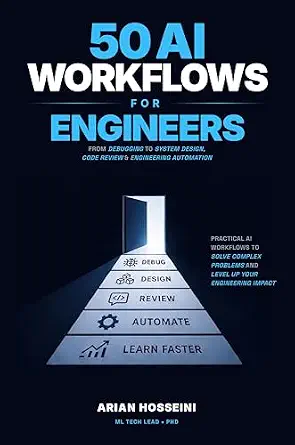 | Best for Engineers Seeking Technical AI Automation Strategies | Target Audience: Engineers and technical teams | Workflow Types: Debugging, system design, code review | Approach: Practical, technical workflows | VIEW LATEST PRICE | See Our Full Breakdown |
| AI Workflow Automation Blueprint System |  | Best for Business Leaders Designing Custom AI Workflows | Target Audience: Business strategists and automation teams | Application Scope: Marketing, sales, business operations | Design Features: Custom AI workflow creation | VIEW LATEST PRICE | See Our Full Breakdown |
| Workflow Automation with ServiceNow: AI Meets Workflow, from Strategy to Operations |  | Best for IT Leaders Implementing AI-Driven ServiceNow Workflows | Target Audience: IT leaders and ServiceNow administrators | Platform Focus: ServiceNow | Content Scope: Strategy and operations | VIEW LATEST PRICE | See Our Full Breakdown |
| Claude AI for Work and Automation: Building Smarter Workflows, Automating Repetitive Tasks, and Creating AI-Powered Systems |  | Best for Intermediate to Advanced Users Exploring Claude AI | Target Audience: Workplace professionals and AI enthusiasts | AI Platform: Claude AI | Focus Areas: Smarter workflows, task automation | VIEW LATEST PRICE | See Our Full Breakdown |
| The Complete Microsoft 365 and Copilot Handbook – Volume I |  | Best for Advanced Productivity and AI-Integrated Workflows | Coverage: Microsoft 365 core applications and AI integration | Intended Audience: Advanced users, enterprise teams | Focus: Automation techniques, AI-enhanced workflows | VIEW LATEST PRICE | See Our Full Breakdown |
| Cursor AI for Developers: Build Real Apps, Automate Coding, and Ship Projects Faster with AI-Powered Software Engineering, SaaS Development, and Workflow Automation |  | Best for Developers and SaaS Teams Needing AI-Driven Automation | AI Capabilities: Code automation, project acceleration | Supported Platforms: Web-based, SaaS integrations | User Level: Advanced developers | VIEW LATEST PRICE | See Our Full Breakdown |
More Details on Our Top Picks
Workflow Automation with Microsoft Power Automate: Use Business Process Automation to Achieve Digital Transformation with Minimal Code
This book stands out for its practical guidance tailored to professionals aiming to leverage Microsoft Power Automate for digital transformation. Compared with the more technical Workflow Automation with Microsoft Power Automate: Design and Scale AI-Powered Cloud and Desktop Workflows, this guide emphasizes straightforward strategies suitable for non-technical users. However, it falls short for advanced users seeking detailed technical examples or complex integrations. Its focus on minimal coding and business process optimization makes it ideal for those with basic familiarity with Microsoft’s platform but less so for developers needing in-depth technical depth.
Pros:- Provides practical guidance on using Power Automate for business processes
- Helps achieve digital transformation with minimal coding
- Suitable for professionals without extensive technical background
Cons:- Lacks detailed technical examples for advanced customization
- Requires prior knowledge of Microsoft Power Platform
Best for: Business professionals and IT teams seeking a practical, non-technical introduction to automating processes with Power Automate
Not ideal for: Advanced developers or users looking for in-depth technical examples and complex workflow customization
- Focus Area:Business process automation
- Audience:Business professionals, IT teams
- Complexity:Beginner to intermediate
- Technical Depth:Minimal
- Platform:Microsoft Power Automate
- Learning Curve:Low
Bottom line: This book is best suited for business users and beginners looking to automate workflows with minimal coding effort.
n8n Workflow Automation for Beginners: A Practical Guide to Automating Business Tasks with No-Code Workflows
This pick makes the most sense for newcomers who want to start automating without learning programming. Compared to the more comprehensive Workflow Automation with Microsoft Power Automate, it offers a simpler, no-code approach that’s easy to follow through step-by-step instructions. While its simplicity is a strength, it also limits technical depth, making it less suitable for users needing complex or highly customized workflows. This book is ideal for small business owners and non-technical staff but isn’t meant for those requiring advanced automation features.
Pros:- Easy-to-follow for beginners with no coding experience
- Provides practical, step-by-step guidance
- Focuses on essential no-code automation techniques
Cons:- Lacks detailed technical depth for complex workflows
- Limited to basic automation scenarios
Best for: Beginners and small business owners wanting straightforward, no-code workflow automation
Not ideal for: Power users or developers seeking advanced features or complex integrations
- Focus Area:No-code automation
- Audience:Beginners, small business owners
- Complexity:Beginner
- Technical Depth:Basic
- Platform:n8n
- Learning Curve:Very low
Bottom line: This guide is perfect for newcomers eager to start automating simple tasks without programming skills.
Workflow Automation with Microsoft Power Automate: Design and Scale AI-Powered Cloud and Desktop Workflows Using Low-Code Automation
This book provides in-depth guidance on designing AI-enhanced workflows in Power Automate, ideal for users aiming to scale automation across cloud and desktop environments. Compared with the more general Workflow Automation with Microsoft Power Automate: Use Business Process Automation to Achieve Digital Transformation, this volume focuses on low-code AI integration, which is valuable for organizations ready to incorporate machine learning and intelligent automation. The tradeoff is its complexity—beginners may find it challenging without prior experience. This makes it best suited for tech-savvy professionals and enterprise users focused on scalable, AI-powered automation.
Pros:- Provides detailed guidance on AI-powered workflow design
- Covers both cloud and desktop automation environments
- Suitable for scaling automation in large organizations
Cons:- Lacks real-world case studies for practical application
- May be complex for complete beginners
Best for: Mid-level to advanced users interested in AI integration and scalable automation in enterprise settings
Not ideal for: Beginners or users seeking simple workflow solutions without AI features
- Focus Area:AI-powered automation
- Audience:Mid to advanced users, enterprise professionals
- Complexity:High
- Technical Depth:Deep
- Platform:Microsoft Power Automate
- Scope:Cloud and desktop workflows
Bottom line: This book is best for professionals seeking to develop scalable, AI-enhanced workflows within enterprise environments.
Google Apps Script for Workflow Automation: Build Real-World Business Automation Systems Using AI-Assisted Learning, Triggers, APIs, and Enterprise Workflow Design
This guide excels in offering comprehensive techniques for automating workflows with Google Apps Script, especially for those comfortable with coding or API integration. In comparison to the more user-friendly n8n Workflow Automation for Beginners, this book dives into AI-assisted learning, triggers, and enterprise-level design, making it a powerful choice for developers looking to build sophisticated systems. Its technical depth is a double-edged sword—while it enables complex system creation, beginners may find the content overwhelming. It’s best suited for software developers or technical teams working on enterprise automation projects.
Pros:- Comprehensive coverage of enterprise workflow design
- Includes practical examples using AI, triggers, and APIs
- Suitable for developers needing advanced customization
Cons:- Content can be technical and challenging for beginners
- Lacks clear prerequisites or skill level guidance
Best for: Developers and technical professionals aiming to build complex, API-driven workflows with Google Apps Script
Not ideal for: Non-technical users or beginners seeking simple automation solutions
- Focus Area:API integration, enterprise workflows
- Audience:Developers, tech-savvy professionals
- Complexity:High
- Technical Depth:Deep
- Platform:Google Apps Script
- Features:AI-assisted learning, triggers, APIs
Bottom line: This book is ideal for developers and technical teams seeking to craft sophisticated, API-driven automation systems.
Workflow Automation with Microsoft Power Automate: Achieve Digital Transformation through Business Automation with Minimal Coding
While sharing a similar title with the first entry, this book emphasizes practical guidance on automating business processes for digital transformation with minimal coding. Compared with the Best Overall guide, it offers fewer detailed examples and case studies, making it more suitable for beginners or organizations just starting their automation journey. Its straightforward approach helps users quickly understand essential automation techniques, but it may lack the depth needed for complex or large-scale automation projects. This makes it a good choice for small teams or business managers without technical expertise.
Pros:- Provides practical, easy-to-understand guidance
- Helps achieve digital transformation with minimal coding
- Suitable for beginners and non-technical users
Cons:- Lacks detailed technical depth and real-world case studies
- Less suitable for complex automation projects
Best for: Business professionals and managers new to digital automation and looking for high-level guidance
Not ideal for: Advanced users or technical teams seeking deep technical insights and case studies
- Focus Area:Business process automation
- Audience:Business professionals, managers
- Complexity:Beginner
- Technical Depth:Low
- Platform:Microsoft Power Automate
- Learning Curve:Low
Bottom line: This book is perfect for beginners or small organizations aiming to start digital transformation with minimal technical complexity.
AI Workflow Automation for Bloggers: Build a Simple Content System to Research, Write, Optimize, and Repurpose Posts Faster with AI and No-Code Tools
This book stands out for its practical guidance tailored specifically for bloggers seeking to automate content workflows. Unlike more technical resources such as 50 AI Workflows for Engineers, it focuses on no-code tools that non-technical users can implement immediately. While it offers excellent strategies for research, writing, and repurposing, it doesn’t delve into complex technical setups or advanced automation, making it less suitable for those seeking in-depth technical instructions. Its strength lies in simplifying automation for content creators, helping them save time and boost productivity without needing programming skills.
Pros:- Offers practical, easy-to-follow automation strategies for bloggers
- Utilizes no-code tools accessible to non-technical users
- Helps save time and increase content productivity
Cons:- Lacks detailed technical instructions for complex automation tasks
- Requires some familiarity with AI tools, which may be a barrier for complete beginners
Best for: Bloggers, content marketers, and social media managers who want straightforward automation methods to streamline their content creation process.
Not ideal for: Advanced users or technical professionals looking for detailed coding instructions or integrations beyond no-code solutions.
- Target Audience:Bloggers and content marketers
- Automation Focus:Content research, writing, optimizing, repurposing
- Tools Covered:No-code AI tools
- Skill Level:Beginner to intermediate
- Platform Compatibility:Web-based, no coding required
- Ease of Use:High for non-technical users
Bottom line: This book makes the most sense for bloggers and content creators who want quick, no-code automation solutions to enhance efficiency.
50 AI Workflows for Engineers: From Debugging to System Design, Code Review & Engineering Automation
This book is ideal for engineers aiming to integrate AI into complex tasks like debugging and system design. Compared with AI Workflow Automation Blueprint System, it offers more detailed workflows tailored to engineering challenges, though it sometimes lacks specific, step-by-step examples, which could frustrate beginners. Its focus on practical engineering processes makes it less suitable for those outside technical roles or newcomers to AI automation. Overall, it provides a robust foundation for improving engineering efficiency through AI, though it sacrifices some accessibility for depth.
Pros:- Covers a broad range of AI workflows relevant to engineering
- Provides practical strategies for automation in complex tasks
- Improves engineering efficiency with AI integration
Cons:- Some sections lack detailed, step-by-step examples
- May be too technical for beginners or non-engineering roles
Best for: Software engineers, system architects, and technical teams looking to embed AI into their workflows for debugging, development, and review processes.
Not ideal for: Non-technical professionals or those new to AI, as some sections may be too advanced or lacking in detailed examples.
- Target Audience:Engineers and technical teams
- Workflow Types:Debugging, system design, code review
- Approach:Practical, technical workflows
- Skill Level:Intermediate to advanced
- Tools Covered:AI integration in engineering software
- Complexity:High
Bottom line: This book is best suited for experienced engineers seeking in-depth AI workflows to streamline technical tasks.
AI Workflow Automation Blueprint System
This system makes sense for organizations aiming to create tailored AI workflows for marketing, sales, and operations. While it offers powerful tools for designing automation systems, it doesn’t provide detailed specifications or step-by-step implementation guides, which could make adoption challenging for teams without technical backgrounds. Compared to the more specialized Workflow Automation with ServiceNow, it offers broader application scope but less platform-specific guidance. It’s a good choice for businesses ready to develop their own AI-driven automation strategies but requiring some technical expertise to execute effectively.
Pros:- Enables the design of custom AI workflows for various business processes
- Supports automation across marketing, sales, and operational areas
- Helps improve overall operational efficiency
Cons:- Lacks detailed technical specifications and implementation steps
- May require significant technical expertise to build and deploy workflows
Best for: Business managers and automation strategists seeking to craft customized AI workflows for multiple business functions.
Not ideal for: Small teams or non-technical users who need ready-to-deploy solutions without extensive system design work.
- Target Audience:Business strategists and automation teams
- Application Scope:Marketing, sales, business operations
- Design Features:Custom AI workflow creation
- Technical Requirements:Moderate to high
- Ease of Use:Requires technical skills
- Platform Support:Flexible, depends on user implementation
Bottom line: This system is best for organizations ready to invest in designing their own AI workflows for broad operational gains.
Workflow Automation with ServiceNow: AI Meets Workflow, from Strategy to Operations
This book provides comprehensive insights into integrating AI with ServiceNow, making it highly valuable for IT professionals overseeing enterprise automation. Unlike more general guides like the AI Workflow Automation Blueprint System, it emphasizes strategic planning and operational best practices specific to ServiceNow’s platform. Its focus on both strategy and execution makes it somewhat too specialized for casual readers or those outside IT leadership. For organizations already invested in ServiceNow, it offers a targeted path to maximizing AI-driven automation, but it’s less useful for broader or non-ServiceNow environments.
Pros:- Provides in-depth insights into ServiceNow automation strategies
- Covers both strategic planning and operational execution
- Useful for maximizing AI integration within ServiceNow environments
Cons:- Limited to ServiceNow platform, less applicable elsewhere
- No detailed technical specifications or implementation guides
Best for: IT leaders and enterprise architects looking to leverage AI within ServiceNow for strategic and operational automation.
Not ideal for: Casual users or organizations not using ServiceNow, as the content is highly platform-specific.
- Target Audience:IT leaders and ServiceNow administrators
- Platform Focus:ServiceNow
- Content Scope:Strategy and operations
- Technical Detail:High-level, strategic
- Use Case:Enterprise automation
- Prerequisites:Familiarity with ServiceNow platform
Bottom line: This book is ideal for IT professionals seeking to deepen AI integration within ServiceNow for enterprise workflow improvements.
Claude AI for Work and Automation: Building Smarter Workflows, Automating Repetitive Tasks, and Creating AI-Powered Systems
This book offers insights into leveraging Claude AI for workplace automation, making it suitable for users with some AI familiarity. Compared with the more specialized Workflow Automation with Microsoft Power Automate, it emphasizes building smarter workflows and automating repetitive tasks using Claude AI’s capabilities. While it provides practical guidance, it lacks detailed technical specifications and may be less suitable for beginners or those seeking plug-and-play solutions. Its focus on developing AI-powered systems aligns well with teams ready to implement more sophisticated automation strategies.
Pros:- Provides practical guidance on applying Claude AI to workplace tasks
- Focuses on creating smarter, AI-driven workflows
- Part of a comprehensive series on Claude AI mastery
Cons:- No detailed technical specifications or step-by-step implementation instructions
- Content may be too advanced for beginners without prior AI experience
Best for: Workplace professionals and AI enthusiasts with intermediate knowledge of AI tools, looking to harness Claude AI for smarter workflows.
Not ideal for: Complete beginners or those seeking ready-made automation templates without deep technical guidance.
- Target Audience:Workplace professionals and AI enthusiasts
- AI Platform:Claude AI
- Focus Areas:Smarter workflows, task automation
- Technical Detail:Intermediate to advanced
- Content Type:Practical application, system building
- Prerequisites:Some AI familiarity
Bottom line: This book suits intermediate users aiming to develop more intelligent, AI-powered workflows with Claude AI.
The Complete Microsoft 365 and Copilot Handbook – Volume I
This comprehensive guide excels for users who want to deepen their mastery of Microsoft 365 applications while leveraging AI tools like Copilot to automate tasks. Unlike more straightforward workflow automation tools such as n8n or Power Automate, this handbook offers in-depth insights into integrating AI with familiar productivity software, making it ideal for power users or enterprise teams. However, its lack of technical specifications and steep learning curve may deter beginners seeking quick setup or simple automation. It’s perfect for experienced professionals looking to elevate their workflows with AI-driven efficiencies, but less suitable for those new to automation or without advanced Microsoft 365 skills.
Pros:- Provides in-depth coverage of Microsoft 365 automation techniques
- Focuses on integrating AI-powered workflows with Copilot for smarter productivity
- Suitable for users aiming to develop advanced automation skills
Cons:- Lacks detailed technical specifications or implementation data
- May be overwhelming for those new to Microsoft 365 or automation concepts
Best for: IT professionals, enterprise teams, or advanced users seeking deep integration of AI with Microsoft 365 applications
Not ideal for: Beginners or casual users who need quick, straightforward automation without technical complexity
- Coverage:Microsoft 365 core applications and AI integration
- Intended Audience:Advanced users, enterprise teams
- Focus:Automation techniques, AI-enhanced workflows
- Level:Advanced
- Format:Comprehensive handbook
- Prerequisites:Familiarity with Microsoft 365 and basic automation
Bottom line: This guide is best suited for experienced Microsoft 365 users and enterprise teams aiming to harness AI for complex workflow automation.
Cursor AI for Developers: Build Real Apps, Automate Coding, and Ship Projects Faster with AI-Powered Software Engineering, SaaS Development, and Workflow Automation
Compared with more general automation tools like n8n or Power Automate, Cursor AI stands out for its focus on accelerating software development through AI-powered coding automation. It’s ideal for developers aiming to build and deploy applications rapidly, especially in SaaS environments. Yet, the limited publicly available details on specific features and the technical expertise required to fully utilize its capabilities mean it’s better suited for experienced engineers rather than beginners or non-technical users. This tool prioritizes speed and automation in coding workflows, but users should be prepared for a learning curve and some opacity around exact functionalities.
Pros:- Enhances development efficiency with AI automation features
- Supports building real applications faster with integrated tools
- Streamlines workflows to reduce project delivery time
Cons:- Limited information on specific features and use cases
- Requires technical expertise to maximize its potential
Best for: Software engineers and SaaS development teams looking to integrate AI into their coding workflows
Not ideal for: Non-technical project managers or beginners seeking simple, no-code automation solutions
- AI Capabilities:Code automation, project acceleration
- Supported Platforms:Web-based, SaaS integrations
- User Level:Advanced developers
- Focus Area:Application building, automation
- Ease of Use:Requires technical skills
- Integration:Supports popular development frameworks
Bottom line: This product makes the most sense for skilled developers aiming to automate and speed up application development with AI assistance.

How We Picked
Our evaluation focused on several key criteria: performance reliability, user interface intuitiveness, integration options, scalability, and overall value for different types of users. We prioritized tools that cater to a range of technical skills, from no-code to advanced development, ensuring options suited for small teams up to large enterprises. Additional considerations included vendor support, pricing transparency, and flexibility in customization. Products were ranked based on how well they balance these factors, with particular emphasis on how they serve different user needs and levels of automation complexity.Factors to Consider When Choosing Workflow Automation Software
Choosing the right workflow automation software depends on understanding your specific needs and technical capacity. Consider how complex your workflows are, your budget, and how much customization you require. A tool that’s too simple might limit growth, while overly complex options can overwhelm new users. Additionally, evaluate the integration ecosystem—your chosen software should work seamlessly with your existing tools. Security features and support services are also vital, especially for enterprise deployments. Carefully weighing these factors helps prevent costly mismatches and ensures you get software that truly enhances your productivity.Ease of Use and Learning Curve
Some automation tools are designed with a user-friendly interface that enables quick setup, making them ideal for non-technical users. Others require coding skills or technical knowledge, which might be suitable for advanced teams but intimidating for beginners. Consider your team’s skill level and whether you prefer a drag-and-drop builder or a scripting-based approach. Investing in a tool that matches your comfort level can reduce onboarding time and improve adoption rates. Remember, more complex tools often offer deeper customization but at the cost of increased setup time and learning effort.
Integration Ecosystem
The value of automation software often hinges on its ability to connect with your existing apps and services. Leading platforms offer extensive integrations with popular tools like Microsoft 365, Google Workspace, and various SaaS applications. Limited integrations can create bottlenecks, forcing manual workarounds. When choosing, verify whether the software supports the specific apps and APIs your organization relies on. A broad and flexible integration ecosystem ensures your workflows are truly automated across all platforms, saving time and reducing errors.
Scalability and Customization
Start small with simple automations, but consider future growth. Some tools are ideal for quick wins and small-scale tasks, while others support complex, enterprise-wide processes. High scalability often requires more advanced features, such as custom scripting or AI capabilities. Think about your long-term automation roadmap—can the platform grow with your organization? Additionally, assess whether it offers enough customization options to tailor workflows precisely to your needs without excessive complexity.
Cost and Value
Pricing structures vary significantly—from free tiers for basic features to premium plans with unlimited workflows and enterprise support. Cheaper options might suffice for small teams or simple automations, but they often lack advanced features or integrations. Conversely, high-cost enterprise solutions can be justified if they deliver substantial efficiency gains and support complex workflows. Evaluate the total cost of ownership, including licensing, setup, training, and ongoing maintenance, to determine whether the software offers good value for your specific use case.
Security and Support
Automation platforms handle sensitive data, so security features like encryption, access controls, and compliance certifications are vital. For larger organizations, robust security protocols are non-negotiable. Additionally, consider the quality of vendor support—timely assistance can prevent costly downtime. Look for platforms with active communities, comprehensive documentation, and responsive customer service. These elements ensure smoother implementation and ongoing operation, especially as automation complexity increases.
Frequently Asked Questions
How do I know if a workflow automation tool is right for my business?
To determine if a specific automation platform fits your business, start by analyzing your current workflows and identifying repetitive tasks that could benefit from automation. Consider your team’s technical skills—if they are non-technical, lean towards no-code solutions. Also, evaluate whether the tool integrates well with your existing software stack and whether it can scale as your business grows. A trial period or demo can provide valuable insight into usability and compatibility before making a commitment.
Can workflow automation software handle complex enterprise processes?
Many modern platforms are capable of managing complex workflows, especially enterprise-grade solutions like ServiceNow or Claude AI, which support multi-layered automation and AI integration. However, these often require more setup time and technical expertise. Simpler tools may struggle with advanced logic or large-scale automation, so if your needs are sophisticated, prioritize platforms designed for enterprise use. Always check the platform’s limits and scalability options before adopting it for critical, complex processes.
What are common mistakes to avoid when choosing automation software?
A common mistake is selecting a tool that doesn’t match your skill level or business scale, leading to poor adoption or underutilization. Overlooking integration capabilities can result in isolated workflows that don’t connect with your core systems. Additionally, ignoring security features or compliance standards can expose your organization to risks. Lastly, failing to consider future growth can leave you stuck with a platform that doesn’t scale, forcing costly migrations later. Careful planning and thorough evaluation help avoid these pitfalls.
How important is AI integration in workflow automation?
AI integration is increasingly significant, especially for automations involving decision-making, data analysis, or personalized content. AI-powered workflows can handle complex tasks like natural language processing, image recognition, and predictive analytics, which traditional automation might struggle with. If your workflows could benefit from intelligent insights or automation of cognitive tasks, choosing a platform with AI capabilities can greatly enhance efficiency. However, it also often involves higher costs and more complex setup, so weigh these factors carefully.
Is it better to choose a cloud-based or on-premises workflow automation solution?
Cloud-based solutions generally offer greater flexibility, easier updates, and lower upfront costs, making them popular for most organizations. They enable remote access and simpler scaling, which is essential for distributed teams. On-premises options can provide more control over security and customization, which might appeal to highly regulated industries or organizations with specific compliance requirements. The decision ultimately depends on your security policies, infrastructure capabilities, and budget—most modern businesses lean toward cloud-based platforms for their convenience and scalability.
Conclusion
For organizations seeking a reliable, all-around platform with extensive integrations and ease of use, Microsoft Power Automate remains the best overall choice. Small teams or those new to automation will find n8n to be a cost-effective, no-code solution that offers room to grow. Enterprises needing advanced AI features and scalability should consider ServiceNow or Claude AI for their robust capabilities. Budget-conscious buyers should prioritize platforms that balance functionality and affordability, while large organizations with complex needs might justify investing in premium, customizable solutions. Tailoring your choice to your technical skills, workflow complexity, and growth plans ensures you get the most value from your automation investment.
Fall Picks
fall essentials
As an affiliate, we earn on qualifying purchases.