

The best AI chatbot builder guide for most readers is Flowise AI User Guide, which focuses on practical workflows and chatbot construction. For a gentler start, The Illustrated Beginner’s Guide to Building Practical AI Agents, Chatbots & Agentic AI Workflows offers a beginner-oriented path, while Build Your Own AI ChatBOT suits readers who want a code-based RAG application. These books differ in more than subject matter: some teach a specific platform, some explain broader conversational design, and others require programming knowledge. The right choice depends on whether you need a first project, a customer-support bot, or a deployable system you can control. Read on for the full comparison and help matching each guide to your goals.

Get business pricing on tech for your team
- Business-only prices and quantity discounts
- Tax-exempt purchasing
- Multiple users, one account, clear invoices
Key Takeaways
- Platform-specific learning and general chatbot education serve different needs: Flowise and Coze guides are more directly useful when you have chosen those tools, while broader titles leave more room to choose a platform.
- Technical depth is the clearest dividing line: the PostgreSQL, pgvector, Python, and FastAPI guide targets readers building a private RAG application, not readers seeking a no-code introduction.
- Customer-support guides focus on deployment context: titles covering Tiledesk and Intercom speak to support workflows, whereas agent and automation guides address wider use cases.
- Beginner books vary in scope: illustrated and For Dummies-style guides prioritize accessibility; that can help new learners, but may not provide the implementation detail a working project needs.
- Two listings share the Data for Entrepreneurs title: compare their editions or listing details before choosing, since the supplied titles alone do not show a distinct learning focus.
| Flowise AI User Guide: Build AI Workflows and Chatbots |  | Best for Learning Flowise Workflows | Subject: AI workflows and chatbots | Platform: Flowise | Model coverage: Connecting large language models | VIEW LATEST PRICE | See Our Full Breakdown |
| Data for Entrepreneurs: AI Chatbot Builder’s Guide |  | Best for Python-First Entrepreneurs | Subject: AI chatbot development | Intended audience: Entrepreneurs | Programming language: Python | VIEW LATEST PRICE | See Our Full Breakdown |
| The Illustrated Beginner’s Guide to Building Practical AI Agents, Chatbots & Agentic AI Workflows |  | Best for Visual, No-Code Beginners | Subject: AI agents, chatbots, and agentic AI workflows | Platform: Flowise AI | Coding requirement: No coding required | VIEW LATEST PRICE | See Our Full Breakdown |
| AI Chatbots For Dummies |  | Best for a Broad Introduction | Subject: AI chatbots | Series: For Dummies | Format: Guide | VIEW LATEST PRICE | See Our Full Breakdown |
| Coze AI Chatbot and AI Agent Builder Guidebook |  | Best for Coze-Focused Builders | Subject: AI chatbots and AI agents | Platform: Coze | Format: Guidebook | VIEW LATEST PRICE | See Our Full Breakdown |
| The AI Builder: From Complete Beginner to AI Automation Professional | 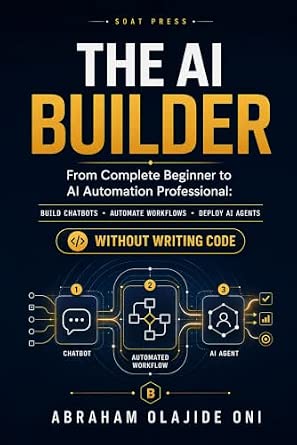 | Best for No-Code Beginners | Format: Book | Intended level: Complete beginner | Approach: No-code tools | VIEW LATEST PRICE | See Our Full Breakdown |
| AI Architect: Building AI Products, Chatbots, and Agentic Systems |  | Best for Product Builders | Format: Book | Intended audience: Developers and product managers | Scope: AI product design, development, and deployment | VIEW LATEST PRICE | See Our Full Breakdown |
| Chatbots & AI Support Agents: Build Smart Assistants With ChatGPT, Tiledesk & Intercom |  | Best for No-Code Support Bots | Format: Book | Primary use: AI chatbots and support agents | Approach: No-code tools | VIEW LATEST PRICE | See Our Full Breakdown |
| Effective Conversational AI: Chatbots That Work |  | Best for Conversation Design | Format: Book | Subject: Conversational AI | Primary focus: Designing and building chatbots | VIEW LATEST PRICE | See Our Full Breakdown |
| Build Your Own AI ChatBOT: Create Private, Powerful RAG Applications with PostgreSQL, pgvector, Python, and FastAPI |  | Best for Private RAG Chatbots | Format: Book | Chatbot approach: Retrieval-Augmented Generation (RAG) | Database: PostgreSQL | VIEW LATEST PRICE | See Our Full Breakdown |
| AI Chatbot Builder: Deploy Customer Service Bots That Work 24/7 |  | Best for Customer-Service Planning | Product type: Not specified | Stated topic: AI chatbot building | Primary use case: Customer service | VIEW LATEST PRICE | See Our Full Breakdown |
| How to Build Your Own AI Chatbot: A Step-by-Step Handbook to Create Conversational AI Assistants |  | Best for Step-by-Step Learning | Product type: Handbook | Stated topic: Building AI chatbots | Instruction format: Step-by-step | VIEW LATEST PRICE | See Our Full Breakdown |
| Data for Entrepreneurs: AI Chatbot Builder’s Guide |  | Best for Startup-Minded Readers | Product type: Guide | Stated topic: AI chatbot building | Intended audience: Entrepreneurs and startups | VIEW LATEST PRICE | See Our Full Breakdown |
More Details on Our Top Picks
Flowise AI User Guide: Build AI Workflows and Chatbots
Flowise AI User Guide is the most directly focused choice here for readers who want to build chatbots as part of broader AI workflows. Its coverage of LLM connections, tool integrations, and deployment points toward a practical build-and-publish process, rather than a general introduction to conversational AI. Compared with The Illustrated Beginner’s Guide to Building Practical AI Agents, Chatbots & Agentic AI Workflows, this title’s description emphasizes the workflow components and deployment steps, while the illustrated guide more explicitly caters to readers who want visual, no-code instruction. The tradeoff is that the available details do not establish how much coding knowledge is needed or how thoroughly each topic is explained. I’d choose it for Flowise-oriented workflow coverage, but not as a platform-neutral reference.
Pros:- Covers both chatbot creation and broader AI workflow building.
- Addresses connecting large language models.
- Includes tool integrations as part of chatbot workflows.
- Covers application deployment, extending beyond the build stage.
Cons:- Flowise is the focus, so readers seeking platform comparisons may need another resource.
- The available product details do not specify the assumed technical skill level.
- No information is provided about examples, chapter depth, or supported integrations.
Best for: Readers who want a Flowise-focused guide to connecting language models, adding tools, and deploying chatbot workflows.
Not ideal for: People seeking a clearly illustrated, explicitly no-code introduction or guidance across several chatbot platforms; the available description does not promise either.
- Subject:AI workflows and chatbots
- Platform:Flowise
- Model coverage:Connecting large language models
- Integration coverage:Tool integrations
- Deployment coverage:Application deployment
- Format:User guide
Our verdict“Choose this guide if your priority is learning how Flowise workflows connect models, tools, and deployed chatbot applications.”
Data for Entrepreneurs: AI Chatbot Builder’s Guide
Data for Entrepreneurs: AI Chatbot Builder’s Guide takes a different route from Flowise-focused books: its defining choice is to teach chatbot building with Python without third-party tools. That makes it a better fit for entrepreneurs who want to understand or control the implementation themselves, rather than relying on a visual builder such as the one covered by The Illustrated Beginner’s Guide to Building Practical AI Agents, Chatbots & Agentic AI Workflows. The independence from third-party tools can suit readers who want a code-based approach, but it also means the description does not promise the convenience of a hosted platform or a no-code setup. The available details are sparse, so I can’t infer the specific techniques, deployment options, or level of Python experience required. Treat it as a focused coding guide, not a ready-made business chatbot service.
Pros:- Centers on practical AI chatbot development.
- Uses Python, giving code-oriented readers a direct implementation path.
- Does not require third-party tools, according to the product details.
- Its entrepreneur focus distinguishes it from platform-specific builder guides.
Cons:- A Python-based approach is a poor fit for readers who do not want to code.
- The description does not identify particular frameworks, integrations, or deployment methods.
- No details are available about required Python knowledge or the guide’s technical depth.
Best for: Entrepreneurs with Python experience who want to learn chatbot development without depending on third-party builder tools.
Not ideal for: Nontechnical founders looking for a visual, no-code builder or readers who need documented guidance on hosting, integrations, and deployment.
- Subject:AI chatbot development
- Intended audience:Entrepreneurs
- Programming language:Python
- Third-party tools:Not required
- Approach:Practical chatbot building
- Format:Builder’s guide
Our verdict“Pick this guide if you are an entrepreneur comfortable with Python and want a chatbot-building path that does not depend on third-party tools.”
The Illustrated Beginner’s Guide to Building Practical AI Agents, Chatbots & Agentic AI Workflows
For readers who want to start building without learning code first, The Illustrated Beginner’s Guide makes the clearest promise in this group: step-by-step, full-color instruction using Flowise. Its practical examples and visual explanations are aimed at making agents, chatbots, and workflows easier to follow. Compared with Flowise AI User Guide: Build AI Workflows and Chatbots, this book explicitly targets beginners and says no coding is required; the other guide gives more emphasis to model connections, tool integrations, and deployment. That accessibility comes with a real limit: the material is centered on Flowise AI, so readers who want to compare builders or carry the same lessons to another platform may find the scope narrow. I’d favor it for visual onboarding, not cross-platform breadth.
Pros:- Designed for building without writing code.
- Full-color illustrations support visual learning.
- Uses practical examples to explain workflows and chatbot creation.
- Covers agents and agentic workflows alongside chatbots.
Cons:- Instruction is limited to the Flowise AI platform.
- The no-code focus may not satisfy readers seeking implementation-level coding detail.
- The available description does not specify deployment coverage or integrations.
Best for: First-time, nontechnical builders who learn best from visual examples and want to create Flowise-based chatbots and agent workflows.
Not ideal for: Developers seeking code-heavy instruction or readers who want a platform-neutral comparison of chatbot builders.
- Subject:AI agents, chatbots, and agentic AI workflows
- Platform:Flowise AI
- Coding requirement:No coding required
- Instruction style:Step-by-step
- Visual format:Full-color illustrations
- Examples:Practical workflow examples
- Intended audience:Beginners
Our verdict“Choose this illustrated guide if you are new to chatbot building and want no-code Flowise instruction rather than broad platform coverage.”
AI Chatbots For Dummies
AI Chatbots For Dummies is the broadest-sounding entry in this set, making it a possible starting point for readers who want an accessible introduction before choosing a specific building method. That general framing separates it from Data for Entrepreneurs: AI Chatbot Builder’s Guide, which identifies Python and a no-third-party-tools approach, and from the Flowise books, which name a particular platform. The tradeoff is a lack of detail: the available description does not say whether this guide includes hands-on projects, coding instruction, platform tutorials, or deployment advice. I would treat it as an introductory option rather than assume it will take a reader from concept to a working chatbot. Buyers who already know their preferred tools may get more targeted guidance from a platform-specific or Python-focused title.
Pros:- The broad chatbot subject may suit readers who have not chosen a build approach.
- The For Dummies title positions it as an introductory guide.
- Does not appear limited in the supplied description to Flowise or Python.
- Can serve as a starting point before choosing a more specialized technical resource.
Cons:- The available description gives no details about hands-on chatbot-building projects.
- No programming language, platform, or tool coverage is specified.
- Deployment guidance and technical depth are not established by the supplied information.
Best for: Readers who want a general, approachable introduction to AI chatbots before committing to a coding language or builder platform.
Not ideal for: Builders who need confirmed step-by-step implementation, specific platform instructions, Python examples, or documented deployment guidance.
- Subject:AI chatbots
- Series:For Dummies
- Format:Guide
- Programming language:Not specified
- Builder platform:Not specified
- Deployment coverage:Not specified
Our verdict“Consider this as a general entry point if you have not chosen a chatbot-building approach, but seek a more specific guide for implementation steps.”
Coze AI Chatbot and AI Agent Builder Guidebook
Coze AI Chatbot and AI Agent Builder Guidebook is the focused pick for readers who have already chosen Coze and want a guide centered on that builder. Its stated scope covers both chatbots and AI agents, which gives it a different emphasis from Data for Entrepreneurs: AI Chatbot Builder’s Guide, whose known approach is Python development without third-party tools. A Coze-specific guide may be a closer match for platform-led building, but the supplied information does not explain which Coze features, integrations, or publishing steps it teaches. That uncertainty matters: unlike the illustrated Flowise guide, no beginner-friendly visual or no-code format is specified. I’d select it based on interest in Coze, while readers still comparing platforms should start with a broader introduction or seek fuller details before relying on it as a step-by-step manual.
Pros:- Focuses specifically on the Coze builder.
- Covers both chatbot and AI agent building.
- Offers a platform-centered alternative to the Flowise guides.
- May be more relevant than a general introduction for readers committed to Coze.
Cons:- The supplied description does not specify which Coze tools or integrations are covered.
- No coding requirement or assumed skill level is stated.
- The available details do not confirm hands-on examples or deployment instruction.
Best for: Readers who have selected Coze and want a guide focused on building chatbots and AI agents with that platform.
Not ideal for: People comparing several chatbot builders or buyers who need confirmed information about skill level, integrations, examples, or deployment steps.
- Subject:AI chatbots and AI agents
- Platform:Coze
- Format:Guidebook
- Chatbot coverage:Coze AI chatbot building
- Agent coverage:AI agent building
- Programming language:Not specified
Our verdict“Choose this guide if Coze is already your intended platform; readers still comparing builders need more information before choosing it.”
The AI Builder: From Complete Beginner to AI Automation Professional
The AI Builder is the most beginner-oriented pick here, with its focus on building chatbots, automating workflows, and deploying AI agents without code. That broader path may suit readers who want to explore more than a single support-bot platform, while Chatbots & AI Support Agents is more specifically centered on named customer-support tools. The tradeoff is that the available details do not identify particular software, example projects, or deployment steps, so buyers have less information about how hands-on the instruction gets. Compared with AI Architect, this guide is aimed at people starting from scratch rather than developers planning a full product lifecycle. It makes the most sense for a nontechnical reader seeking an introduction to no-code chatbot building, but not for someone who needs verified tool-specific instructions.
Pros:- Designed for complete beginners
- Covers chatbot creation alongside workflow automation
- Includes AI agents in its stated scope
- Focuses on no-code tools
Cons:- The available description names no specific tools or platforms
- No further detail is provided about examples, deployment steps, or technical depth
Best for: Nontechnical beginners who want an introduction to no-code chatbots, workflow automation, and AI agents.
Not ideal for: Readers who need detailed instructions for a specific platform, code examples, or clearly documented deployment methods.
- Format:Book
- Intended level:Complete beginner
- Approach:No-code tools
- Topics:Chatbots, workflow automation, and AI agents
- Coding requirement:Designed for building without writing code
- Product type:AI automation guide
- ASIN:9786884825
Our verdict“Choose this guide if you want a beginner-level, no-code starting point across chatbots and automation, rather than platform-specific or developer-focused instruction.”
AI Architect: Building AI Products, Chatbots, and Agentic Systems
AI Architect takes a wider product-development view than a chatbot-only manual: it covers designing, building, and deploying AI applications, including chatbots and autonomous agents. Its stated step-by-step methodology, case studies, and code snippets make it a stronger fit for developers and product managers who need to connect implementation choices to a shippable product. That scope also creates a steeper learning curve. Beginners looking for visual, no-code steps may find The AI Builder a more approachable entry point, while this book is better suited to readers who can work with technical material. Its examples and best practices are intended to support practical decisions, but the description does not specify languages or frameworks, so buyers seeking instruction for a particular stack should check that fit before choosing.
Pros:- Covers the process from AI product design through deployment
- Includes chatbots and autonomous-agent systems
- Provides a stated step-by-step methodology
- Description highlights practical case studies and code snippets
Cons:- May be too technical for complete beginners
- The available description does not specify programming languages or frameworks
Best for: Developers and product managers planning AI applications that combine chatbot features with broader agent workflows.
Not ideal for: Complete beginners or no-code builders who want platform-specific setup instructions and minimal technical terminology.
- Format:Book
- Intended audience:Developers and product managers
- Scope:AI product design, development, and deployment
- Chatbot coverage:AI-powered chatbots
- Agent coverage:Autonomous and agentic systems
- Learning materials:Practical examples, case studies, and code snippets
- ASIN:B0HHYX19ZB
Our verdict“Pick this when you need a product-development guide for technical AI applications, not a gentle introduction to no-code chatbot tools.”
Chatbots & AI Support Agents: Build Smart Assistants With ChatGPT, Tiledesk & Intercom
Chatbots & AI Support Agents is the most directly focused option for readers building customer-facing assistants with established support and chatbot platforms. Its named coverage of ChatGPT, Tiledesk, and Intercom gives buyers a clearer tool-based starting point than The AI Builder, whose description does not name specific software. The no-code emphasis may also be easier to approach than AI Architect, which targets developers and product managers. This focus is useful if your project is a support assistant, but less suited to someone building a private, self-hosted RAG application or a general AI product. The available description does not say how deeply each platform is covered or provide specific setup examples, so readers who need detailed implementation steps have limited information to judge beforehand.
Pros:- Names three chatbot and support platforms
- Focuses on AI-powered support agents
- Emphasizes no-code building
- Targets practical smart-assistant creation
Cons:- The available description does not clarify the depth of coverage for each platform
- No specific setup examples or deployment details are provided
Best for: Small-business support teams and no-code builders who want to explore assistants using ChatGPT, Tiledesk, or Intercom.
Not ideal for: Developers building self-hosted RAG systems or readers seeking a broadly platform-agnostic guide to AI products.
- Format:Book
- Primary use:AI chatbots and support agents
- Approach:No-code tools
- Platform:ChatGPT
- Platform:Tiledesk
- Platform:Intercom
- ASIN:B0G5H9HV6N
Our verdict“Choose this for a no-code support-bot path across named platforms, but look elsewhere for detailed code-based or self-hosted chatbot instruction.”
Effective Conversational AI: Chatbots That Work
Effective Conversational AI: Chatbots That Work is the most narrowly framed choice in this group: its stated subject is designing and building effective conversational chatbots. That makes it a plausible fit for readers focused on how an interaction should work, rather than on a specific no-code platform such as those covered by Chatbots & AI Support Agents or on full product architecture like AI Architect. The limitation is the sparse product information. No methods, tools, examples, audience level, or technical stack are provided, so I can’t tell from the supplied details whether it offers practical build instructions or stays at a higher level. It may suit someone looking for a focused conversational-AI title, but buyers who need a clearly documented implementation path should favor a guide with named platforms or technologies.
Pros:- Keeps its stated focus on conversational AI chatbots
- Addresses both chatbot design and building
- Its focused subject may appeal to readers less interested in broader AI-agent systems
Cons:- The available product details provide no named tools or technical stack
- No examples, methods, or audience level are specified
Best for: Readers whose main goal is to study chatbot interaction design and the principles behind effective conversations.
Not ideal for: Builders who need documented platform instructions, programming examples, deployment guidance, or a specified skill level.
- Format:Book
- Subject:Conversational AI
- Primary focus:Designing and building chatbots
- Named platforms:Not specified
- Programming languages:Not specified
- Technical level:Not specified
- ASIN:1633436403
Our verdict“Consider this for a focused look at chatbot conversations, but choose a more fully specified guide if hands-on implementation details are a priority.”
Build Your Own AI ChatBOT: Create Private, Powerful RAG Applications with PostgreSQL, pgvector, Python, and FastAPI
Build Your Own AI ChatBOT is the most implementation-specific choice here: it guides readers through a private chatbot built with RAG, PostgreSQL, pgvector, Python, and FastAPI. That stack gives technical builders a defined route toward using their own data while retaining control over how the application is hosted. It contrasts with Chatbots & AI Support Agents, which centers on no-code support platforms, and with The AI Builder, which is pitched at beginners. The tradeoff is a higher technical bar: the guide assumes Python and basic database knowledge, and the PostgreSQL-centered approach is not platform-agnostic. Its focus is a strength for developers who have chosen this stack, but a poor match for readers seeking a visual builder or a quick setup without coding.
Pros:- Provides a defined RAG implementation path
- Covers PostgreSQL and the pgvector extension
- Includes Python and FastAPI development and deployment
- Focuses on private, self-hosted chatbot applications
Cons:- Assumes familiarity with Python and basic database concepts
- Tied to the PostgreSQL ecosystem rather than being platform-agnostic
- Not suited to readers seeking a no-code chatbot builder
Best for: Python developers with basic database knowledge who want to build a private, self-hosted RAG chatbot using PostgreSQL.
Not ideal for: No-code beginners, builders committed to another database ecosystem, or teams seeking a platform-neutral chatbot builder.
- Format:Book
- Chatbot approach:Retrieval-Augmented Generation (RAG)
- Database:PostgreSQL
- Vector extension:pgvector
- Programming language:Python
- Web framework:FastAPI
- Deployment focus:Private, self-hosted chatbot applications
- ASIN:B0H9G5RPXQ
Our verdict“Choose this if you can work in Python and want a private RAG chatbot on PostgreSQL; skip it if you need a no-code or stack-neutral route.”
AI Chatbot Builder: Deploy Customer Service Bots That Work 24/7
The title puts round-the-clock customer service at the center, making this the most directly service-oriented pick in this group. That focus may help readers evaluating chatbot support use cases, but the supplied description gives no platform, setup steps, integrations, or implementation details to judge how a bot would actually be built. Compared with How to Build Your Own AI Chatbot, which explicitly promises a step-by-step handbook, this listing gives less evidence of hands-on instruction. I would treat it as a potentially relevant starting point for service teams, not as a confirmed software builder or complete deployment manual. The key tradeoff is a clear customer-support theme against very limited product information, so buyers who need technical guidance should verify the contents before choosing it.
Pros:- Explicitly focuses on customer-service chatbots
- Frames the use case around continuous availability
- The title makes its intended audience easy to identify
Cons:- No software platform, features, or integrations are identified
- No setup method or technical depth is described
- The supplied information is too limited to confirm how actionable the content is
Best for: Customer-service managers exploring always-available chatbot support who want a resource explicitly framed around service bots.
Not ideal for: Readers seeking a confirmed chatbot-building platform, specific integrations, or documented technical instructions, since none are supplied in the product details.
- Product type:Not specified
- Stated topic:AI chatbot building
- Primary use case:Customer service
- Availability focus:Bots operating 24/7
- Named platform:Not provided
- Integrations:Not provided
Our verdict“Choose this only if customer-service automation is your main interest and you can confirm the contents provide the practical guidance you need.”
How to Build Your Own AI Chatbot: A Step-by-Step Handbook to Create Conversational AI Assistants
Among these three listings, this one makes the clearest instructional promise: a step-by-step handbook for creating chatbots and conversational assistants. That makes it a more natural fit for learners who want a guided build process than AI Chatbot Builder: Deploy Customer Service Bots That Work 24/7, whose description states a use case but gives no method. Still, the available data does not name tools, coding languages, example projects, or the reader level, so the title alone cannot show how practical or current the guidance is. Compared with Data for Entrepreneurs: AI Chatbot Builder’s Guide, this book sounds broader rather than explicitly startup-focused. Its advantage is the learning-oriented framing; its limitation is that buyers cannot verify the technical path or depth from the supplied details.
Pros:- Explicitly promises step-by-step instruction
- Covers both AI chatbots and conversational assistants
- Has a clearer learning path in its title than the customer-service-focused option
Cons:- No programming languages or chatbot platforms are specified
- The intended reader skill level is not stated
- No examples, project scope, or technical details are provided
Best for: Self-directed learners who want a sequential introduction to building conversational assistants and can check the book’s contents for suitable tools and skill level.
Not ideal for: Experienced developers seeking confirmed framework-specific instructions, code examples, or current platform guidance, none of which are identified in the supplied data.
- Product type:Handbook
- Stated topic:Building AI chatbots
- Instruction format:Step-by-step
- Assistant type:Conversational AI assistants
- Named platform:Not provided
- Programming languages:Not provided
Our verdict“Pick this as a potential guided introduction if its contents confirm the tools and technical level you need.”
Data for Entrepreneurs: AI Chatbot Builder’s Guide
This guide has the clearest audience cue for founders: it is framed around entrepreneurs and startups, with a practical focus on building AI chatbots. That makes it more business-oriented than How to Build Your Own AI Chatbot, whose title emphasizes a general step-by-step learning process. For a founder deciding whether chatbot development belongs in a product or support plan, that audience focus may be useful. But the supplied data does not describe its exercises, technical approach, tools, or business topics, so I cannot confirm how practical the guidance is. It also offers less specific use-case framing than AI Chatbot Builder: Deploy Customer Service Bots That Work 24/7, which explicitly centers customer service. The tradeoff is a startup lens without enough detail to judge the build instructions.
Pros:- Specifically aimed at entrepreneurs and startups
- Positions chatbot building as a practical activity
- Business-focused framing distinguishes it from the broader handbook
Cons:- No tools, platforms, or technical methods are identified
- The supplied description gives no examples or project details
- The extent of its business guidance is not stated
Best for: Startup founders and entrepreneurs exploring chatbot projects who want a resource positioned around practical business building.
Not ideal for: Readers who need verified implementation steps, named tools, or detailed technical specifications before selecting a guide.
- Product type:Guide
- Stated topic:AI chatbot building
- Intended audience:Entrepreneurs and startups
- Stated approach:Practical focus
- Named platform:Not provided
- Technical details:Not provided
Our verdict“Consider this for a startup-oriented perspective, but verify that it includes concrete build guidance before relying on it as an implementation resource.”

How We Picked
I evaluated these 13 titles as learning resources for building AI chatbots, not as chatbot software. The main criteria were how directly each title addresses chatbot creation, the likely skill level it serves, the clarity of its stated tools and methods, and whether its scope points to a practical outcome such as a support assistant, workflow, or RAG application. I also looked at how well a reader can match the title to a specific project before committing to a learning path.
The ranking favors direct, actionable alignment with chatbot building and a clearly defined audience. Flowise AI User Guide leads because its title signals a focused route into workflows and chatbots; code-heavy and platform-specific books rank higher for readers with matching needs, but lower for broad beginner appeal. General AI, agent, and conversational-design titles can teach useful foundations, yet rank below more direct build guides when the buyer’s goal is to create a chatbot. The supplied titles do not provide enough detail to verify chapter depth, current platform coverage, or publication updates, so I avoid treating those as confirmed strengths.
Factors to Consider When Choosing AI Chatbot Builders
These listings are books and guides about AI chatbot builders, rather than builder platforms themselves. I’d choose a learning resource by starting with the chatbot I want to make, then matching its tools, technical demands, and intended audience to my own situation.
Match the guide to the chatbot you plan to build
Start with a concrete outcome, such as answering questions from company documents, handling support requests, or routing work through an AI workflow. A guide about agents or automation may help with broader systems, but it can spend less time on a simple website chatbot. Conversely, a customer-support title may assume you care about handoffs, service channels, and operational processes. A common mistake is buying the broadest-sounding book before identifying the first use case. Check the title and available contents for examples that resemble your intended bot. The closer the project match, the less time you are likely to spend translating unrelated examples.
Choose a platform-specific path only when the tool fits
Books centered on Flowise, Coze, Intercom, or Tiledesk can make learning more concrete because they connect concepts to named tools. That focus is useful if your organization already uses the platform or you have selected it for a project. It can also limit the guide’s usefulness if the tool changes, access is unavailable, or you later switch products. Before choosing, check whether you want to learn a transferable method or follow a step-by-step route inside one platform. A platform guide should explain concepts you can reuse, not only where to click. If you are still comparing tools, a broader design or introductory guide may be a better first purchase.
Be honest about your coding background
No-code workflow guides and beginner introductions lower the barrier to a first prototype, while a guide built around Python, FastAPI, PostgreSQL, and pgvector presumes comfort with development concepts. The code-based route can give you more control over data handling and system design, but it also brings setup, debugging, and maintenance work. A frequent misstep is choosing a technical book for the promise of control without accounting for the time needed to implement its examples. If you already code, check that the tools align with your existing stack. If you do not, look for explanations that teach the foundations before asking you to assemble a production-style application.
Distinguish a prototype from a dependable service
A chatbot that answers a few test prompts is not automatically ready for customer or employee use. Production projects need clear limits, useful escalation paths, reliable source content, privacy decisions, and ongoing monitoring. A guide’s stated scope can hint at whether it focuses on building an example or operating a service, but the title alone cannot confirm coverage of every operational topic. When a bot will handle real requests, favor learning material that addresses testing, failure cases, human handoff, and maintenance. For a private RAG application, also investigate how the proposed setup handles document updates and access controls. Do not treat a working demo as proof that the bot is safe or dependable for every user.
Look for foundations that survive tool changes
AI platforms and model options can change faster than a book’s examples, so durable ideas matter alongside current instructions. Conversation design, clear task boundaries, evaluation, and responsible data handling can remain useful even after a menu or integration changes. A narrowly focused guide may still be the right choice, but check whether it explains why a workflow works rather than presenting steps without context. General books can offer transferable concepts, though they may leave you to fill in implementation details. The strongest learning path often pairs a broad foundation with a project-specific resource. That approach can reduce dependence on any single platform’s interface.
Check editions and duplicate listings before deciding
Two entries in this roundup use the title Data for Entrepreneurs: AI Chatbot Builder’s Guide, so the supplied information does not establish whether they are separate editions or duplicate listings. Confirm the author, edition, publication date, format, and table of contents before selecting one. The same check helps with any guide that names fast-changing products or frameworks. A more recent edition may reflect changed interfaces, but a clear explanation of core ideas can still make an older resource useful. Compare the actual contents against your project rather than relying on a similar title. This small check can prevent buying the same material twice or choosing a version that misses your needs.
Frequently Asked Questions
Are these recommendations for chatbot software or books about building chatbots?
They are books and guides about creating AI chatbots, not hosted chatbot-builder services. That means this roundup helps you choose a learning resource, but it does not compare software plans, integrations, or service limits. If you need a tool to deploy a bot immediately, first choose a platform based on your channels, data needs, and support workflow. You can then select a guide that teaches that platform or the methods behind it. Some titles name specific tools, while others focus on broader chatbot or agent concepts.
Which guide makes sense if I have never built a chatbot?
Start with a title that explicitly signals beginner-friendly instruction, such as The Illustrated Beginner’s Guide or AI Chatbots For Dummies. Those titles indicate an accessible starting point, though the listing information alone cannot confirm their exact depth or teaching style. Check the contents for a complete first project and explanations of basic terms, rather than assuming a beginner label guarantees hands-on instruction. If you already know which platform you want, a focused guide may be more useful than a general introduction. Avoid beginning with the code-heavy RAG route unless you are ready to work with development tools.
Do I need programming skills to build an AI chatbot?
Not for every kind of chatbot project: platform-based workflow tools can support builds without writing an entire application. Programming becomes more relevant when you need custom interfaces, backend logic, or control over a RAG system and its data pipeline. The guide titled Build Your Own AI ChatBOT names Python, FastAPI, PostgreSQL, and pgvector, so it is aimed at a more technical route. Decide how much control your project needs before choosing a learning path. If you are unsure, prototype with a simpler approach, then add code when a real limitation calls for it.
Should I choose a guide for customer support or one for general AI agents?
Choose based on the work the bot needs to perform, not on which title sounds broader. A customer-support guide is a closer match if the project involves answering service questions, connecting with support platforms, or passing issues to a person. An agent or workflow guide may fit tasks that involve several steps, tools, or automation beyond conversation. Those categories can overlap, but their examples and priorities may differ. If your support bot must also take actions, look for material that covers both conversation handling and workflow logic.
How can I tell whether a chatbot guide is current enough?
Check the publication date, edition, table of contents, and the specific products or frameworks used in its examples. A tool-focused book can become less useful when its interface or integrations change, while principles such as conversation design and testing may remain applicable. For a project tied to a current platform, compare the guide’s version references with the platform’s present documentation. Treat the book as a structured learning path, not the only source for current setup instructions. The duplicate Data for Entrepreneurs listings also make it especially sensible to verify edition details before buying.
Conclusion
For the broadest match to building workflows and chatbots, I’d start with Flowise AI User Guide as the best overall pick. For value, the best choice is the guide that directly matches a tool or project you already plan to use; the available titles do not include enough pricing or edition detail to name a cost-based winner. Readers seeking a premium, technically controlled path should consider Build Your Own AI ChatBOT if they are ready for Python and a RAG stack. For beginners, I’d choose The Illustrated Beginner’s Guide or AI Chatbots For Dummies, then check the contents for a practical first build. For specific needs, select the Flowise or Coze guide for those platforms, the Tiledesk and Intercom book for support workflows, or Effective Conversational AI for conversation design. Before deciding, verify the edition and contents—especially for the duplicated Data for Entrepreneurs listing—and pick the guide whose methods fit the bot you actually intend to build.
Halloween Picks
halloween
As an affiliate, we earn on qualifying purchases.