
As front office automation becomes more essential for streamlining visitor check-ins and staff attendance, selecting the right kiosk is critical. The three options reviewed—Self Service Kiosk POS Stand, JIYANG 37 Inch Digital Signage Display, and MWE 21.5 Inch Touch-screen Kiosk—each serve different needs. While the Self Service Kiosk POS Stand excels for retail and restaurant environments with versatile mounting, it may lack integrated display features. The JIYANG 37 Inch Digital Signage stands out for high-visibility advertising and flexible content management but isn’t optimized for attendance tracking. The MWE Touch-screen Kiosk offers a responsive touchscreen experience suited for interactive check-ins. Understanding these differences helps determine which fits your front office workflow best.
Key Takeaways
- The Self Service Kiosk POS Stand prioritizes mounting flexibility and hardware customization, ideal for environments needing physical durability and modular setup.
- The JIYANG digital signage excels in vibrant visual display and advertising, making it better suited for informational or promotional roles rather than strict attendance tracking.
- The MWE 21.5-inch touchscreen combines interactive capabilities with durability, suitable for engaging visitor check-ins but with limited content display versatility.
- Tradeoffs include the Self Service Kiosk’s limited display tech, the JIYANG’s lack of integrated attendance features, and the MWE’s smaller display size for large groups.
- Choosing the right kiosk depends on whether you prioritize hardware flexibility, visual impact, or interactive user engagement.


More Details on Our Top Picks
Self Service Kiosk POS Stand – CTA POS Kiosk with CPU & Printer Compartments for Digital Signage Displays TV’s & Monitors up to 33 Pounds – for Restaurants, Retail & Business – White
This kiosk stands out for its versatility in physical setup, with compatibility for VESA mounts and customizable CPU and printer compartments. Compared with the other options, it requires external display integration but offers superior durability for high-traffic environments. The heavy-duty metal base provides stability, and its modular design makes it adaptable for retail or restaurant check-in stations. However, it lacks built-in display tech, which means additional investment in monitors is necessary. Its main tradeoff is the need for external components, which could increase setup complexity and cost. This pick is ideal for environments needing robust, customizable hardware but not all-in-one display solutions.
Pros:- Highly customizable with monitor and printer mounts
- Heavy-duty metal base for stability
- Pre-drilled holes for permanent mounting
- CPU holder for compact setup
Cons:- Requires separate display setup
- Limited integrated features
- Potentially higher initial setup complexity
Best for: Front offices needing customizable hardware mounting and durable, permanent installation.
Not ideal for: Spaces that require integrated display screens or simple plug-and-play solutions.
- Monitor Compatibility:VESA 75mm/100mm
- Max Monitor Weight:33 lbs
- CPU Holder Size:up to 7.2″ x 7″ x 1.45″
- Printer Holder:up to 6″ x 6″ x 7.6″
- Material:Heavy-duty metal
- Warranty:1 year
Bottom line: A flexible, durable choice for hardware-centric front office setups that can accommodate external displays.
JIYANG 37 Inch Digital Signage Display, Indoor Floor Standing Advertising Display Kiosk Android System, Commercial LCD Totem(Black)
This digital signage offers a large, bright 37-inch IPS LCD with a 1920×1080 resolution, making it excellent for high-visibility environments like lobbies or malls. Its plug-and-play features, including automatic looping and split-screen modules, provide flexible content delivery. Compared with the other options, it lacks built-in attendance tracking capabilities, focusing instead on advertising and information display. Its main drawback is that it isn’t optimized for interactive check-ins, which limits its use for front office attendance. Nonetheless, its high-quality display and ease of content updates make it a strong choice for informational or promotional fronts, especially when visual impact is key.
Pros:- Large 37-inch high-brightness screen
- Multiple split-screen modes
- Easy USB plug-and-play setup
- Stable open cell technology for long display life
Cons:- No built-in attendance or biometric features
- Primarily designed for signage, not interactivity
- Requires external system for attendance management
Best for: Environments prioritizing large, vibrant displays for visitor information or advertising, not strict attendance tracking.
Not ideal for: Pure attendance or check-in purposes where integrated user interaction is essential.
- Screen Size:37 inches
- Resolution:1920×1080 (Full HD)
- Brightness:Delicate pixels for vivid display
- Display Technology:IPS
- Viewing Angle:Wide
- Warranty:Unknown
Bottom line: Ideal for signage-heavy environments where visual impact matters more than interactive check-ins.
MWE 21.5 Inch Touch-screen Self Service Kiosk, Floor Standing Digital Signage Display, FHD Information Kiosk, 2 Speakers, Interactive Display for Mall Navigation/Self-Ordering/Advertising/Retail Store
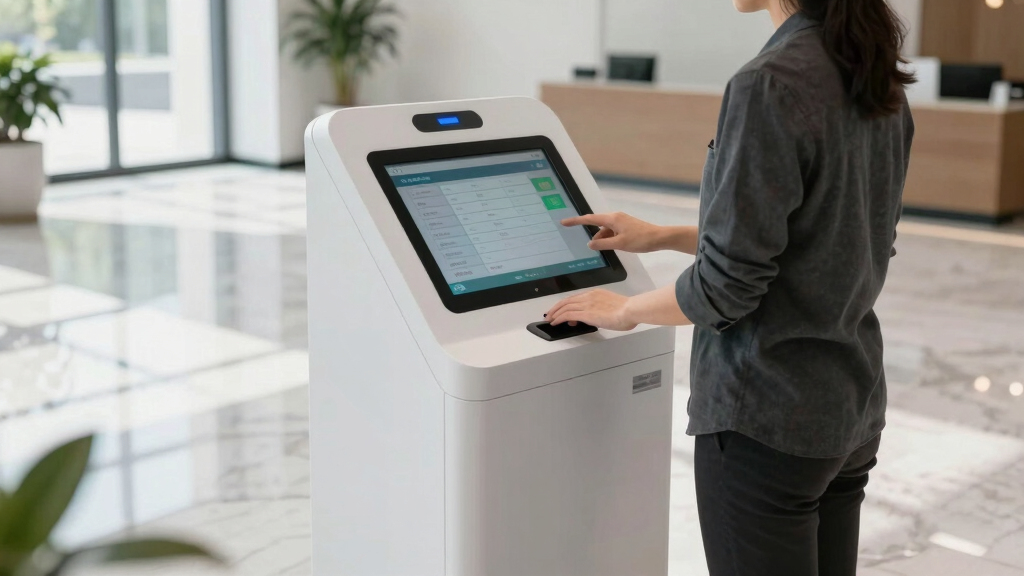
This 21.5-inch touchscreen kiosk combines responsive touch capabilities with a sturdy build, making it suitable for visitor check-ins or staff attendance in busy environments. Compared to larger signage options, its smaller display size limits visual impact but enhances interaction. It runs on Android 13, providing flexibility to install custom attendance or visitor management software. The two integrated speakers add multimedia options, useful for announcements or onboarding videos. The main tradeoff is its limited screen size, which may not be ideal for large groups or high-traffic areas where visibility is critical. Still, its interactive features and durability make it a strong choice for engaging front office check-ins.
Pros:- Responsive 21.5-inch FHD touchscreen
- Supports installation of external systems
- Built-in 2W speakers for multimedia
- Durable, floor-standing design
Cons:- Smaller display size limits visibility from afar
- Requires external system for attendance management
- Limited visual signage capabilities
Best for: Facilities seeking interactive, user-friendly check-in points with flexible software deployment.
Not ideal for: Large waiting areas requiring prominent visual signage or advertising.
- Display Size:21.5 inches
- Resolution:1920×1080 (FHD)
- OS:Android 13
- Touch Capability:Responsive
- Speakers:2 x 5W
- Warranty:3 years
Bottom line: A practical, engaging solution for interactive front desk check-ins in busy environments.

How We Picked
Our selection process focused on identifying models that balance hardware flexibility, ease of use, and suitability for front office automation. We prioritized products with clear roles—whether for hardware mounting, visual signage, or interactive touchpoints—and evaluated their features against real-world needs. Tradeoffs such as display size, integration options, and durability were key considerations. We also looked at customer reviews, warranty coverage, and vendor support to ensure these options meet long-term operational demands.
Factors to Consider When Choosing Best Attendance Kiosk For Front Office Automation
Choosing the best attendance kiosk for your front office involves understanding your specific needs—whether that’s hardware flexibility, visual signage, or customer interaction. Your decision should consider environment size, user engagement level, and integration capabilities. This guide highlights key features and tradeoffs to help you make an informed choice, ensuring your investment enhances operational efficiency and visitor experience.
Hardware Flexibility
If you need a highly customizable setup, look for kiosks like the Self Service POS Stand that support versatile mounting and hardware integration. These are best for environments where durability is essential, and external peripherals are common. For more streamlined needs, all-in-one models reduce setup complexity but may limit future upgrades.
Display Tech and Content
Large, high-brightness screens like the JIYANG signage excel in visibility but lack interactivity, making them suitable for static information and advertising. Interactive kiosks, such as the MWE touchscreen, provide engaging user experiences but are limited in display size and visual impact. Choose based on whether content must be static or interactive.
Interaction and User Engagement
For visitor check-ins, staff attendance, or staff-facing interfaces, touchscreen models like the MWE kiosk are ideal. They support custom software and offer flexibility for complex workflows. Conversely, for visitor information or advertising, larger signage displays offer better visibility but less interactivity.
Durability and Support
Consider the environment’s traffic volume; heavy-duty metal bases or rugged designs are better for high-traffic areas. Also, evaluate vendor support and warranty options—products like the MWE kiosk offer long-term support, reducing maintenance worries over time.
Frequently Asked Questions
What should I consider when choosing an attendance kiosk?
Focus on your environment’s specific needs, such as whether you require an interactive touchscreen, a large display for signage, or a durable hardware setup. Evaluate if the kiosk needs to support peripherals like printers or scanners, and consider the available space for installation.
Are integrated displays necessary for attendance kiosks?
Not always. If your primary goal is check-in or attendance recording, a rugged hardware stand with external monitor support can suffice. However, if visibility and visitor engagement are priorities, integrated high-resolution screens simplify setup and improve user experience.
How important is software compatibility for these kiosks?
Very important. Ensure the kiosk supports the operating system and software you plan to use, whether that’s custom attendance apps, visitor management systems, or multimedia content. Compatibility impacts ease of deployment and ongoing maintenance.
What are the main tradeoffs between these options?
The Self Service POS Stand offers hardware flexibility but requires additional display setup. The JIYANG signage provides impactful visuals but isn’t designed for interactivity or attendance functions. The MWE touchscreen combines interactivity with durability but has a smaller display size, which may not suit larger areas or high-traffic environments.
Which kiosk type is best for high-traffic environments?
Heavy-duty, hardware-focused kiosks like the Self Service POS Stand are better suited for high-traffic environments where durability and customization are essential. For environments prioritizing visitor engagement, durable touchscreen kiosks like the MWE model can handle frequent use while providing interactive features.
Conclusion
For environments that prioritize robust hardware and flexible installation, the Self Service Kiosk POS Stand is a reliable choice. If your focus is on high-visibility signage to convey information or promote services, the JIYANG digital signage makes sense. For facilities seeking engaging, interactive check-in points with advanced software support, the MWE touchscreen kiosk offers an appealing balance. Your specific operational needs and environment size will guide the best fit among these options.