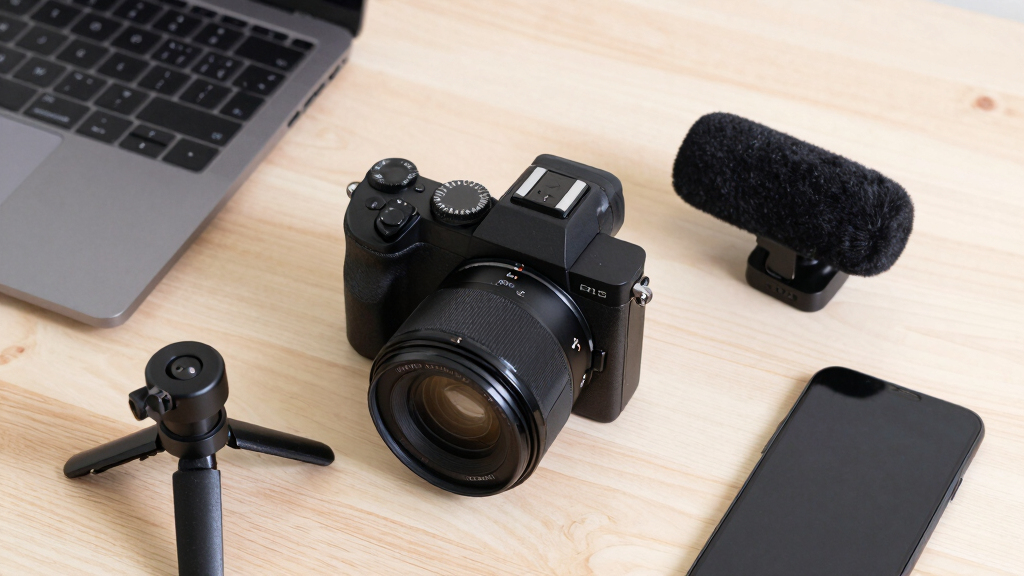

Choosing the perfect mirrorless camera for webinars and courses involves balancing video quality, ease of use, and connectivity. The G930 Mirrorless Camera stands out with its stunning 5K resolution and flexible flip-over screen, making it ideal for detailed visuals and versatile angles. Meanwhile, the Fujifilm X-E5 offers a high-resolution 40.2MP sensor and tactile controls suited for creative content. The Sony NEX-5RK/B provides a compact design with fast autofocus, perfect for dynamic presentations. Lastly, the Panasonic Lumix G7KS offers 4K video in a lightweight body. Each has unique strengths and compromises, so I’ll clarify who each is best suited for and what tradeoffs to consider.
Key Takeaways
- Video resolution and autofocus speed are critical for engaging webinars and courses.
- Connectivity options like Wi-Fi simplify streaming and content sharing.
- Screen articulability and flip-over features enhance presenter flexibility.
- Higher resolution sensors improve image quality but may require more processing power.
- Price varies significantly; balance features with budget constraints.
| G930 Mirrorless Camera, 5K HD 30FPS 64MP Full Frame Mirrorless Camera |  | Best Overall for Detailed Video and Flexibility | Resolution: 64 MP | Video Resolution: 5K 30FPS / 4K 60FPS | Screen Size: 3.2 inches | VIEW LATEST PRICE | See Our Full Breakdown |
| Fujifilm X-E5 Mirrorless Camera Body, Includes: ProGrade Digital 128GB SD Card, Spare Battery and More |  | Best for Creative Control and High-Resolution Content | Sensor: 40.2 MP APS-C | Video: 6.2K 29.97 fps | Display: 3 inches LCD | VIEW LATEST PRICE | See Our Full Breakdown |
| Sony NEX-5RK/B 16.1 MP Mirrorless Digital Camera with 18-55mm Lenses |  | Best Compact for Ease of Use and Quick Setup | Sensor: 16.1 MP APS-C | Video: Full HD 1080p | Screen: 3 inches tilting LCD | VIEW LATEST PRICE | See Our Full Breakdown |
| Panasonic LUMIX G7KS 4K Mirrorless Camera, 16MP, 14-42mm Lens Kit |  | Best for Lightweight 4K Video and User-Friendly Features | Sensor: 16 MP Live MOS | Video: 4K UHD | Lens: 14-42mm kit | VIEW LATEST PRICE | See Our Full Breakdown |
More Details on Our Top Picks
G930 Mirrorless Camera, 5K HD 30FPS 64MP Full Frame Mirrorless Camera
The G930 Mirrorless Camera distinguishes itself with its 5K resolution and 64MP full-frame sensor, delivering crisp, detailed visuals perfect for high-quality webinars. Its 3.2-inch flip-over display provides flexible framing angles, essential for presenters who may need to adjust their view while streaming. The camera also offers 30FPS in real-time eye autofocus, making it suitable for dynamic interactions. Compared to other options, it prioritizes resolution and focus control over compactness or simple connectivity, which means it’s best for users willing to handle a slightly steeper learning curve. Its lack of built-in image stabilization is a tradeoff, but for static or well-lit environments, it performs admirably.
Pros:- Ultra-high resolution with 5K video capture
- Flip-over, rotatable HD display for flexible framing
- Advanced autofocus with real-time eye detection
- Versatile zoom options (5X optical, 15X hybrid)
Cons:- No in-body image stabilization
- Requires some technical knowledge to set up streaming
- Higher price point
Best for: Content creators who prioritize visual detail and professional-quality footage.
Not ideal for: Beginners or those seeking a plug-and-play streaming solution without much technical setup.
- Resolution:64 MP
- Video Resolution:5K 30FPS / 4K 60FPS
- Screen Size:3.2 inches
- Focus Type:Real-time eye autofocus
- Zoom:5X optical, 15X hybrid
- Connectivity:Ethernet, external mic
Bottom line: Ideal for professional users needing detailed visuals, but less suited for beginners or casual streamers.
Fujifilm X-E5 Mirrorless Camera Body, Includes: ProGrade Digital 128GB SD Card, Spare Battery and More
The Fujifilm X-E5 delivers a substantial 40.2MP APS-C sensor, ensuring sharp, detailed images suitable for professional courses and visually rich webinars. Its tactile controls and dedicated film simulation dial make it appealing for content creators who want to fine-tune their aesthetic on the fly. The camera’s 6.2K video capability at 29.97 fps offers excellent clarity, though it’s slightly less versatile in autofocus speed compared to Sony or Panasonic models. Its compact, lightweight design makes it practical for mobile setups, but the interface may require some familiarity with advanced camera settings. It’s a great choice for users who want high image quality with a creative edge.
Pros:- High-resolution 40.2MP sensor
- Physical controls for tactile operation
- 6.2K video at 29.97 fps
- Compact and lightweight design
Cons:- Autofocus is slower than some competitors
- No in-body stabilization
- Learning curve for advanced features
Best for: Photographers and videographers seeking high-resolution, customizable content.
Not ideal for: Users wanting a simple plug-and-play device with minimal setup or autofocus speed.
- Sensor:40.2 MP APS-C
- Video:6.2K 29.97 fps
- Display:3 inches LCD
- Focus:AI Autofocus
- Connectivity:Wi-Fi, Bluetooth
- Weight:Approximately 430 grams
Bottom line: Excellent for high-res content and creative control, better suited for experienced users than beginners.
Sony NEX-5RK/B 16.1 MP Mirrorless Digital Camera with 18-55mm Lenses
The Sony NEX-5RK/B offers a 16.1MP APS-C sensor and a compact body, making it highly portable for on-the-go webinars. Its fast hybrid autofocus, with phase detection, ensures quick focus tracking, which is vital for lively or unpredictable online sessions. The flip-up tilting LCD, measuring 3 inches, facilitates self-recording and framing, especially for solo presenters. While its 16MP sensor and 1080p video are sufficient for many streaming needs, it doesn’t match the resolution or frame rate capabilities of higher-end models, which might be a limitation for detailed visuals. It’s a practical choice for those prioritizing simplicity and mobility over maximum resolution.
Pros:- Compact, lightweight design
- Fast hybrid autofocus
- Flip-up LCD for easy framing
- Built-in Wi-Fi for quick sharing
Cons:- Lower resolution than premium models
- Limited video capabilities (1080p only)
- No in-body stabilization
Best for: Beginners and casual users seeking an easy-to-use, portable camera for webinars.
Not ideal for: Professional content creators needing the highest resolution or advanced features.
- Sensor:16.1 MP APS-C
- Video:Full HD 1080p
- Screen:3 inches tilting LCD
- Autofocus:Hybrid phase-detection
- Connectivity:Wi-Fi
- Weight:Approx. 9.76 ounces
Bottom line: Perfect for beginners and casual streaming, with straightforward operation but limited high-end features.
Panasonic LUMIX G7KS 4K Mirrorless Camera, 16MP, 14-42mm Lens Kit
The Panasonic Lumix G7KS combines 4K ultra HD video with a compact mirrorless design, making it suitable for educators who want a balance of quality and portability. Its 16MP Live MOS sensor captures sharp images, and the 14-42mm lens provides versatile framing options. The camera’s autofocus system is quick and precise, with face and eye detection, ensuring stable, professional-looking streams. Its Wi-Fi capability simplifies content sharing and live streaming integration. The main tradeoff is that it offers fewer manual controls and less advanced autofocus speed than higher-tier models, but for straightforward webinar use, it provides excellent value and ease of use.
Pros:- 4K ultra HD video recording
- Compact and lightweight design
- Fast and accurate autofocus
- Versatile zoom range
Cons:- Limited manual controls
- Lens kit not as high-end as premium options
- No in-body stabilization
Best for: Content creators who want 4K video in an easy-to-use, lightweight package.
Not ideal for: High-end videographers or those needing extensive manual control.
- Sensor:16 MP Live MOS
- Video:4K UHD
- Lens:14-42mm kit
- Autofocus:Contrast + Face detection
- Connectivity:Wi-Fi, HDMI
- Weight:Approx. 1.6 pounds
Bottom line: A versatile, user-friendly camera for 4K content and webinars with minimal setup hassle.

How We Picked
Our selection process focused on cameras that excel in live video quality, ease of setup, and connectivity features relevant for online teaching. We considered resolution, autofocus speed, flip screens, and compatibility with streaming platforms. Our choices also reflect different budget levels and user expertise, aiming to provide options for beginners, intermediate users, and professionals. Each camera was evaluated for its ability to deliver clear, reliable video during webinars and courses, with attention to tradeoffs like complexity and cost.
Factors to Consider When Choosing Best Mirrorless Camera For Webinars And Courses
When selecting a mirrorless camera for webinars and courses, it’s essential to prioritize video quality, autofocus speed, ease of connectivity, and the ability to frame yourself comfortably. Consider your technical comfort level and whether you prefer a simple plug-and-play device or a more advanced setup with manual controls. The right choice depends on your budget, space, and content style, so I’ll guide you through key features to look for and how they impact your online presentation quality.
Video Resolution and Autofocus
High-resolution video (4K or higher) offers crisp image quality, which can make your courses look more professional. Fast, reliable autofocus ensures you stay in focus even if you move around or interact during your session. For live webinars, smooth autofocus is crucial to avoid distracting focus shifts.
Screen Articulation and Framing
A flip-out or fully articulating screen allows you to monitor your framing easily, especially if you’re recording or streaming solo. This feature is particularly important for courses where you demonstrate products or write on a whiteboard, helping you keep yourself centered and well-lit.
Connectivity and Streaming Compatibility
Built-in Wi-Fi or Ethernet options simplify live streaming by allowing direct connection to your preferred platform. Some cameras also support USB or HDMI output, which is ideal if you’re using a capture card for professional-grade streaming. Compatibility with streaming software like OBS or Zoom is a key consideration.
Sensor Size and Image Quality
Larger sensors (APS-C or full-frame) tend to produce better image quality, especially in lower light conditions. While higher megapixels are not always necessary for webinars, they do improve overall clarity and allow for cropping or zooming during editing.
Frequently Asked Questions
What resolution should I look for in a camera for webinars?
For professional-looking webinars, a minimum of 1080p Full HD is essential, but 4K resolution provides sharper, more detailed images. Many newer models now support 4K, which is especially useful if you plan to record content or use cropping during editing.
Is autofocus important for live courses?
Yes, fast and accurate autofocus ensures your face remains in focus even if you move or gesture during your presentation. Cameras with eye detection or face tracking are particularly beneficial to maintain professional quality without manual adjustments.
Can I connect these cameras directly to my computer?
Most mirrorless cameras can be connected via USB or HDMI. HDMI output often requires a capture card for streaming, while some models support direct USB streaming with compatible software. Check each camera’s connectivity options to match your setup.
Are flip screens necessary for webinars?
Flip-out or articulating screens help you see yourself while framing, which is vital for solo presenters. They allow for better control over lighting and composition, reducing the need for external monitors or guesswork.
What’s the best budget option for beginner webinars?
The Sony NEX-5RK/B offers a good balance of quality and simplicity, with a compact design, decent autofocus, and built-in Wi-Fi. It’s ideal for beginners who want to get started without a steep learning curve or high investment.
Conclusion
If you’re a professional educator or content creator aiming for the highest image quality and detailed visuals, the G930 Mirrorless Camera is the best choice, despite its complexity. For creative professionals who value high-resolution images and tactile controls, the Fujifilm X-E5 makes a compelling case. Beginners or those prioritizing portability and ease of use should consider the Sony NEX-5RK/B, which offers straightforward setup and reliable autofocus. Meanwhile, the Panasonic Lumix G7KS balances 4K quality with affordability and user-friendliness. Your ideal camera depends on your technical comfort, budget, and desired video quality—choose accordingly to elevate your webinars and online courses in 2026.