

Searching for AI-powered data analysis tools? The best options combine machine learning, automation, and visualization to turn raw data into actionable insights. Machine Learning for Emotion Analysis in Python stands out for custom AI models, while Data Science on AWS excels in scalable pipelines. However, tradeoffs include complexity versus ease of use and cost versus flexibility. Continue reading for a detailed breakdown of these nine standout tools to find your perfect match.

Get business pricing on tech for your team
- Business-only prices and quantity discounts
- Tax-exempt purchasing
- Multiple users, one account, clear invoices
Key Takeaways
- Top picks balance ease of use with advanced analytical capabilities, catering to both beginners and experts.
- Scalability is a key differentiator, especially for enterprise-level data workflows like AWS-based solutions.
- Visualization tools like Mastering Tableau integrate AI analytics seamlessly for impactful storytelling.
- Automation-focused platforms streamline repetitive tasks but may limit customization for complex analyses.
- Pricing varies widely; more comprehensive tools often come with higher costs but provide greater depth and versatility.



More Details on Our Top Picks
Machine Learning for Emotion Analysis in Python: Build AI-powered tools for analyzing emotion using natural language processing and machine learning
This book stands out for its practical focus on creating emotion analysis tools with Python, making it ideal for developers who want to implement NLP and machine learning techniques directly. Compared with the more workflow-oriented Data Science on AWS, this guide dives into specific algorithms and code, offering hands-on projects that translate theory into functional tools. The main tradeoff is its reliance on prior programming and ML knowledge, which could be a barrier for newcomers. If you’re a developer seeking to embed emotion detection into your applications, this resource provides the necessary technical depth.
Pros:- Teaches practical NLP and machine learning techniques for emotion detection
- Includes hands-on Python projects for real-world application
- Balances theoretical concepts with applied coding examples
Cons:- Requires prior knowledge of Python and machine learning fundamentals
- Limited coverage on non-technical aspects like deployment or user experience
Best for: Data scientists and software developers looking to build emotion analysis features into AI applications
Not ideal for: Business analysts or managers without a coding background, as the book requires programming skills and focuses heavily on technical implementation
- Focus Area:Emotion detection, NLP, machine learning
- Format:Print, eBook
- Target Audience:Developers, data scientists
- Difficulty Level:Intermediate to advanced
- Language:Python
- Coverage:Theoretical and practical
Bottom line: This book is perfect for developers aiming to craft emotion analysis tools with a strong technical foundation.
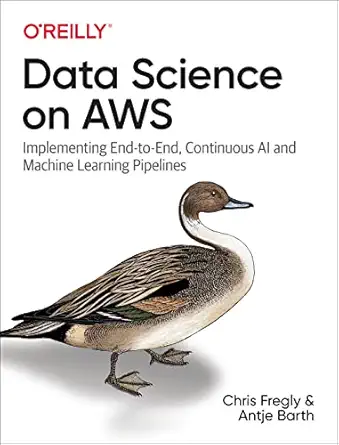
Data Science on AWS: Implementing End-to-End, Continuous AI and Machine Learning Pipelines
This book makes a strong case for using AWS to build scalable, automated data science workflows, especially when compared to the more specialized focus of Machine Learning for Emotion Analysis in Python. While it excels at guiding users through deploying end-to-end pipelines with continuous integration, its broad scope means less focus on specific AI techniques. The main tradeoff is that it demands familiarity with AWS services and cloud concepts, making it less suitable for those seeking purely local or lightweight solutions. This resource suits enterprise teams aiming for robust, cloud-based AI pipelines that handle large-scale data.
Pros:- Provides comprehensive guidance on deploying end-to-end ML pipelines on AWS
- Covers continuous integration and automation for scalable data workflows
- Ideal for enterprise environments needing cloud solutions
Cons:- Requires familiarity with AWS cloud services and infrastructure
- Less focus on specific AI model development or customization
Best for: Data engineers and analytics teams implementing scalable, cloud-native AI workflows
Not ideal for: Solo data scientists or small startups without cloud infrastructure, as the focus on AWS might be overkill and complex to set up
- Platform:AWS cloud
- Focus:End-to-end ML pipelines
- Audience:Data engineers, cloud architects
- Prerequisites:AWS knowledge, basic data engineering
- Format:Print, Digital
- Coverage:Deployment, automation
Bottom line: This book is best suited for teams seeking scalable, automated AI pipelines within a cloud infrastructure environment.
AI-Powered Data Workflows: From Raw Data to Actionable Insights (AI & Automation for Professionals Series Book 3)
This guide emphasizes automating data cleaning, analysis, and reporting with Python and AI tools, making it a strong choice for professionals who want to streamline workflows. Unlike Mastering Tableau 2026, which focuses on visualization and BI, this book dives into automating the entire data pipeline to produce actionable insights efficiently. Its main drawback is that it assumes familiarity with Python, potentially alienating complete beginners. If your goal is to reduce manual data handling and generate quick insights, this book offers practical automation techniques.
Pros:- Covers comprehensive data workflow automation with Python and AI
- Focuses on delivering actionable insights for decision-making
- Part of a professional series on AI and automation
Cons:- Requires prior knowledge of Python programming
- Complex for those new to data analysis or automation
Best for: Business analysts and managers seeking to automate data processing and generate insights faster
Not ideal for: Beginners in data analysis who lack Python experience, as the book assumes prior coding skills
- Focus:Data automation, workflow optimization
- Format:Book
- Intended Audience:Business analysts, data professionals
- Prerequisite Skills:Python programming
- Coverage:Data cleaning, analysis, reporting
- Series:AI & Automation
Bottom line: This book is ideal for professionals aiming to automate data workflows and produce rapid, actionable insights.
Mastering Tableau 2026: Advanced Data Visualizations, BI Techniques & AI Analytics
This latest edition offers detailed guidance on creating sophisticated visualizations with Tableau, including integrating AI-driven analytics, making it a strong upgrade from earlier versions for BI specialists. Compared to the more technical Python-focused Machine Learning for Emotion Analysis, it emphasizes visual storytelling and business insights. The downside is that the 2026 edition may be outdated if newer Tableau features emerge soon after release, and it doesn’t cover deployment or coding in depth. If visual analytics combined with AI is your priority, this book delivers advanced techniques with practical applications.
Pros:- Covers advanced visualization techniques and BI strategies
- Includes AI analytics integration for richer insights
- Comprehensive coverage of Tableau’s latest features
Cons:- Potentially outdated if newer Tableau updates are released after 2026
- Limited focus on raw data analysis or machine learning model development
Best for: Business intelligence analysts and data visualization specialists seeking to incorporate AI insights into dashboards
Not ideal for: Purely technical data scientists or programmers who prefer coding over visualization-focused tools
- Edition:2026
- Focus:Data visualization, BI, AI analytics
- Target Audience:BI analysts, visualization specialists
- Format:Book
- Coverage:Advanced charts, BI techniques, AI integration
Bottom line: This book is best suited for BI professionals eager to leverage advanced visualizations and AI insights in Tableau.
AI-Powered Business Intelligence: Improving Forecasts and Decision Making with Machine Learning
This book emphasizes applying machine learning to enhance business forecasts and decision-making processes, making it a valuable resource for managers and strategists. Compared with the more technical Machine Learning for Emotion Analysis, it focuses on practical applications like sales predictions and risk assessments, but its reliance on theoretical concepts may limit immediate hands-on utility. The limited case studies and focus on frameworks mean it’s better suited for those with some ML background rather than absolute beginners. If your goal is to improve forecasting accuracy using AI, this book provides actionable insights, albeit at a more conceptual level.
Pros:- Explores advanced AI techniques for improving forecasts
- Provides actionable strategies for data-driven decision making
- Focuses on practical business applications
Cons:- Assumes some prior knowledge of machine learning concepts
- Limited real-world case studies or step-by-step implementation details
Best for: Business strategists and decision-makers seeking to incorporate AI-based forecasting into their planning
Not ideal for: Data scientists looking for detailed model development or coding guidance, as the book emphasizes frameworks over implementation
- Focus:Forecasting, decision-making, AI techniques
- Format:Book
- Target Audience:Business leaders, strategists
- Prerequisites:Basic understanding of machine learning
- Coverage:Forecast models, frameworks
- Series:AI & Business
Bottom line: This book is ideal for managers and strategists aiming to leverage AI to refine forecasting and decision processes.
AI-Powered Analyst: Mastering Data with SQL, Google Workspace & AI Tools
This guide stands out for its focus on integrating AI into everyday data analysis workflows, especially through SQL and Google Workspace. Compared with the more theoretical AI for Data Analytics book, it offers hands-on techniques that immediately improve productivity. However, it may fall short for advanced data scientists requiring deeper algorithmic insights or comprehensive case studies. Its emphasis on practical tools makes it ideal for analysts looking to upgrade their toolkit without getting bogged down in complex theory.
Pros:- Practical focus on integrating AI with SQL and Google Workspace
- Step-by-step workflows that boost efficiency in routine analysis
- Up-to-date with modern AI-powered tools for everyday use
Cons:- Lacks depth for users seeking advanced AI or machine learning techniques
- No detailed case studies or real-world examples to illustrate concepts
Best for: Data analysts and business professionals wanting to streamline and modernize their day-to-day analysis tasks using familiar tools with AI support
Not ideal for: Experienced data scientists needing in-depth algorithmic or industry-specific case studies, as this guide focuses more on practical workflows than advanced theory
- ASIN:B0GXGRWW52
Bottom line: This book makes the most sense for professionals who want practical, easy-to-implement AI enhancements in common data analysis tools.
Ultimate Excel with Power Query and ChatGPT: Master Dynamic Lookup Functions, Generative AI, Data Navigation, Automation — Excel & Power Platform
This resource excels at teaching advanced Excel techniques, especially for users familiar with basic functions who want to leverage Power Query and ChatGPT for automation and complex data retrieval. Unlike AI for Data Analytics, which provides a broader theoretical overview, this guide dives into practical, hands-on skills for streamlining Excel-based workflows. Its focus on dynamic lookup functions and Power Platform integration makes it ideal for analysts seeking to automate repetitive tasks but may overwhelm beginners without prior Excel expertise.
Pros:- Covers advanced Excel features like Power Query and dynamic lookup functions
- Integrates generative AI with ChatGPT for smarter data insights
- Includes automation strategies within the Excel & Power Platform ecosystem
Cons:- Title and content may be overwhelming for users new to Excel or automation
- Lacks practical exercises or real-world case studies to reinforce learning
Best for: Data professionals comfortable with Excel seeking to incorporate AI-driven automation and advanced data navigation techniques
Not ideal for: Complete beginners to Excel or those looking for a broad overview of data analysis concepts, as this book assumes familiarity with intermediate skills
- ASIN:8196782616
Bottom line: Ideal for Excel users ready to adopt AI and automation strategies to handle complex data tasks efficiently.
SQL with AI: A Complete Beginner’s Guide to SQL, Databases, Data Analysis, and AI-Powered Querying
This guide is designed to introduce newcomers to the essentials of SQL, databases, and data analysis, while incorporating AI-powered querying techniques. Compared with AI-Powered Analyst, which assumes some familiarity with data tools, this book is better suited for absolute beginners aiming to develop foundational skills. Its coverage of AI integration is useful but limited in depth, making it a good starting point for those new to data analysis but not yet ready for advanced automation or complex workflows.
Pros:- Clear introduction to SQL, databases, and basic data analysis concepts
- Includes AI-powered querying methods suitable for beginners
- Provides a balanced overview of traditional and modern data techniques
Cons:- Lacks depth needed for advanced SQL practitioners or data scientists
- AI examples might be superficial without detailed case studies or real-world applications
Best for: Beginners seeking a comprehensive foundation in SQL, databases, and introductory AI data querying methods
Not ideal for: Experienced data analysts or professionals seeking advanced AI-driven analysis techniques, as the content remains at an introductory level
Bottom line: This book is a solid starting point for newcomers aiming to understand AI-enhanced data querying fundamentals.
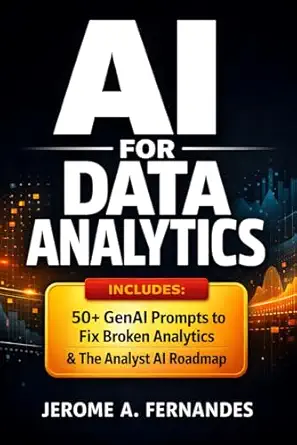
AI for Data Analytics: Applying Machine Learning and Generative AI for Better Decisions
This book stands out for its comprehensive coverage of machine learning and generative AI applications, focusing on how these advanced techniques can improve decision-making across industries. Unlike the more workflow-oriented AI-Powered Analyst, it emphasizes understanding core concepts and implementation strategies, making it suitable for those interested in the theoretical underpinnings as well as practical applications. A key tradeoff is that it presumes some prior knowledge of data analytics and lacks specific industry case studies, which might limit its immediate applicability for beginners or those seeking real-world examples.
Pros:- In-depth coverage of machine learning and generative AI applications
- Focuses on practical implementation strategies for real-world challenges
- Helps bridge the gap between AI theory and business decision-making
Cons:- Requires some prior knowledge of analytics concepts
- No specific industry case studies or detailed examples to illustrate applications
Best for: Data analysts and decision-makers with some background in analytics looking to deepen their understanding of AI applications and strategic implementation
Not ideal for: Complete beginners or professionals seeking step-by-step workflows without a focus on underlying AI concepts, as it leans more toward theory and strategic insights
Bottom line: Ideal for experienced data practitioners wanting to understand the strategic use of AI in analytics rather than just tools or workflows.

How We Picked
The selection process focused on a combination of performance, usability, scalability, and value. Each tool was evaluated based on how well it harnesses AI for data analysis, its ease of integration into existing workflows, and its suitability for different user skill levels. We also considered customer feedback, industry reputation, and the breadth of features offered. The ranking reflects a balance between powerful capabilities and practical accessibility, ensuring options for a range of needs and budgets.Factors to Consider When Choosing AI-powered Data Analysis Tools
Choosing the right AI-powered data analysis tool requires considering several key factors. First, assess your technical expertise—some platforms are designed for data scientists, while others prioritize user-friendly interfaces for non-technical users. Cost is another significant factor; high-end solutions may deliver advanced features but can be expensive for small teams. Compatibility with existing systems, such as cloud platforms or data sources, can influence ease of adoption. Additionally, consider scalability if your data needs are expected to grow, and evaluate the level of automation versus customization you require. Being aware of these factors helps avoid common pitfalls like overpaying for features you won’t use or selecting a tool that’s too complex for your team.Ease of Use and Learning Curve
Some tools are designed for data scientists and require coding skills, like Machine Learning for Emotion Analysis in Python. Others, such as Mastering Tableau 2026, focus on visual analytics with minimal coding, making them more accessible for business users. Consider your team’s skill level and how much time you’re willing to invest in training. A steep learning curve can delay results and increase costs, so balancing power with usability is vital.
Scalability and Integration
If your organization handles large datasets or plans to expand, scalability becomes critical. Platforms like Data Science on AWS are built for high-volume, real-time processing, which is essential for enterprise environments. Compatibility with existing data sources and workflows also matters—look for tools that easily integrate with your current cloud services, databases, or BI platforms. Failing to consider this can lead to fragmented workflows and increased overhead.
Cost and Value
Pricing models vary widely—from subscription-based SaaS to enterprise licenses. More advanced tools often come with higher costs but deliver deeper insights and automation. Small teams or startups might prioritize budget-friendly options like SQL with AI, which offers foundational capabilities at a lower price point. Remember, the most expensive tool isn’t always the best fit; it’s about matching features to your needs without overspending.
Automation and Customization
Automation features, such as automated data cleaning or predictive modeling, can save time but may limit control over nuanced analyses. Conversely, platforms offering extensive customization, like AI for Data Analytics, often require more expertise to leverage fully. Think about whether your priority is rapid insights or tailored, complex models—your choice influences the right tool for your workflow.
Support and Community
Robust support channels and active user communities can significantly reduce implementation hurdles. Larger platforms like Mastering Tableau provide extensive resources, tutorials, and customer service. Smaller or newer tools might lack these, making onboarding more challenging. Evaluate the level of vendor support and available learning resources to ensure smoother adoption and ongoing success.
Frequently Asked Questions
Can these tools handle large datasets efficiently?
Many of these AI-powered data analysis tools are designed with scalability in mind, especially options like Data Science on AWS. They leverage cloud infrastructure to process large volumes of data quickly and efficiently. However, performance depends on your specific data size, complexity, and the configuration of the platform. Selecting a tool that explicitly supports scalable architecture ensures your analysis remains fast and reliable as your data grows.
Do I need coding skills to use these tools effectively?
It varies by platform. Tools like Mastering Tableau 2026 focus on visual analytics with minimal coding, making them suitable for business users. Conversely, solutions like Machine Learning for Emotion Analysis in Python require programming knowledge to build custom models. Assess your team’s technical skills and choose a tool aligned with your capacity to avoid frustration and maximize productivity.
Are these tools suitable for real-time data analysis?
Yes, some options like Data Science on AWS are optimized for real-time processing, making them ideal for applications that demand immediate insights. Others may be more batch-oriented, better suited for periodic analysis. When real-time capability is essential, verify the platform’s support for streaming data and low-latency processing before making a decision.
How important is visualization in these AI tools?
Visualization plays a critical role in translating complex data insights into understandable formats. Tools like Mastering Tableau 2026 excel at creating compelling visuals integrated with AI analytics, which can significantly enhance decision-making. If your goal is to communicate findings clearly, prioritize tools with strong visualization features alongside AI capabilities.
What should I consider regarding data security and privacy?
Data security is paramount, especially when handling sensitive information. Cloud-based tools like Data Science on AWS often offer robust security features, but it’s vital to review their compliance certifications and data handling policies. On-premises or hybrid solutions provide more control but may require additional setup. Always evaluate a platform’s security measures to protect your data assets effectively.
Conclusion
For organizations seeking a comprehensive, user-friendly solution, Mastering Tableau 2026 offers excellent visualization and analytics with minimal coding. Budget-conscious teams will appreciate SQL with AI for foundational data analysis. Enterprises needing scalable pipelines should consider Data Science on AWS. Beginners or non-technical users will benefit from platforms emphasizing automation and simplicity, while data scientists may prefer customizable options like Machine Learning for Emotion Analysis in Python. Your ideal choice hinges on your team’s skills, data needs, and budget constraints. As an affiliate, we earn on qualifying purchases.Halloween Picks
halloween