Searching for the best 3D printers under 500? The market offers a variety of options, from beginner-friendly models to high-speed, feature-rich machines. The Creality Ender 3 V3 SE stands out as the best overall choice, offering reliable performance with auto-leveling and ease of use. For those prioritizing speed, the ELEGOO Centauri Carbon delivers rapid printing at 500mm/s, while the FLASHFORGE Adventurer 5M provides a compact, auto-leveling, fully enclosed experience perfect for newcomers. In this category, buyers often face tradeoffs between speed, print volume, and ease of setup. Continue reading for a detailed breakdown of the top picks and key considerations to help you find the best fit for your needs.

Get business pricing on tech for your team
- Business-only prices and quantity discounts
- Tax-exempt purchasing
- Multiple users, one account, clear invoices
Complete the kit


Key Takeaways
- Speed capabilities vary significantly; models like ELEGOO Centauri and Creality Ender-3 V3 KE excel in high-speed printing.
- Auto-leveling is a common feature, but its quality and ease of use differ, impacting setup time and print success.
- Print volume is often limited under 500, with most models offering around 220x220x250mm, suitable for small to medium projects.
- Multi-color support is available but often comes at a higher complexity or cost, appealing to more advanced users.
- Build quality and ease of maintenance vary; models with all-metal structures tend to last longer but may require more careful assembly.



| 3d printers under 500 | Print Speed |
|---|---|
| Creality Ender 3 V3 SE Beginne | 250mm/s |
| FLASHFORGE Adventurer 5M 3D Pr | — |
| Bambu Lab P1S 3D Printer | — |
| Bambu Lab A1 3D Printer | High-speed |
| Fully Assembled Mini 3D Printe | 250mm/s |
| ELEGOO Centauri Carbon 3D Prin | 500 mm/s |
| Creality SPARKX i7 3D Printer | 500 mm/s |
| FLASHFORGE AD5M 3D Printer wit | 600 mm/s |
| FlashForge Adventurer 5M 3D Pr | — |
| Creality Ender-3 V3 KE 3D Prin | 500 mm/s |
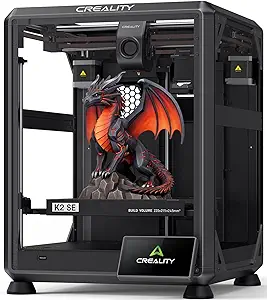
| Creality K2 SE 3D Printer | 500mm/s |
| FlashForge AD5M 3D Printer Ful | — |
More Details on Our Top Picks
Creality Ender 3 V3 SE Beginner-Friendly 3D Printer with Auto Leveling
The Creality Ender 3 V3 SE earns its place as the top pick thanks to its straightforward assembly, auto bed leveling, and reliable performance. Compared to the Bambu Lab A1, it offers a more accessible setup with fewer advanced features but remains highly capable for new users. Its auto leveling and quiet operation make it ideal for home environments, while the high-speed 250mm/s print capability balances speed with quality. The upgraded Sprite Direct Drive Extruder enhances filament feeding, reducing common issues seen in cheaper models. However, some users report inconsistent results, and its build volume, while standard, may be limiting for larger projects. This model suits beginners or hobbyists seeking an easy-to-use, reliable machine without sacrificing speed or quality.
Pros:- Easy and quick assembly with auto bed leveling
- High-speed printing up to 250mm/s
- Reliable extrusion with upgraded direct drive extruder
- Quiet operation for a home setting
Cons:- Some users experience inconsistent print results
- Limited build volume for larger projects
Best for: Beginners, hobbyists, or those new to 3D printing who want a reliable, straightforward machine with auto leveling.
Not ideal for: Advanced users or professionals needing larger build volumes or highly customizable features, as it lacks some high-end options.
- Print Speed:250mm/s
- Build Volume:250mm x 250mm x 250mm
- Auto Leveling:CR Touch
- Extruder:Sprite Direct Drive
- Dimensions:15 x 19.6 x 15 inches
- Weight:19.8 pounds
Our verdict“This printer is best suited for beginners or hobbyists who prioritize ease of use and reliable performance.”
FLASHFORGE Adventurer 5M 3D Printer, 600mm/s High-Speed, Fully Auto Leveling, Upgraded Direct Extruder, 280°C Nozzle, Dual-Sided PEI Coating Plate, 220x220x220mm Print Size
The FLASHFORGE Adventurer 5M stands out for its blazing 600mm/s print speed, making it ideal for users needing quick turnaround on smaller projects. Unlike the Ender 3 V3 SE, which balances speed and usability, this model emphasizes rapid printing, supported by automated bed leveling and a quick-heating hotend up to 280°C. Its dual-sided PEI plate simplifies filament adhesion and removal, catering to users who prioritize ease and speed. The setup process is straightforward, but its larger footprint and complex features may challenge those with limited space or technical experience. While it excels in fast production, it lacks the versatility for larger or more detailed prints. This printer is suitable for those who want high-speed capabilities without intricate customization.
Pros:- Exceptional print speed up to 600mm/s
- Automatic one-click bed leveling
- Fast heat-up to 280°C for diverse filaments
- Reliable filament run-out and power recovery
Cons:- Relatively large and may not fit small workspaces
- Complex setup might require some technical knowledge
Best for: Users who need fast printing and quick setup, especially in small-scale production or prototyping.
Not ideal for: Users with limited space or looking for more detailed, large-format prints, as it’s relatively bulky and specialized.
- Product Dimensions:14.29 x 15.83 x 17.64 inches
- Item Weight:23.8 pounds
- Print Size:220x220x220mm
- Max Speed:600mm/s
- Nozzle Temperature:280°C
- Heating Power:50W
Our verdict“This printer is best for users prioritizing rapid production and straightforward operation over large build volumes.”
Bambu Lab P1S 3D Printer, Ready-to-Use FDM 3D Printer
The Bambu Lab P1S offers impressive multi-color and multi-material capabilities with its automatic bed leveling and high-speed printing up to 500mm/s. Compared to the Ender 3 V3 SE, which is more beginner-friendly, the P1S targets users interested in complex, multi-material projects, though it requires connection to the Bambu Lab AMS for multi-color functionality. Its enclosed design and quick setup make it suitable for users seeking vibrant, multi-material prints with minimal fuss. However, it’s limited to specific filament types and relies on additional modules for multi-color operation, which could complicate initial setup. If multi-material printing is a priority, this model delivers vibrant results but at the cost of added complexity and expense.
Pros:- Vibrant multi-color/multi-material printing
- High-speed printing up to 500mm/s
- Automatic bed leveling for easy setup
- Quick setup in about 15 minutes
Cons:- Requires Bambu Lab AMS for multi-color printing
- Limited filament compatibility for reinforced or specialty filaments
Best for: Creative users interested in multi-color/multi-material printing who want a quick, mostly plug-and-play experience.
Not ideal for: Users wanting large-volume or highly detailed single-color prints without multi-material features, due to its specialized focus.
- Color Capabilities:Up to 16 colors
- Speed:500mm/s
- Auto Bed Leveling:Yes
- Supported Filaments:PLA, PETG, TPU, PVA, PET, ABS, ASA
- Design:Enclosed
- Setup Time:15 minutes
Our verdict“This printer is best suited for hobbyists seeking multi-material, multi-color prints with quick setup in a compact form.”
Bambu Lab A1 3D Printer, Ready-to-Use FDM 3D Printer for Beginners and Kids
The Bambu Lab A1 combines high-speed, precise printing with user-friendly features, making it ideal for beginners and young users. Its automatic calibration and active flow rate compensation ensure consistent quality, similar in ease to the Ender 3 V3 SE but with quieter operation. While it supports multi-color printing with the optional AMS lite module, this adds extra cost and setup steps. Its relatively large size might be a consideration for limited spaces, but the intuitive touchscreen and simple interface make it accessible. Compared to the more versatile P1S, the A1 is better for those prioritizing quiet operation, ease of use, and high precision over complex multi-material capabilities. This makes it perfect for educational use or casual home projects.
Pros:- High-speed, precise printing performance
- Automatic calibration simplifies setup
- Supports multi-color with optional module
- Quiet operation with noise canceling
Cons:- Additional purchase needed for multi-color capabilities
- Relatively large footprint for small spaces
Best for: Beginners, kids, or educational environments where ease of operation and quiet performance are valued.
Not ideal for: Advanced users or those needing large build volumes or multi-material setups without the extra purchase of accessories.
- Product Dimensions:21.76 x 20.83 x 12.87 inches
- Item Weight:22 pounds
- ASIN:B0D17TMWFB
- Item Number:PF002-A
- Supported Colors:Multiple with optional AMS lite
- Print Speed:High-speed
Our verdict“This printer is ideal for beginners or educational settings where ease of use and quiet operation matter most.”
Fully Assembled Mini 3D Printer for Kids & Beginners – Complete Starter Kit with Auto Leveling, High Speed, and High Precision
This mini 3D printer is designed specifically for kids and beginners, with a compact size and all-in-one starter kit. Its high-speed 250mm/s and 0.01mm precision deliver professional-quality results for small projects, much like the Ender 3 V3 SE but in a smaller package. The automatic nozzle cleaning and auto-leveling features make setup straightforward, and the included filament and accessories add value for new users. Its small footprint is perfect for limited spaces, though it limits the size of printable objects. Customer feedback points to occasional print quality issues, typical of beginner models. This machine is best for those starting out, especially for educational or hobbyist use, who want a complete, easy-to-operate package.
Pros:- Easy to operate with auto-leveling and nozzle cleaning
- High speed up to 250mm/s
- Complete starter kit with filament and accessories
- High precision of 0.01mm for detailed prints
Cons:- Limited build size restricts larger projects
- Occasional print quality issues reported by some users
Best for: Beginners, kids, or educators seeking a compact, all-in-one starter kit for small-scale printing projects.
Not ideal for: Users needing larger build volumes or more advanced features for complex projects, due to size limitations.
- Product Dimensions:10.63 x 10.12 x 15.94 inches
- Item Weight:6.61 pounds
- Print Speed:250mm/s
- Print Precision:0.01mm
- Included Filament:1 roll of PLA
- Warranty:12 months free repair
Our verdict“This compact, beginner-friendly printer is ideal for educational or hobby use on small projects with a focus on ease and speed.”
ELEGOO Centauri Carbon 3D Printer, CoreXY 500mm/s High Speed Printing with Auto Calibration, 320°C Nozzle, Built-in Camera, 256x256x256mm Build Volume
The ELEGOO Centauri Carbon stands out for its combination of high-speed performance and reliable precision, thanks to its CoreXY design and auto bed leveling. Compared with the FlashForge AD5M, it offers faster speeds of up to 500 mm/s, making it ideal for rapid prototyping. However, this speed demands careful calibration to avoid quality issues, and the enclosed chamber can make maintenance less accessible. Its built-in camera enables remote monitoring, a feature missing in many budget options, but the advanced features may be overwhelming for complete beginners. This model is best suited for experienced makers or those needing quick turnaround times without sacrificing detail, but less ideal for newcomers seeking simple, plug-and-play solutions.
Pros:- High-speed printing up to 500 mm/s for fast results
- Auto bed leveling and auto vibration compensation for consistent quality
- Built-in camera for real-time remote monitoring
- Enclosed chamber suitable for advanced filaments like carbon fiber
Cons:- High speed can require meticulous calibration for optimal results
- Enclosed design limits accessibility during maintenance
- Advanced features might intimidate users new to 3D printing
Best for: Experienced makers who need fast, reliable, high-quality prints and are comfortable with complex features
Not ideal for: Beginners or those looking for a straightforward, easy-to-use printer with minimal setup
- Build Volume:256x256x256 mm
- Max Nozzle Temperature:320°C
- Print Speed:500 mm/s
- Acceleration:20000 mm/s²
- Frame:Die-cast aluminum
- Display:Touchscreen
Our verdict“This printer makes the most sense for experienced users seeking speed and precision in demanding projects.”
Creality SPARKX i7 3D Printer, Multi-Color, Auto-Leveling, AI Camera, High Speed 500mm/s, 260×260×255 mm Build Volume
The Creality SPARKX i7 offers a compelling mix of multi-color capabilities and AI-assisted features, making it ideal for detailed, colorful models. Its auto calibration and AI camera monitoring provide a level of automation that surpasses many budget printers like the FlashForge Adventurer 5M, reducing setup time and offering real-time alerts. The tradeoff is that some features, such as multicolor printing, require additional filament management and can be complex for newcomers. Its sizable build volume supports larger, multi-color projects, but the complexity of the features might challenge beginners unfamiliar with multi-filament workflows. This pick suits creative users who want vibrant, multi-material prints with minimal manual intervention, but less ideal for those seeking a simple, single-filament machine.
Pros:- Supports vibrant, multi-color printing for detailed models
- AI camera provides real-time monitoring and notifications
- Auto calibration and filament recognition simplify setup
- Large build volume for complex, multi-color projects
Cons:- Multi-color printing requires additional filament management and setup
- Features can be complex and overwhelming for newcomers
- Potentially higher cost compared to simpler printers
Best for: Artists and hobbyists who prioritize multi-color printing and remote project management
Not ideal for: Beginners or users who prefer straightforward, single-filament printers without advanced features
- Build Volume:260×260×255 mm
- Print Speed:500 mm/s
- Features:Auto calibration, AI camera, RGB lighting
- Supported Materials:Multiple filaments including multi-color
- Dimensions:16.5 x 17.5 x 18.5 inches
- Item Weight:27.1 pounds
Our verdict“This printer is best suited for creative users who want vibrant, multi-material models with smart monitoring features.”
FLASHFORGE AD5M 3D Printer with Auto-Calibration and High-Speed Printing
The FLASHFORGE AD5M emphasizes rapid printing with speeds up to 600 mm/s, making it a strong choice for quick prototypes or small batch production. Its 1-click full-auto calibration reduces setup time, and the quick-swap nozzle system simplifies maintenance, setting it apart from slower models like the ELEGOO Centauri Carbon. The main tradeoff is that the high-speed printing may require more careful calibration to maintain quality, and the limited filament info leaves some questions about material versatility. Its smaller build volume of 220x220x220mm suits users with smaller or less complex projects, but larger or multi-color prints might be restrictive. This pick is ideal for experienced users needing speed, but less so for beginners or those requiring larger build areas.
Pros:- Exceptional print speeds up to 600 mm/s for rapid results
- Automatic full-auto calibration simplifies setup
- Quick-swap nozzle system for fast maintenance
- Versatile for various filament types
Cons:- Limited build volume of 220x220x220mm
- Speed may compromise print quality without careful calibration
- Lack of detailed filament compatibility info
Best for: Experienced users focused on rapid prototyping and fast turnaround times
Not ideal for: Beginners or those needing larger build volumes or multi-color capabilities
- Build Volume:220x220x220 mm
- Print Speed:600 mm/s
- Nozzle:3S Quick-Swap
- Calibration:1-Click Full-Auto
- Features:Automatic calibration, quick-swap nozzle
Our verdict“This printer offers high-speed printing for experienced users prioritizing quick results over large build sizes.”
FlashForge Adventurer 5M 3D Printer with Auto Leveling and High-Speed Printing
The FlashForge Adventurer 5M combines high-speed capabilities up to 600 mm/s with automatic bed leveling, making it suitable for both beginners and intermediates who want a reliable, fast machine. Its direct drive extruder reaches temperatures up to 280°C, allowing for a wide range of filament options, while the mobile app monitoring adds convenience. Compared to the ELEGOO Centauri Carbon, it offers a larger user-friendly interface and easier nozzle changes. The main limitation is its maximum print size of 220x220x220mm, which restricts larger projects, and the high-speed features might require familiarity with advanced settings to ensure quality. This model fits users seeking a versatile, fast, and remotely manageable printer, but less so for those with bigger or multi-color projects.
Pros:- High-speed printing up to 600 mm/s for rapid production
- Automatic bed leveling ensures consistent first layers
- Easy nozzle changes and remote app monitoring
- Supports a variety of filament types including flexible materials
Cons:- Limited to a 220x220x220mm build size
- Advanced features may require some learning curve
- Potentially higher cost for high-speed capabilities
Best for: Hobbyists and small businesses needing speed, automation, and remote access
Not ideal for: Beginners seeking a simple, plug-and-play machine or large-volume projects
- Print Size:220x220x220 mm
- Max Speed:600 mm/s
- Extruder Temperature:280°C
- Auto Leveling:Yes
- Connectivity:Mobile App Monitoring
Our verdict“This printer is ideal for users wanting fast, flexible, and remotely monitored printing with reliable automation.”
Creality Ender-3 V3 KE 3D Printer, 500 mm/s High-Speed Printing with Auto-Leveling, Sprite Direct Extruder Supports 300°C, 220×220×250 mm Print Volume
The Creality Ender-3 V3 KE stands out for its impressive high-speed capabilities, reaching up to 500mm/s, which drastically reduces printing times compared to many competitors like the FlashForge AD5M. Its auto-leveling with the CR Touch sensor simplifies setup, making it accessible for hobbyists who want quick results. The Sprite direct extruder supports a wide range of filaments up to 300°C, offering versatility. However, the high speeds may challenge users aiming for detailed, precise prints, especially at the expense of small features. Its compact size and easy 10-minute setup make it ideal for those new to 3D printing or with limited space. The tradeoff is that its build volume is somewhat limited at 220×220×250 mm, which may restrict larger projects.
Pros:- Speeds up to 500mm/s drastically cut print times
- Auto-leveling with CR Touch ensures first-layer accuracy
- Supports a wide filament range including PETG, ABS, TPU
Cons:- High speed can compromise fine detail for intricate prints
- Limited build volume may restrict larger projects
Best for: Hobbyists and enthusiasts seeking rapid prototyping and reliable performance without complex calibration.
Not ideal for: Users focused on detailed miniature work or large-scale prints due to speed limitations at small feature resolutions.
- Print Volume:220×220×250 mm
- Max Printing Temperature:300°C
- Print Speed:500 mm/s
- Weight:21.7 pounds
- Dimensions:17.04 x 14.41 x 19.29 inches
- Item Model Number:Creality Ender 3 V3 KE
Our verdict“This printer is best for those prioritizing fast, reliable prints over ultra-fine detail in smaller build sizes.”
Creality K2 SE 3D Printer, 500mm/s High-Speed, Multi-Color Support, Auto Leveling, Solid Metal Build, 220×215×245mm Print Size
The Creality K2 SE offers a compelling combination of speed and multi-color support, making it a strong contender alongside the FlashForge AD5M. Its solid metal frame enhances stability during rapid printing, which is crucial at 500mm/s, and supports multi-color printing via the optional CFS system—ideal for complex projects. The auto-leveling simplifies setup for users who want consistent first layers. However, the CFS system requires an additional purchase, adding cost, and the large footprint may be a challenge for smaller workspaces. While it is accessible for intermediate users, beginners might find the multi-color features and setup slightly complex. Compared to the FlashForge AD5M, it offers more stability and multi-color versatility but at a higher initial complexity.
Pros:- Supports multi-color printing with optional CFS system
- Sturdy metal frame ensures stability at high speeds
- Auto bed leveling simplifies calibration
Cons:- Additional cost for multi-color support system
- Large size may require dedicated workspace
Best for: Intermediate users seeking stable high-speed multi-color printing with easy setup for varied filament projects.
Not ideal for: Absolute beginners or those with limited space, due to additional system costs and larger size.
- Print Speed:500mm/s
- Build Volume:220×215×245 mm
- Build Material Support:Multi-color, various filaments
- Frame Material:Die-cast aluminum alloy
- Auto Leveling:Yes
- Extruder Type:Direct drive
Our verdict“This printer is ideal for users wanting high-speed, multi-color capability with solid build stability, but not for those on a tight budget or space-constrained environments.”
FlashForge AD5M 3D Printer Fully Auto Calibration with Max 600mm/s Speed, All-Metal CoreXY Structure, Quick-Swap Nozzle, Print Size 220x220x220mm
The FlashForge AD5M pushes the high-speed boundary with a maximum of 600mm/s, outperforming some competitors like the Ender-3 V3 KE in raw speed. Its fully automatic calibration and one-click leveling reduce setup time, making it appealing for users who value quick, consistent results. The durable CoreXY all-metal frame ensures stability at these speeds, and the quick-swap nozzles simplify maintenance. While its high speed is advantageous, the complexity of setup can challenge complete beginners, and its heavier weight may limit portability. Compared to the Ender-3 V3 KE, it offers faster speeds and remote management, but may require more technical confidence to operate effectively.
Pros:- Maximum speed up to 600mm/s for rapid prototyping
- Automatic leveling and quick-swap nozzles ease maintenance
- Remote control via app enhances workflow flexibility
Cons:- Setup complexity may overwhelm complete beginners
- Heavier build reduces portability
Best for: Professionals and advanced hobbyists who need fast, precise prints with minimal setup fuss and remote monitoring features.
Not ideal for: Beginners seeking a simple, lightweight, plug-and-play device without dealing with complex calibration processes.
- Max Speed:600mm/s
- Print Size:220×220×220 mm
- Nozzle Diameters:0.25/0.4/0.6/0.8 mm
- Product Dimensions:15.83 x 14.29 x 17.64 inches
- Item Weight:22 pounds
- Warranty:Details available via manufacturer
Our verdict“This printer suits experienced users who prioritize high-speed, high-precision printing with automated calibration and remote management capabilities.”

How We Picked
Products were selected based on a combination of affordability, feature set, print quality potential, and user-friendliness. Priority was given to models that balance performance with accessibility, especially for hobbyists and beginners. We evaluated build quality, speed, auto-calibration features, and versatility—factors that directly affect the printing experience. The ranking reflects a mix of overall value, ease of use, and how well each machine meets the needs of various user levels within the under-500 budget. Tradeoffs were considered, such as speed versus print volume or complexity versus automation, to ensure a comprehensive overview of the best options available.Factors to Consider When Choosing 3d Printers Under 500
Choosing the right 3D printer under 500 depends on several key factors. While affordability is important, understanding features like print speed, build volume, and ease of setup can make a significant difference in your overall experience. Consider your primary use—whether it’s prototyping, hobby printing, or educational projects—and how much you’re willing to learn or troubleshoot. Being aware of common pitfalls, such as underestimating the importance of auto-leveling or print bed adhesion, can save time and frustration. This guide highlights critical factors to keep in mind before making your purchase.Print Speed and Volume
High print speeds, like 500mm/s, can significantly reduce production time, especially for larger projects. However, faster speeds often require more precise calibration and can compromise print quality if not managed properly. Print volume determines the maximum size of your projects; most models in this range offer around 220x220x250mm, suitable for small to medium objects. Always balance speed and volume with your intended use to avoid sacrificing quality or convenience.
Ease of Use and Auto-Calibration
Auto-leveling features are increasingly common and can dramatically simplify setup, especially for beginners. However, the quality of auto-calibration varies, and some systems may still require manual adjustments. Ease of use also includes touchscreen interfaces and straightforward assembly or pre-assembled units. Investing in a model with reliable auto-leveling can reduce failed prints and frustration, but ensure it’s well-reviewed for accuracy and reliability.
Build Quality and Durability
All-metal frames tend to offer better stability and longevity, especially during high-speed printing. Cheaper plastic frames may be less stable, leading to print inaccuracies or increased maintenance. Consider the construction materials and how often you’re willing to perform maintenance or repairs. A sturdy build can improve print consistency over time, making it worth paying attention to in this budget range.
Material Compatibility and Support
Most printers under 500 support common filament types like PLA and ABS, but some may have limitations with higher-temperature materials. Multi-material or dual-extruder setups are rare in this price segment but can be found on select models. Think about what materials you plan to use and whether the printer’s hotend and extruder are compatible. This affects the range of projects you can pursue and the quality of final prints.
Additional Features and Future-Proofing
Features like built-in cameras, Wi-Fi connectivity, and filament sensors add convenience but may increase complexity or cost. Consider whether these extras will genuinely improve your workflow or if they’re unnecessary bells and whistles. Also, look for models with good community support and firmware updates, helping future-proof your investment as new features or improvements become available.
Frequently Asked Questions
Is auto-leveling essential for a beginner?
Auto-leveling can be a significant time-saver and reduce failed prints, making it highly beneficial for beginners. Manual leveling can be challenging for new users and lead to inconsistent results. However, some auto-leveling systems vary in reliability, so reading reviews is important. If you’re just starting out, choosing a model with proven auto-leveling features can streamline your learning curve and improve your overall experience.
Can I print with higher-temperature materials under 500?
Many printers in this price range support PLA and ABS, but printing with higher-temperature materials like PETG or nylon may require a hotend capable of reaching 250°C or more. Some models, such as the Creality Ender 3 V3 KE, support temperatures up to 300°C, expanding your material options. Check the hotend specifications before purchasing if you plan to experiment with advanced filaments for more durable or functional parts.
How important is print speed in this category?
Print speed can dramatically affect your workflow, especially if you frequently produce larger or multiple models. Models supporting 500mm/s are capable of faster printing, but speed often comes with tradeoffs in precision and layer quality. For hobbyists or beginners, moderate speeds around 50-100mm/s usually balance quality and efficiency better. Consider your project needs and patience level when evaluating speed features.
What maintenance should I expect with these printers?
Most printers under 500 require routine maintenance such as bed leveling, cleaning the nozzle, and lubricating moving parts. All-metal frames tend to be more durable but may need more careful assembly or calibration. Regular filament cleaning and checking for loose screws help maintain print quality over time. Investing in a model with accessible components and good community support can make ongoing maintenance easier.
Is multi-color printing realistic under 500?
Multi-color printing is possible but often limited or more complex in this price range. Some models, like the FLASHFORGE AD5X, support multi-material or multi-color prints with dual extruders, but setup can be more involved. For most hobbyists, single-extruder printers with manual filament swapping are sufficient. If multi-color is a priority, be prepared for additional learning and potential upgrades to your workflow.
Conclusion
For casual hobbyists or those new to 3D printing, the Creality Ender 3 V3 SE offers a reliable, user-friendly experience as the best overall pick. Those seeking high-speed production should consider the ELEGOO Centauri Carbon, which provides rapid printing for large projects. If you want a compact, fully enclosed model, the FLASHFORGE Adventurer 5M makes a strong case for beginners. Advanced users interested in multi-material or multi-color printing might look at models like the FLASHFORGE AD5X, even if it’s slightly above the budget. Each buyer type can find a suitable machine within this list—just keep your specific needs and priorities in mind to make the best choice.
Columbus Day / Indigenous Peoples' Day Picks
long weekend sales
As an affiliate, we earn on qualifying purchases.