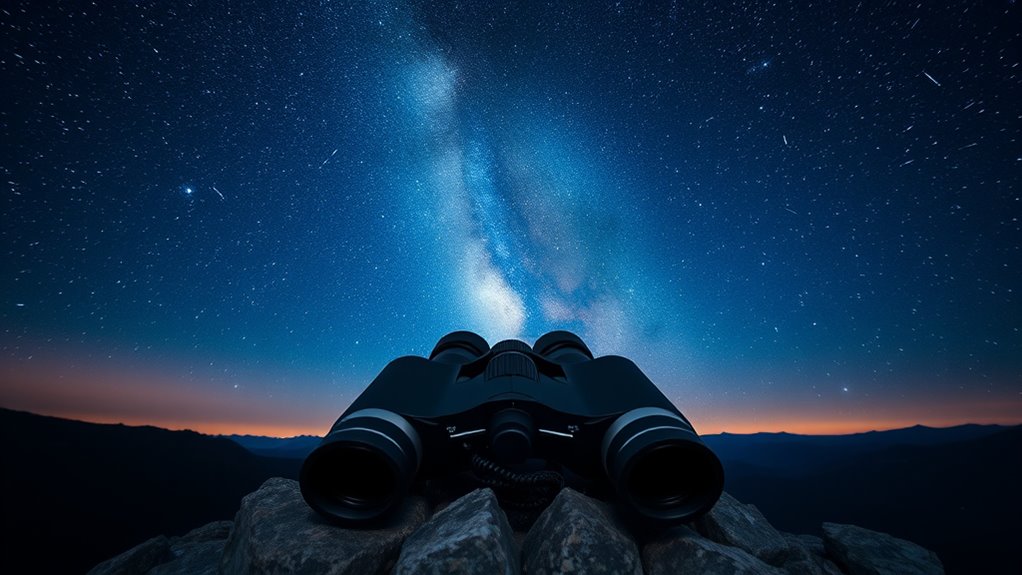

For stargazing, choosing the right binoculars can transform your night sky experience. The best options deliver a wide field of view, high light-gathering ability, and durability without being too heavy to handle comfortably. The Celestron SkyMaster 20×80 stands out as the overall best pick for serious skywatchers, offering excellent magnification and brightness. Meanwhile, the Celestron SkyMaster Pro ED 7×50 provides expansive views for wide sky observations, and the Celestron UpClose G2 10×50 is a more accessible choice for beginners. Tradeoffs often involve balancing power, field of view, and ease of use—read on to see which model suits your needs best.

Get business pricing on tech for your team
- Business-only prices and quantity discounts
- Tax-exempt purchasing
- Multiple users, one account, clear invoices
Key Takeaways
- High magnification binoculars (like 20x or higher) are best for detailed viewing but often require a tripod for stability.
- Wide field of view models (around 7-10x magnification) excel at star field scanning and are easier to handle without stabilization.
- Larger objective lenses (70-80mm) gather more light, making them ideal for low-light conditions but also heavier and bulkier.
- Budget options tend to sacrifice some optical clarity and build quality, so investing more generally improves viewing experience.
- Models with ED (extra-low dispersion) glass or multi-coated lenses significantly enhance image brightness and color fidelity.
| Celestron SkyMaster Pro ED 7×50 Binoculars for Wide Night-Sky Views |  | Best Overall for Wide Sky Observation | Magnification: 7x | Objective Lens Diameter: 50mm | Glass Type: Extra-Low Dispersion (ED) | VIEW ON AMAZON | See Our Full Breakdown |
| 18×70 Professional Astronomy Binoculars for Adults, High Powered |  | Best for Serious Deep-Sky Observation | Magnification: 18x | Objective Lens Diameter: 70mm | Prism Type: BAK-4 Roof Prism | VIEW ON AMAZON | See Our Full Breakdown |
| Celestron SkyMaster 20×80 Astronomy Binoculars |  | Best for Deep-Sky and Long-Distance Viewing | Magnification: 20x | Objective Lens Diameter: 80mm | Prism Type: BaK-4 | VIEW ON AMAZON | See Our Full Breakdown |
| Celestron Cometron 7×50 Astronomy Binoculars |  | Best Budget-Friendly Wide View for Beginners | Magnification: 7x | Objective Lens Diameter: 50mm | Angular Field of View: 6.6° | VIEW ON AMAZON | See Our Full Breakdown |
| Celestron UpClose G2 10×50 Porro Binoculars |  | Best Entry-Level for Versatile Use | Magnification: 10x | Objective Lens Diameter: 50mm | Prism Type: Porro | VIEW ON AMAZON | See Our Full Breakdown |
| Celestron SkyMaster 25×70 Binoculars |  | Best for High-Powered Astronomical Observations | Magnification: 25x | Objective Lens Diameter: 70mm | Prism Type: BaK-4 | VIEW ON AMAZON | See Our Full Breakdown |
| Celestron SkyMaster 15-35×70 Binoculars with Zoom for Long-Range Viewing |  | Best for Versatile Long-Range Astronomy and Land Observation | Magnification: 15-35x | Objective Lens Diameter: 70mm | Prism Type: BaK-4 | VIEW ON AMAZON | See Our Full Breakdown |
| Celestron SkyMaster 12×60 Binoculars for Astronomy & Wide-Field Viewing |  | Best for Wide-Field Viewing and General Astronomy | Magnification: 12x | Objective Lens Diameter: 60mm | Prism Type: BaK-4 | VIEW ON AMAZON | See Our Full Breakdown |
| Celestron SkyMaster 15×70 Astronomy Binoculars |  | Best for Deep-Sky Astronomy and Bright Night Viewing | Magnification: 15x | Objective Lens Diameter: 70mm | Prism Type: BaK-4 | VIEW ON AMAZON | See Our Full Breakdown |
| Sogries 15-35x70mm High Powered Binoculars for Adults, Star Gazing Astronomy |  | Best for Advanced Astronomical and Long-Range Observation | Magnification: 15-35x | Objective Lens Diameter: 70mm | Prism Type: BAK4 Porro | VIEW ON AMAZON | See Our Full Breakdown |
| 20×80 High-Powered Astronomy Binoculars for Adults |  | Best for Deep-Sky Observation and Detailed Moon Viewing | Magnification: 20x | Objective Lens Diameter: 80mm | Weight: 2.08 kg (4.66 lbs) | VIEW ON AMAZON | See Our Full Breakdown |
| binoculars astronomy | Magnification | Objective Lens Diameter | Prism Type |
|---|---|---|---|
| Celestron SkyMaster Pro ED 7×5 | 7x | 50mm | — |
| 18×70 Professional Astronomy B | 18x | 70mm | BAK-4 Roof Prism |
| Celestron SkyMaster 20×80 Astr | 20x | 80mm | BaK-4 |
| Celestron Cometron 7×50 Astron | 7x | 50mm | — |
| Celestron UpClose G2 10×50 Por | 10x | 50mm | Porro |
| Celestron SkyMaster 25×70 Bino | 25x | 70mm | BaK-4 |
| Celestron SkyMaster 15-35×70 B | 15-35x | 70mm | BaK-4 |
| Celestron SkyMaster 12×60 Bino | 12x | 60mm | BaK-4 |
| Celestron SkyMaster 15×70 Astr | 15x | 70mm | BaK-4 |
| Sogries 15-35x70mm High Powere | 15-35x | 70mm | BAK4 Porro |
| 20×80 High-Powered Astronomy B | 20x | 80mm | BaK-4 |
More Details on Our Top Picks
Celestron SkyMaster Pro ED 7×50 Binoculars for Wide Night-Sky Views
This option stands out primarily for its wide 50mm objective lenses and ED glass, which deliver bright, sharp images even in low-light conditions. Compared to the 20×80 binoculars, the SkyMaster Pro ED offers a more portable size and easier handling, though it sacrifices some magnification power. Its waterproof and fog-proof design ensures durability in outdoor conditions, while tripod adaptability provides stability for extended viewing sessions. The tradeoff is that its bulkier size makes it less convenient for quick setups or casual observing. This pick makes the most sense for amateur astronomers seeking a high-quality, versatile binocular for wide sky surveys without the bulk of heavier models.Pros:- Excellent light-gathering capability for low-light conditions
- Sharp, true-to-life color images with minimal chromatic aberration
- Waterproof and fog-proof construction for outdoor durability
- Tripod adaptable for stable long-duration viewing
Cons:- Bulkier size reduces portability and quick handling
- Requires a tripod for extended viewing stability
- Higher price compared to basic models
Best for: Beginners and intermediate sky observers who want a durable, high-quality binocular for general celestial viewing.
Not ideal for: Travelers or casual stargazers who prefer lightweight, ultra-compact options for quick, impromptu sessions.
- Magnification:7x
- Objective Lens Diameter:50mm
- Glass Type:Extra-Low Dispersion (ED)
- Coatings:XLT multi-coatings
- Waterproof:Yes
- Tripod Adaptable:Yes
- Housing Material:Polycarbonate and aluminum
- Warranty:Limited Lifetime US Warranty
Our verdict“This binocular is ideal for dedicated amateur astronomers wanting a rugged, bright, and versatile instrument for detailed wide sky views.”
18×70 Professional Astronomy Binoculars for Adults, High Powered
This model stands out for its powerful 18x magnification and large 70mm lenses, which provide remarkably bright and detailed images, especially in low-light conditions. Unlike the 20×80 binoculars, its slightly more manageable size makes it easier to handle for extended periods, though the high magnification still necessitates a tripod for stability. The fully multi-coated FMC lenses and BAK-4 prisms maximize light throughput, making it ideal for serious astronomers who need high contrast and brightness. The main tradeoff is its weight—nearly 5 pounds—and the impracticality of handheld use without stabilization. It’s best suited for experienced users who own a sturdy tripod and seek detailed, high-magnification views of deep-sky objects.Pros:- High 18x magnification with large 70mm aperture for bright, detailed views
- Excellent low-light performance with BAK-4 prisms and FMC lenses
- Rugged waterproof and fogproof construction with tripod compatibility
- Includes smartphone digiscoping adapter for astrophotography
Cons:- Heavy weight makes handheld use impractical
- High magnification amplifies shake, requiring tripod stabilization
- Price is on the higher end for hobbyist equipment
Best for: Advanced amateur astronomers or outdoor enthusiasts with tripod access seeking high-magnification, low-light astronomy views.
Not ideal for: Casual stargazers or those seeking lightweight, portable binoculars for quick observations, due to its weight and high magnification.
- Magnification:18x
- Objective Lens Diameter:70mm
- Prism Type:BAK-4 Roof Prism
- Lens Coating:Fully Multi-Coated (FMC)
- Water Resistance:IPX7 Waterproof
- Focus Type:Center Focus
- Tripod Mount:1/4″-20 thread
- Weight:4.7 lbs
Our verdict“This binocular is perfect for dedicated sky watchers with tripod support aiming for high-detail deep-sky imaging and long viewing sessions.”
Celestron SkyMaster 20×80 Astronomy Binoculars
This binocular excels in deep-sky astronomy thanks to its massive 80mm objective lenses and 20x magnification, which gather ample light for bright, detailed images of faint objects. Compared to the 7×50 models, the 20×80 offers significantly higher magnification, but that comes with a need for a sturdy tripod due to its size and weight. The BaK-4 prisms maximize light throughput, making it suitable for low-light conditions like dusk or dawn. Its rubber-armored, water-resistant housing makes it durable for outdoor use, but the bulk and weight mean it’s less convenient for quick, casual outings. It’s best for serious stargazers who have tripod support and want to observe faint celestial objects in detail.Pros:- Large 80mm lenses for maximum light collection
- High 20x magnification for detailed faint-object views
- Durable rubber-armored, water-resistant housing
- Built-in tripod adapter for stability
Cons:- Heavy and large, requiring tripod for effective use
- High magnification makes handheld viewing impractical
- Less portable for spontaneous outdoor use
Best for: Experienced astronomers or dedicated deep-sky observers with tripod access seeking maximum light-gathering power.
Not ideal for: Casual users or those seeking lightweight, portable instruments for quick sky scans, due to its size and weight.
- Magnification:20x
- Objective Lens Diameter:80mm
- Prism Type:BaK-4
- Housing:Rubber-armored, water-resistant
- Tripod Adapter:Yes
- Warranty:Limited Lifetime US Warranty
Our verdict“This binocular is tailored for serious deep-sky astronomy, where maximum light capture and detail are prioritized over portability.”
Celestron Cometron 7×50 Astronomy Binoculars
The Cometron 7×50 binoculars are a practical choice for newcomers to astronomy, offering an expansive 6.6° field of view that makes locating comets, the Milky Way, and constellations easier. Compared with more advanced models like the SkyMaster Pro ED, the Cometron provides good brightness and contrast but with simpler BK-7 prisms that lower overall optical quality. Its wide field and reasonable price make it appealing for casual stargazing, and the waterproof design adds durability for outdoor use. However, the longer close focus distance limits use for terrestrial subjects, and the tripod adapter isn’t included, adding to setup time. This model suits beginners interested in wide-field sky exploration without a hefty investment.Pros:- Wide 6.6° field of view ideal for tracking large celestial objects
- Bright, high-contrast views with multi-coated optics
- Affordable price point for beginners
- Tripod-adaptable for stable viewing
Cons:- Longer close focus distance limits terrestrial use
- Tripod adapter not included
- Lower-grade BK-7 prisms compared to premium models
Best for: Novice astronomers or casual sky watchers who want a straightforward, affordable binocular for wide-field celestial viewing.
Not ideal for: Experienced users seeking high-contrast, high-magnification views or those wanting a fully optimized astronomical instrument, due to lower optical quality.
- Magnification:7x
- Objective Lens Diameter:50mm
- Angular Field of View:6.6°
- Close Focus:26.2 feet
- Optics:Multi-coated
- Tripod Adaptable:Yes (adapter not included)
- Warranty:Limited Lifetime US Warranty
Our verdict“This binocular offers an accessible, wide-field view tailored for beginners interested in exploring the night sky without high costs.”
Celestron UpClose G2 10×50 Porro Binoculars
The UpClose G2 10×50 binoculars present a solid entry point for those new to astronomy, offering a moderate 10x magnification and wide 50mm lenses that balance brightness with ease of handling. Compared to the more specialized models like the SkyMaster Pro ED, these binoculars lack premium ED glass and have BK-7 prisms, which slightly reduce image sharpness and contrast. Nonetheless, they provide good optical performance at a budget-friendly price and feature ergonomic, water-resistant rubber armor for outdoor durability. The main limitation is that BK-7 prisms are lower grade than BAK-4, meaning images won’t be as crisp or bright, especially in low-light conditions. They’re suitable for beginners who want a versatile, affordable binocular for casual astronomy, birdwatching, and travel.Pros:- Affordable price with decent optical quality
- Versatile for astronomy, birdwatching, and travel
- Water-resistant, rubber-coated body for outdoor durability
- Ergonomic design for comfortable handling
Cons:- Lower-grade BK-7 prisms reduce image clarity
- Not fully waterproof—water-resistant only
- Optical performance less optimal in dim conditions
Best for: Beginner sky watchers looking for an affordable, durable binocular for multiple outdoor activities, including astronomy.
Not ideal for: Serious astronomers who require high-contrast, high-magnification instruments or low-light performance, as the BK-7 prisms are less advanced.
- Magnification:10x
- Objective Lens Diameter:50mm
- Prism Type:Porro
- Prism Glass:BK-7
- Optical Coating:Multi-coated
- Water Resistance:Water-resistant
- Included Accessories:Carrying case, objective covers, eyepiece covers, lens cloth, manual
Our verdict“This binocular offers a practical, budget-friendly option for beginners seeking versatile outdoor viewing, including basic astronomy.”
Celestron SkyMaster 25×70 Binoculars
The Celestron SkyMaster 25×70 stands out for its powerful 25x magnification and large 70mm lenses, making it ideal for detailed astronomy sessions that demand brightness and clarity in low-light conditions. Compared to the 15×70 SkyMaster, this model offers greater detail but at the cost of increased weight and the necessity of a sturdy tripod, which is not included. Its BaK-4 prisms and multi-coated optics ensure sharp images, especially during nighttime viewing, but the high magnification can make hand-held use difficult. The rugged, water-resistant rubber housing adds durability for outdoor use, and the included tripod adapter simplifies stable viewing. This model suits dedicated amateur astronomers who prioritize high magnification and brightness over portability. It isn’t suitable for casual or beginner users who prefer lightweight, versatile binoculars without the need for a tripod. Pros: Powerful 25x magnification with bright, sharp images; Durable, water-resistant design; Includes tripod adapter and accessories; Backed by lifetime warranty. Cons: Heavy and requires tripod for extended use; Fixed 25x magnification limits versatility.
Verdict: This pick is perfect for serious astronomy enthusiasts prepared to mount their binoculars for detailed stellar observations.- Magnification:25x
- Objective Lens Diameter:70mm
- Prism Type:BaK-4
- Optics:Multi-coated
- Tripod Adapter:Built-in 1/4″-20
- Housing:Rubber-armored, water-resistant
Our verdict“Best for High-Powered Astronomical Observations — a strong pick in this lineup.”
Celestron SkyMaster 15-35×70 Binoculars with Zoom for Long-Range Viewing
The Celestron SkyMaster 15-35×70 offers adjustable zoom, making it adaptable for both land and celestial viewing. Compared with the fixed 15×70 model, this zoom version provides a broader magnification range, allowing users to switch from wide-field views to detailed distant objects. The tradeoff is increased weight and complexity; at higher zoom levels, steady hand-holding becomes challenging, necessitating a tripod (not included). Its BaK-4 prisms and water-resistant build ensure bright, sharp images in various weather conditions, with the tripod mount providing stability for long sessions. This model particularly benefits users who need flexible magnification for different observing scenarios, such as star tracking or distant landscape observation. It’s less suitable for those seeking lightweight, simple binoculars for casual use. Pros: Variable 15-35x zoom for flexibility; Bright, detailed images in low-light; Water-resistant and rugged; Tripod mount included. Cons: Heavy, requiring tripod for stable viewing; Difficult to hold steady at high zoom levels.
Verdict: Best suited for users who want adaptable magnification for both astronomy and long-range terrestrial viewing, with a willingness to use a tripod.- Magnification:15-35x
- Objective Lens Diameter:70mm
- Prism Type:BaK-4
- Water-Resistant:Yes
- Tripod Mount:Yes (adapter included)
Our verdict“Best for Versatile Long-Range Astronomy and Land Observation — a strong pick in this lineup.”
Celestron SkyMaster 12×60 Binoculars for Astronomy & Wide-Field Viewing
The Celestron SkyMaster 12×60 strikes a balance between magnification and wide field, making it suitable for broad sky surveys and terrestrial spotting. Unlike the higher magnification 15×70, this model provides a steadier viewing experience without necessarily needing a tripod, though mounting can improve long sessions. Its 60mm lenses gather ample light for bright, clear images during dusk or dawn, and the BaK-4 prisms with multi-coated optics enhance contrast and sharpness. While it’s more portable than larger models, the 12x magnification still allows detailed observation of celestial objects, with the added benefit of easier hand-held use. It’s ideal for beginners or casual users who want a reliable all-around astronomy binocular. However, for serious deep-sky astronomers, the lower magnification and smaller lenses limit its ultimate performance. Pros: Well-balanced for general use; Bright, sharp images; Portable and easy to handle; Tripod-compatible for extended viewing. Cons: Not as powerful for deep-sky objects; Still relatively large and heavy for casual carry.
Verdict: An excellent choice for amateur astronomers seeking a versatile, easy-to-use binocular for both sky and land viewing.- Magnification:12x
- Objective Lens Diameter:60mm
- Prism Type:BaK-4
- Water-Resistant:Yes
- Tripod Mount:Yes (¼”-20)
Our verdict“Best for Wide-Field Viewing and General Astronomy — a strong pick in this lineup.”
Celestron SkyMaster 15×70 Astronomy Binoculars
The Celestron SkyMaster 15×70 features larger 70mm objective lenses and 15x magnification, making it a favorite among deep-sky enthusiasts seeking bright, detailed images of nebulae and star clusters. Compared with the 12×60, this model excels in low-light conditions but adds significant weight and bulk, making hand-holding impractical without a tripod. Its BaK-4 prisms and multi-coated optics ensure high contrast and brightness, crucial for revealing faint celestial features. The built-in tripod adapter simplifies mounting, allowing for stable, prolonged observations. While ideal for dedicated astronomers, this binocular’s size and weight make it less suitable for casual or mobile observation. The tradeoff is a less portable experience, but the gains in brightness and detail are well worth it for serious stargazing. Pros: Superior brightness and detail in low-light; Large 70mm lenses gather more light; Tripod adapter included; Durable, water-resistant construction. Cons: Heavy and bulky, difficult to hand-hold; Not suitable for quick, casual viewing.
Verdict: Designed for experienced astronomers who prioritize brightness and detail over portability.- Magnification:15x
- Objective Lens Diameter:70mm
- Prism Type:BaK-4
- Housing:Rubber-armored, water-resistant
- Tripod Mount:Built-in ¼”-20
Our verdict“Best for Deep-Sky Astronomy and Bright Night Viewing — a strong pick in this lineup.”
Sogries 15-35x70mm High Powered Binoculars for Adults, Star Gazing Astronomy
The Sogries 15-35x70mm offers a wide zoom range, making it suitable for users wanting high versatility in their astronomy gear. Its BAK4 Porro prisms and multi-coated lenses ensure bright, high-contrast images across the zoom spectrum, from wide views to detailed distant objects. Compared to fixed-focus models like the 15×70 SkyMaster, this binocular provides more flexibility, especially for observing different celestial objects or landscapes. However, the high zoom factors mean that stable viewing requires a sturdy tripod, which is included but adds to overall bulk. Its aircraft-grade aluminum chassis provides durability for outdoor use, and the long eye relief makes it eyeglass friendly. This binocular makes the most sense for experienced users who need adaptability but should be avoided by those seeking lightweight, portable options. Pros: Wide 15-35x zoom for versatility; Bright, high-contrast images; Durable build; Tripod included for stability. Cons: High zoom can be difficult to hold steadily; Bulky for casual use; Tripod use needed at maximum zoom.
Verdict: Ideal for dedicated star gazers and outdoor observers who want flexible magnification in a rugged package.- Magnification:15-35x
- Objective Lens Diameter:70mm
- Prism Type:BAK4 Porro
- Lens Coating:FMC multi-coated
- Chassis Material:Aircraft-grade aluminum
- Included Accessories:Tripod adapter
Our verdict“Best for Advanced Astronomical and Long-Range Observation — a strong pick in this lineup.”
20×80 High-Powered Astronomy Binoculars for Adults
This pair stands out for its impressive combination of 20x magnification and large 80mm lenses, making it ideal for detailed views of the Moon, star clusters, and faint deep-sky objects. Compared with the 15×70 models, these binoculars deliver brighter, sharper images thanks to their larger objective lenses and BaK-4 prisms, though the increased power reduces the field of view, which can make locating objects more challenging. The waterproof, shock-resistant build ensures durability during outdoor use, and the included tripod adapter stabilizes the image for extended sessions. However, the weight of over 4.5 pounds means it’s best used mounted—handheld viewing causes fatigue, especially over longer periods. This pick makes the most sense for serious amateur astronomers who prioritize detailed, bright images and are prepared to use a tripod for stability.
Pros:- Exceptional 20x magnification reveals fine lunar and deep-sky details
- Large 80mm lenses provide bright images even in low-light conditions
- BaK-4 prisms ensure high clarity and true color rendition
- Waterproof and shock-resistant construction enhances durability outdoors
Cons:- Heavy weight at 4.66 lbs makes handheld use tiring
- Requires tripod for prolonged viewing, reducing portability
Best for: Astronomy enthusiasts aiming for detailed, high-magnification views of the Moon and deep-sky objects, willing to invest in a sturdy mount.
Not ideal for: Casual stargazers or those seeking lightweight, portable binoculars for quick sky scans, as the weight and need for tripod use may be cumbersome.
- Magnification:20x
- Objective Lens Diameter:80mm
- Weight:2.08 kg (4.66 lbs)
- Prism Type:BaK-4
- Eye Relief:17mm
- Field of View:173 feet
- Water Resistance:Waterproof
- Focus Type:Center Focus
- Mount Type:Tripod Mount
Our verdict“This binocular is best suited for dedicated astronomers who want high-detail, bright views and are comfortable using a tripod for stability.”
How We Picked
To evaluate these binoculars for astronomy, I focused on performance factors that matter most to stargazers: light gathering ability, magnification range, optical clarity, and field of view. Usability was also important—models needed to be manageable in size and weight for extended viewing sessions. Build quality and durability were considered, especially for outdoor conditions. Lastly, I balanced value against price, highlighting options that deliver the best optical performance within different budget ranges. The ranking reflects a combination of these criteria, prioritizing models that provide clear, bright images with ease of use for night sky observation.| binoculars astronomy | Prism Type |
|---|---|
| Celestron SkyMaster Pro ED 7×5 | — |
| 18×70 Professional Astronomy B | BAK-4 Roof Prism |
| Celestron SkyMaster 20×80 Astr | BaK-4 |
| Celestron Cometron 7×50 Astron | — |
| Celestron UpClose G2 10×50 Por | Porro |
| Celestron SkyMaster 25×70 Bino | BaK-4 |
| Celestron SkyMaster 15-35×70 B | BaK-4 |
| Celestron SkyMaster 12×60 Bino | BaK-4 |
| Celestron SkyMaster 15×70 Astr | BaK-4 |
| Sogries 15-35x70mm High Powere | BAK4 Porro |
| 20×80 High-Powered Astronomy B | BaK-4 |
Factors to Consider When Choosing Binoculars Astronomy
Choosing the right binoculars for astronomy involves more than just picking high magnification. Several factors influence how satisfying your stargazing experience will be. Understanding these can help you avoid common pitfalls like purchasing overly heavy models or ones with insufficient light-gathering capabilities. Below are key considerations to keep in mind when selecting binoculars for astronomy.Magnification and Field of View
Higher magnification (above 10x) allows you to see more detail in celestial objects, but it can also make images shakier and more difficult to hold steady without a tripod. Conversely, lower magnification (around 7x to 10x) offers a wider field of view, making it easier to scan large sections of the sky. For casual stargazing, a balance between these factors is essential—models with 10x to 15x magnification often provide the best compromise between detail and ease of use.
Objective Lens Size
The size of the objective lens (measured in millimeters) greatly impacts light gathering. Larger lenses (70-80mm) capture more light, revealing fainter objects and providing brighter images in dark conditions. However, bigger lenses also mean increased weight and bulk, which can make prolonged sessions tiring. Smaller lenses (50mm or less) are more portable but may not perform as well under low-light conditions, limiting their usefulness for deep-sky viewing.
Optical Coatings and Glass Quality
Good optical coatings reduce glare and reflections, enhancing brightness and contrast—vital for night sky viewing. Look for models with fully multi-coated lenses, especially those with ED glass, which minimizes chromatic aberration and produces sharper images. Cheaper binoculars often lack these features, resulting in duller images with less color fidelity. Investing in quality coatings pays off with clearer, more vibrant views of stars and planets.
Size, Weight, and Handling
While larger binoculars deliver better light and magnification, they can be heavy and unwieldy, especially if you plan to move around or set up for extended periods. Tripod compatibility becomes important as magnification increases. For portability and ease of use, compact models or those with a good grip and lightweight design are preferable. Consider your physical comfort and whether you’ll need a tripod to stabilize high-power models.
Budget and Value
Optical quality generally correlates with price, but there are excellent mid-range options that balance cost and performance. Avoid very cheap models that sacrifice image clarity or durability; instead, look for reputable brands with positive reviews. Sometimes, spending a bit more upfront results in a significantly better viewing experience and longer-lasting equipment, especially for serious stargazing enthusiasts.
Frequently Asked Questions
Can I use regular daytime binoculars for astronomy?
While many daytime binoculars can be used for astronomy, they may not perform as well as models specifically designed for night sky observation. Daytime binoculars often have smaller objective lenses, which reduce light-gathering ability, resulting in dimmer images of celestial objects. Additionally, they might lack the coatings or optical quality needed for low-light conditions. If you plan to stargaze frequently, investing in dedicated astronomy binoculars will significantly improve your experience.
Is a tripod necessary for high-magnification binoculars?
Yes, a tripod or some form of stabilization is highly recommended for binoculars with magnification above 15x. Higher power makes images more susceptible to hand shake, which can blur your view and cause eye strain. Using a tripod ensures steady, clear images, especially when observing faint objects like distant galaxies or nebulae. Many astronomy binoculars either come with tripod adapters or are compatible with standard tripods, making prolonged viewing sessions more comfortable.
What size binoculars are best for beginners?
For beginners, binoculars around 7×50 or 10×50 strike a good balance between ease of use and performance. These sizes are manageable in weight, provide a wide field of view, and gather enough light for decent night sky viewing. They are also typically less expensive, making them a good starting point without a large investment. As you gain experience, you can explore higher magnification or larger objective lenses based on your specific interests.
How important are coatings and lens quality in astronomy binoculars?
Optical coatings and lens quality are critical for producing bright, sharp, and true-to-color images in low-light conditions. Fully multi-coated lenses reduce internal reflections and improve light transmission, which directly impacts visibility of faint celestial objects. ED glass minimizes chromatic aberration, especially at higher magnifications, resulting in clearer images. Skimping on these features often leads to dull, washed-out views, limiting the enjoyment of deep-sky objects and planets.
Should I choose waterproof binoculars for astronomy?
Waterproofing can be a valuable feature if you plan to use your binoculars outdoors in variable weather conditions or humid environments. It adds to the durability and protects the lenses and internal components from moisture, fog, and dust. However, waterproof models tend to be heavier and more expensive. For most stargazing in dry conditions, waterproofing is a bonus but not a necessity—prioritize optical quality and stability first.
Conclusion
For those new to astronomy or casual stargazing, the Celestron UpClose G2 10×50 offers an affordable, user-friendly option. Serious enthusiasts seeking detailed views of deep-sky objects will find the Celestron SkyMaster 20×80 to be a compelling choice, especially with tripod support. The Celestron SkyMaster Pro ED 7×50 stands out as the best overall for its combination of wide views and brightness, suitable for both beginners and experienced skywatchers. Budget shoppers should look at mid-range models with quality coatings, while dedicated stargazers wanting the best optics should consider premium options with ED glass and larger objectives. Ultimately, your choice depends on your experience level, portability preferences, and how much detail you want to see in the night sky.
Fall Picks
fall essentials
As an affiliate, we earn on qualifying purchases.