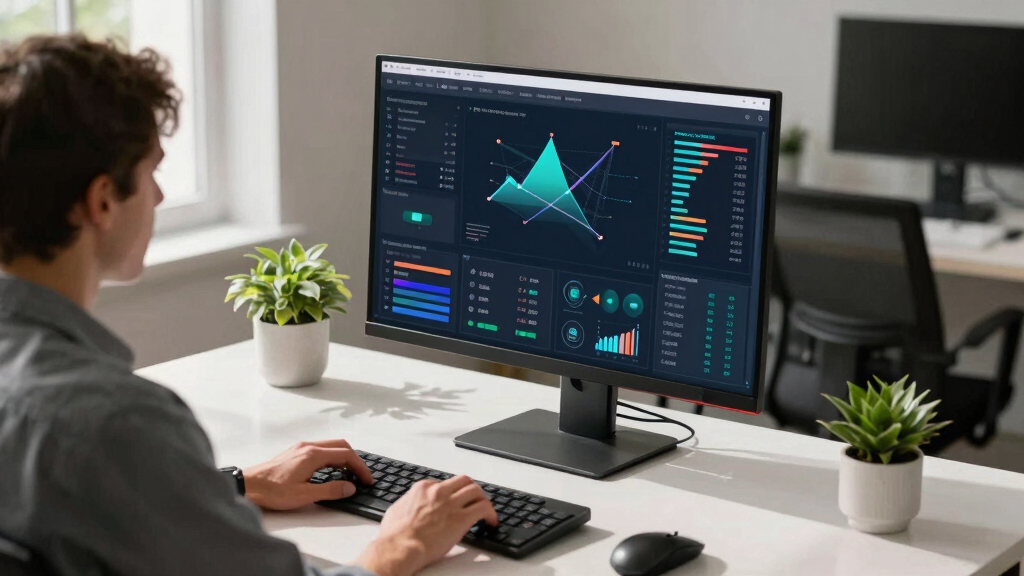

Choosing the best color-accurate monitor for data visualization involves balancing color precision, resolution, and usability. The ASUS ProArt PA279CRV stands out as a top overall choice with excellent factory-calibrated color accuracy and versatile connectivity. The LG 32U990A-S offers a stunning 6K Nano IPS display, ideal for professionals needing extreme detail. On the downside, higher-end models often come with a higher price tag or might sacrifice some flexibility. Continue reading for a detailed comparison to find the monitor that best fits your needs and budget.

Get business pricing on tech for your team
- Business-only prices and quantity discounts
- Tax-exempt purchasing
- Multiple users, one account, clear invoices
Key Takeaways
- Color calibration accuracy varies significantly, with professional-grade models like ASUS ProArt leading the pack.
- Higher resolution monitors tend to deliver more precise data visualization, but they often come at an increased cost.
- Size and aspect ratio influence workspace comfort and multitasking, with larger screens benefiting detailed work.
- Connectivity options, especially USB-C, matter for seamless integration into modern workflows.
- Entry-level options can provide decent color accuracy but often lack the calibration and features needed for professional data visualization.
| Dell 27 Monitor S2725QC 4K UHD IPS, 120Hz, FreeSync Premium |  | Best Overall for Versatile Color and Clarity | Display Size: 27 inches | Resolution: 3840 x 2160 (4K UHD) | Display Technology: LED IPS | VIEW LATEST PRICE | See Our Full Breakdown |
| ASUS ProArt PA279CRV 27-Inch 4K UHD HDR Professional Monitor for Mac |  | Best for Professional Creatives with Demanding Color Needs | Display Size: 27 inches | Resolution: 3840 x 2160 (4K UHD) | Panel Type: IPS | VIEW LATEST PRICE | See Our Full Breakdown |
| Dell UltraSharp U4025QW 40-Inch Curved 5K2K WUHD LED Monitor |  | Best for Immersive, Large-Scale Visualization | Display Size: 39.7 inches | Resolution: 5120 x 2160 pixels | Native Resolution: 5120×2880 | VIEW LATEST PRICE | See Our Full Breakdown |
| LG 32U990A-S 32-Inch Ultrafine 6K Nano IPS Monitor |  | Best for Ultra-High-Resolution Detail Work | Display Size: 32 inches | Resolution: 6144 × 3456 (6K) | Color Coverage: 99.5% Adobe RGB, 98% DCI-P3 | VIEW LATEST PRICE | See Our Full Breakdown |
| ASUS ProArt PA278QV 27-Inch 1440p QHD Professional Monitor |  | Best Budget-Friendly for Color Accuracy in Professional Work | Display Size: 27 inches | Resolution: 2560 x 1440 (QHD) | Color Gamut: 100% sRGB & Rec. 709 | VIEW LATEST PRICE | See Our Full Breakdown |
| ASUS ProArt PA247CV 24-Inch 1080p USB-C Professional Monitor |  | Best for Compact Professional Workspaces | Display Size: 24 inches | Resolution: 1920 x 1080 (Full HD) | Display Technology: LED | VIEW LATEST PRICE | See Our Full Breakdown |
| color-accurate monitor for data visualization | Display Size | Resolution | Connectivity | Display Technology |
|---|---|---|---|---|
| Dell 27 Monitor S2725QC 4K UHD | 27 inches | 3840 x 2160 (4K UHD) | — | LED IPS |
| ASUS ProArt PA279CRV 27-Inch 4 | 27 inches | 3840 x 2160 (4K UHD) | DisplayPort, USB-C 96W, HDMI, USB hub | — |
| Dell UltraSharp U4025QW 40-Inc | 39.7 inches | 5120 x 2160 pixels | — | LED |
| LG 32U990A-S 32-Inch Ultrafine | 32 inches | 6144 × 3456 (6K) | Thunderbolt 5, HDMI, DisplayPort 2.1, USB-C | — |
| ASUS ProArt PA278QV 27-Inch 14 | 27 inches | 2560 x 1440 (QHD) | DisplayPort, HDMI, DVI-D, Mini DP, USB hub | — |
| ASUS ProArt PA247CV 24-Inch 10 | 24 inches | 1920 x 1080 (Full HD) | DisplayPort, HDMI, USB-C with 65W Power Delivery, USB 3.1 hub | LED |
More Details on Our Top Picks
Dell 27 Monitor S2725QC 4K UHD IPS, 120Hz, FreeSync Premium
The Dell S2725QC stands out for delivering vibrant 4K visuals with 99% sRGB coverage, making it an excellent choice for data visualization that requires both accuracy and smoothness. Its 120Hz refresh rate benefits multimedia tasks, setting it apart from more basic 4K monitors like the ASUS ProArt PA278QV. While the color reproduction is impressive, the limited stand adjustability could be a drawback for precise ergonomic setups. Compared with high-end options like LG’s UltraFine 6K, this model offers a balanced mix of performance and price, though it doesn’t match the ultra-high resolution or color depth of the latter. This monitor is best suited for professionals who want reliable color fidelity without sacrificing refresh rate for multimedia versatility.
Pros:- Vivid 4K visuals with 99% sRGB coverage
- 120Hz refresh rate enhances multimedia and interactive work
- Low blue light technology reduces eye fatigue
- Single USB-C connection simplifies desk setup
Cons:- Limited stand adjustability may hinder ergonomic fine-tuning
- No built-in speakers, requiring external audio solutions
Best for: Data visualization professionals seeking a versatile, high-resolution display with smooth performance and good color coverage
Not ideal for: Users requiring extensive ergonomic adjustments or ultra-high resolution for detailed editing beyond 4K
- Display Size:27 inches
- Resolution:3840 x 2160 (4K UHD)
- Display Technology:LED IPS
- Refresh Rate:120Hz
- Response Time:4ms
- Color Gamut:99% sRGB
Our verdict“This monitor offers an excellent balance of color accuracy, resolution, and smooth performance ideal for flexible data visualization tasks.”
ASUS ProArt PA279CRV 27-Inch 4K UHD HDR Professional Monitor for Mac
The ASUS ProArt PA279CRV is tailored for professionals who need precise color accuracy, with 99% DCI-P3 and Adobe RGB coverage and Delta E < 2 calibration. Unlike the Dell S2725QC, it offers extensive ergonomic adjustments, including tilt, swivel, pivot, and height, making it easier to achieve perfect viewing angles for long hours of work. Its factory calibration and 5-year warranty provide peace of mind, but the premium price may be prohibitive for casual users or those on a tighter budget. While the Dell monitor delivers vibrant visuals, the ProArt excels in color fidelity for critical editing, making it the better choice for high-end creative workflows. However, it’s less suited for multimedia or gaming where high refresh rates are prioritized over color precision.
Pros:- High-precision color with Delta E < 2 and wide gamut coverage
- Factory calibrated for accurate colors out of the box
- Multiple ergonomic adjustments for comfort
- Extended 5-year warranty adds durability
Cons:- Higher cost may deter budget-conscious buyers
- Geared specifically toward professional use, limited multimedia features
Best for: Creative professionals who prioritize color accuracy and ergonomic flexibility for detailed editing and design work
Not ideal for: Casual users or gamers seeking higher refresh rates or more affordable options
- Display Size:27 inches
- Resolution:3840 x 2160 (4K UHD)
- Panel Type:IPS
- Color Coverage:99% DCI-P3, 99% Adobe RGB
- Color Accuracy:Delta E < 2
- Connectivity:DisplayPort, USB-C 96W, HDMI, USB hub
Our verdict“This monitor is ideal for demanding creative professionals who need reliable, factory-calibrated color accuracy and ergonomic comfort.”
Dell UltraSharp U4025QW 40-Inch Curved 5K2K WUHD LED Monitor
The Dell UltraSharp U4025QW offers a massive 40-inch curved display with an ultra-high 5120×2160 resolution, ideal for users who need detailed visualizations at a large scale. Its wide 21:9 aspect ratio and bright display make it suitable for multitasking and immersive viewing, setting it apart from smaller or less expansive monitors like the ASUS ProArt PA278QV. However, its size requires a substantial desk space and the high brightness might be overwhelming for some users in dim environments. While the resolution is impressive, it doesn’t match the pixel density of a 6K model like LG’s UltraFine, which is better for pixel-level editing. The U4025QW excels for those who prioritize expansive real estate over pixel density, making it perfect for multi-window data analysis and visualization.
Pros:- Large 40-inch curved screen for immersive multitasking
- High-resolution 5K2K for detailed visualizations
- Multiple USB ports support versatile connectivity
- Bright display suitable for varied lighting conditions
Cons:- Requires significant desk space due to size
- Limited information on adjustable stand features
Best for: Data analysts and visualization specialists working with multiple applications simultaneously on a large, curved display
Not ideal for: Users with limited desk space or those who prefer high pixel density over screen size
- Display Size:39.7 inches
- Resolution:5120 x 2160 pixels
- Native Resolution:5120×2880
- Display Technology:LED
- Brightness:2056 Nit
- Aspect Ratio:21:9
Our verdict“This monitor suits professionals needing expansive screen real estate for multi-application data visualization rather than pixel-level detail.”
LG 32U990A-S 32-Inch Ultrafine 6K Nano IPS Monitor
The LG UltraFine evo 6K distinguishes itself with a stunning 6144×3456 resolution, delivering unparalleled pixel density for detailed data visualization and retouching. Its Nano IPS technology ensures 99.5% Adobe RGB and 98% DCI-P3 coverage, making it highly accurate for color-critical tasks. Compared with the ASUS ProArt, which offers excellent calibration, the LG provides even higher resolution and a broader color spectrum, but at a significantly higher price point. Its Thunderbolt 5 and daisy-chaining capabilities make it versatile but might be complex for non-technical users. This monitor is best suited to professionals who demand the highest resolution and color fidelity for intricate visual work, though its premium cost and large size could be drawbacks for casual or budget-conscious users.
Pros:- Exceptional 6K resolution with high pixel density
- Wide color gamut coverage for accurate, vibrant colors
- Thunderbolt 5 support with daisy chaining
- High contrast ratio for rich black levels
Cons:- Premium price may be prohibitive
- Large size needs ample workspace
- Setup complexity for non-technical users
Best for: High-end creative professionals requiring maximum resolution and color accuracy for detailed visual projects
Not ideal for: Budget-conscious users or those needing a simpler setup without Thunderbolt connectivity
- Display Size:32 inches
- Resolution:6144 × 3456 (6K)
- Color Coverage:99.5% Adobe RGB, 98% DCI-P3
- Contrast Ratio:2000:1
- HDR:DisplayHDR 600
- Connectivity:Thunderbolt 5, HDMI, DisplayPort 2.1, USB-C
Our verdict“This monitor is perfect for professionals demanding the highest resolution and color fidelity, with a focus on detailed visual analysis and editing.”
ASUS ProArt PA278QV 27-Inch 1440p QHD Professional Monitor
The ASUS ProArt PA278QV offers solid color accuracy with Calman Verified calibration, covering 100% sRGB and Rec. 709, making it a practical choice for professional visualization within a limited budget. Its 1440p resolution, while lower than 4K models like the Dell S2725QC, still provides sharp images for data visualization tasks. Its extensive connectivity and ergonomic stand support long hours of work, and the built-in eye care technology reduces strain. Compared to higher-resolution counterparts, it’s more affordable but sacrifices some pixel density and detail, which could matter for very detailed visualizations. This monitor is best for those starting in data visualization or professionals who need reliable color accuracy without the cost of ultra-high resolutions.
Pros:- Calman Verified calibration ensures color accuracy
- Full ergonomic adjustment options
- Good connectivity with multiple ports and USB hub
- Flicker-free and blue light filter reduce eye strain
Cons:- Lower resolution than 4K models limits detail
- Not suited for high-end pixel-level editing or gaming
Best for: Budget-conscious professionals or students seeking accurate colors for visualization and design work
Not ideal for: Users needing ultra-high resolution or pixel-perfect detail for intricate editing
- Display Size:27 inches
- Resolution:2560 x 1440 (QHD)
- Color Gamut:100% sRGB & Rec. 709
- Calibration:Calman Verified, Delta E < 2
- Connectivity:DisplayPort, HDMI, DVI-D, Mini DP, USB hub
- Warranty:5 years
Our verdict“This monitor provides dependable color accuracy and ergonomic comfort at a price point suitable for emerging professionals and students.”
ASUS ProArt PA247CV 24-Inch 1080p USB-C Professional Monitor
The ASUS ProArt PA247CV stands out for its precise factory-calibrated color accuracy, covering 100% sRGB and Rec. 709, making it ideal for color-critical data visualization tasks. Compared to the larger ASUS ProArt PA279CRV, which offers 4K resolution, the PA247CV’s Full HD resolution might seem limiting for detailed data analysis, but it still delivers sharp, consistent colors for most professional workflows. Its USB-C connectivity with 65W power delivery simplifies desk setups, especially for users with limited space. The monitor’s 178-degree viewing angles ensure consistent color from multiple positions, but the lack of detailed response time specs could be a concern for fast-paced editing. While the 75Hz refresh rate is adequate for static visualization, it may fall short for dynamic data scenarios. The 5-year warranty adds reassurance for long-term use. This monitor makes the most sense for data analysts and small creative teams working in tight spaces who prioritize color accuracy over ultra-high resolution.
Pros:- Factory-calibrated with 100% sRGB and Rec. 709 coverage for accurate colors
- Versatile connectivity including USB-C with 65W power delivery
- Supports daisy-chain multi-monitor setups for expanded workspace
- Wide 178-degree viewing angles ensure consistent color from multiple perspectives
Cons:- Lacks detailed response time specifications, which could matter for certain professional tasks
- Limited to 1080p resolution, which may feel restrictive for detailed data visualization
- Price point not specified, potentially higher than entry-level options
Best for: Data visualization professionals needing a reliable, space-efficient monitor with excellent color fidelity
Not ideal for: High-end 4K content creators or users requiring ultra-high resolution for pixel-level detail
- Display Size:24 inches
- Resolution:1920 x 1080 (Full HD)
- Display Technology:LED
- Viewing Angle:178 degrees
- Brightness:1027.8 lumens
- Contrast Ratio:100,000,000:1
- Connectivity:DisplayPort, HDMI, USB-C with 65W Power Delivery, USB 3.1 hub
- Dimensions:13.46″ D x 21.25″ W x 8.32″ H
- Weight:6.3 kg
Our verdict“This monitor is perfect for professionals who need precise color accuracy in a compact form factor, but not for those requiring ultra-high resolution for detailed data analysis.”

How We Picked
These monitors were evaluated based on their factory calibration, color coverage (especially AdobeRGB and DCI-P3), resolution, build quality, and usability features like connectivity and ergonomics. Performance in color accuracy and consistency was prioritized because data visualization depends on precise color reproduction. Cost-to-value ratios also played a role, helping to identify options suitable for different budgets. The ranking reflects a balance between professional-grade color fidelity and practical usability for data analysts, designers, and everyday users who require high color accuracy.| color-accurate monitor for data visualization | Display Technology | Connectivity |
|---|---|---|
| Dell 27 Monitor S2725QC 4K UHD | LED IPS | — |
| ASUS ProArt PA279CRV 27-Inch 4 | — | DisplayPort, USB-C 96W, HDMI, USB hub |
| Dell UltraSharp U4025QW 40-Inc | LED | — |
| LG 32U990A-S 32-Inch Ultrafine | — | Thunderbolt 5, HDMI, DisplayPort 2.1, USB-C |
| ASUS ProArt PA278QV 27-Inch 14 | — | DisplayPort, HDMI, DVI-D, Mini DP, USB hub |
| ASUS ProArt PA247CV 24-Inch 10 | LED | DisplayPort, HDMI, USB-C with 65W Power Delivery, USB 3.1 hub |
Factors to Consider When Choosing Best Color-accurate Monitor For Data Visualization
When selecting the best color-accurate monitor for data visualization, several key factors influence your decision. Understanding these will help you avoid common pitfalls and choose a monitor that aligns with your workflow and budget.Color Accuracy and Calibration
Color precision is fundamental for data visualization. Look for monitors with hardware calibration capabilities and factory calibration reports. A wider color gamut, such as AdobeRGB or DCI-P3, allows for richer, more accurate colors, which can be critical for detailed visual data analysis. Skipping calibration or choosing a monitor with poor color coverage can lead to misleading visualizations, undermining your work’s reliability.
Resolution and Screen Size
Higher resolutions like 4K or 6K provide sharper images and more workspace, enabling detailed data analysis without zooming or scrolling excessively. Larger screens improve comfort and allow for multiple data windows, but they also come with increased costs and desk space requirements. Balancing resolution and size according to your workspace and visual needs is key to maximizing productivity and accuracy.
Connectivity and Compatibility
Modern workflows benefit from versatile connectivity options, especially USB-C, which can transmit data, video, and power through a single cable. Ensure your monitor supports the connections you need and is compatible with your computer or device. Poor connectivity options can complicate your setup, leading to clutter or requiring additional adapters, which might impact signal quality and reliability.
Ergonomics and Build Quality
Adjustability features like height, tilt, swivel, and rotation improve comfort during prolonged periods of data analysis. A sturdy build and good ergonomics reduce fatigue and help maintain accuracy over long sessions. Overlooking these factors can result in discomfort, which may affect your focus and the precision of your visualizations.
Budget and Future Proofing
While professional-grade monitors offer unmatched color fidelity, they can be costly. Consider your current needs and whether a mid-range monitor with good calibration will suffice or if investing in a premium model provides tangible benefits. Also, think about future-proof features like higher resolutions or more versatile ports, which can extend the monitor’s useful lifespan and adaptability.
Frequently Asked Questions
How important is factory calibration for data visualization?
Factory calibration ensures the monitor displays colors as accurately as possible right out of the box, which is critical for data visualization where color precision can impact interpretation. While calibration tools can fine-tune any monitor later, starting with a well-calibrated display reduces setup time and enhances reliability. For professionals whose work depends on exact colors, investing in a monitor with proven calibration is a wise choice.
Is a 6K monitor worth the extra cost for data analysis?
A 6K monitor offers exceptional detail and color depth, beneficial for complex data visualization tasks. However, the extra cost may not be justified unless your work demands extreme precision or you work with very detailed graphics. For most users, a high-quality 4K monitor provides a good balance of clarity, affordability, and compatibility, making it a more practical choice in many cases.
Can I rely on regular consumer monitors for professional data visualization?
While some high-end consumer monitors may offer decent color accuracy, they often lack the calibration features and color coverage needed for professional data work. For critical tasks, professional-grade monitors with hardware calibration and wider gamuts are preferable. Relying solely on consumer models risks inaccuracies that can compromise your data interpretation.
What is the best size for a monitor used in data visualization?
The ideal size depends on your workspace and workflow, but generally, 27 to 32 inches strikes a good balance between detail and comfort. Larger screens, like 40 inches or more, can enhance multitasking and detail perception but require more space and higher investment. Smaller monitors may be less suitable for extensive data analysis but can still serve well in tight spaces or for supplementary tasks.
Should I prioritize resolution over color coverage?
Both resolution and color coverage are important, but for data visualization, color accuracy often takes precedence because it directly impacts how data is perceived and interpreted. A high-resolution display with poor color coverage can still produce misleading visuals. Ideally, choose a monitor that offers both high resolution and broad color gamut, but if you must prioritize, focus on color fidelity for reliable data representation.
Conclusion
For general data professionals and those just starting out, the ASUS ProArt PA279CRV offers a compelling mix of color accuracy, usability, and affordability. For those requiring maximum detail and fidelity, the LG 32U990A-S provides a stunning 6K Nano IPS display, making it ideal for high-end workflows. Budget-conscious users should consider mid-range options that balance calibration and features without the premium price. Finally, professionals seeking the utmost precision should look toward high-end models with hardware calibration and extensive color coverage, ensuring their visualizations are both accurate and reliable.Halloween Picks
halloween
As an affiliate, we earn on qualifying purchases.