

To fix your help center in 7 days, start by analyzing customer feedback and support analytics to identify main pain points and content gaps. Focus on quick wins, like updating popular articles, improving navigation, and clarifying information. Simplify your design, use clear labels, and enhance accessibility. Track your progress and make ongoing adjustments. If you want to turn your support issues around fast, uncover the essential steps to get started right here.
Key Takeaways
- Conduct a thorough audit of support content, customer feedback, and analytics to identify gaps and pain points.
- Prioritize quick fixes for high-impact issues causing customer frustration and escalations.
- Simplify navigation with clear labels, logical groupings, and regular content updates for accuracy.
- Enhance readability by using plain language, headings, bullet points, and accessible design principles.
- Continuously measure performance, gather feedback, and refine your Help Center for ongoing improvement.
Help Center support analytics tools
As an affiliate, we earn on qualifying purchases.
As an affiliate, we earn on qualifying purchases.
Diagnose Why Your Help Center Isn’t Meeting Customer Needs

To make certain your Help Center effectively meets customer needs, you first need to identify where it falls short. Start by analyzing customer feedback; their comments reveal recurring issues and frustrations. Support analytics are equally valuable, showing you which articles are most viewed, abandoned, or lead to follow-up inquiries. When combined, these insights help pinpoint gaps in your content and usability. Are customers repeatedly searching for information that doesn’t exist or struggling to find answers quickly? Do certain topics generate high support tickets? By systematically reviewing feedback and analytics, you can understand where your Help Center is falling flat. Incorporating principles of sound healing science can also inspire more effective communication strategies within your support resources. Developing a clear troubleshooting process ensures customers can resolve issues efficiently on their own. This clarity allows you to prioritize updates, improve clarity, and ensure your support resources truly address customer needs. Additionally, employing wave and wind principles in your content delivery can enhance the clarity and calming effect of your support materials, making it easier for customers to find solutions. Recognizing the importance of color accuracy in visual presentation can also improve how instructions and guides are perceived, reducing confusion. Understanding user experience design best practices, informed by research, can further optimize your Help Center’s effectiveness.
Customer feedback survey software
As an affiliate, we earn on qualifying purchases.
As an affiliate, we earn on qualifying purchases.
Find the Biggest Gaps and Pain Points in Your Support Content

Find the biggest gaps and pain points in your support content. This feedback reveals where your content isn’t addressing customer needs effectively. Check your support articles for content gaps—areas where information is missing or unclear. Use analytics to see which articles have high bounce rates or low engagement, indicating trouble spots. Talk to your support team, too; they often have direct insights into common customer frustrations. Prioritizing these pain points allows you to target the most critical gaps first, ensuring your support content becomes more helpful and aligned with what customers actually need. Additionally, incorporating customer feedback about flavors or textures can help tailor your support to specific issues. Understanding cybersecurity vulnerabilities in your content can further prevent potential security risks. Regularly reviewing your content strategy can help identify new areas for improvement and prevent future gaps. Incorporating industry standards related to Gold IRA markets can also enhance the accuracy and reliability of your support information. This focused approach sets the stage for meaningful improvements.
Help Center navigation improvement tools
As an affiliate, we earn on qualifying purchases.
As an affiliate, we earn on qualifying purchases.
Prioritize Quick Wins That Make a Real Difference

Start by pinpointing high-impact issues that frustrate your customers and fix them first. Simplify navigation so users find answers faster without getting lost. Keep your content fresh and relevant by updating it regularly to guarantee it always meets their needs. Incorporate evidence‑informed guidance into your content to ensure it remains accurate and trustworthy. Additionally, regularly reviewing your content quality standards can help maintain consistent, reliable information across your site. Incorporating AI-powered home automation insights can also help you predict and address common customer concerns proactively, especially through power tools and heavy‑duty equipment troubleshooting tips and safety guidelines. Leveraging content management best practices ensures your updates are systematic and effective.
Identify High-Impact Issues
Have you ever wondered which issues in your help center create the biggest impact for customers? To find out, analyze customer feedback and support analytics. These insights reveal recurring problems that frustrate users and hinder their experience. Focus on issues that, when fixed, will improve satisfaction quickly. Here are ways to identify high-impact issues:
- Look for common complaints in customer feedback.
- Review support ticket trends for frequent topics.
- Prioritize problems that cause the most escalations.
- Measure the time customers spend searching for solutions.
- Track the bounce rate on help articles with high exit rates.
- Incorporate content analysis to better understand which articles need improvement.
- Evaluate solution effectiveness to determine which fixes lead to real customer satisfaction improvements.
- Consider problem recurrences to identify issues that repeatedly affect users over time.
- Pay attention to odor-related reports, as subtle cues like unusual smells can indicate underlying issues that impact customer trust and safety.
- Additionally, assess content quality to ensure help articles are clear, accurate, and comprehensive for users.
Simplify Navigation Paths
Once you’ve identified the issues most frustrating to customers, the next step is making it easier for them to find solutions. Simplify navigation paths by establishing a clear visual hierarchy that guides users effortlessly. Use concise labels and logical groupings aligned with your user personas, ensuring each visitor finds relevant content quickly. Remove unnecessary menu options and prioritize the most common questions. Group related topics to reduce clutter and create a straightforward flow from general categories to specific answers. Consistent design elements, like icons and colors, help users recognize familiar paths. Incorporating user-centric design principles and an understanding of content organization ensures the structure remains intuitive and responsive to customer needs. Paying attention to website usability can further enhance the overall experience. Additionally, applying effective navigation strategies can significantly improve how users interact with your site, reducing frustration. Remember, your goal is to eliminate confusion and make navigation intuitive, so customers spend less time searching and more time resolving their issues efficiently. To support these improvements, focusing on content clarity can make a substantial difference in guiding users smoothly.
Update Content Regularly
Regularly updating your help center content is one of the quickest ways to improve customer experience and reduce frustration. When you focus on content relevance and update frequency, you guarantee information stays accurate and helpful. Outdated content can mislead customers and increase support requests. Prioritize quick wins by reviewing high-traffic articles first, removing obsolete details, and adding new insights. Keep your content fresh and aligned with customer needs. Consider these actions:
- Review popular articles weekly for updates
- Remove outdated or irrelevant info
- Add recent product or policy changes
- Incorporate customer feedback for clarity
- Schedule regular content audits every month
Accessible support content templates
As an affiliate, we earn on qualifying purchases.
As an affiliate, we earn on qualifying purchases.
Make Simple Fixes to Clarify and Improve Accessibility

You can improve accessibility by using clear language and simple layouts that everyone can understand. Descriptive labels and thoughtful use of colors help users navigate your help center more easily. Small adjustments like these make a big difference in ensuring all customers find the support they need.
Clear Language and Simple Layouts
Clear language and simple layouts are essential for making your help center accessible and easy to understand. When your content is straightforward, customers can find answers faster and feel confident in your support. To improve, gather customer feedback to identify confusing or unclear sections. Maintain content consistency so users know what to expect across pages. Focus on these simple fixes:
- Use plain language, avoiding jargon or complex terms
- Break information into clear, digestible sections
- Highlight key points with bullet points or headings
- Remove unnecessary clutter from pages
- Ensure layout is intuitive and easy to navigate
Use Descriptive Labels and Colors
Using descriptive labels and colors can greatly enhance your help center’s clarity and accessibility. Color coding helps users quickly identify categories or priorities, reducing confusion. Make certain your labels are clear and specific; vague labels hinder understanding. Use straightforward language that accurately describes each section or topic. Incorporate color strategically—avoid overusing it or relying solely on color to convey meaning, as this can pose accessibility issues for color-blind users. Ensure there’s sufficient contrast between text and background for readability. Consistent label clarity and thoughtful color choices make navigation intuitive, helping customers find answers faster. Simple, well-labeled sections combined with effective color coding create a more accessible, user-friendly help center that truly meets customer needs.
Improve Navigation and Design for Better Customer Experience
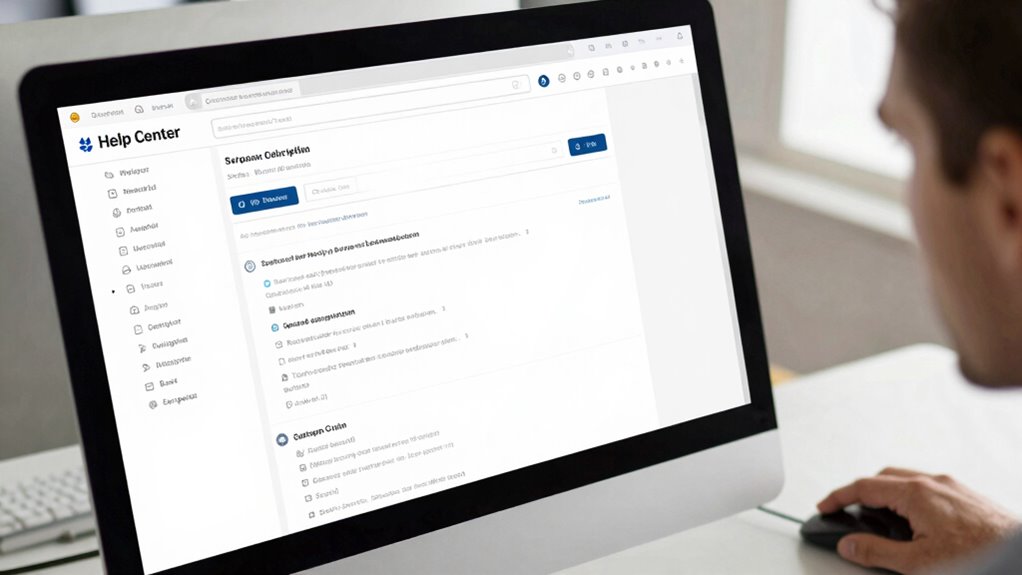
To enhance the customer experience, improving navigation and design is essential. Clear visual hierarchy guides users effortlessly through your help center, highlighting key sections and reducing confusion. Use consistent color schemes to create a cohesive look that reinforces your brand and makes navigation intuitive. Simplify menus and organize content logically so customers find answers quickly. Focus on clean layouts with ample white space to prevent overwhelm. Incorporate clickable buttons and prominent search bars to streamline access. Regularly test your design on different devices to ensure responsiveness. By refining these elements, you make it easier for customers to navigate, find information, and resolve issues faster, leading to increased satisfaction and loyalty.
Measure Your Results and Adjust for Ongoing Success

Measuring your help center’s performance is essential to understanding what works and where improvements are needed. Customer feedback offers direct insights into your users’ experiences, highlighting pain points and areas for enhancement. Performance metrics, like resolution times, FAQ usage rates, and customer satisfaction scores, provide quantitative data to track progress over time. Regularly reviewing these indicators helps you identify trends and measure the impact of your updates. Adjust your strategies based on this information, testing new solutions and refining existing ones. By staying attentive to both qualitative feedback and performance metrics, you ensure your help center evolves with your customers’ needs. This ongoing process keeps your support system effective, boosting customer satisfaction and loyalty long-term.
Develop a Long-Term Support Strategy to Keep Your Help Center Effective

Building a long-term support strategy requires you to proactively plan for ongoing improvements and adaptability. To keep your Help Center effective, regularly gather customer feedback to identify pain points and opportunities. Use this insight to refine content and support processes. Invest in support training to ensure your team stays knowledgeable and confident in handling evolving issues. Additionally, consider implementing these strategies:
- Schedule periodic content reviews to update or expand FAQs
- Foster a culture of continuous learning through regular training sessions
- Monitor support metrics and customer feedback for trends
- Incorporate feedback into your support workflows
- Stay adaptable by revising your strategy based on performance data
Frequently Asked Questions
How Often Should I Review and Update My Help Center Content?
You should review and update your help center content at least quarterly through a content audit. Regularly checking guarantees your information stays accurate and relevant. Update frequency depends on how quickly your products or policies change—more frequent updates might be necessary for fast-paced industries. By staying proactive, you improve customer satisfaction and reduce support queries, keeping your help center an effective resource.
What Tools Can Help Me Track Customer Support Issues Effectively?
You can track customer support issues effectively using customer support analytics and ticket management systems. These tools help you monitor issue trends, response times, and customer satisfaction. With analytics, you gain insights into recurring problems, while ticket management systems organize and prioritize support tickets. Together, they enable you to identify bottlenecks, improve your help center, and deliver faster, more effective support. Make sure to review and act on these metrics regularly.
How Do I Train Staff to Improve Help Center Interactions?
Think of training your staff as tuning a finely crafted instrument—you want harmony in every interaction. Use engaging training strategies that spark curiosity and foster real-world practice. Encourage staff engagement through role-playing, feedback sessions, and gamification. By making learning interactive and relevant, your team will hit the right notes, transforming help center interactions into memorable, helpful experiences that boost customer satisfaction and loyalty.
What Are Common Mistakes to Avoid in Help Center Redesign?
Avoid misleading headlines that promise quick fixes but deliver little. Steer clear of overly technical language that confuses customers instead of helping them. Focus on clear, concise, and honest messaging, ensuring users quickly find solutions. Test your redesign with real users to identify confusing elements. Keep navigation simple and intuitive. By doing so, you improve customer experience and reduce frustration, making your help center genuinely helpful.
How Can I Gather Customer Feedback to Improve Support Content?
You should actively seek customer feedback through surveys, live chat, and social media to understand their needs. Encourage customers to share their experiences with your support content, asking specific questions about clarity and usefulness. Analyze this feedback to identify common issues and gaps. Use these insights to continuously improve your support content, ensuring it’s relevant, easy to navigate, and truly helpful for your customers’ problems.
Conclusion
Think of your help center as a lighthouse guiding stranded ships. When it’s clear, accessible, and well-lit, customers find their way easily. But if it’s foggy or cluttered, they’ll struggle and drift away. Fixing your support hub in just seven days is like clearing the fog—restoring clarity and trust. Keep refining your beacon so it always leads customers safely home, ensuring your support stays bright and effective.