

Automation inventory might seem dull until an urgent moment hits. You highlight assets, quickly identify shortages, and automate reordering, saving precious time. Manual tracking risks mistakes that can delay repairs or cause errors during crises. System integration keeps data accurate, helping you respond faster and more efficiently. By automating, you turn tedious tasks into strategic tools that boost operational resilience. Stay with us to discover how automation can truly save the day when it matters most.

Get business pricing on tech for your team
- Business-only prices and quantity discounts
- Tax-exempt purchasing
- Multiple users, one account, clear invoices
Key Takeaways
- Manual inventories are often overlooked until urgent situations demand quick, accurate asset tracking.
- System integration ensures real-time data access, reducing errors during critical moments.
- Automated inventories streamline emergency responses by rapidly identifying shortages and locating assets.
- Reliable automation transforms tedious tasks into strategic tools, enhancing operational resilience.
- Investing in automation provides long-term efficiency and accuracy, crucial when speed and precision matter most.
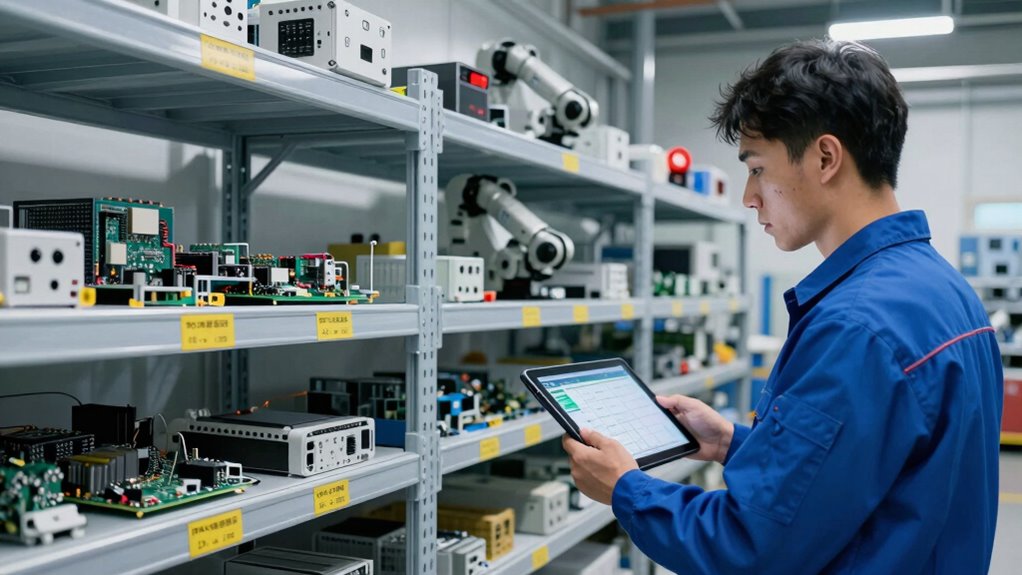
Automation inventories often seem dull and unnecessary—until the moment you desperately need one. At first glance, they might appear as just another tedious task, involving manual tracking of assets, supplies, or equipment. You might think it’s enough to keep a simple spreadsheet or rely on outdated paper records. But when an urgent situation hits—like a sudden equipment failure or a stock discrepancy—you realize how critical a well-maintained automation inventory truly is. It’s not just about knowing what you have; it’s about having instant access to accurate data that can make or break your response time.
When you rely on manual tracking, mistakes are easy to make. You might forget to update records, overlook misplaced items, or miscount inventory during hectic periods. These errors can cascade into bigger problems, such as delays in repairs or ordering the wrong parts. That’s where system integration becomes a game-changer. Automated inventory systems connect seamlessly with other business tools—like procurement platforms, maintenance software, or ERP systems—so your data stays current and accurate across all platforms. Instead of manually updating multiple spreadsheets or databases, system integration ensures that everything is synchronized in real time. This reduces errors, saving you time and preventing costly mistakes.
In an emergency, having an integrated system means you can quickly pull up detailed inventory reports, identify shortages, or locate critical assets without rummaging through piles of paperwork. You can generate real-time updates on stock levels, identify which items need replenishment, and even automate reordering processes. This streamlined approach helps you respond faster, whether you’re addressing a supply chain disruption or conducting a routine audit. Instead of wasting precious minutes on manual tracking, you can focus on making strategic decisions based on reliable data. Additionally, automation tools help minimize human error, ensuring the accuracy of your inventory data in critical moments. Investing in system integration enhances not only accuracy but also overall operational resilience, allowing your team to adapt quickly to unforeseen challenges. Recognizing the importance of inventory management can significantly improve your ability to handle emergencies efficiently.
Over time, investing in an automated inventory system built with strong system integration becomes a strategic advantage. It transforms a seemingly dull, administrative task into a powerful tool that enhances operational efficiency and resilience. When you finally experience the difference of instant data access and error reduction, you’ll wonder why you didn’t prioritize automation earlier. In the end, it’s not just about avoiding chaos during crises; it’s about proactively managing your resources with precision and confidence. That’s the true value of a well-executed automation inventory—something you’ll be glad you had when it’s most needed.
automated inventory management system
As an affiliate, we earn on qualifying purchases.
As an affiliate, we earn on qualifying purchases.
Frequently Asked Questions
How Often Should I Update My Automation Inventory?
You should update your automation inventory regularly, ideally monthly or whenever you implement significant changes. Frequent automation tracking guarantees your inventory accuracy remains reliable, preventing errors and inefficiencies. Keeping your automation details current helps you quickly identify outdated or redundant processes, saving you time and resources. Consistent updates also prepare you for troubleshooting or scaling operations, making your automation system more effective and adaptable to your evolving needs.
What Tools Are Best for Managing Automation Inventories?
Think of automation management as a well-organized library; the right tools keep your shelves in order. Tools like Zapier, Airtable, or ServiceNow excel at automation tracking and inventory categorization, making it easier to find what you need instantly. They streamline updates and keep your inventory fresh, so when a crisis hits, you’re ready to act swiftly. Choose the one that fits your workflow and keeps your automation universe tidy and accessible.
How Do I Prioritize Automation Tasks in My Inventory?
To prioritize automation tasks, start with a workflow analysis to identify bottlenecks and high-impact areas. Focus on automations that deliver quick wins and improve efficiency first. Use resource allocation wisely by assigning tasks based on team strengths and workload. Regularly review your inventory to adjust priorities as business needs evolve, ensuring you’re tackling the most valuable automations first, which ultimately maximizes ROI and streamlines operations.
Can Automation Inventory Improve Overall Business Efficiency?
Yes, automation inventory can considerably boost your overall business efficiency. By implementing automation tracking, you gain clear insights into your processes, helping identify bottlenecks. This enables you to focus on process optimization, reducing manual effort and increasing consistency. With a well-maintained automation inventory, you streamline workflows, save time, and improve accuracy, ultimately leading to faster decision-making and enhanced productivity across your business operations.
What Common Mistakes Should I Avoid With Automation Inventories?
You should avoid neglecting thorough automation documentation and skipping regular inventory auditing. Failing to keep detailed records can lead to gaps or outdated info, causing delays when you need fast access. Rushing audits or not updating your inventory regularly risks inaccuracies. Stay proactive by documenting every change and scheduling consistent audits, ensuring your automation inventory remains reliable and ready whenever you need it most.
As an affiliate, we earn on qualifying purchases.
Conclusion
Remember, a stitch in time saves nine. Keeping your automation inventory organized might seem dull now, but when speed counts, you’ll be glad you did. Having everything in place means no scrambling or delays—you’re always prepared. So, don’t wait for the chaos to hit; stay proactive. Because in the end, staying ahead isn’t just smart—it’s essential. Invest a little today to save yourself a lot of trouble tomorrow.
As an affiliate, we earn on qualifying purchases.
system integration inventory tools
As an affiliate, we earn on qualifying purchases.
As an affiliate, we earn on qualifying purchases.
Fall Picks
fall essentials
As an affiliate, we earn on qualifying purchases.