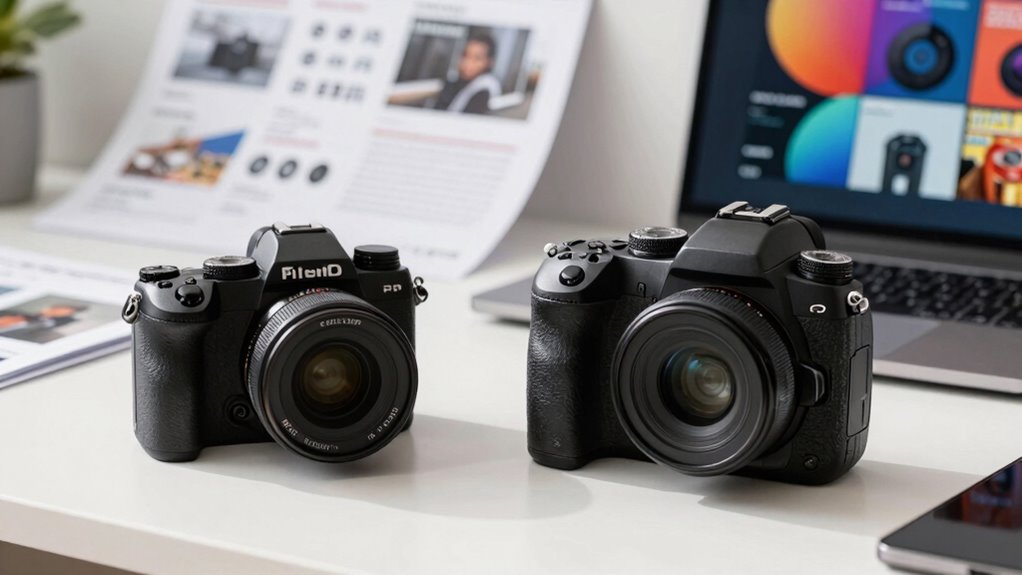

For your brand content team, choosing between mirrorless and DSLR cameras depends on your priorities. If portability, speed, and quick workflow are key, a mirrorless camera is a smart pick, as it offers compactness and fast autofocus for fast-paced shoots. On the other hand, a DSLR provides better battery life, broader lens options, and traditional controls for more detailed and reliable results. To understand which option best fits your team’s needs, keep exploring how each camera type can enhance your creative process.
Listen free for 30 days with Audible
Thousands of audiobooks and originals — cancel anytime.
As an affiliate, we earn on qualifying purchases.
Key Takeaways
- Mirrorless cameras offer greater portability and faster setup, ideal for dynamic brand content shoots on the move.
- DSLRs provide superior battery life and broader lens options, beneficial for extensive or specialized shoots.
- Mirrorless models enable quick image transfer and seamless workflow with built-in Wi-Fi and Bluetooth.
- Both camera types deliver high-quality images, but mirrorless sensors process data more efficiently for faster editing.
- Choice depends on balancing portability, lens versatility, and traditional controls based on team shooting needs.
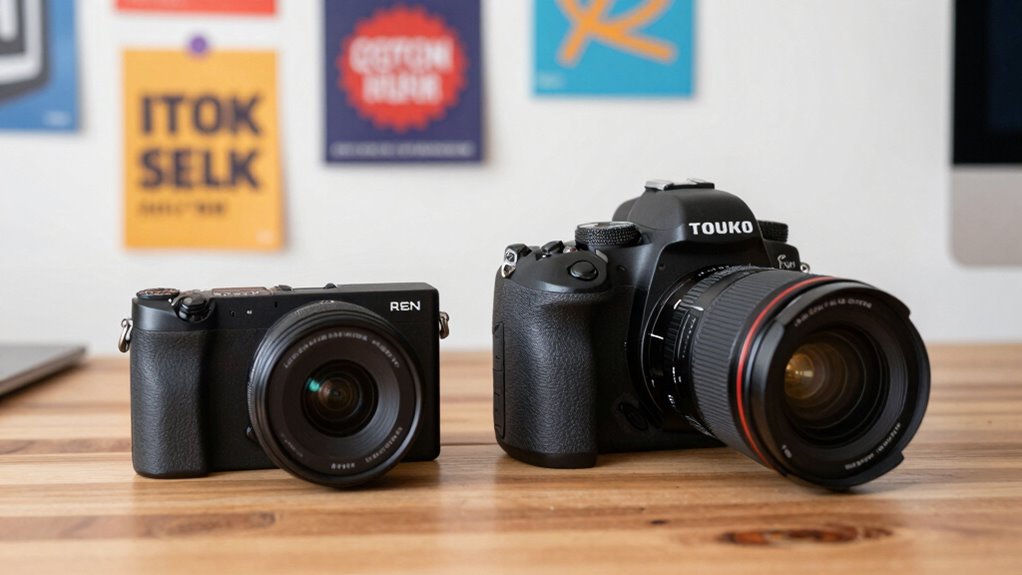
Choosing the right camera gear can make a significant difference for brand content teams, especially when balancing quality, speed, and flexibility. When deciding between mirrorless and DSLR cameras, you need to think about how each suits your workflow, including lighting techniques and editing processes. Mirrorless cameras are known for their compact design and lighter weight, making them ideal if you’re often on the move or need to shoot quickly without sacrificing image quality. They typically feature faster autofocus systems, which help you capture sharp images in dynamic lighting conditions, streamlining your lighting techniques for consistent results. This speed allows you to adapt quickly to different environments, capturing content that aligns perfectly with your brand’s style.
On the other hand, DSLRs have been the industry standard for years, offering robust build quality and longer battery life. If your team relies heavily on traditional lighting setups or prefers a more tactile approach to camera controls, DSLRs might feel more comfortable. They also tend to have a broader selection of lenses, which can be advantageous when customizing your lighting techniques for various shooting scenarios. When it comes to editing workflows, both camera types produce high-quality images, but mirrorless cameras often generate files that are more compatible with modern editing software, thanks to their mirrorless sensors’ advanced data processing. This can cut down on post-production time, allowing you to deliver content faster. Additionally, sensor technology advancements have further enhanced image quality and efficiency in both camera types, making the decision even more nuanced. Moreover, the compact design of mirrorless cameras can also help reduce setup and shooting time, especially in fast-paced environments.
Speed is another critical factor. Mirrorless cameras shoot silently and often have faster burst modes, enabling you to capture multiple frames in quick succession—a huge plus when working under tight deadlines or capturing fleeting moments. DSLRs, however, still excel in handling high-speed bursts and can be more reliable for long shooting sessions, especially in environments with demanding lighting conditions. Understanding your team’s workflow can help you determine which camera aligns best with your production style and post-processing routines. Your choice should also consider how seamlessly your camera integrates with your editing workflows. Many mirrorless models offer built-in Wi-Fi and Bluetooth, making it easier to transfer images directly to your editing station or mobile device, speeding up your content creation pipeline. Additionally, staying informed about latest camera innovations can help you make a more strategic decision, as ongoing technological developments continue to enhance both camera types.
Additionally, understanding the evolution of camera technology can help you make a more informed decision, as both types continue to advance in features and performance. Ultimately, both mirrorless and DSLR cameras can serve brand content teams well. Your decision hinges on your specific needs: if you prioritize portability, speed, and modern connectivity, a mirrorless camera might be the better fit. If you value battery longevity, a more extensive lens selection, and a traditional feel, a DSLR could be more suitable. Either way, mastering lighting techniques and optimizing your editing workflows will ensure the best possible content, regardless of the camera type you choose.
mirrorless camera for brand content
As an affiliate, we earn on qualifying purchases.
As an affiliate, we earn on qualifying purchases.
Frequently Asked Questions
How Do Mirrorless and DSLR Cameras Compare in Low-Light Performance?
In low-light conditions, mirrorless and DSLR cameras both perform well, but mirrorless cameras often have an edge due to their advanced sensor sensitivity. They typically produce less image noise at high ISO settings, giving you clearer shots in dim environments. DSLR cameras still excel with larger sensors, but mirrorless options are catching up quickly, making them a reliable choice for capturing sharp, low-light images without too much noise.
What Are the Maintenance Differences Between Mirrorless and DSLR Cameras?
You’ll find that maintenance differs mainly in lens durability and battery longevity. DSLR cameras have more robust, weather-sealed bodies, making their lenses more durable against rough conditions. They also tend to have longer battery life, so you won’t need to change batteries as often. Mirrorless cameras, on the other hand, usually require more careful handling of their lenses and batteries since they’re often more compact and sensitive to wear.
How Does Autofocus Speed Vary Between Mirrorless and DSLR Models?
You’ll find that autofocus speed generally favors mirrorless models, especially with real-time tracking and eye detection, providing faster autofocus accuracy. Mirrorless cameras excel in focusing versatility because they use advanced on-sensor autofocus systems, capturing subjects quickly and precisely. DLSRs, however, might lag slightly in autofocus speed but still offer reliable performance. Overall, for brand content teams, mirrorless cameras often deliver quicker, more versatile autofocus, helping you capture sharp images efficiently.
Are There Specific Brands Better Suited for Brand Content Teams?
Did you know that over 60% of professional brand content teams prefer Canon and Sony? These brands excel in brand compatibility and user experience, making them ideal choices. Canon offers reliable autofocus and excellent color science, while Sony provides compact designs and innovative features. Your choice depends on your specific needs, but these brands guarantee smooth workflows and top-quality visuals, helping you create compelling brand content effortlessly.
What Are the Long-Term Cost Implications of Each Camera Type?
You’ll find that mirrorless cameras often have higher upfront costs but can lower long-term expenses due to their lighter weight and compact design, making them easier to handle over extended shoots. DSLR cameras might have cheaper initial prices but can incur higher maintenance costs and need more accessories. Consider your budget and ergonomic needs, as a camera’s comfort and durability impact long-term costs, making mirrorless models potentially more cost-effective over time.
DSLR camera with long battery life
As an affiliate, we earn on qualifying purchases.
As an affiliate, we earn on qualifying purchases.
Conclusion
Choosing between mirrorless and DSLR cameras is like picking the right brush for your masterpiece — each has its own strengths. Mirrorless cameras offer agility and innovation, while DSLRs provide the timeless depth of tradition. Whichever you select, remember that your camera is just a tool; your vision and storytelling are what truly bring your brand to life. Embrace the one that fuels your creative fire, and let your content shine like a beacon in the night.
compact mirrorless camera with Wi-Fi
As an affiliate, we earn on qualifying purchases.
As an affiliate, we earn on qualifying purchases.
As an affiliate, we earn on qualifying purchases.
Fall Picks
fall essentials
As an affiliate, we earn on qualifying purchases.