

If you handle large data sets or run analytics workloads, 10GbE networking is essential for fast, reliable data transfer. It minimizes latency, reducing lag and improving real-time insights. With higher speeds, you can transfer bigger files quickly and support multiple users or systems without bottlenecks. Upgrading to 10GbE guarantees your infrastructure stays scalable and efficient as data volumes grow. To uncover how this technology can boost your analytics performance, keep exploring the details.

Get business pricing on tech for your team
- Business-only prices and quantity discounts
- Tax-exempt purchasing
- Multiple users, one account, clear invoices
Key Takeaways
- When high-speed data transfer and minimal latency are critical for real-time analytics and timely decision-making.
- For handling large datasets efficiently, reducing bottlenecks in big data and machine learning workflows.
- To support scalable infrastructure that accommodates increasing data volumes without performance degradation.
- During upgrades to existing networks to enhance throughput with minimal disruption and future-proof the system.
- When maintaining high reliability and low latency is essential for accurate and fast data processing.
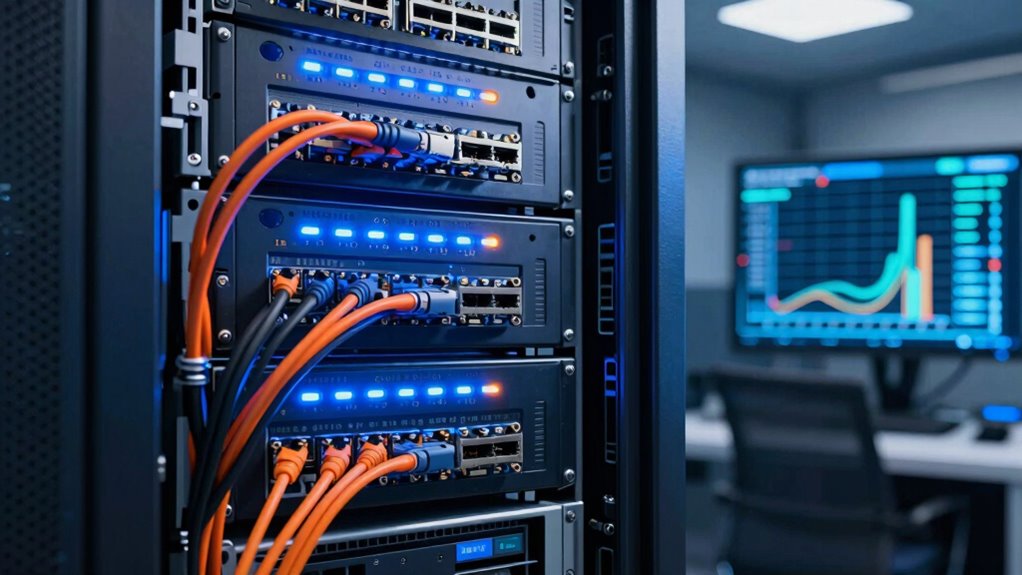
As data demands continue to grow, 10GbE networking has become an essential solution for high-speed connections in data centers, enterprise environments, and even advanced home setups. When handling analytics workloads, the significance of a fast and reliable network cannot be overstated. You need to minimize network latency so data moves quickly without delays, enabling real-time insights and faster decision-making. High network latency can introduce lag, disrupt data processing, and slow down analytics tasks, making 10GbE a critical upgrade for those who rely on timely information.
With 10GbE, your data throughput increases dramatically, allowing larger datasets to transfer more efficiently. Instead of waiting for files to upload or download, you get the speed necessary for complex analytics processes that involve massive amounts of data. This boost in data throughput means your systems can handle higher volumes of information simultaneously, reducing bottlenecks and improving overall performance. When working with big data or machine learning models, having a network that supports rapid data exchange is essential to avoid delays that can hamper productivity or lead to missed insights.
10GbE boosts data transfer speeds, reducing bottlenecks for big data and machine learning workloads.
In environments where multiple servers or storage devices are interconnected, 10GbE ensures you have the bandwidth needed to keep everything running smoothly. This is especially important when running parallel analytics tasks or consolidating data from diverse sources. The ability to sustain high data throughput means you can process and analyze information in near real-time, making your workflows more efficient. Plus, a lower network latency ensures that data packets arrive promptly, reducing the chance of timeouts or synchronization issues that could compromise data accuracy. Additionally, network scalability is critical for accommodating future increases in data volume without significant disruptions. Implementing robust network infrastructure can further optimize performance and reliability.
Furthermore, 10GbE’s compatibility with existing infrastructure makes it a practical choice for upgrades. It provides a significant performance leap without requiring a complete overhaul of your network. You can integrate 10GbE switches and NICs into your current setup, ensuring that your analytics workloads are not hindered by outdated or slow connections. This upgrade helps future-proof your environment, preparing it for even larger data volumes and more demanding applications. Investing in high-performance networking hardware is also crucial to fully leverage the benefits of 10GbE.
Ultimately, when your work depends on quick, reliable access to vast amounts of data, 10GbE networking becomes indispensable. It offers the high data throughput necessary to handle big workloads and minimizes network latency, ensuring your analytics processes are fast, efficient, and accurate. Whether in a data center or an enterprise setting, investing in 10GbE means you’re equipping yourself with the speed and reliability needed to stay ahead in today’s data-driven world. High-speed connections are crucial for maintaining optimal analytics performance.
As an affiliate, we earn on qualifying purchases.
Frequently Asked Questions
How Does 10GBE Compare to Other High-Speed Networking Options?
Compared to other high-speed networking options, 10GbE offers a great balance of bandwidth scaling and network compatibility. It’s faster than standard Gigabit Ethernet, making it ideal for analytics workloads that demand quick data transfer. While options like 40GbE or 100GbE provide even higher speeds, they may require more complex infrastructure. You’ll find 10GbE fits well into most existing setups, providing reliable, scalable performance without unnecessary complexity.
What Are the Cost Implications of Deploying 10GBE?
Deploying 10GbE involves significant cost considerations. You should conduct a thorough cost analysis to evaluate expenses like switches, network cards, and cabling, which can be higher than traditional Gigabit Ethernet. Budget considerations also include ongoing maintenance and potential upgrades. While initial costs are elevated, the performance gains can justify the investment for demanding analytics workloads, helping you decide if the improved speed aligns with your organization’s financial planning.
Is 10GBE Suitable for Small-Scale Analytics Workloads?
You’ll find that 10GbE networking isn’t typically necessary for small-scale analytics workloads, as most can easily handle lower speeds. Studies show that many small businesses see diminishing returns beyond 1GbE. For small-scale analytics suitability, investing in 10GbE might be overkill, unless you anticipate rapid data growth or need faster transfer times for specific tasks. For now, a solid 1GbE network usually suffices.
How Does 10GBE Impact Network Latency?
10GbE considerably reduces network latency, helping you achieve faster data transfers. With bandwidth optimization, it minimizes delays during large data exchanges, enabling smoother analytics workloads. By lowering latency, your systems respond quicker, improving overall performance. This is especially important when handling real-time data or high-volume tasks. You’ll notice quicker insights, less bottlenecking, and more efficient processing, making 10GbE a smart choice for demanding analytics environments.
What Hardware Upgrades Are Necessary for 10GBE Implementation?
To implement 10GbE networking, you need hardware upgrades like fiber optics cables, which offer high-speed data transfer. Replace existing switches and network interface cards with 10GbE-compatible models, ensuring your network topology supports the increased bandwidth. Upgrading your routers and switches to 10GbE-capable devices is essential. These upgrades will optimize your network for faster analytics workloads, reducing latency and improving overall data processing efficiency.
As an affiliate, we earn on qualifying purchases.
Conclusion
As you consider whether 10GbE networking is right for your analytics workloads, imagine the difference it could make—faster data transfer, smoother processing, and quicker insights. Can your current setup keep up with the growing demand for real-time analytics? Upgrading might just be the boost you need to stay ahead. When speed and efficiency matter most, isn’t it worth investing in a network that can handle the load?
As an affiliate, we earn on qualifying purchases.
As an affiliate, we earn on qualifying purchases.
Fall Picks
fall essentials
As an affiliate, we earn on qualifying purchases.