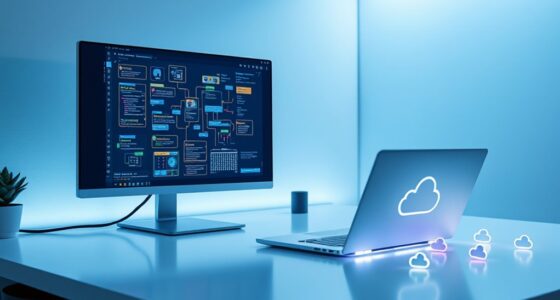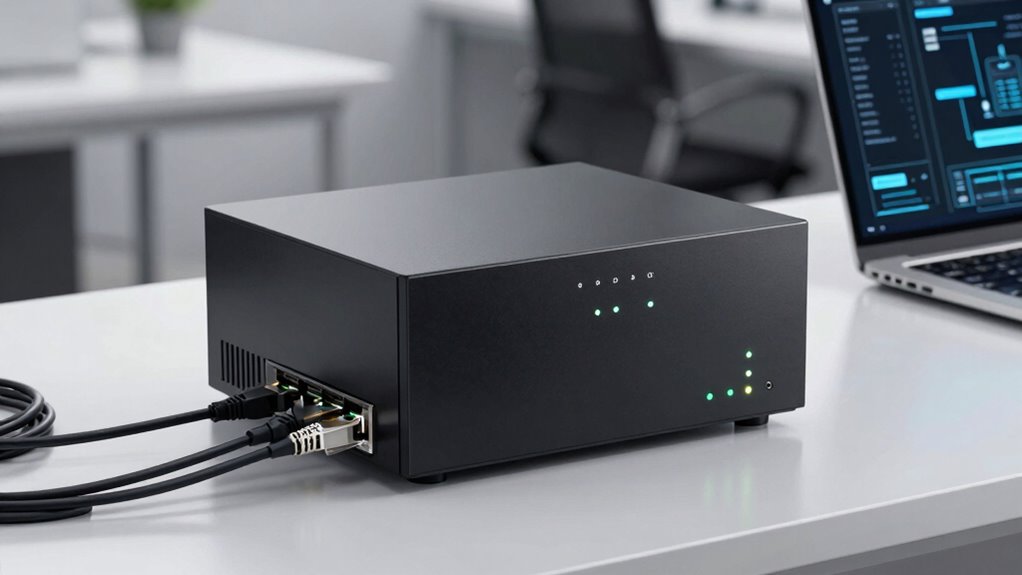
Firewall hardware for developer networks is essential for protecting and managing your increasingly complex environment. It helps you control access, block cyber threats, and guarantee compliance with security standards. Modern firewalls are scalable and customizable, supporting features like intrusion prevention, VPN, and deep packet inspection. They also offer centralized management and cloud integration, giving you flexibility and security as your network grows. Keep exploring to discover how the right hardware can enhance your network’s safety and efficiency.
Key Takeaways
- Firewall hardware secures developer networks by controlling access and preventing cyber threats from external and internal sources.
- Modern firewalls offer scalable, customizable options supporting high throughput, multiple network interfaces, and advanced security features.
- They facilitate integration with cloud environments, enabling unified security policies across on-premises and cloud platforms.
- Features like intrusion prevention, VPN support, and regular firmware updates enhance ongoing security and threat detection.
- Centralized management and future-proof hardware ensure efficient oversight and adaptability to evolving development needs.

As developer networks grow more complex and vulnerable to cyber threats, deploying the right firewall hardware becomes vital for maintaining security and controlling access. You need a solution that adapts to your unique environment, especially as cloud integration becomes a central part of your infrastructure. Modern firewall hardware isn’t just about blocking unwanted traffic; it’s about providing a flexible, scalable foundation that can seamlessly connect your on-premises systems with cloud services, guaranteeing a unified security approach. When selecting firewall hardware, consider devices that support cloud integration, allowing you to set up policies that extend security controls into cloud environments. This integration enables you to monitor and manage traffic across multiple platforms from a single interface, simplifying your security management and reducing blind spots. Ensuring your firewall hardware supports site management dashboards can further enhance your ability to oversee and optimize your security setup efficiently. Hardware customization plays a key role in tailoring your firewall to meet specific needs. Instead of relying on generic, one-size-fits-all solutions, look for options that let you customize features such as throughput capacity, number of network interfaces, and security modules. Custom hardware options ensure your firewall can handle the volume and complexity of your network traffic without sacrificing performance. They also allow you to add or upgrade capabilities over time, making your security infrastructure future-proof. By customizing your firewall hardware, you can optimize it for particular development workflows, whether your focus is on high-speed data transfer, secure remote access, or detailed traffic analysis. Additionally, choosing hardware with advanced threat detection can provide an extra layer of security against sophisticated cyber attacks. Selecting hardware that supports scalability ensures that your network security can grow alongside your development environment, avoiding the need for frequent replacements. To stay ahead of evolving threats, it’s important to choose hardware that supports regular firmware updates, ensuring your defenses are always current. Incorporating compliance standards into your hardware selection can help you meet industry-specific security requirements and avoid penalties. Choosing hardware that supports advanced features like intrusion prevention systems (IPS), virtual private network (VPN) support, and deep packet inspection. These features help you identify and block malicious activity before it can impact your development environment. Additionally, prioritize hardware with support for centralized management, so you can oversee multiple firewalls across different locations without hassle. This centralized approach simplifies updates, policy enforcement, and incident response. Ultimately, your goal is to establish a security perimeter that’s resilient, adaptable, and easy to manage. As your network evolves, so should your firewall hardware. Prioritize solutions that offer cloud integration, hardware customization, and scalability. Doing so ensures your developer network stays protected against emerging threats while maintaining the agility needed for rapid development cycles. By selecting the right firewall hardware, you’re building a foundation that supports secure innovation and growth—without compromising on performance or control.
As an affiliate, we earn on qualifying purchases.
Frequently Asked Questions
How Does Firewall Hardware Differ From Software Firewalls?
Firewall hardware differs from software firewalls by being a dedicated device that sits between your network and external connections, offering robust network segmentation and intrusion detection. Hardware firewalls handle high traffic volumes efficiently and provide a physical barrier, while software firewalls run on your individual devices, offering flexible, software-based protection. Both work together to strengthen security, but hardware is ideal for all-encompassing network control and preventing unauthorized access.
What Are the Best Firewall Hardware Options for Small Developer Teams?
For small developer teams, the best firewall hardware options include devices that support network segmentation and intrusion detection. Look for models like the Cisco ASA, Ubiquiti Unifi Security Gateway, or Fortinet FortiGate, which offer robust security features. These firewalls help you isolate sensitive projects, monitor traffic for suspicious activity, and enhance overall security. Choose one that fits your budget and technical needs to guarantee reliable protection for your network.
Can Firewall Hardware Be Customized for Specific Developer Needs?
Absolutely, firewall hardware can be tailored to suit your specific developer needs. You can customize settings for network segmentation, ensuring different project environments stay isolated, and enhance intrusion detection to monitor unusual activity. This flexibility helps you create a secure, efficient workspace precisely aligned with your team’s requirements. By fine-tuning your firewall, you optimize security without sacrificing performance, giving you peace of mind while you focus on development.
How Often Should Firewall Hardware Firmware Be Updated?
You should update your firewall hardware firmware as often as recommended by the manufacturer, typically every few months. Regular updates address firmware vulnerabilities, reducing the risk of security breaches. Keeping your firmware current guarantees you benefit from patches that fix known issues and improve performance. Don’t ignore update frequency guidelines; staying up-to-date is essential for maintaining a secure developer network against evolving threats.
What Are Common Challenges When Deploying Firewall Hardware in Developer Networks?
Deploying firewall hardware in developer networks presents several challenges, including balancing robust network segmentation and preventing insider threats. You might struggle with setting strict security settings without stifling productivity, and managing complex configurations can cause costly delays. Maintaining clear communication and continuous monitoring helps overcome these hurdles. Ensuring seamless integration, avoiding accidental exposure, and keeping pace with evolving threats are critical to safeguarding sensitive data while fostering innovation.
scalable network security appliance
As an affiliate, we earn on qualifying purchases.
As an affiliate, we earn on qualifying purchases.
Conclusion
Now that you’ve seen how firewall hardware can safeguard your developer network, imagine what’s next—advanced threats lurking just beyond the horizon. As cyberattacks grow smarter, your defenses must evolve too. Will your firewall be enough to keep intruders out, or will a new vulnerability slip through? The future of network security is uncertain, but one thing’s clear: staying ahead means constantly upgrading your defenses. Are you ready to face what’s coming?
As an affiliate, we earn on qualifying purchases.
intrusion prevention system hardware
As an affiliate, we earn on qualifying purchases.
As an affiliate, we earn on qualifying purchases.