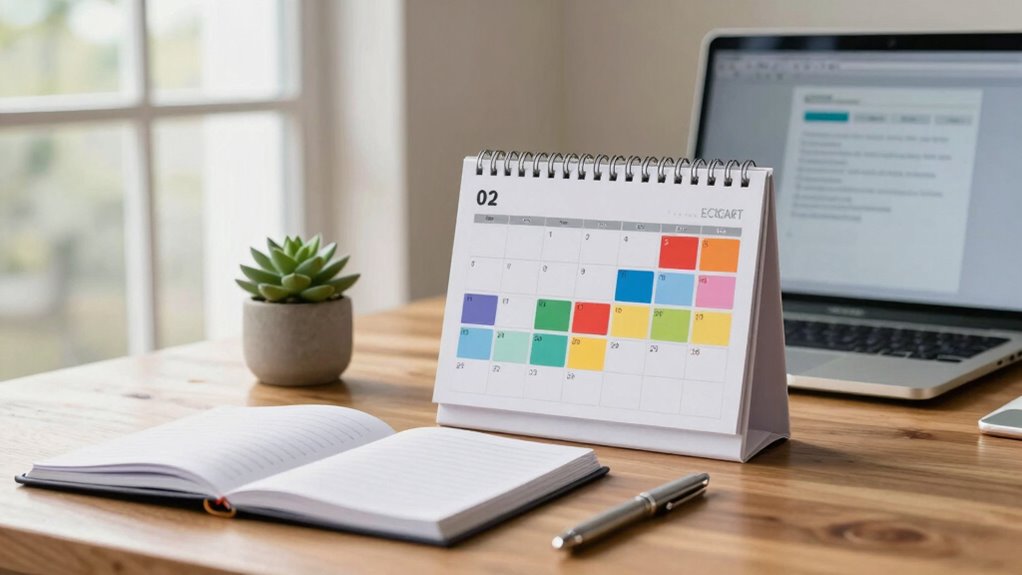

Adding recovery blocks to your calendar can be a game-changer for your productivity and mental health. These intentional breaks help prevent burnout, boost focus, and give you time to process information or stretch. By scheduling short recovery periods between meetings, you can manage your energy better and stay engaged throughout the day. If you keep exploring, you’ll discover simple strategies to make this habit a seamless part of your routine.

Get tech for your team delivered free — and shop member deals
- Fast, free delivery on millions of items
- Access to Prime Big Deal Days deals on October 6–7
- Prime Video, Amazon Music and more included
Key Takeaways
- Incorporating recovery blocks prevents burnout and maintains focus during back-to-back meetings.
- Scheduled breaks help process information, review notes, and recharge mentally.
- Adding recovery periods improves overall time management and reduces stress.
- Consistent recovery habits support a healthy work rhythm and enhance well-being.
- Recognizing recovery blocks as a vital calendar practice boosts productivity and mental health.

If you often find yourself overwhelmed by back-to-back meetings, you might be missing a simple but powerful calendar habit: scheduling recovery blocks. These are dedicated periods of time between meetings where you can pause, reflect, or catch up on tasks. Incorporating recovery blocks into your calendar is a smart time management strategy that boosts your overall productivity. Instead of jumping from one meeting to the next without a breather, you give yourself the space to process information, reset, and prepare for what’s next. This approach prevents burnout and helps you stay focused throughout the day.
Many people underestimate how much mental energy meetings consume. Without intentional breaks, your efficiency drops, and your ability to concentrate suffers. By blocking out recovery periods, you create a buffer zone that allows you to handle unexpected issues, review notes, or simply breathe. These gaps in your schedule might be just five or ten minutes, but they make a significant difference. They serve as mental reset buttons that keep you engaged and alert. Recovery blocks also help you avoid the trap of perpetual busyness, which is a common pitfall in today’s fast-paced work environments. Additionally, understanding how meetings impact mental energy can encourage you to prioritize these recovery periods for better focus. Recognizing the value of time management tools can further support your efforts to optimize your schedule. Incorporating mental health practices can enhance the effectiveness of your recovery periods and promote overall well-being. Developing an awareness of work-life balance can motivate you to consistently implement these strategies for sustainable productivity. Implementing these strategies can also help you develop a more sustainable work rhythm that balances productivity with self-care.
Taking intentional breaks between meetings boosts focus, prevents burnout, and keeps you engaged throughout the day.
Implementing recovery blocks is a straightforward yet effective productivity strategy. First, analyze your daily schedule and identify the gaps between meetings. If your calendar is tightly packed, consider adjusting or rescheduling some meetings to ensure you have these crucial intervals. When you set up your calendar, make it a habit to insert short recovery periods, even if they’re just five minutes. Use this time for stretching, quick breathing exercises, or a brief walk. This not only refreshes your mind but also enhances your time management skills by teaching you to prioritize quality over quantity of work.
Another benefit of recovery blocks is that they help you manage your energy levels better. Instead of feeling drained by a continuous stream of meetings, you gain the ability to approach each session with clarity and purpose. Over time, this habit becomes a core component of your productivity strategies, making your workday more sustainable and less stressful. The key is consistency—by routinely blocking out recovery periods, you reinforce a healthy work rhythm and demonstrate that taking care of your mental well-being is integral to effective time management.
Ultimately, recovery blocks are a simple yet powerful addition to your calendar. They allow you to manage your time more effectively, maintain high levels of productivity, and safeguard your mental health. If you’re serious about optimizing your workday, start scheduling these recovery moments today. Your focus, energy, and overall productivity will thank you.
As an affiliate, we earn on qualifying purchases.
Frequently Asked Questions
How Do Recovery Blocks Differ From Regular Calendar Buffers?
Recovery blocks differ from regular calendar buffers because they offer calendar flexibility and serve as intentional time slots to recover from unexpected delays or overruns. While buffers are often just extra time, recovery blocks are strategic scheduling tools that help you stay on track. Using these, you can adapt your planning, prevent stress, and maintain productivity, making them a valuable part of effective scheduling strategies.
What Tools Are Best for Tracking Recovery Blocks?
You might think tracking recovery blocks is a no-brainer, but ironically, many overlook this vital step. The best tools for tracking them include digital calendars like Google Calendar or Outlook, which integrate seamlessly with your time management and productivity strategies. Apps like Toggl or RescueTime help monitor how well you’re allocating recovery time. Using these tools guarantees you stay mindful, preventing burnout while maximizing your efficiency.
How Often Should Recovery Blocks Be Scheduled?
You should schedule recovery blocks regularly, ideally daily or at least several times a week, to maintain mental health and productivity balance. These blocks give you dedicated time to recharge, preventing burnout. By making recovery a consistent part of your calendar, you create a healthy routine that supports sustained focus and well-being. Consistency guarantees you’re proactively managing stress and staying balanced, ultimately boosting your overall effectiveness.
Can Recovery Blocks Be Used for Personal Time?
Absolutely, recovery blocks can be your secret weapon for personal time. Think of them as your personal boundary-buffers, a sacred space for self-care routines. You’re telling your calendar, “Nope, I’m off-duty,” which is essential for mental health. With these blocks, you create a dedicated window for relaxation, hobbies, or just breathing—because even superheroes need a break! Prioritize yourself; your well-being deserves scheduled time too.
What Are Common Mistakes When Implementing Recovery Blocks?
When implementing recovery blocks, you often make mistakes like over-scheduling, which hampers effective time management and stress reduction. You might also neglect to protect these blocks, allowing meetings or tasks to encroach. Additionally, failing to set clear boundaries or underestimate the needed recovery time can reduce their effectiveness. To succeed, you need to be disciplined, prioritize recovery, and treat these blocks as essential, not optional, parts of your schedule.
As an affiliate, we earn on qualifying purchases.
Conclusion
By embracing recovery blocks, you’re gently weaving a safety net into your calendar, allowing space for growth and renewal. It’s not about avoiding meetings but giving yourself moments to breathe between them. Over time, these pauses become subtle anchors, guiding you toward a more balanced rhythm. Remember, sometimes the most meaningful progress happens when you quietly create room for what’s next—without rushing, without strain, just enough space to truly reset.
As an affiliate, we earn on qualifying purchases.
As an affiliate, we earn on qualifying purchases.
Halloween Picks
halloween
As an affiliate, we earn on qualifying purchases.